Istanbul’s T1 Tram line is the most practical public transport route for visitors, as it connects many of the city’s iconic sights along a single, easy-to-follow line. Running from Bağcılar on the European side to Kabataş on the Bosphorus, the tram passes directly through the Old City and key central districts such as Sultanahmet, Eminönü, and Karaköy. With a short funicular ride from Kabataş, it also provides quick access to Taksim Square.
As a licensed tour guide with over 20 years of experience in Istanbul, I have seen how essential the T1 Tram is for getting around efficiently. It operates frequently throughout the day, is affordable, and allows travelers to avoid Istanbul’s heavy traffic while reaching major landmarks such as the Grand Bazaar, Hagia Sophia, the Blue Mosque, the Spice Bazaar, Galata Tower, and Dolmabahçe Palace with ease.
To use the T1 Tram and Istanbul’s public transport network, travelers need an Istanbulkart, the city’s contactless transportation card. The same card works on trams, metros, ferries, and buses, making it the simplest and most economical way to move around the city.
In this guide, you will find an updated T1 Tram map along with a clear overview of all major stations on the line. Whether you are visiting Istanbul for the first time or want to travel more smoothly between sights, this article will help you navigate the city with confidence and save valuable time during your stay.
Istanbul Tram T1 Map (2026)
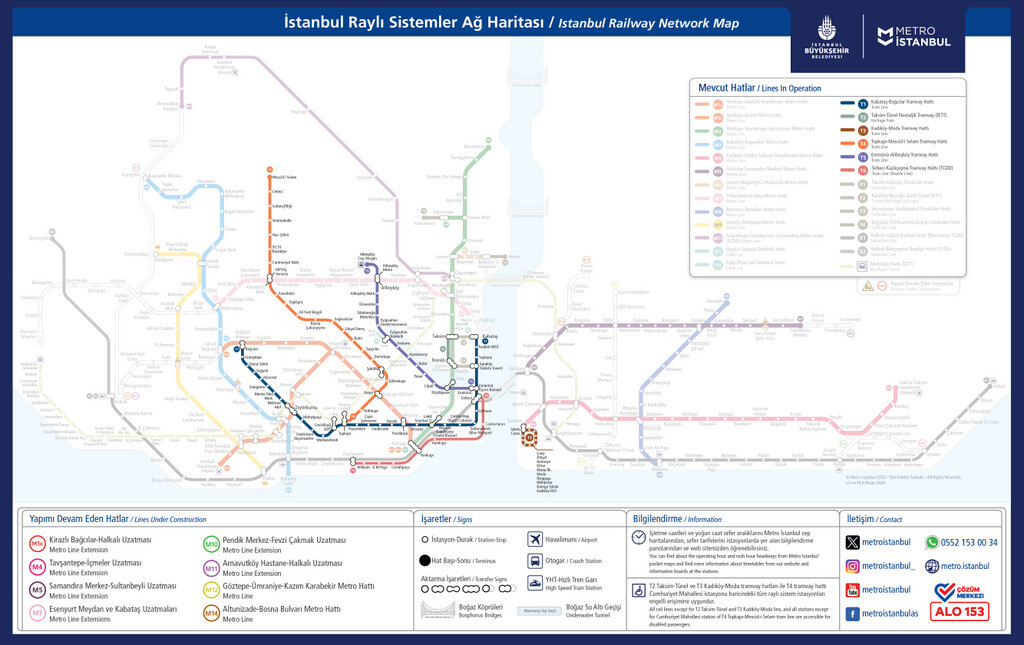
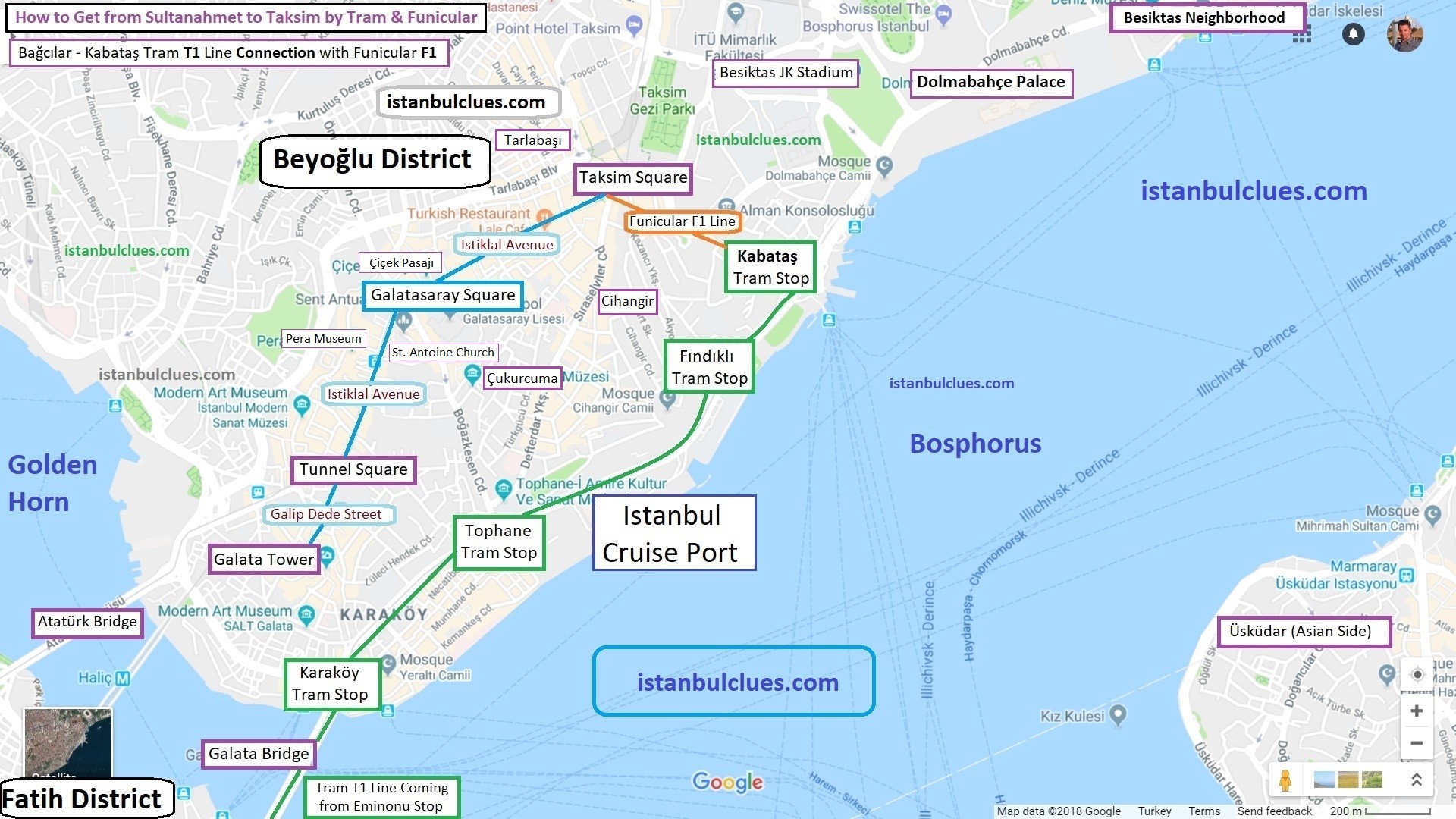
On the map above, the Tram T1 route is shown in dark blue, clearly marking one of the most useful transport lines for visitors. The line runs between Bağcılar, a residential area on the European side, and Kabataş, a major transportation hub on the Bosphorus shoreline.
From Kabataş Tram Station, travelers can transfer to the F1 Funicular, which provides a fast connection to Taksim Square. This makes it easy to reach the main attractions of Beyoğlu, often referred to as Istanbul’s New City, including Istiklal Street and Galata Tower.
Kabataş also serves as an important ferry terminal. From here, you can cross to the Asian side of Istanbul and visit lively districts such as Kadıköy and Üsküdar. In addition, Bosphorus cruise boats, including services operated by Dentur, depart from Kabataş and offer scenic tours along the strait.
Within walking distance of Kabataş Tram Station, visitors can reach Dolmabahçe Palace, one of the most impressive landmarks of the city. Nearby, Beşiktaş FC Stadium, the home ground of Beşiktaş, is also easily accessible on foot, making Kabataş a convenient starting point for both sightseeing and local experiences.
You can also access the official Tram T1 map prepared by the Istanbul Metropolitan Municipality (IBB) via the blue button below. This PDF map provides the most accurate and up-to-date overview of all tram lines and stations in Istanbul.
Istanbul Tram T1 Line Stations (2026)
The T1 Tram line includes many more stops than the ones covered in this guide. However, the 12 stations listed below are the most relevant for foreign visitors, as they provide direct access to Istanbul’s main touristic areas. Each of these stops is located within walking distance of major landmarks, including museums, historic sites, and shopping areas.
For travelers who want to explore Istanbul Old City, the T1 Tram is by far the most convenient option. The line connects key sights such as the Grand Bazaar, Hagia Sophia, the Blue Mosque, Topkapı Palace, and the Spice Bazaar along a single, easy-to-use route.
In addition to the Old City, the T1 Tram also allows travelers to cross the Golden Horn and reach the lively streets of Beyoğlu, making it a practical choice for visitors who want to explore both the historic core and the modern side of Istanbul without dealing with traffic or complicated transfers.
1. Zeytinburnu Tram Station
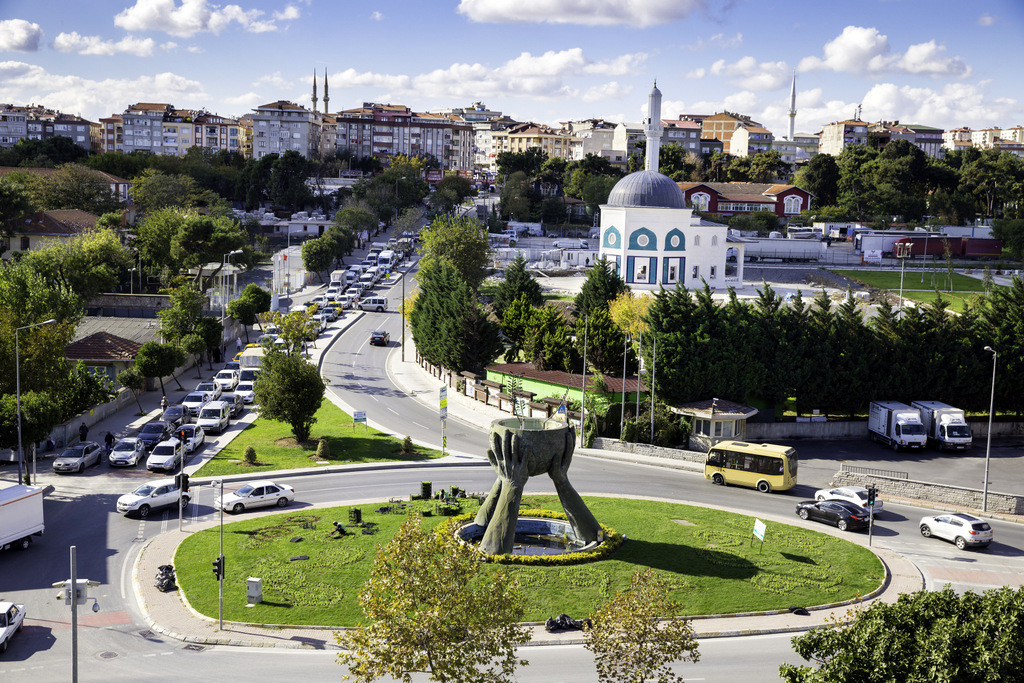
Zeytinburnu Tram Station is best known today as the most convenient stop for shopping malls along the T1 line. Since shopping options are very limited in the Old City, many visitors use the T1 Tram from central areas such as Sultanahmet to reach large shopping centers outside the historic core.
The station provides easy access to Marmara Forum Shopping Center, one of Istanbul’s largest malls, offering a wide range of international brands, restaurants, cafés, and entertainment options. For visitors looking to combine sightseeing with modern shopping, Zeytinburnu is the most practical tram stop on the T1 route.
In the past, Zeytinburnu was also an important transfer point for airport access. Before the closure of Atatürk Airport, changing from the T1 Tram to the M1 Metro at Zeytinburnu was one of the fastest ways to reach Istanbul’s former international airport. With the opening of Istanbul Airport, this role has largely disappeared, and the station is no longer relevant for airport-related travel.
Among the shopping centers reachable via the T1 line, Marmara Forum and Historia Shopping Center are the two closest options to the Old City. Between the two, Marmara Forum stands out with its larger size, broader selection of shops, and more dining options, while Historia is smaller and more limited in scope.
2. Haseki Tram Station
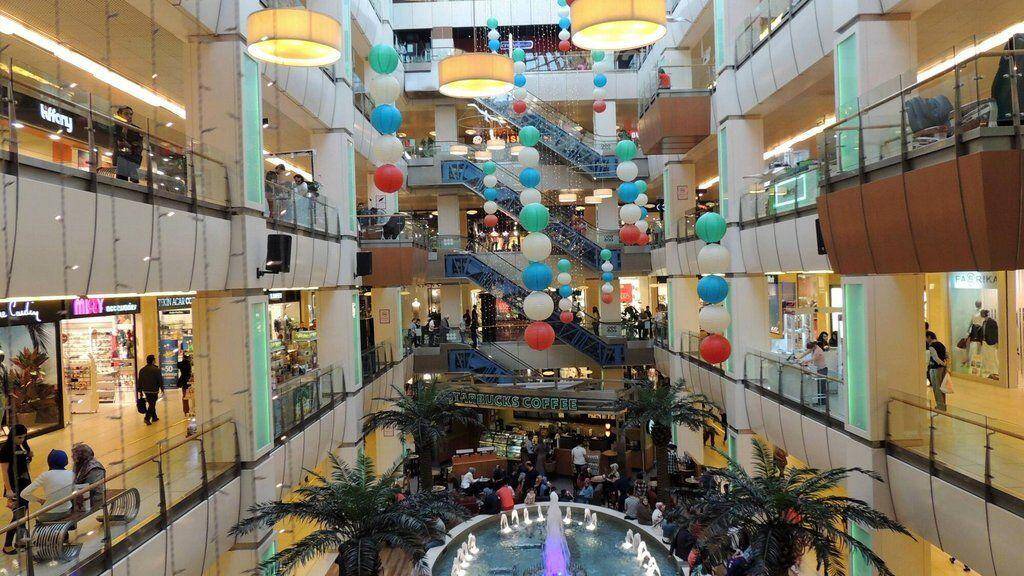
Haseki Tram Station is a convenient stop for visitors who want to reach Historia Shopping Center, a medium-sized shopping mall located within walking distance of the station. Historia stands out as the closest shopping center to the Old City, making it a practical option for travelers staying in central areas such as Sirkeci, Sultanahmet, Beyazıt, and Laleli.
Istanbul is home to many large and popular shopping malls—including İstinye Park, Kanyon, Cevahir, Mall of Istanbul, Akasya, and Zorlu Center—which offer a much wider selection of shops and entertainment. However, for visitors staying in Old City hotels, these malls usually require longer metro journeys or multiple transfers.
For this reason, Historia Shopping Center remains the easiest and most accessible shopping option for travelers based in the Old City. While it may not match the scale of Istanbul’s major malls, its central location and simple access via the T1 Tram make Haseki Tram Station a practical stop for short shopping breaks during sightseeing days.
3. Aksaray Tram Station
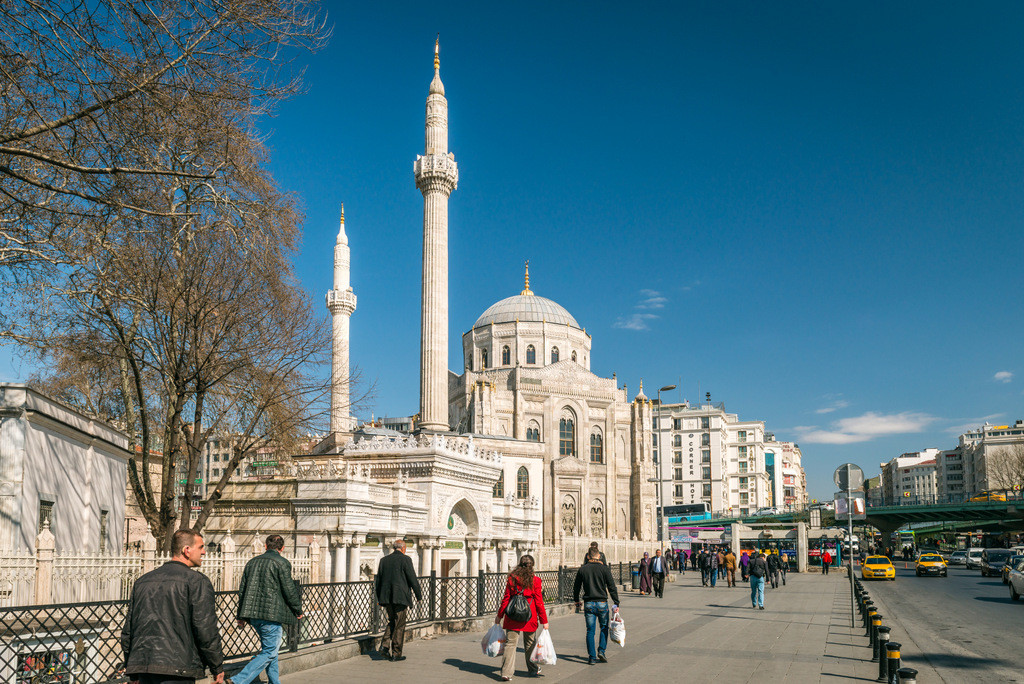
Aksaray Tram Station is one of Istanbul’s most important public transportation hubs, as it offers easy connections to both the Marmaray and Yenikapı Ferry Terminal. After getting off the T1 Tram at Aksaray, you can reach the Marmaray Station with a short walk, making it a highly efficient transfer point for crossing the city.
Using Marmaray, travelers can reach Sirkeci—the heart of the Old City—in about 4 minutes. Continuing eastward, the same line takes you to Üsküdar on the Asian side in roughly 8 minutes, and to Ayrılık Çeşmesi in approximately 12 minutes.
The Marmaray undersea tunnel runs beneath the Bosphorus, allowing passengers to travel between Europe and Asia much faster than ferries and without being affected by weather or sea traffic. For visitors who want a quick and predictable crossing, this is one of the most efficient transport options in Istanbul.
After reaching Ayrılık Çeşmesi, travelers can transfer to the M4 Metro Line to continue to Kadıköy. Kadıköy is widely regarded as the best area on the Asian side for shopping, dining, and local life, making Aksaray Tram Station a strategic stop for visitors who want to explore both sides of Istanbul in a single day.
4. Beyazıt Tram Station
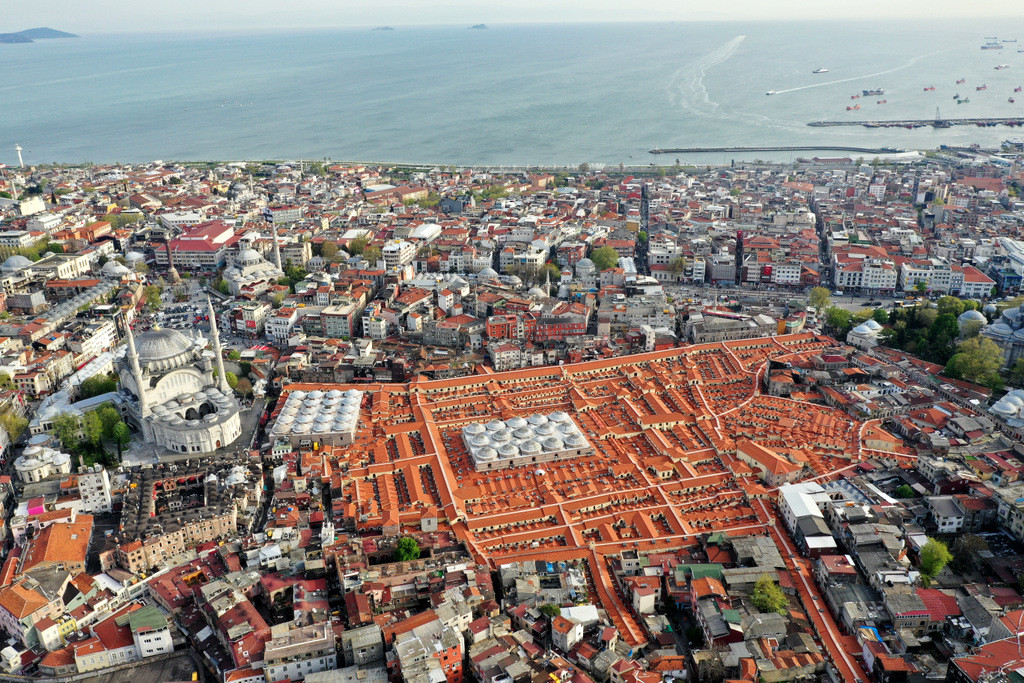
Beyazıt Tram Station is located right next to the Grand Bazaar, making it one of the most important stops on the T1 Tram line for visitors interested in shopping and historical sites. The closest entrance of the Grand Bazaar to the tram station is Gate 7, one of the main access points to the market.
Entering through Gate 7 leads directly to Kalpakçılarbaşı Street, the main spine of the Grand Bazaar. By following this central route, visitors can walk all the way to Gate 1 and exit toward Sultanahmet via Nuruosmaniye Street. This street, located just outside the Grand Bazaar, offers a pleasant walking route lined with elegant shops and historic buildings.
While the walk between Gate 7 and Gate 1 may look straightforward on a map, navigating inside the Grand Bazaar is rarely that simple. With over 60 streets and thousands of shops, it is very easy to lose your sense of direction once you step off the main axis. For this reason, Beyazıt Tram Station is best used as a clear entry or exit point, especially for first-time visitors exploring the bazaar.
5. Sultanahmet Tram T1 Station
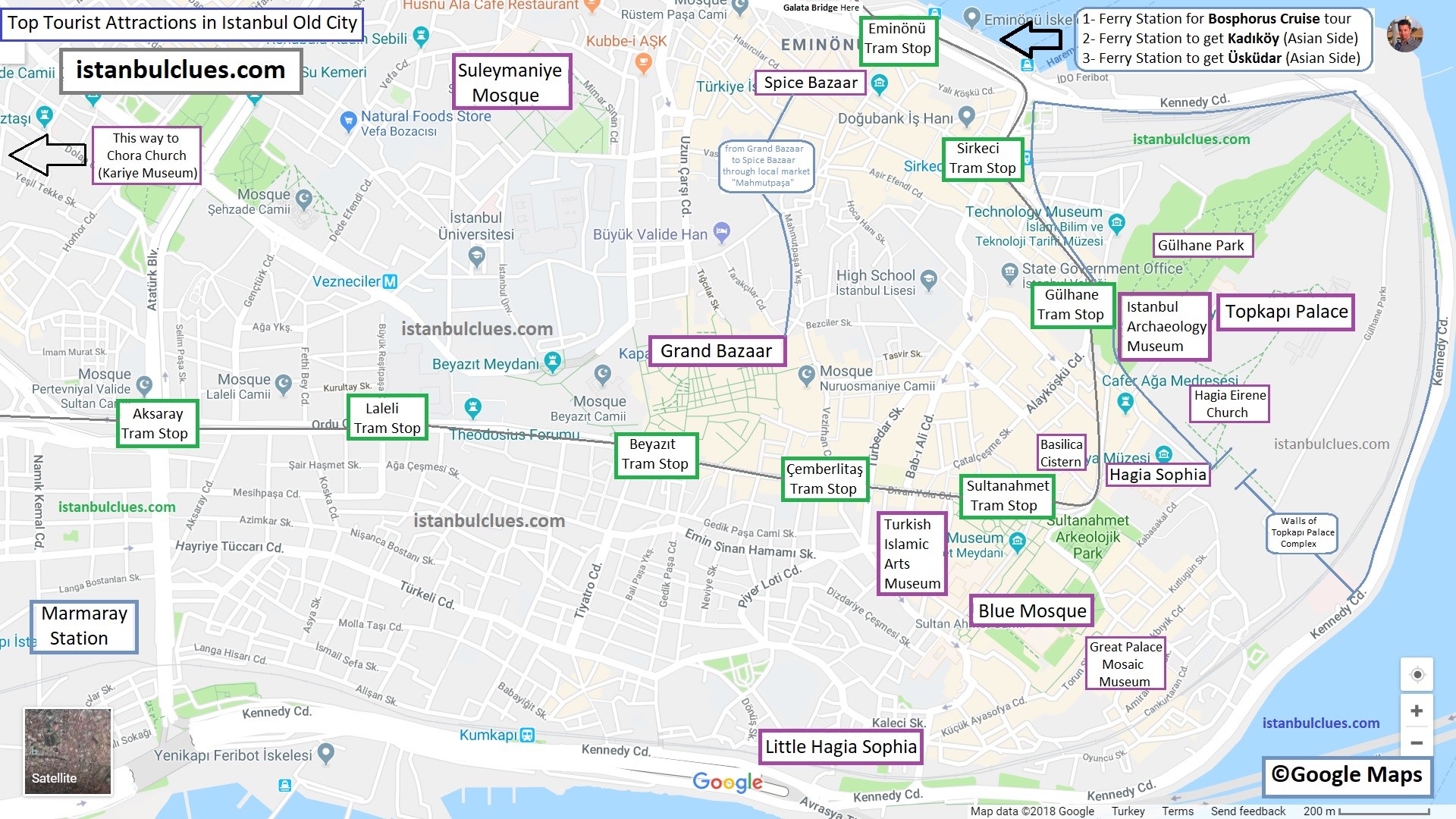
Sultanahmet Tram Station is the busiest stop on the T1 Tram line and the main arrival point for visitors exploring Istanbul’s historic core. Every day, hundreds of travelers use the T1 Tram to reach Sultanahmet, avoiding Istanbul’s unpredictable traffic and stepping directly into the heart of the Old City.
As shown on the route map, the highest concentration of historic monuments in the Old City lies between Beyazıt, Sultanahmet, and Gülhane Tram Stations. Iconic landmarks such as Hagia Sophia, the Blue Mosque, Topkapı Palace, and several major museums are all located within easy walking distance. Exploring Sultanahmet properly usually takes a full day, even at a relaxed pace.
While Sultanahmet is unrivaled for daytime sightseeing, the area is relatively quiet in the evening. Visitors staying in the Old City often use the T1 Tram to travel to livelier districts after sunset, such as Galata, Taksim, or Beşiktaş, which offer a wider selection of restaurants, bars, and nightlife venues.
6. Gülhane Tram Station
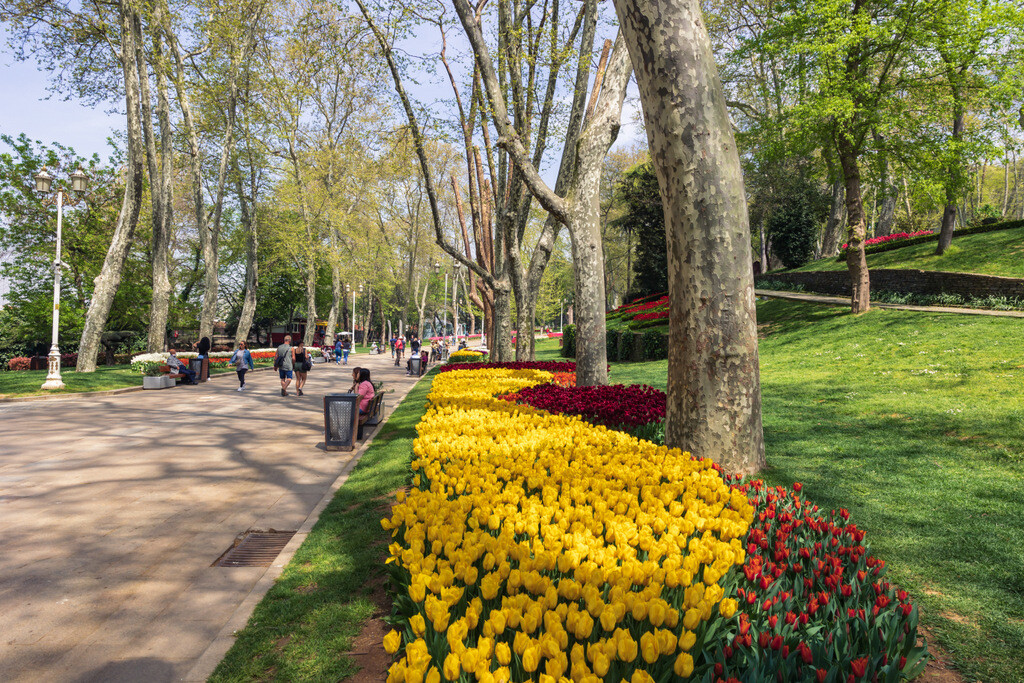
Gülhane Tram Station is one of the most convenient stops for visitors who want to reach the Istanbul Archaeological Museums and Gülhane Park on foot. Although both sites lie within the outer boundaries of Topkapı Palace, they are easily accessible from the Gülhane Tram Stop.
To reach these landmarks, visitors pass through the Gülhane Gate, one of the secondary entrances of Topkapı Palace. After entering through this gate, Gülhane Park opens up directly in front of you, offering a peaceful green space in the heart of the Old City. Following the path slightly uphill to the right leads to the Istanbul Archaeological Museums, which will appear on your left-hand side.
Inside Gülhane Park, visitors can also find the Museum of the History of Science and Technology in Islam. This lesser-known museum displays a fascinating collection of historical scientific instruments and is often overlooked by first-time visitors, making Gülhane Tram Station a rewarding stop for those interested in both history and culture.
7. Sirkeci Tram Station
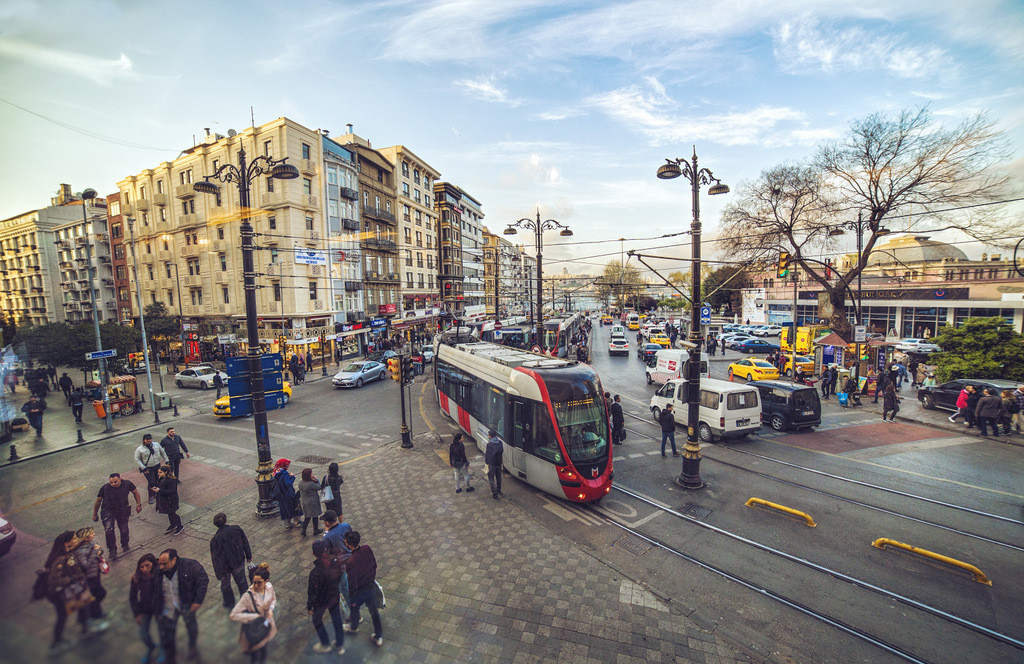
Sirkeci Tram Station is located in the heart of the Old City and sits in one of Istanbul’s most lively historic neighborhoods. Busy throughout the day, Sirkeci has served as an important trading, dining, and transportation area since the Ottoman period, and it continues to attract both locals and visitors.
The tram stop opens onto a historic square, where one of the most notable landmarks is the Sirkeci Railway Station. This elegant station was once the final stop of the Orient Express, the legendary train that connected Paris and Istanbul, and it remains one of the most atmospheric places in the district.
Sirkeci is also well known for its excellent street food and traditional eateries. The area is filled with dessert shops, local restaurants, and long-established food spots popular with residents. In particular, Hocapaşa Street stands out for its concentration of quality restaurants and casual dining options, making it an ideal stop for lunch or dinner during sightseeing.
Another cultural highlight of Sirkeci is its connection to Istanbul’s whirling dervish tradition. The Hodjapasha Cultural Center, located on Hocapaşa Street, hosts one of the city’s most respected whirling dervish performances, offering visitors a meaningful cultural experience within walking distance of the tram station.
8. Eminönü Tram T1 Station
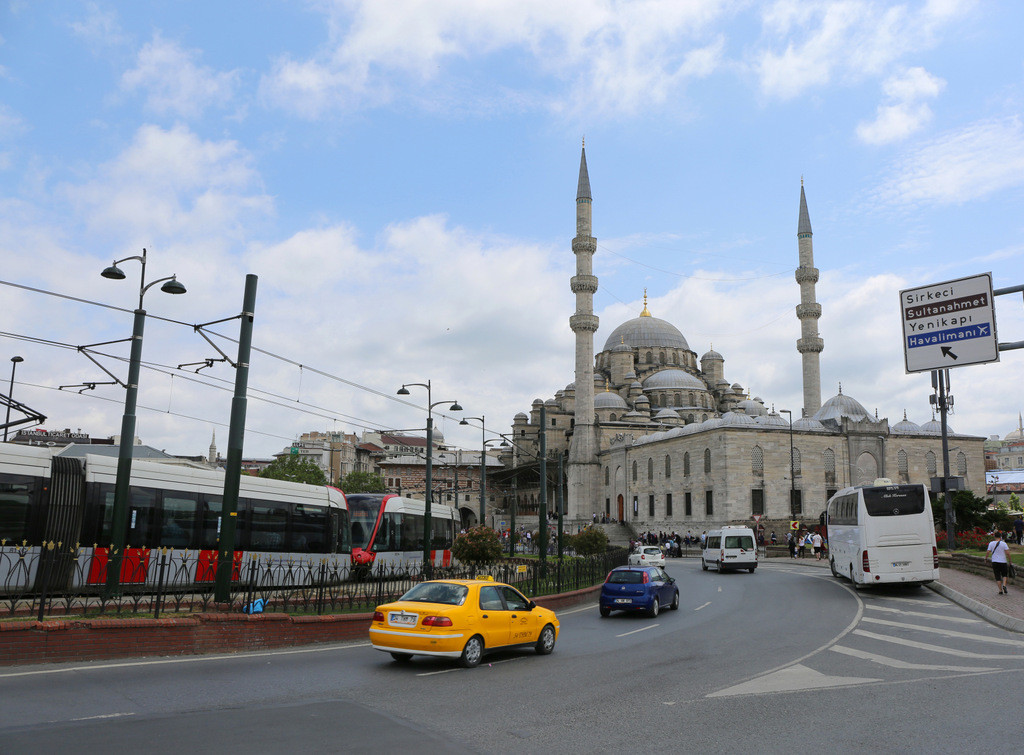
Eminönü Tram Station is located right next to the Spice Bazaar, one of the most atmospheric markets in the Old City. Inside the bazaar, visitors can find Turkish delight, tea leaves, saffron, local nuts, and a wide variety of spices. Dating back over 300 years, the Spice Bazaar is often compared to a smaller version of the Grand Bazaar, but with a more compact and intimate atmosphere.
Just outside the Spice Bazaar stands Hamdi Restaurant, widely regarded as one of the best kebab restaurants in Istanbul. Nearby, the Rüstem Pasha Mosque is another highlight of the area, famous for its exceptional İznik tilework, considered among the finest examples in the city.
Eminönü is also a central meeting point for Istanbul street food tours, many of which begin around the Spice Bazaar. The surrounding streets are filled with iconic local flavors such as döner, kokoreç, and the classic fish sandwich, making the area a must-visit for food-focused travelers.
Since the opening of the T5 Eminönü–Alibeyköy Tram Line in 2023, Eminönü Tram Station has gained additional importance as a transfer point. Travelers can now switch between T1 and T5 and explore the Golden Horn from east to west by rail. This connection makes it easy to reach historic districts such as Fener and Balat, Ayvansaray, and Eyüp, including access to Pierre Loti Hill, without relying on buses or ferries.
9. Karaköy Tram T1 Station
Karaköy Tram Station is located in the center of a historic square, at the meeting point of the Old City and the northern shore of the Golden Horn. Throughout the Byzantine and Ottoman periods, Karaköy functioned as the main port district of the city, which explains its long-standing cosmopolitan character that is still visible today.
Much of Karaköy was rebuilt in the 19th century, and the district is known for its Baroque and Neoclassical architecture. Unlike the tightly packed fabric of the Old City, Karaköy features a more European urban layout, reflecting the westernization process of the late Ottoman Empire. Walking through the area offers a clear architectural contrast to neighborhoods such as Sultanahmet or Beyazıt.
The side streets of Karaköy are filled with well-known dessert shops, cafés, and local restaurants, making the district a popular stop for short breaks or meals. From Karaköy, it is also easy to walk uphill to Galata Tower and continue toward İstiklal Street, one of the city’s busiest pedestrian zones.
In recent years, Karaköy has also become the gateway to Galataport, Istanbul’s modern cruise port and waterfront complex. This development has further strengthened Karaköy’s role as a bridge between the city’s maritime past and its contemporary urban life.
10. Tophane Tram Station
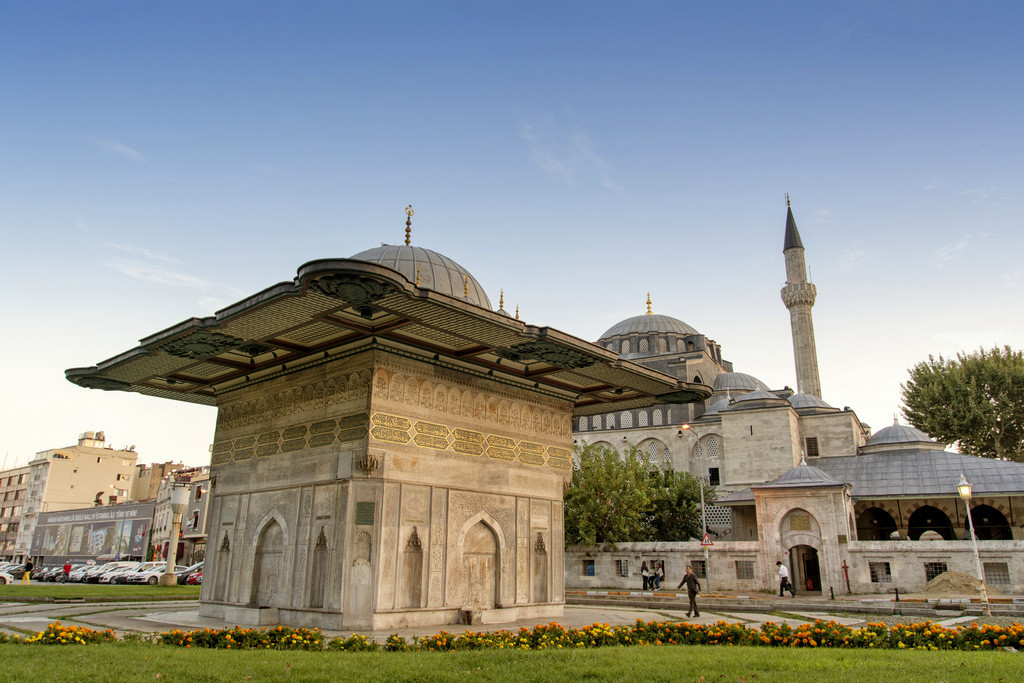
Tophane Tram Station is located next to the elegant Kılıç Ali Paşa Mosque, a 16th-century Ottoman mosque designed by Mimar Sinan. From the station, visitors can easily walk to Istanbul Modern and the nearby Galataport, making Tophane a convenient stop for both culture and waterfront walks.
Tophane sits at the southern edge of Beyoğlu, one of Istanbul’s most vibrant districts. From here, it is possible to walk uphill to Cihangir, a neighborhood known for its relaxed atmosphere, antique shops, and cafés popular with locals. Cihangir is also home to the Museum of Innocence, inspired by the novel of Nobel Prize–winning author Orhan Pamuk.
For food lovers, Tophane Tram Station offers several notable options nearby. One of Istanbul’s well-known breakfast spots, Namlı Gurme, is located within a short walking distance. Right next to the tram stop, visitors can also find the historic Kılıç Ali Paşa Hamamı, widely regarded as one of the finest Turkish baths in the city.
11. Fındıklı Tram Station
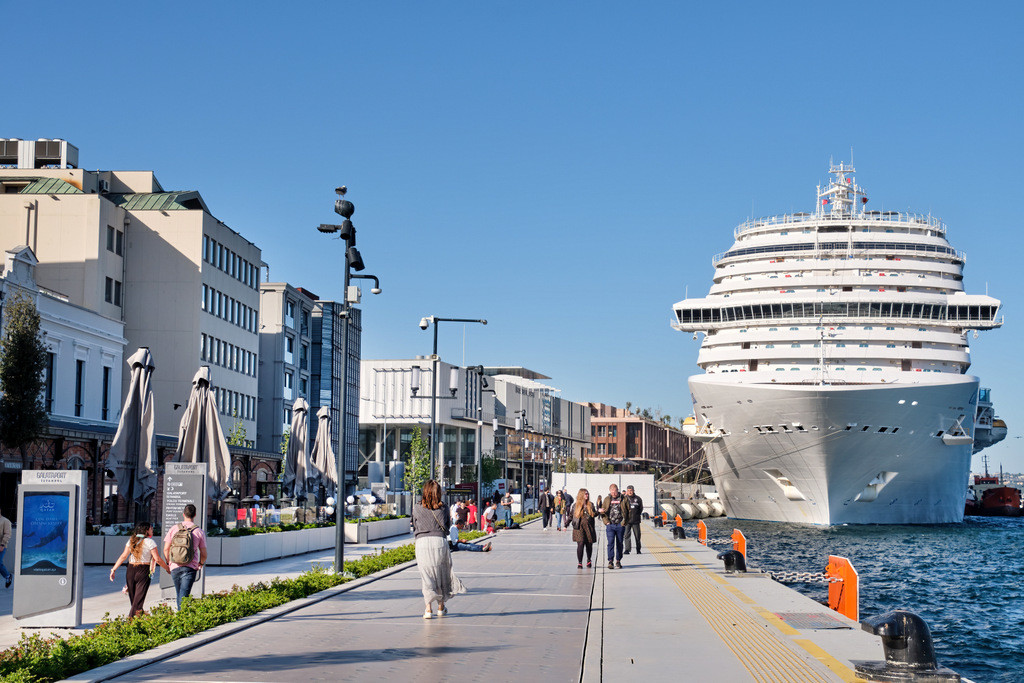
Fındıklı Tram Station is located within walking distance of both Istanbul Modern and Galataport, making it a practical stop for visitors interested in contemporary art and the Bosphorus waterfront. Nearby, the Nusretiye Mosque stands out as an elegant Ottoman structure, notable for its Baroque-influenced architecture, which reflects the stylistic transition of the 19th century.
Right next to the tram station is Mimar Sinan Fine Arts University, one of Istanbul’s most respected institutions for fine arts and architecture. Named after Mimar Sinan, the most influential architect of the Ottoman era, the university contributes to the area’s creative and academic atmosphere. As a result, Fındıklı feels noticeably more student-oriented and artistic compared to neighboring districts along the tram line.
12. Kabatas Tram T1 Station
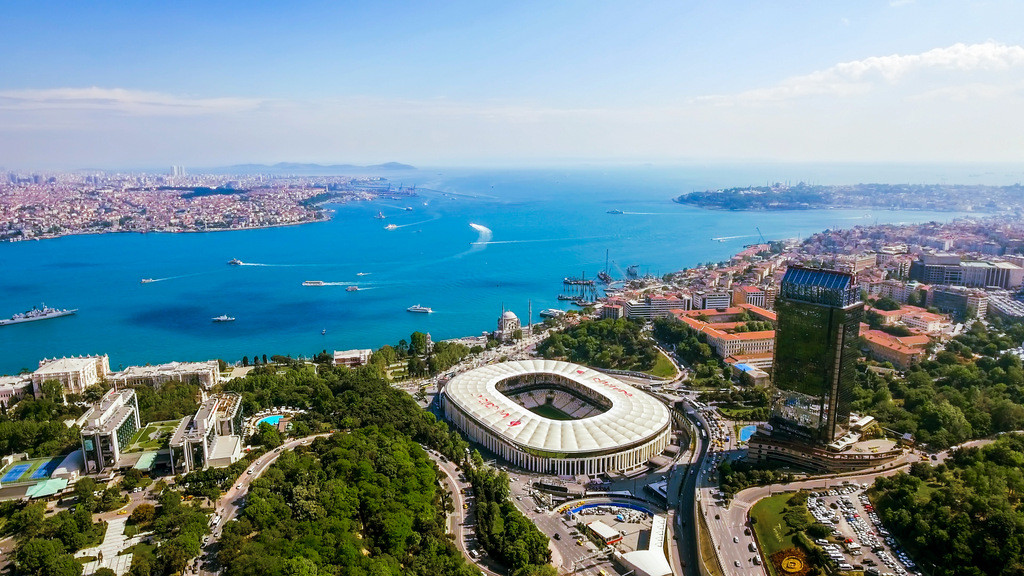
Kabataş Tram Station is one of the most strategic endpoints of the T1 Tram line, offering direct access to both historic landmarks and Bosphorus transportation. From here, visitors can easily walk to Dolmabahçe Palace, one of Istanbul’s most impressive 19th-century monuments.
Kabataş also functions as a major ferry hub. From the nearby piers, travelers can cross to the Asian Side, join Bosphorus cruise tours, or take ferries to the Princes’ Islands, making this stop especially convenient for day trips and scenic journeys.
Located at the intersection of Beyoğlu and Beşiktaş, Kabataş is surrounded by some of the city’s most prestigious hotels. Well-known properties such as The Ritz-Carlton Istanbul, Swissôtel The Bosphorus, and Hilton Istanbul Bosphorus are all within easy walking distance.
From Kabataş Tram Station, it is also possible to walk to Beşiktaş FC Stadium, home of one of the city’s most popular football clubs. The area around Kabataş also serves as a starting point for Bosphorus-side walks toward Beşiktaş, offering a pleasant route along the waterfront after a day of sightseeing.
How to Buy a Ticket for the Tram

Visitors who plan to use the tram only once can purchase a single-use token from the ticket machines (known locally as Jetonmatik) located near each tram stop. While this option is straightforward, it is also more expensive and not practical for travelers who intend to use public transportation more than once.
For most visitors, the most convenient and economical option is to use an Istanbulkart. This is a rechargeable contactless transport card that works across all public transportation in Istanbul, including trams, metros, ferries, buses, and funiculars. The card can be purchased easily from kiosks and vending machines near tram stations and topped up whenever needed.
Using an Istanbulkart not only simplifies travel but also offers lower fares, especially when making transfers between different transport modes. For anyone spending more than a day in the city, it is the smartest and most efficient way to move around Istanbul without repeatedly buying tickets.
Conclusion
In short, the T1 Tram line is the most practical and widely used transport option for visitors in Istanbul. It allows you to move easily between the city’s key historic areas—from Sultanahmet to Kabataş—and reach many of the landmarks shown on the Istanbul Tourist Map, all while avoiding the city’s unpredictable traffic.
For travelers who want a broader overview of Istanbul’s transport system, having access to up-to-date public transport maps can make a real difference. Our detailed Istanbul Metro Map guide complements the T1 Tram perfectly, covering metro, tram, ferry, and Metrobus lines in one place and helping you plan your routes with confidence.
Used together, these resources make navigating Istanbul simpler, faster, and far less stressful, allowing you to focus on exploring the city rather than figuring out how to get around.
Written By Serhat Engul

Hi, I love your blog and the way you explain the tram stations. I just wanted to ask: can I bring my luggage on the T1 tram from Sabiha Gokcen Airport?
Hi, thank you very much for your kind words. Yes, you can bring luggage on the T1 tram, but please keep in mind that the T1 line can be very crowded, especially during peak hours. Also, Sabiha Gökçen Airport is not directly connected to the T1 tram; you’ll first need to reach the European side by airport bus, metro, or transfer options before using the tram. If you’re traveling with large luggage, a private transfer or taxi may be more comfortable.
Your info is the most amazing and helpful in the internet. Keep up the good work!
Hello Nur, thank you very much for the feedback!
I find your article very informative.. Could you please tell me if any station T1 is near to Taksim Square?
Hello Yagya, among the T1 stations, the closest to Taksim Square is Kabatas Tram Station. However, it takes a long time to walk and you have to go uphill.
For this reason, you can use the F1 Funicular connection. F1 is a one-stop underground metro running between Kabatas and Taksim Square.
Thank you for all of the information you have provided. It is really helpful for me to plan our trip to Istanbul next year. Kind regards.
Dear Anne, thank you for your feedback regarding the blog. I’m glad my articles helped you with your travel planning. I wish you a nice holiday in Istanbul.
I think this is the best article to travel Istanbul alone even without a guide.
Dear Arshad, thank you for your kind words about the article. Have a nice trip!
So useful and helpful information. Thanks
Dear Bahria, thank you for the feedback on the post. Have a nice trip!
Very informative and useful blog. Those yellow taksi’s are a rip off, and charge fees according to their own needs instead of using the distance meters.
Thanks for the feedback Rita. Yes, you are right about the taxis. Let alone tourists, even us Istanbulites have problems with taxis. I don’t use a yellow taxi unless I have to.
Fortunately, Istanbul’s tram, metro and marmaray lines are developing in a way that does not require the use of taxis. Soon, the rail system will cover the whole touristic areas.
This guy and the website is just amazing. If you are planning to do things on your own, read out all here. Each and every information is available here.
Dear Shyam, thank you for your kind review. Have a nice trip!
Very useful, thank U!
Hi Ursa, thank you for the feedback. Have a nice holiday!
Sallam
Government of Turkey should pay you for writing such beautiful information about Istanbul transportation.
You are fantastic.
Allah bless you
Thank you Abdul Mohammad. This is one of the most encouraging comments I have ever seen. It’s nice to see that my efforts were not in vain.
What a fantastic, wonderful and helpful article. For someone who has never been to Turkey, I feel like I already know this place and can get around like a professional.
Thanks you very much
Hello Romeo, thank you for your review and nice words. I hope you would have great time here in Turkey.