Istanbul is home to some of the most remarkable mosques in the Islamic world. Over the past twenty years of guiding visitors through this city, I have walked through hundreds of mosque courtyards, climbed countless stone steps, and watched travelers pause beneath domes that have shaped Istanbul’s skyline for centuries. What you see in this guide is not only historical information, but also the observations and practical insights that come from exploring these monuments on a daily basis.
Most of the historic mosques visitors encounter today are concentrated in the Historic Peninsula, the old imperial center of Constantinople and later Ottoman Istanbul. Within walking distance of landmarks such as Sultanahmet Square, Topkapı Palace, and the Grand Bazaar, the skyline is defined by the domes and minarets of imperial foundations commissioned by sultans, grand viziers, and members of the royal family.
Yet the story of Istanbul’s mosques extends far beyond the Old City. Elegant waterfront mosques line the Bosphorus, while others appear unexpectedly in neighborhoods such as Beyoğlu, Beşiktaş, Üsküdar, and Karaköy, reflecting how the city gradually expanded beyond its historic walls.
Architecturally, these monuments reveal the transformation of the Ottoman world itself. The masterpieces of the Classical Ottoman period, perfected by the legendary architect Mimar Sinan, emphasize harmony, geometry, and monumental scale. In later centuries, new influences from Europe introduced the refined language of Ottoman Baroque and Neo-Classical architecture, often associated with the work of the Balyan family, the imperial architects of the 18th and 19th centuries.
In this guide, you will discover some of the most beautiful and historically significant mosques in Istanbul—from the monumental imperial complexes of the Old City to the elegant waterfront sanctuaries of the Bosphorus and the modern landmarks that now shape the city’s skyline.
Best Mosques to Visit in Istanbul 2026
This list highlights 25 mosques that best represent Istanbul’s architectural and historical layers.
As a licensed local tour guide, I have selected places that travelers most frequently encounter while exploring the city—from the famous imperial mosques of Sultanahmet to lesser-known architectural gems hidden in neighborhoods like Balat, Kadırga, and Karaköy.
Some of these mosques are monumental landmarks visited by millions every year. Others are quieter sanctuaries where you can experience a more local side of Istanbul. Together, they offer a journey through five centuries of Ottoman architecture and urban history.
1. Hagia Sophia
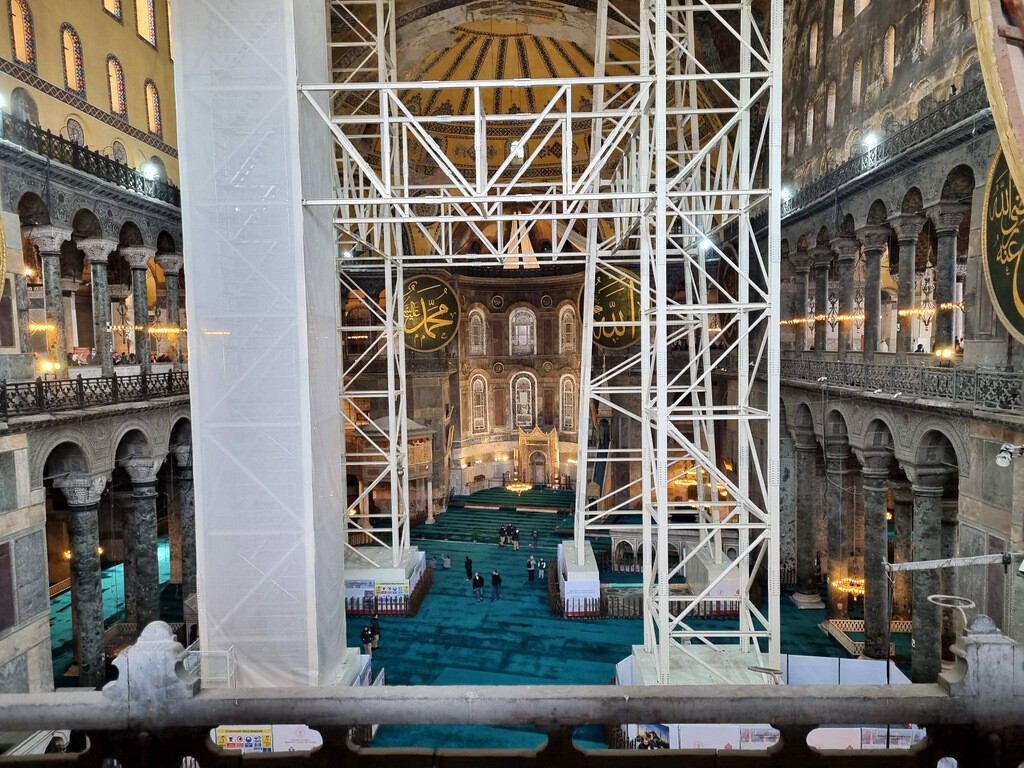
Hagia Sophia is not only the most famous mosque in Istanbul today, but also one of the most historically significant monuments in the world. Built in the 6th century during the reign of the Byzantine emperor Justinian I, it originally served as the main cathedral of Constantinople for nearly nine centuries. After the Ottoman conquest of the city in 1453, the building was converted into a mosque and remained the imperial mosque of the Ottoman capital for centuries.
Throughout its long history, Hagia Sophia has held a unique position in Istanbul’s religious and architectural landscape. During the Byzantine era it was the spiritual center of Eastern Christianity, and under the Ottomans it became one of the most revered mosques of the empire. In the Republican period it functioned as a museum for many decades before being reconverted into a mosque in 2020.
In recent years Hagia Sophia has developed a distinctive visitor structure that sets it apart from most mosques in Istanbul. The ground level now functions primarily as an active mosque, while the upper galleries are open to visitors with a ticket. These galleries allow visitors to see some of the surviving Byzantine mosaics that once decorated the great church, offering a rare glimpse into the building’s earlier history.
Large-scale restoration works also began toward the end of 2025 and are expected to continue for many years. Strengthening efforts and conservation work are currently underway inside the building, and visitors may notice scaffolding in parts of the central space. Despite these ongoing restorations, Hagia Sophia remains one of the most remarkable places to experience the layered history of Istanbul.
2. Blue Mosque
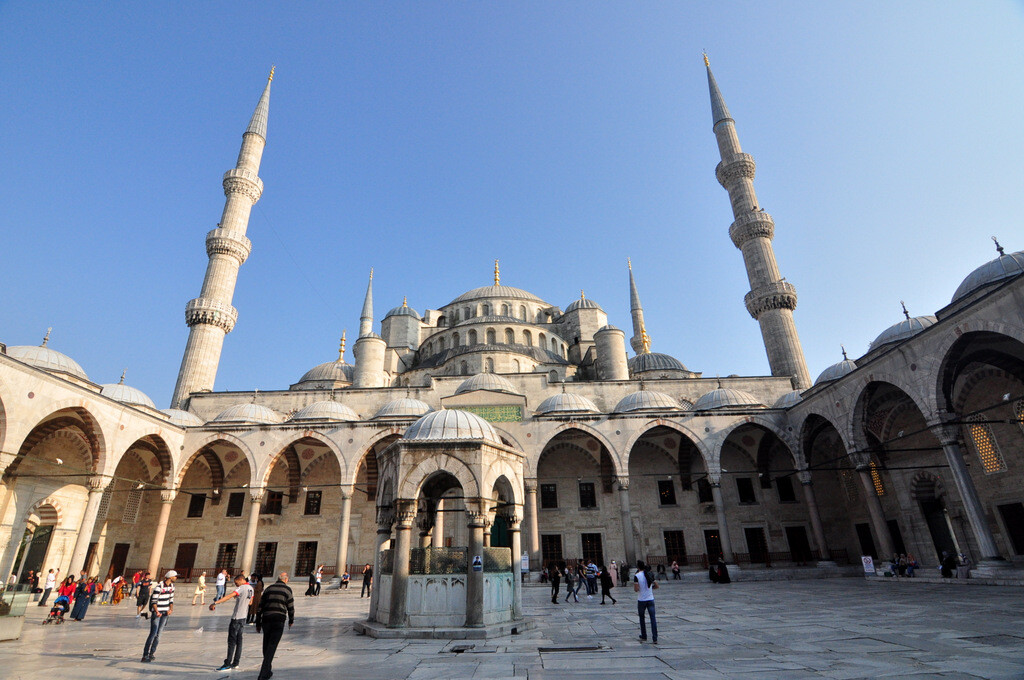
The Blue Mosque, officially known as the Sultan Ahmed Mosque, stands in the heart of Istanbul’s historic Sultanahmet district, directly facing Hagia Sophia across the old imperial square. Built in the early 17th century during the reign of Sultan Ahmed I, it remains one of the most recognizable landmarks of the Ottoman skyline with its cascading domes and six slender minarets.
From the outside, the mosque’s appearance does not immediately explain the name “Blue Mosque.” The nickname comes from the interior decoration, where thousands of hand-painted Iznik tiles cover the walls and galleries. Produced during the golden age of Ottoman ceramics, these tiles feature floral motifs and shades of blue that give the interior its distinctive atmosphere.
Because of its central location in Sultanahmet, the Blue Mosque attracts large numbers of visitors throughout the year. During the main tourist season, especially between April and October, lines can become quite long after the mid-morning hours. Visiting earlier in the morning or later in the afternoon usually offers a calmer experience.
As an active mosque, the building follows prayer schedules and modest dress rules more strictly than many smaller mosques in the city. Visitors are asked to remove their shoes before stepping onto the carpeted interior and to keep them either in the provided racks or in a small bag carried with them. Leaving shoes on the carpets is considered disrespectful.
The mosque also underwent a major restoration between 2015 and 2023. For several years much of the interior decoration was hidden behind scaffolding and protective coverings. Today most of the work inside has been completed, allowing visitors to once again see the famous blue Iznik tiles and painted dome decoration, while some restoration continues on parts of the exterior structure.
3. Süleymaniye Mosque
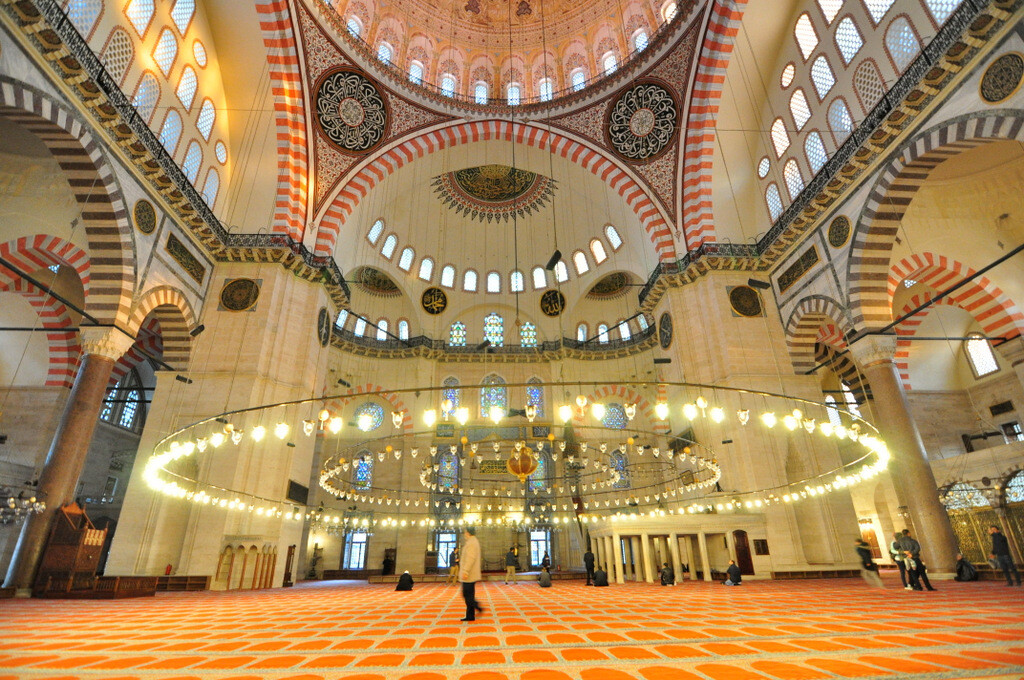
Perched on one of the highest hills of Istanbul’s Historic Peninsula, the Süleymaniye Mosque dominates the skyline overlooking both the Golden Horn and the Bosphorus. Completed in the mid-16th century, it is widely regarded as the masterpiece of Mimar Sinan, the chief architect of the Ottoman Empire and one of the greatest builders of the early modern world.
The mosque was commissioned by Sultan Suleiman the Magnificent, the most powerful ruler of the Ottoman Empire at its peak. Rather than creating a single monumental structure, Sinan designed the complex as an entire imperial külliye that once included madrasas, hospitals, kitchens, and caravanserais, reflecting the Ottoman idea that a mosque should serve both spiritual and social life.
Inside, the vast prayer hall creates a striking sense of balance and openness. The proportions of the central dome are carefully calculated so that the interior feels even larger than its actual size. Unlike later imperial mosques such as the Blue Mosque, the massive supporting pillars are pushed toward the sides and partially hidden within the galleries, allowing the central space to remain visually uninterrupted. As a result, the dome appears to float high above the hall while the entire interior gently draws visitors toward the center.
Sinan’s architectural vision blended influences from many traditions that shaped the Ottoman world—Byzantine structural engineering, Seljuk and Central Asian spatial ideas, and elements from Persian and Arab architecture. In Süleymaniye Mosque, these diverse influences come together in what is often considered the most refined expression of classical Ottoman architecture.
For many visitors the mosque offers one of the most impressive interiors in Istanbul. Standing beneath the vast dome, it is easy to understand why this building is often regarded as the architectural symbol of Suleiman’s imperial era—and why many local guides quietly consider it their favorite of the great Ottoman mosques.
4. Fatih Mosque
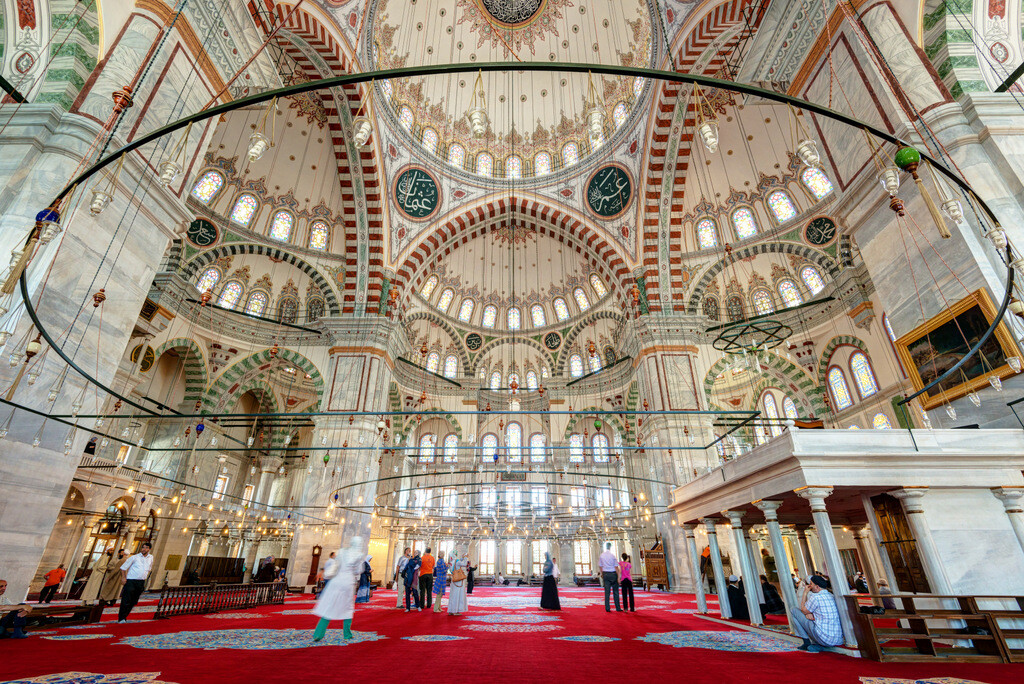
The Fatih Mosque stands near the center of Istanbul’s Historic Peninsula and occupies one of the most historically symbolic locations in the city. Commissioned by Mehmed II, known as Mehmed the Conqueror, the mosque was built in the late 15th century not long after the Ottoman capture of Constantinople. As the first major imperial mosque constructed by the Ottomans in their new capital, it represented both a political and spiritual statement for the emerging Ottoman city.
The site itself carries an even deeper historical layer. The mosque rises on the grounds of the Church of the Holy Apostles, which was once the second most important church in Byzantine Constantinople after Hagia Sophia. For centuries, Byzantine emperors such as Constantine the Great, Justinian I, and Heraclius were buried in the crypts of that church. By building his imperial mosque here, Mehmed II symbolically connected the new Ottoman capital with the long imperial history of the city.
Although the original mosque suffered damage from earthquakes over the centuries and was later rebuilt, the complex remains one of the most significant religious centers in Istanbul. The interior decoration, especially after recent restorations, presents a refined example of classical Ottoman mosque design.
Today the mosque is also known for its extensive cemetery (hazire), which contains the tomb of Mehmed the Conqueror himself. In addition to the sultan’s mausoleum, the surrounding burial grounds hold the graves of many prominent scholars and intellectuals from both the Ottoman and modern Turkish periods. Among them are the renowned Ottoman historian Halil İnalcık and the influential Byzantine scholar Semavi Eyice, whose resting places lie side by side here.
Because of this layered history—Byzantine imperial burials, the tomb of the conqueror of Constantinople, and the graves of leading historians—the Fatih Mosque complex remains one of the most meaningful spiritual and historical centers of the Historic Peninsula.
5. Bayezid Mosque

The Bayezid Mosque stands in Beyazit Square, one of the busiest historic crossroads of Istanbul, located between the Grand Bazaar and the main gate of Istanbul University. Commissioned by Sultan Bayezid II, the son of Mehmed the Conqueror, the mosque was completed at the beginning of the 16th century and represents an important stage in the development of early Ottoman architecture.
The mosque was built next to the Old Palace (Eski Saray), the first imperial residence constructed by the Ottomans after the conquest of Constantinople. Although the palace itself no longer survives, the area around today’s Beyazit Square once formed a major political and educational center of the early Ottoman capital. The monumental gate of Istanbul University now stands roughly where the palace complex once began.
Architecturally, Bayezid Mosque is often considered one of the most mature works of the pre-classical Ottoman period. Before the architectural achievements of Mimar Sinan defined the classical style in the 16th century, this mosque already displayed many of the spatial ideas that would later be perfected in imperial mosques such as Süleymaniye. Architectural historian Doğan Kuban described the building as a refined summary of 15th-century Ottoman mosque design.
Like many major Ottoman foundations, the mosque was originally part of a larger külliye, or religious complex. In addition to the mosque itself, the foundation included a madrasa where several prominent scholars and future chief jurists (şeyhülislams) taught, as well as a bathhouse located a short distance away. Today the historic bath building functions as a small museum where visitors can learn about Ottoman bathing culture.
Despite its central location near the Grand Bazaar, Bayezid Mosque is often overlooked by visitors rushing through the surrounding markets. Yet for those interested in the architectural evolution of Ottoman Istanbul, it offers an important glimpse into the transitional phase that preceded the great imperial mosques of the classical period.
6. Sultan Selim Mosque
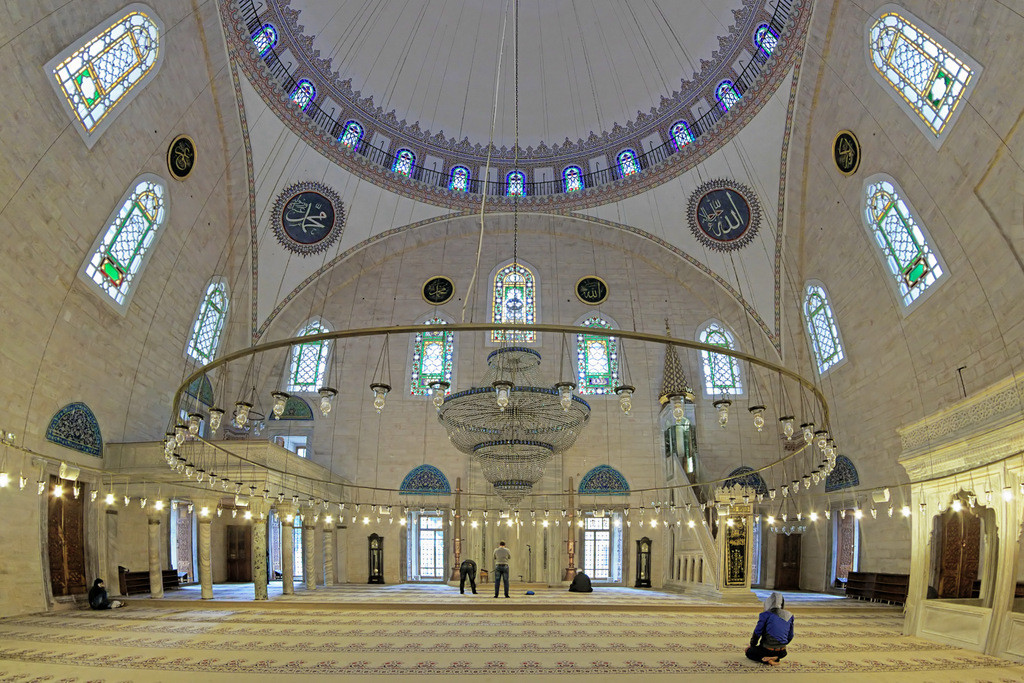
The Sultan Selim Mosque stands on the fifth hill of Istanbul’s Historic Peninsula, overlooking the Golden Horn from the ridge above the historic neighborhoods of Fener and Balat. Because of its elevated position, the mosque forms an important part of the historic skyline and can be seen from many points along the Golden Horn.
The mosque was commissioned by Sultan Suleiman the Magnificent in honor of his father, Selim I, who is often known in Western history as Selim the Resolute. Although Selim I ruled the Ottoman Empire for only eight years, his reign dramatically expanded its territory. During this short period, the Ottomans gained control of the holy cities of Mecca, Medina, and Jerusalem, transforming the empire into the leading power of the Islamic world.
Architecturally, the mosque represents an interesting transitional moment in Ottoman design. Built shortly before the classical period that would later be defined by the works of Mimar Sinan, it still reflects elements of earlier Ottoman mosque architecture that developed in cities such as Edirne. At the same time, the building hints at the spatial ambitions that would soon characterize the great imperial mosques of the 16th century.
The mosque’s single large dome dominates the interior space and gives the structure a bold silhouette when viewed from outside. Yet the interior decoration remains relatively restrained compared to later imperial mosques. This combination of a powerful architectural form and a modest decorative program gives the Sultan Selim Mosque a distinctive character within the evolution of Ottoman mosque architecture.
7. Mihrimah Sultan Mosque

The Mihrimah Sultan Mosque near Edirnekapi stands close to the historic Theodosian Land Walls, one of the most impressive defensive systems of Byzantine Constantinople. Built in the 16th century and designed by the great Ottoman architect Mimar Sinan, the mosque was commissioned for Mihrimah Sultan, the daughter of Sultan Suleiman the Magnificent and one of the most influential women of the Ottoman court.
Located on one of the highest points of the historic peninsula, the mosque has a commanding presence along the line of the old city walls. As visitors approach the area from the direction of Balat or Edirnekapi, the building appears almost like a vertical composition of windows rising toward the sky. Its tall drum and large central dome give the structure an elegant silhouette that stands out against the surrounding skyline.
Architectural historian Doğan Kuban once described the building as resembling a “curtained cage” because of the remarkable number of windows that surround the arches supporting the dome. This design floods the interior with light, making the prayer hall feel unusually bright compared with many other Ottoman mosques. The structure rises from a square base and gradually opens upward toward the dome, creating a sense of vertical elegance both inside and out.
Mihrimah Sultan actually commissioned two mosques designed by Sinan. The second one stands in Üsküdar, near the ferry port on the Asian side of Istanbul. While the Üsküdar Mosque is smaller and more integrated into the waterfront urban fabric, the Edirnekapi mosque near the land walls feels more monumental and dramatic due to its elevated position.
Today the mosque is often encountered by visitors exploring nearby historical sites such as the Chora Church (Kariye Mosque) and the Palace of the Porphyrogenitus (Tekfur Palace). Even for those who only see it from the outside while approaching the old city walls, the building’s graceful proportions and luminous design make it one of the most distinctive Ottoman mosques in this part of Istanbul.
8. Little Hagia Sophia Mosque
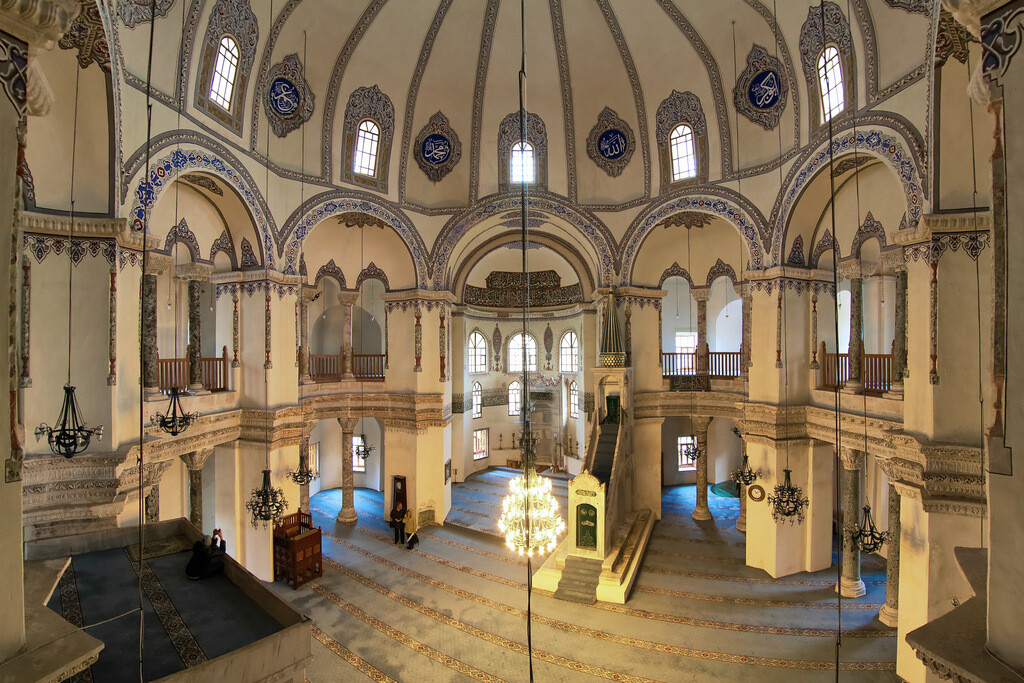
The Little Hagia Sophia Mosque is one of the oldest surviving religious buildings in Istanbul, yet many visitors pass by without realizing its significance. Located only a short walk from Sultanahmet, the structure was originally built in the 6th century as the Church of Saints Sergius and Bacchus during the reign of the Byzantine emperor Justinian I, placing it in the same historical era as Hagia Sophia.
The church was commissioned by Justinian and Empress Theodora, one of the most influential imperial couples of the Byzantine world. Some historians believe the project also carried a political dimension. According to Istanbul historian Stefanos Yerasimos, the building may have been intended as an imperial response to the aristocrat Anicia Juliana’s ambitious Church of St. Polyeuctus, reflecting the tension between the ruling dynasty and the old Roman aristocracy of Constantinople.
The dedication of the church to Saints Sergius and Bacchus may also reflect the religious balance within the empire. While Justinian positioned himself as a defender of Orthodox Christianity, Theodora was known to sympathize with Monophysite communities in the eastern provinces. Saint Sergius, widely venerated in Syria and other eastern regions, may therefore have represented a symbolic bridge between these theological worlds.
Architecturally, the building is remarkable for its octagonal plan, which creates a spatial experience very different from the basilica-style churches of the same period. Scholars often compare it to the Church of San Vitale in Ravenna, another structure built under Justinian that explores a similar centralized design.
After the Ottoman conquest, the church was converted into a mosque and gradually became known as Little Hagia Sophia because of its resemblance to the great basilica nearby. Today, the building retains the quiet atmosphere of a neighborhood mosque. Sitting in its courtyard or stepping inside the compact octagonal interior, visitors encounter a rare survivor from the early centuries of Byzantine Constantinople.
9. Kariye Mosque
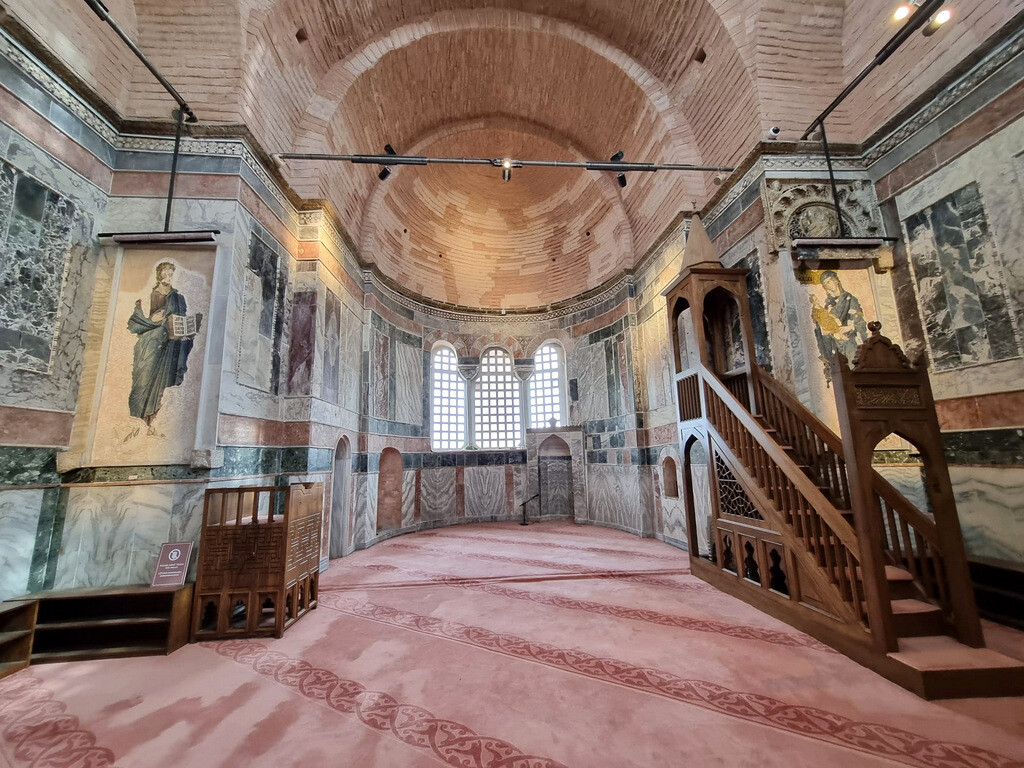
The Kariye Mosque, originally known as the Church of the Holy Saviour in Chora, stands near the Theodosian Land Walls on the western side of Istanbul’s Historic Peninsula. Although it lies outside the main tourist routes of Sultanahmet, the building is widely considered one of the most remarkable monuments of late Byzantine art.
The core of the present structure took shape during the Byzantine period, but the church reached its artistic peak in the early 14th century when the statesman and scholar Theodore Metochites sponsored an ambitious decorative program. The mosaics and frescoes created during this period belong to what historians often call the Palaiologan Renaissance, the final flowering of Byzantine artistic culture before the fall of Constantinople.
Architecturally, Kariye feels very different from the monumental scale of Hagia Sophia. Instead of a vast open interior, the church is composed of a sequence of smaller spaces—especially the inner and outer narthexes and the funerary chapel known as the parekklesion—each designed to frame narrative mosaics illustrating the lives of Christ and the Virgin Mary.
The building later served as a mosque during the Ottoman period and functioned as a museum for much of the 20th century before returning to mosque status in 2020. After a comprehensive restoration completed in the early 2020s, the interior lighting was significantly improved, making the famous mosaics and frescoes easier to appreciate than in the past.
Today, Kariye remains one of the essential stops for anyone interested in the Byzantine history of Istanbul. Despite having served as a mosque for centuries, the monument has preserved one of the richest surviving mosaic cycles of the Byzantine world, allowing visitors to encounter the artistic imagination of late Constantinople at remarkably close range.
10. Nuruosmaniye Mosque
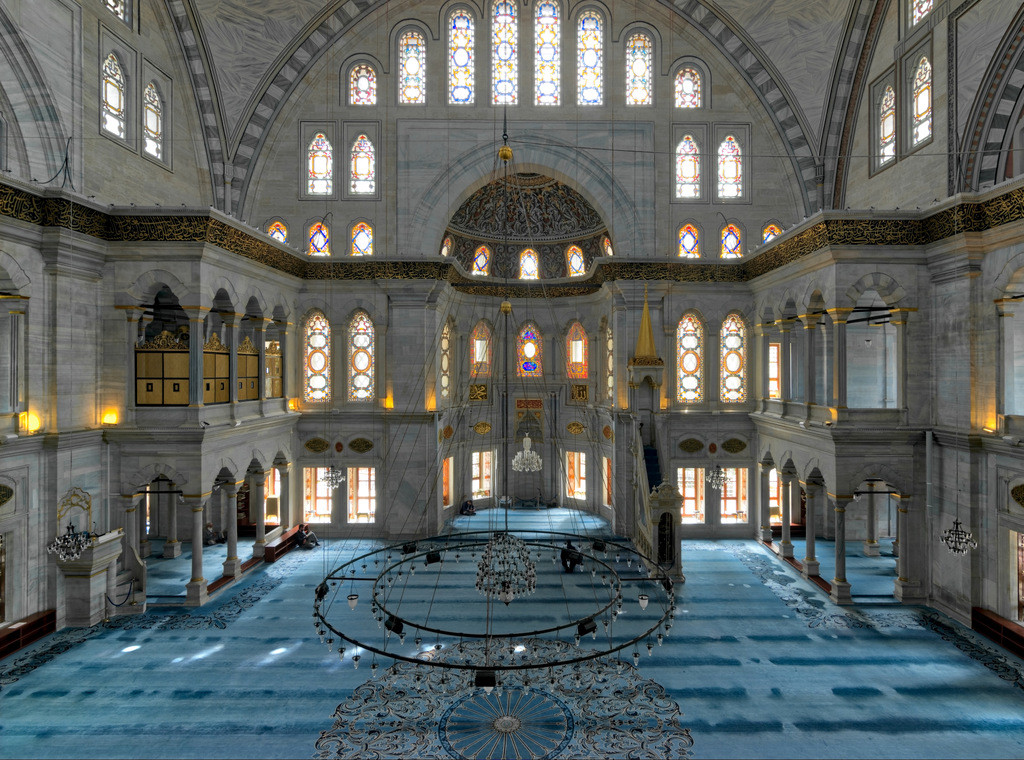
The Nuruosmaniye Mosque rises beside the main entrance of the Grand Bazaar, yet many visitors hurry past it without realizing they are standing before one of the most important architectural turning points in Ottoman history. Built in the mid-18th century, the mosque marks the moment when the classical style of the great imperial mosques began to give way to new artistic influences.
Commissioned by Sultan Mahmud I and completed during the reign of Osman III, the building represents the emergence of what historians often call the Ottoman Baroque. During this period, Ottoman architecture began incorporating stylistic elements inspired by European Baroque forms while still preserving the essential structure of a traditional imperial mosque.
The mosque’s name, meaning “The Light of Osman,” reflects the luminous quality of its interior. Large windows surrounding the prayer hall allow daylight to fill the space, creating an atmosphere noticeably brighter than many earlier Ottoman mosques.
Architecturally, the most unusual feature is the semi-circular courtyard, a dramatic departure from the rectangular porticoed courtyards typical of the classical Ottoman period. This distinctive design immediately sets Nuruosmaniye apart from earlier imperial mosques built during the era of Mimar Sinan.
Today thousands of people cross the mosque’s courtyard while heading to the Grand Bazaar. Yet stepping inside reveals a refined and surprisingly calm interior. The black-grounded gold calligraphy panels and the striking contrast between the warm decorative tones and the turquoise prayer carpets create one of the most elegant mosque interiors in the Old City.
11. New Mosque

The New Mosque (Yeni Cami) stands at the heart of Eminönü, one of the busiest transportation and commercial hubs of historic Istanbul. Despite its name, the mosque is more than three centuries old and forms one of the most recognizable landmarks along the Golden Horn waterfront.
Construction began in 1597 under Safiye Sultan, the powerful mother of Sultan Mehmed III. The project was interrupted for decades due to political and economic difficulties before it was finally completed in 1665 by another Valide Sultan, Turhan Hatice Sultan. The long construction process reflects the turbulent period often described as the “Sultanate of Women,” when royal mothers played a major role in imperial politics.
Architecturally, the mosque belongs to the later phase of the classical Ottoman tradition, with its cascading domes rising above a large central dome. Like other imperial foundations, it was designed as part of a larger külliye, combining religious, social, and commercial functions.
The most famous surviving element of this complex is the adjacent Spice Bazaar (Mısır Çarşısı). Built as part of the mosque’s foundation, the bazaar generated rental income that supported the maintenance of the mosque and its charitable services.
Today the square between the mosque and the bazaar is one of the liveliest places in Istanbul. Locals and visitors gather here throughout the day, making Eminönü one of the city’s most recognizable historic marketplaces. Stepping inside the mosque, however, offers a surprisingly calm interior that contrasts sharply with the energy of the square outside.
12. Şehzade Mosque
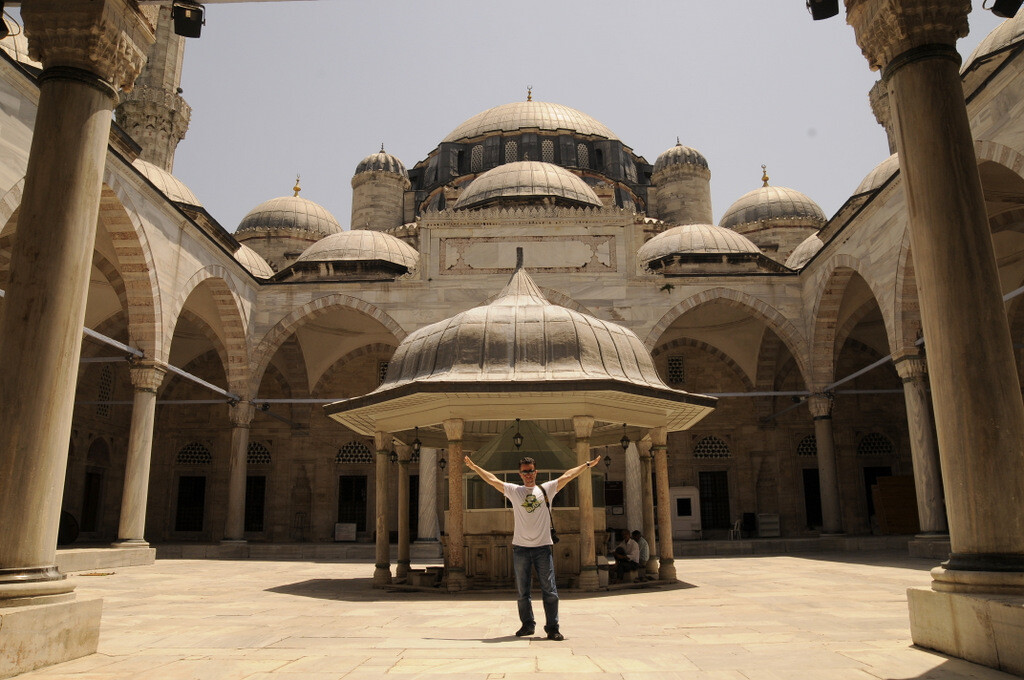
The Şehzade Mosque (Mosque of the Prince) stands in the central part of Istanbul’s Historic Peninsula, not far from the monumental Valens Aqueduct, one of the great engineering works of Roman Constantinople. Built in the mid-16th century, the mosque represents a crucial moment in the development of classical Ottoman architecture.
Sultan Suleiman the Magnificent commissioned the mosque in memory of his beloved son Prince Mehmed, who died of smallpox at a young age. The prince had been widely expected to become the next ruler of the empire, and his sudden death deeply affected the Sultan.
Some historians suggest that Suleiman may have originally intended the mosque for himself. After the prince’s death, however, the project became a memorial complex centered around Mehmed’s tomb, which stands in the garden behind the mosque.
The building was designed by Mimar Sinan early in his career as chief imperial architect. Sinan later described the mosque as his “apprentice work,” where he experimented with a central dome supported by four semi-domes in a highly balanced composition.
Today the mosque is admired not only for this elegant symmetry but also for the refined details of its architecture. The carefully decorated minarets and the harmonious courtyard create a serene atmosphere, reflecting the emotional story behind one of Sinan’s earliest masterpieces.
13. Rüstem Pasha Mosque

The Rüstem Pasha Mosque is tucked away in the busy market streets near the Spice Bazaar in Eminönü. Hidden among rows of small shops and narrow alleys, the mosque is often overlooked by visitors rushing through the commercial district. Yet for those who manage to find it, the building reveals one of the most impressive artistic interiors in Istanbul.
Commissioned in the 1560s by Rüstem Pasha, the powerful Grand Vizier and son-in-law of Sultan Suleiman the Magnificent, the mosque reflects the wealth and influence of one of the most prominent statesmen of the Ottoman Empire.
The structure was designed by Mimar Sinan, who solved the challenge of the crowded urban setting by elevating the mosque above street level. The building stands on a platform of vaulted shops, which historically generated rental income to support the mosque’s foundation.
Inside, however, the focus shifts entirely to decoration. The walls are covered with some of the finest Iznik tiles ever produced during the golden age of Ottoman ceramics in the 16th century.
For many visitors interested in art history, the mosque feels almost like a small museum of Iznik tilework. It is not uncommon to see art students quietly sketching the intricate floral designs, studying the patterns that once defined the peak of Ottoman ceramic artistry.
14. Eyüp Sultan Mosque
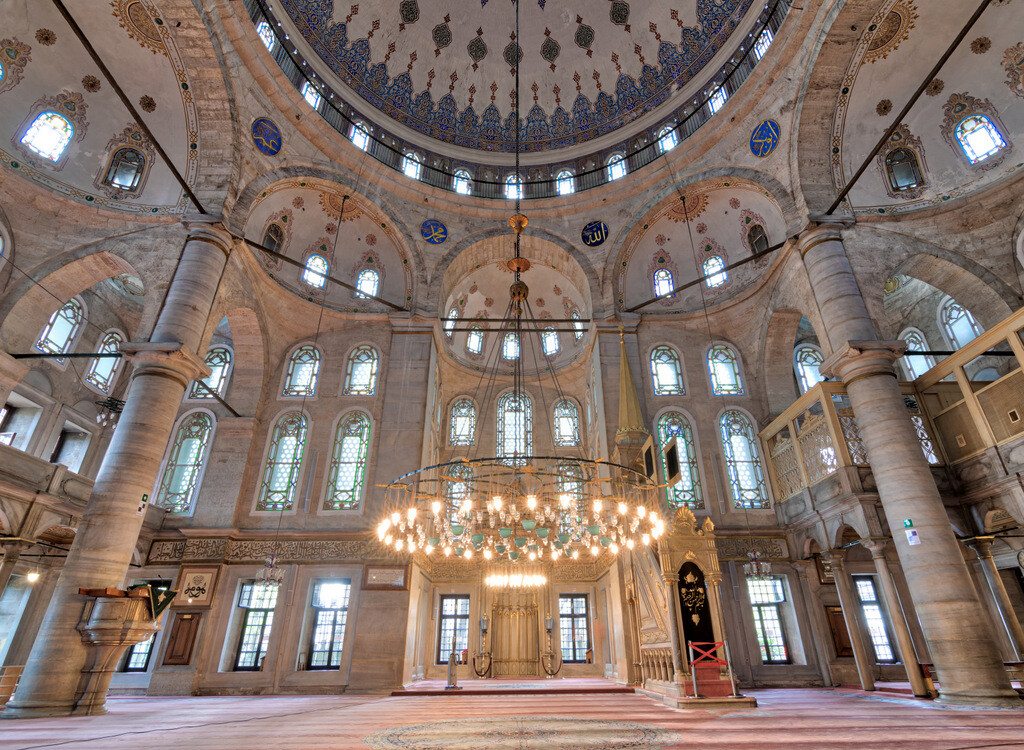
The Eyüp Sultan Mosque is widely regarded as the most sacred Islamic site in Istanbul. Located along the upper shores of the Golden Horn, beyond the historic city walls, the complex has long been a place of pilgrimage and devotion for the city’s Muslim community.
The mosque is dedicated to Abu Ayyub al-Ansari, a close companion of the Prophet Muhammad who died during the Arab siege of Constantinople in the 7th century. After the Ottoman conquest in 1453, Sultan Mehmed II ordered the construction of the first imperial mosque of the new Ottoman capital on the site where his tomb was believed to have been discovered.
Although the original 15th-century mosque was later damaged by earthquakes, the present structure largely dates to the 18th-century reconstruction, reflecting the lighter and more decorative character of the Ottoman Baroque period.
Despite its relatively modest scale, the mosque complex carries enormous symbolic importance. The adjacent mausoleum of Abu Ayyub al-Ansari, covered with richly decorated tiles, remains the spiritual focus of the site and continues to attract a steady stream of visitors and worshippers.
Walking through the courtyard today reveals an atmosphere very different from the touristic energy of Sultanahmet. The steady flow of local visitors, quiet prayers, and the surrounding historic cemetery give Eyup a distinct spiritual character that has shaped the identity of this district for centuries.
15. Laleli Mosque
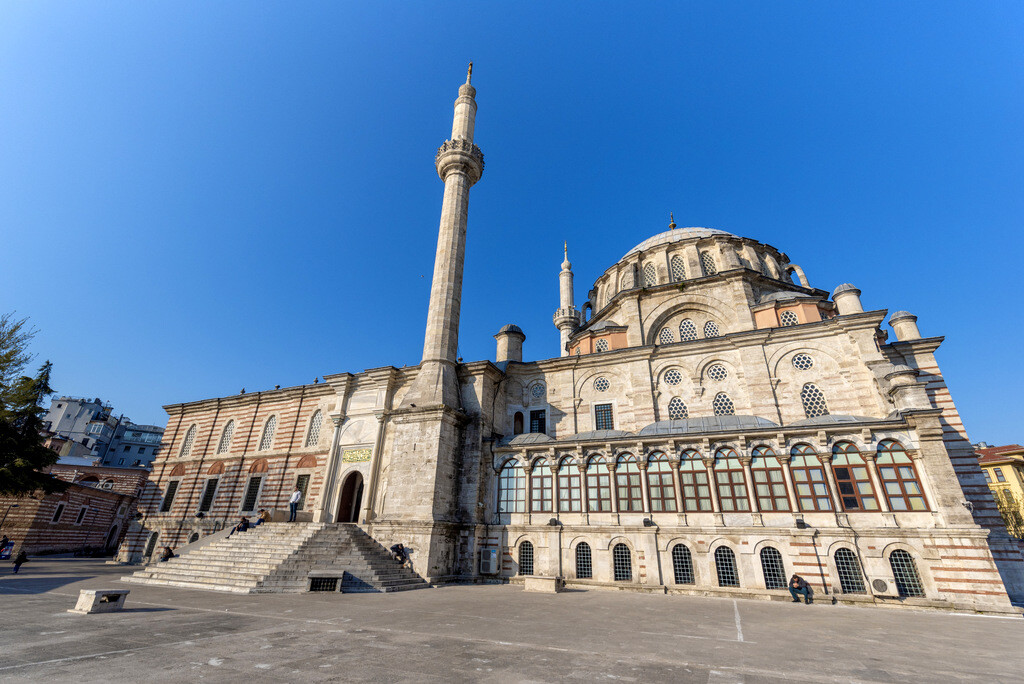
The Laleli Mosque stands in one of the busiest districts of Istanbul’s Historic Peninsula, surrounded today by textile shops, hotels, and the constant movement of commercial life. Rising above this crowded urban setting, the mosque offers a surprisingly calm courtyard that feels removed from the busy streets below.
Commissioned by Sultan Mustafa III in the 18th century, the mosque represents an elegant phase of Ottoman Baroque architecture, when traditional Ottoman forms began to blend with decorative influences coming from Europe.
Despite its Baroque ornamentation, the building also carries an architectural idea rooted in the classical Ottoman tradition. Its central dome rests on an octagonal support system, a spatial concept famously perfected by Mimar Sinan in his masterpiece, the Selimiye Mosque in Edirne.
The mosque is built on a massive elevated platform containing a vaulted bazaar underneath. This design not only raises the prayer hall above the noise of the surrounding streets but also reflects the Ottoman tradition of financing religious foundations through commercial income.
For visitors who may not have time to travel to Edirne, Laleli Mosque offers a rare opportunity to experience Sinan’s octagonal dome concept within Istanbul itself—combined with the refined decorative language of the empire’s later architectural period.
16. Pertevniyal Valide Sultan Mosque

The Pertevniyal Valide Sultan Mosque stands in Aksaray, one of the busiest transportation hubs of Istanbul’s Historic Peninsula. Surrounded today by tram lines, major roads, and constant traffic, the mosque often appears suddenly in the middle of the urban chaos, catching the attention of passersby with its unusually elaborate façade.
Commissioned in the 19th century by Pertevniyal Valide Sultan, the mother of Sultan Abdulaziz, the mosque reflects a period when Ottoman architecture was increasingly influenced by European artistic trends.
Unlike the balanced simplicity of the classical Ottoman mosques, this building presents a striking eclectic style, blending elements of Baroque, Neo-Classical, and Neo-Gothic architecture. The mosque was designed by members of the Balyan family, the celebrated dynasty of imperial architects who shaped many of Istanbul’s most prominent buildings during the empire’s final century.
Rather than relying on monumental scale, the mosque attracts attention through its rich decorative stonework. The intricately carved façades and entrance portals create a highly ornamental appearance, giving the structure a distinctive character among Istanbul’s historic mosques.
Standing in the middle of modern traffic today, the mosque offers a fascinating glimpse into the late Ottoman architectural imagination, when traditional forms were being reinterpreted through new stylistic influences coming from the West.
17. Sokullu Mehmed Pasha Mosque
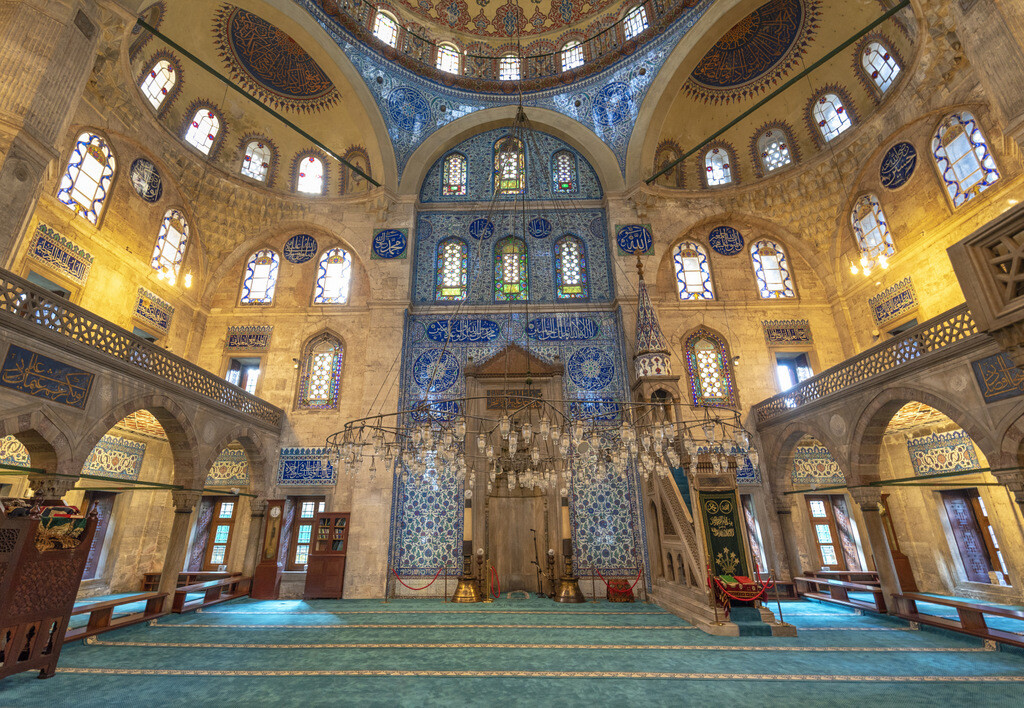
The Sokullu Mehmed Pasha Mosque is quietly hidden in the Kadırga neighborhood, just a short walk downhill from the Hippodrome of Sultanahmet. Despite its close proximity to one of the busiest tourist areas of Istanbul, the mosque remains remarkably peaceful and is often overlooked by visitors.
The complex was built in 1571 for Sokullu Mehmed Pasha, one of the most powerful statesmen in Ottoman history, who served as Grand Vizier under three sultans. The mosque was commissioned by Ismihan Sultan, the daughter of Sultan Selim II and the wife of Sokullu Mehmed Pasha.
Designed by the master architect Mimar Sinan, the building demonstrates his ability to solve complex urban challenges. Constructed on a steep hillside, the mosque sits above a lower level that originally functioned as a medrese (Islamic school), allowing the entire complex to fit harmoniously into the slope of the neighborhood.
Inside, the mosque is celebrated for its extraordinary collection of Iznik tiles, widely considered among the finest preserved examples of 16th-century Ottoman ceramic art. The decorative program gives the interior a luminous quality that immediately captures the attention of visitors.
Another remarkable feature lies within the marble decoration of the prayer hall, where small fragments believed to come from the Black Stone of the Kaaba are embedded. Together with its refined proportions and rich decoration, the mosque remains one of the most rewarding hidden architectural treasures of classical Ottoman Istanbul.
18. Gül Mosque
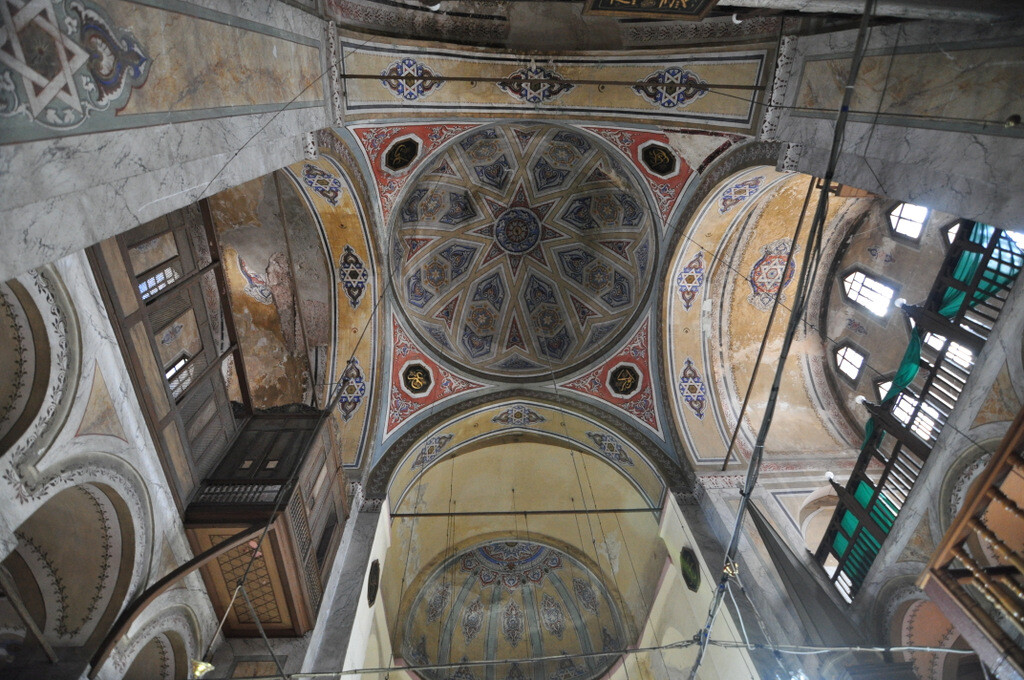
The Gül Mosque stands in the historic Balat–Ayakapı area, near the shores of the Golden Horn. Surrounded today by narrow streets and traditional neighborhoods, the building immediately stands out with its massive brick structure, revealing its origins as a Byzantine church rather than an Ottoman mosque.
Most scholars identify the building as the Church of Saint Theodosia, constructed in the 11th century during the Middle Byzantine period. The church was dedicated to Saint Theodosia, a Christian woman who became a martyr during the Iconoclast controversy of the 8th century after defending the use of sacred icons.
Over time the church gained a reputation as a place associated with healing and devotion. Pilgrims visited the site seeking spiritual protection, making it an important religious center in the northern districts of Byzantine Constantinople.
Following the Ottoman conquest, the building was converted into a mosque and gradually became known as the Gül Mosque, a name traditionally linked to the roses said to have decorated the church on the day of the conquest.
Today the structure remains one of the most atmospheric surviving Byzantine monuments in Istanbul. Located along walking routes that explore Fener, Balat, and Cibali, it continues to reflect the layered cultural history of this lesser-visited part of the city.
19. Arap Mosque

The Arap Mosque is hidden among the busy commercial streets of Karaköy, surrounded today by hardware stores and small workshops. At first glance, the building looks very different from the classical Ottoman mosques of Istanbul, and its unusual appearance immediately hints at a much older origin.
The structure was originally built in the 13th or early 14th century as the Church of San Domenico, constructed by Dominican monks during the period when Genoese merchants controlled the Galata district. At that time, the northern shore of the Golden Horn—known as Pera—was home to several Italian trading colonies that played a major role in the commercial life of Constantinople.
Architecturally, the building reflects medieval Gothic design, making it one of the most distinctive historic structures in Istanbul. Its square minaret, for example, was originally the church’s bell tower, giving the building a silhouette very different from the slender minarets typically associated with Ottoman mosques.
After the Ottoman conquest, the church was converted into a mosque. In the late 15th century, the building was allocated to Andalusian Muslims who had fled Spain during the Spanish Inquisition, and the mosque gradually became known as the Arap Mosque.
Today the structure remains one of the most unusual monuments in Istanbul. Walking through the narrow streets of Karaköy and suddenly encountering a Gothic church that later became a mosque offers a striking reminder of the city’s layered and multicultural past.
20. Kılıç Ali Pasha Mosque

The Kılıç Ali Pasha Mosque stands near the Tophane tram stop along the Bosphorus shoreline in Karaköy. Surrounded today by the lively cafés and galleries of this rapidly transforming neighborhood, the mosque remains a quiet reminder of Istanbul’s maritime past.
The complex was commissioned in the late 16th century by Kılıç Ali Pasha, one of the most powerful admirals of the Ottoman navy. Originally of Italian origin and known in Europe as Occhiali, he rose through the ranks of the empire and eventually became Grand Admiral (Kapudan Pasha) during the height of Ottoman naval power.
The mosque was designed by Mimar Sinan, the chief architect of the Ottoman Empire in the 16th century. Architecturally, it is particularly notable because its interior proportions recall the spatial arrangement of a Byzantine basilica, especially Hagia Sophia. Some historians suggest that Kılıç Ali Pasha specifically asked Sinan to create a design inspired by the famous Byzantine monument.
The mosque forms part of a larger complex that also includes the Kılıç Ali Pasha Hammam, one of the most impressive historical bathhouses in Istanbul. Together these structures once served the needs of the sailors and maritime communities of the nearby harbor.
Today the mosque remains one of the most refined examples of Sinan’s architectural mastery. Its harmonious proportions and serene interior create an atmosphere that continues to impress visitors exploring the historic waterfront of Karaköy.
21. Nusretiye Mosque

The Nusretiye Mosque stands in the Tophane district, directly along the tram line connecting Karaköy and Kabataş. Because of its prominent location near the waterfront, many visitors notice its elegant silhouette while passing by, yet few realize the powerful historical story behind this striking monument.
The mosque was commissioned by Sultan Mahmud II and completed in 1826, a year that marked one of the most dramatic turning points in Ottoman history. Its name, meaning “Victory,” commemorates the Sultan’s successful abolition of the Janissary corps, an event known as the Auspicious Incident (Vaka-i Hayriye).
Architecturally, the building reflects the transformation of Ottoman design during the 19th century. The mosque displays the refined decorative language of the late Ottoman Baroque style, a period when the empire increasingly incorporated Western artistic influences into its architectural vocabulary.
One of its most distinctive features is the remarkable elegance of its slender minarets, among the most delicate in Istanbul. The rich stone carvings and ornate façade create a highly decorative appearance that contrasts sharply with the more restrained geometry of earlier Ottoman mosques.
Today the Nusretiye Mosque remains an important landmark of the Tophane waterfront. Standing beside the busy tram line and the modern developments of the area, it continues to reflect a moment when the Ottoman Empire was undergoing profound political and cultural transformation.
22. Dolmabahçe Mosque
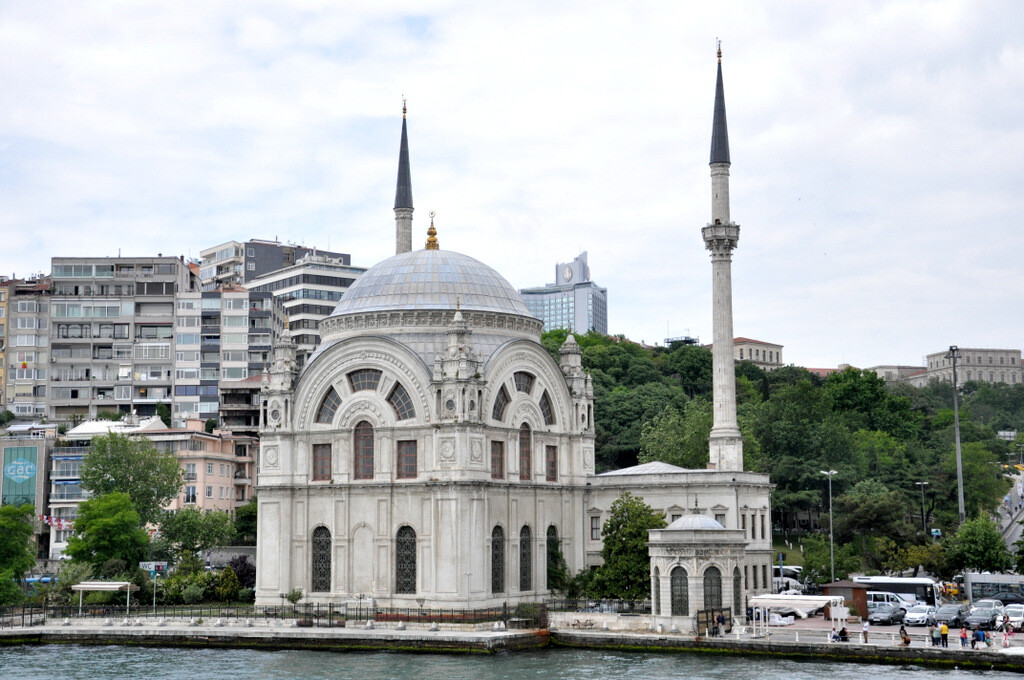
The Dolmabahçe Mosque, also known as the Bezmialem Valide Sultan Mosque, stands directly on the Bosphorus waterfront next to Dolmabahçe Palace. Because of its prominent location along the shoreline, most visitors notice the mosque while walking between Kabataş and the palace complex.
The mosque was commissioned by Bezmialem Valide Sultan, the mother of Sultan Abdulmecid I, and completed in the mid-19th century during a period when the Ottoman Empire was increasingly adopting Western architectural influences. Its construction was closely connected with the development of the new imperial residence at Dolmabahçe.
Architecturally, the building differs significantly from the classical Ottoman mosque tradition. Designed by members of the Balyan family, the structure reflects a blend of Neo-Classical and Empire-style elements, giving it an appearance that resembles a European palace pavilion as much as a traditional mosque.
One of the most distinctive features of the building is its large arched windows, which allow natural light from the Bosphorus to fill the prayer hall. The mosque consists of a single main dome accompanied by an adjacent imperial pavilion, while the slender minarets stand beside the entrance structure.
Today the Dolmabahçe Mosque forms an elegant architectural ensemble with the palace next door. Together they reflect the final phase of Ottoman imperial architecture, when traditional forms were reinterpreted through a strong dialogue with European design.
23. Ortaköy Mosque

The Ortaköy Mosque, officially known as the Büyük Mecidiye Mosque, stands at one of the most scenic locations along the Bosphorus. Positioned directly on the waterfront in the lively square of Ortaköy, the mosque forms one of the most recognizable views of Istanbul, especially with the Bosphorus Bridge rising behind it.
The mosque was commissioned by Sultan Abdulmecid I in the mid-19th century, during a period when the Ottoman Empire was increasingly embracing Western architectural influences. Like the nearby Dolmabahçe Palace, the building reflects the empire’s broader cultural transformation during this era.
Designed by Garabet Balyan and his son Nigogayos Balyan, the mosque is a refined example of Neo-Baroque Ottoman architecture. Its elegant façade, detailed stone carvings, and slender twin minarets create a delicate structure that appears almost like a jewel set against the waters of the Bosphorus.
Inside, large windows allow natural light to fill the prayer hall while framing views of the Bosphorus outside. The interior also features calligraphic panels created by Sultan Abdulmecid himself, who was known for his interest in art and calligraphy.
Today the mosque remains one of the most photographed landmarks in Istanbul. Visitors often combine a visit here with a walk along the Bosphorus toward Bebek, enjoying one of the most beautiful waterfront routes in the city.
24. Beylerbeyi Mosque
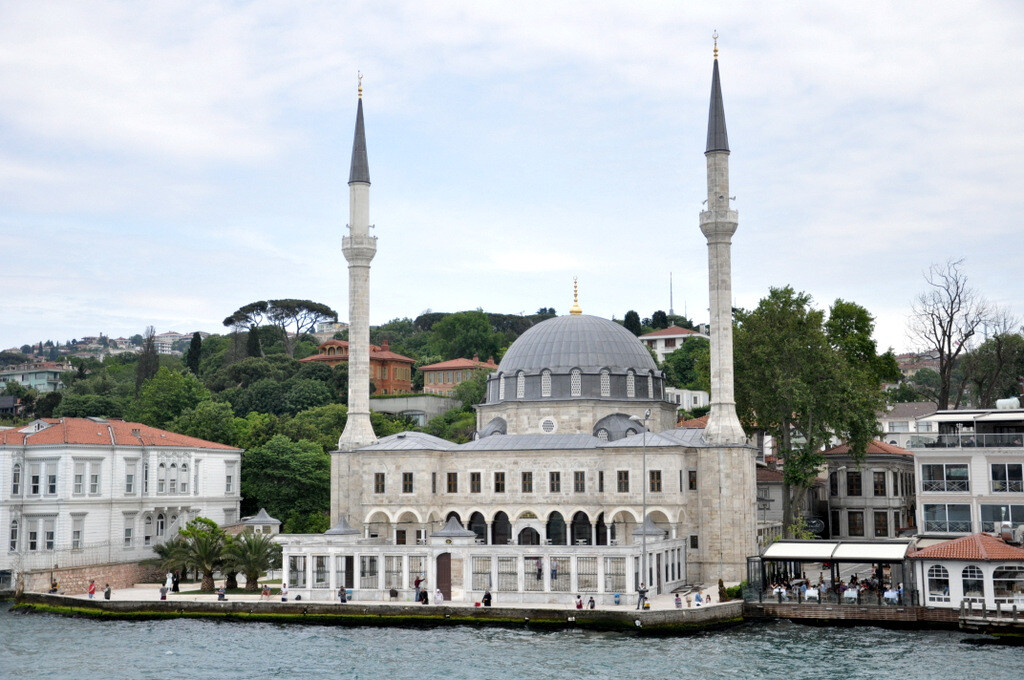
The Beylerbeyi Mosque, also known as the Hamid-i Evvel Mosque, stands gracefully along the Asian shores of the Bosphorus in the quiet neighborhood of Beylerbeyi. Located just beside the famous Beylerbeyi Palace, the mosque forms part of one of the most picturesque waterfront settings in Istanbul.
Commissioned in 1778 by Sultan Abdulhamid I, the mosque was built in memory of his mother. Interestingly, the structure predates the nearby Beylerbeyi Palace, which was constructed nearly a century later during the reign of Sultan Abdulaziz.
Architecturally, the mosque reflects the refined elegance of the Ottoman Baroque period. Like several Bosphorus mosques built during the 18th and 19th centuries, it belongs to the tradition sometimes described as a “waterfront mosque,” designed to harmonize with the surrounding maritime landscape.
One of the most distinctive features of the building is its imperial lodge (hünkar mahfili) facing the sea. Unlike the typical arrangement in earlier Ottoman mosques, the lodge here is positioned in a way that overlooks the prayer hall almost like a balcony, creating a theatrical spatial effect inside the building.
Today the Beylerbeyi Mosque remains one of the most elegant historic monuments on the Bosphorus. Its peaceful setting and refined proportions make it a memorable stop for visitors exploring the quieter neighborhoods of Istanbul’s Asian side.
25. Çamlıca Mosque
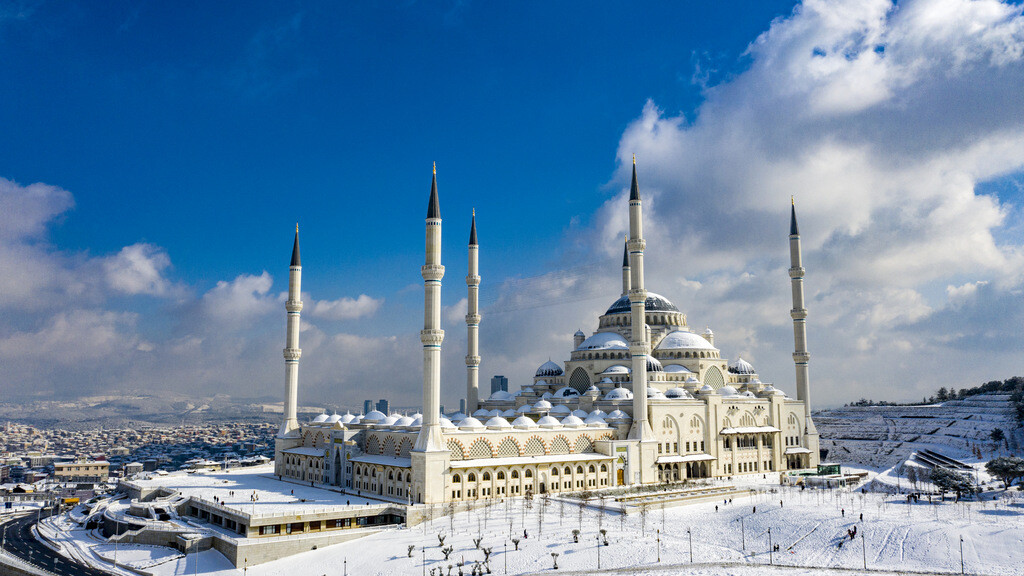
The Çamlıca Mosque is the newest and most visible addition to Istanbul’s skyline. Perched on Çamlıca Hill, the highest point on the Asian side of the city, its massive silhouette can be seen from many parts of Istanbul, including distant points along the Bosphorus and even sections of the Historic Peninsula.
Completed in 2019, the mosque is the largest in Turkey. Although it is a modern construction, its design intentionally draws inspiration from the classical Ottoman imperial mosque tradition. With its grand central dome, cascading semi-domes, and six minarets, the structure echoes the architectural language of historic monuments such as the Sultanahmet (Blue Mosque) while using contemporary engineering techniques.
During my tours, this mosque frequently becomes a topic of curiosity. When guests look across the skyline and notice the enormous structure rising above the hills of the Asian side, they often ask which mosque it is. That question usually opens the door to a conversation about how modern Istanbul continues to reinterpret the monumental architectural tradition of the Ottoman era.
The mosque is also part of a much larger cultural complex. Beneath the main structure are exhibition halls, a library, and the Museum of Islamic Civilizations, which houses an impressive collection of artifacts related to Islamic history and art.
For visitors exploring the Asian side of Istanbul, Çamlıca Mosque offers a fascinating contrast to the historic sanctuaries of the Old City. Its vast terraces also provide one of the most panoramic views of the Bosphorus and the Istanbul skyline, making it both a place of worship and a remarkable viewpoint over the city.
Conclusion
Istanbul is home to hundreds of mosques, many of which remain hidden in the narrow streets of historic neighborhoods or quietly standing in residential districts across the city. This guide focuses on some of the most significant and memorable ones—structures that reveal how the Ottoman Empire expressed power, faith, and artistic ambition through architecture.
From the monumental domes of Süleymaniye Mosque and Sultanahmet Mosque, to the intimate neighborhood atmosphere of places like Sokullu Mehmed Pasha Mosque, and finally to modern landmarks such as Çamlıca Mosque, each building represents a different chapter in the city’s long story.
Exploring these mosques is not only about architecture. It is also about understanding how Istanbul grew—from the imperial capital of an empire to the vibrant metropolis it is today. The domes and minarets that shape the skyline are reminders that this city has always been a meeting point of faith, history, and daily life.
And as you move from one mosque courtyard to another, you will notice something remarkable: each one offers a slightly different view of the city—sometimes overlooking the Golden Horn, sometimes the Bosphorus, and sometimes the quiet streets of an old neighborhood.
Together, they form one of the most distinctive skylines in the world.

Serhat,
Again, I am in awe of your research and writing, this is such a beautiful and informative article. Thank you for writing this.
I have a question though, when Churches convert into Mosques, are their mosaics removed or are they covered as pictures, idols, and paintings of living beings are prohibited in mosques.?
Moreover, if they are covered then do they get uncovered for visitors during any specific timings maybe?
Hi Moon, thanks for the feedback. Yes, two museums in Turkey have been turned into mosques again. One of them is Hagia Sophia and the other is Kariye Museum (former Chora Church).
The status of the mosaics in Hagia Sophia is not clear at the moment. Only a mosaic (Virgin and the Child) in the center of Hagia Sophia is covered with a curtain. The remaining mosaics are open.
The Chora Museum was converted into a mosque after Hagia Sophia. However, as the walls of Chora were completely covered with mosaics, it was not decided exactly what to do.