Walking is the best way to understand a city—but in Istanbul, it becomes essential.
As a licensed Istanbul tour guide with over 20 years of experience, I have seen how the city reveals itself differently when explored on foot. Beyond the major landmarks, it is the streets, transitions, and everyday details that truly define the experience.
Istanbul is often introduced as a city that connects two continents. While this is geographically true, it only captures part of the story. What makes Istanbul unique is not just its position between Europe and Asia, but the way these worlds coexist within the same urban space—sometimes within a single walk.
In many historic cities such as Rome, Florence, Barcelona, or Paris, walking is important. In Istanbul, it is transformative.
A short route can take you from the imperial setting of Sultanahmet to the commercial streets of Galata, and then to the waterfront life of Karaköy—each step revealing a different layer of the city.
This guide brings together the walking routes I have refined over years of guiding, combined with a lifetime of experiencing Istanbul as a local.
Best Walking Routes in Istanbul (2026)
Exploring Istanbul on foot is not about covering distance—it is about understanding transitions.
The routes in this guide are not presented as isolated areas, but as connected experiences that reflect how the city unfolds. Each walk follows a natural progression, moving from one layer of Istanbul to another.
You will begin with the monumental core of the Old City, continue through the community life of the Golden Horn, and then step into the energy of Beyoğlu. From there, the Bosphorus introduces a slower rhythm, gradually extending toward quieter northern districts. Crossing to the Asian side offers a more local perspective, before the route settles into the calm neighborhoods of Üsküdar.
Taken together, these walks form a complete experience of Istanbul—one that cannot be understood through landmarks alone, but through the movement between them.
1. Old City Walk (Sultanahmet – Eminönü)

Sultanahmet is where Istanbul begins to make sense.
Not just because it holds the city’s most famous landmarks, but because this is where the layers of history are still visible at the surface. Within a few minutes of walking, you move between the worlds of Byzantium and the Ottomans—sometimes without even realizing it.
Standing in Sultanahmet Square, you are surrounded by monuments that defined entire eras: the Hagia Sophia, the Blue Mosque, and the remains of the ancient Hippodrome of Constantinople. But what makes this place truly unique is not just what you see—it is what lies beneath and between these structures.
For more than 2,000 years, this area has been the political and ceremonial center of the city. The square you walk through today was once part of the Great Palace of Constantinople, and the road you follow—Divanyolu—was the continuation of the ancient Mese, the main artery of the Byzantine capital. This was the path emperors took after their victories, entering the city through monumental gates and moving toward the heart of power.
As you begin walking up Divanyolu, the atmosphere slowly shifts. The open imperial space of Sultanahmet gives way to a more intimate rhythm—tram bells, small cafés, Ottoman tombs, and the steady presence of the Column of Constantine at Çemberlitaş. You are no longer just visiting monuments; you are moving through what used to be the daily life corridor of an empire.
From here, the route naturally pulls you toward the Grand Bazaar. Even if you don’t fully explore its interior, passing through one of its gates marks a transition. The controlled grandeur of imperial architecture gives way to something more chaotic, more alive.
Exiting the bazaar toward Mahmutpaşa, the city changes again. The streets narrow. The pace accelerates. The voices get louder.
This is where centuries of trade still echo through the same streets that once connected the Byzantine forums to the Golden Horn. The downhill walk along Uzun Çarşı—known in Byzantine times as Makros Embolos—has carried merchants, goods, and stories toward the harbor for over a millennium.
Somewhere along this descent, if you step slightly off the main flow, you may find the Rüstem Pasha Mosque—quietly hidden above the chaos, decorated with some of the finest İznik tiles in the city. It feels almost like a pause button in the middle of movement.
And then, suddenly, the streets open up as you arrive in Eminönü.
After the dense fabric of the Old City, the space expands into light, water, and motion. The smell of the sea replaces the dust of the streets. Ferries cross the Bosphorus. The silhouette of the Galata Tower appears across the Golden Horn.
This is where the walk naturally ends—not with a monument, but with a sense of arrival.
2. Golden Horn Walk (Fener – Balat – Eyüp)

If the Old City represents power, the Golden Horn represents memory.
Leaving behind the imperial scale of Sultanahmet, this walk takes you into a very different layer of Istanbul—one shaped not by palaces and monuments, but by communities, traditions, and everyday life that have evolved over centuries.
The route begins around Cibali and Fener, where the rhythm of the city immediately slows down. Narrow streets replace wide avenues, and instead of monumental architecture, you start noticing details—wooden houses, small workshops, and the quiet presence of religious buildings hidden within the urban fabric.
At the heart of Fener stands the Ecumenical Patriarchate of Constantinople, one of the most important centers of Eastern Orthodox Christianity. What surprises many visitors is how modest it appears from the outside. There is no monumental square, no grand entrance—just a quiet courtyard that carries immense historical weight.
A short walk away, the atmosphere shifts again as you enter Balat.
Today, Balat is often associated with its colorful streets and photogenic corners, but its real character lies beneath that surface. This was once a Jewish neighborhood shaped by communities that arrived here centuries ago, and walking through these streets, it is not unusual to pass a synagogue, a church, and a mosque within a few minutes—an everyday reflection of the Ottoman “millet system” that allowed different cultures to coexist side by side.
However, what many visitors don’t realize is that this area has changed significantly over the last decade. What used to be a quiet, almost forgotten neighborhood has gradually become one of the most photographed parts of Istanbul. If you look beyond the colorful facades and the crowds, the deeper historical texture of the district is still there—but it requires a slower pace to notice.
As you continue walking along the Golden Horn, the city gradually begins to open up. The dense network of streets gives way to wider views, and the old land walls start to appear near Ayvansaray—marking the historical edge of Constantinople.
As you cross this invisible boundary and arrive in Eyüp, the atmosphere changes once more.
Unlike the layered, sometimes chaotic energy of Fener and Balat, Eyüp feels calm, inward-looking, and deeply spiritual. At its center stands the Eyüp Sultan Mosque, built near the tomb of Abu Ayyub al-Ansari. For centuries, this has been one of the most sacred places in Istanbul, where Ottoman sultans came for their sword-girding ceremonies.
From here, the walk naturally continues uphill through the historic cemetery toward Pierre Loti Hill. The path is quiet, shaded by cypress trees, and lined with gravestones that carry the memory of generations. I usually recommend walking up instead of taking the cable car—because moving slowly through this space changes the entire experience.
By the time you reach the top, the Golden Horn unfolds beneath you—revealing the entire route you have just walked, now seen from a completely different perspective. This is what makes this route special.
You don’t just walk through neighborhoods—you move through the cultural and spiritual layers of Istanbul itself.
3. Beyoğlu Walk (Karaköy – Galata – İstiklal)
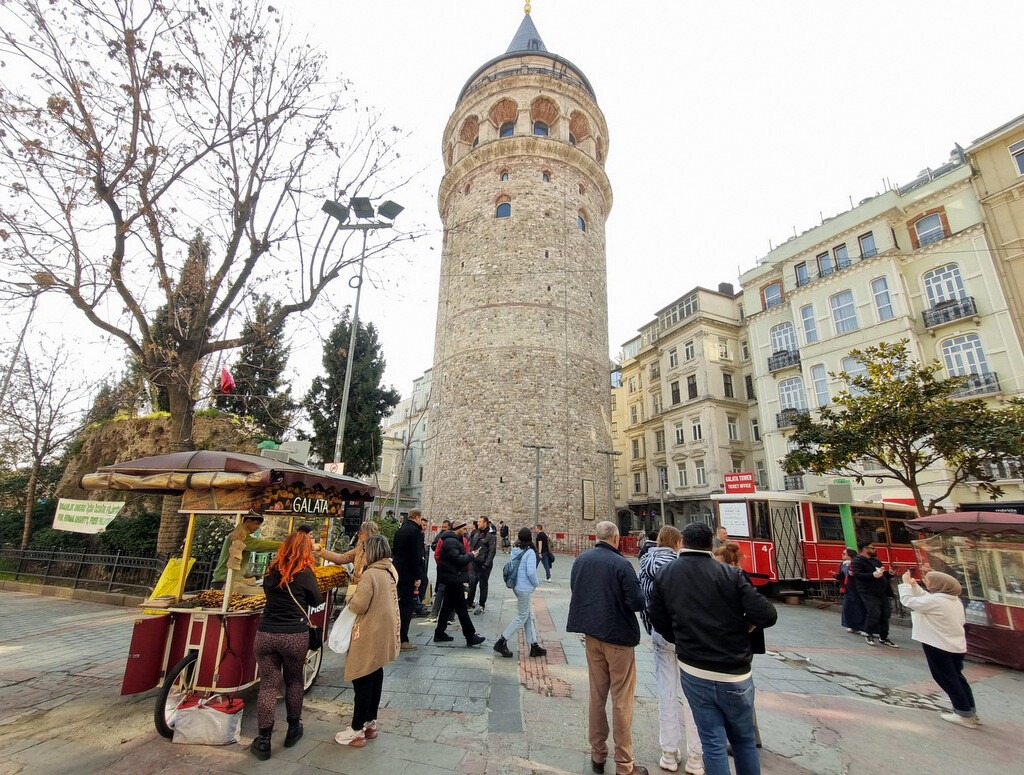
If the Old City represents power, and the Golden Horn represents memory, Beyoğlu represents change.
This is where Istanbul turns outward—toward Europe, toward modernity, and toward a faster rhythm of life that still defines the city today.
The walk begins in Karaköy, one of the oldest port districts of Istanbul. For centuries, this area functioned as the city’s gateway to the Mediterranean world, where Venetian and Genoese merchants once lived and traded. Even today, that sense of movement remains. Ferries arrive and depart, cafés open onto the streets, and the shoreline continues to act as a point of transition between different parts of the city.
Near the waterfront, you can still feel this layered identity. Traditional shops stand next to modern cafés, and places like the Kılıç Ali Paşa Mosque quietly remind you that even in a district shaped by trade, the architectural language of the Ottoman Empire was never far away.
From here, the city begins to rise.
Leaving the waterfront behind, you move into the steep streets leading toward Galata. The climb itself is part of the experience. As you pass through Bankalar Street—the financial heart of the late Ottoman Empire—and reach the elegant curves of the Kamondo Stairs, you are no longer just walking through space, but moving upward through time.
At the top, the streets narrow again, and suddenly the Galata Tower appears.
The small square around the tower is always full of life—people gathering, taking photos, waiting, observing. While many visitors choose to go up the tower, I often find that the real experience is here, at street level, watching how the city moves around it.
Continuing uphill along Galip Dede Street, known for its historic music shops, you reach the upper edge of the district—Tünel Square.
And then, the rhythm changes again as you step into İstiklal Avenue.
For more than 150 years, this has been Istanbul’s most prominent pedestrian street, shaped during the late Ottoman period as the empire’s most visible connection to Europe. The architecture shifts noticeably—neoclassical façades, embassies, passages, and cultural buildings line the street, creating a very different atmosphere from the rest of the city.
But İstiklal is not just about architecture—it is about movement.
A continuous flow of people moves along the street, forming what feels like an urban current. Street musicians, shops, historic arcades, and food stalls all become part of this rhythm. And yet, just a few steps away from the main avenue, quieter streets still preserve fragments of the older Beyoğlu—places where the pace slows down again, and the city feels more personal.
This contrast is what defines the Beyoğlu walk.
It is not a single atmosphere, but a constant shift between past and present, calm and intensity, memory and transformation.
4. Bosphorus Walk (Beşiktaş – Ortaköy – Bebek)
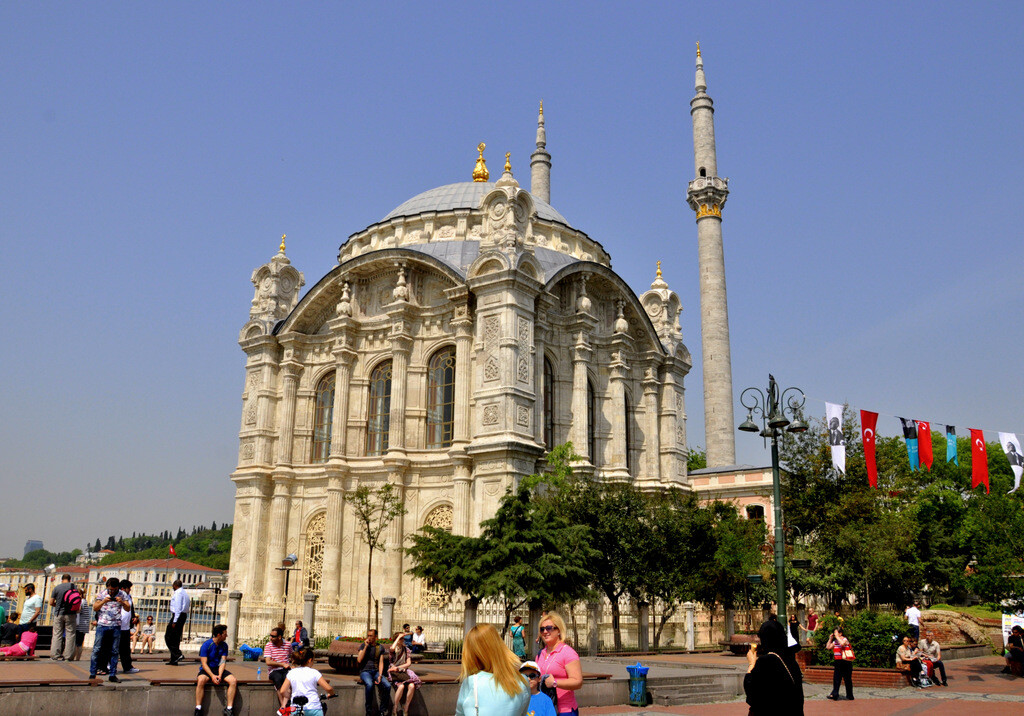
After the intensity of Beyoğlu, the Bosphorus offers something entirely different.
This is where Istanbul begins to breathe.
Starting from Beşiktaş, the city gradually opens toward the water. The dense urban fabric gives way to wider spaces, and the presence of the Bosphorus becomes impossible to ignore. Ferries, seagulls, and the constant movement of the sea define the atmosphere here.
Historically, Beşiktaş marked an important transition in the life of the Ottoman Empire. As the court moved away from the enclosed structure of Topkapı Palace, the sultans established their residences along the Bosphorus. Walking past landmarks such as Dolmabahçe Palace and the shoreline leading toward Çırağan Palace, you are following the path of this transformation—where imperial life shifted from inward-looking courtyards to open waterfront palaces.
Yet what makes this walk memorable is not just its history, but its rhythm.
Unlike the steep streets of Beyoğlu or the dense texture of the Old City, this route is almost entirely flat. You walk at sea level, accompanied by the sound of waves and the changing light of the Bosphorus.
As you approach Ortaköy, the atmosphere becomes more animated again.
At the center of the square stands the elegant Ortaköy Mosque, framed by the massive structure of the Bosphorus Bridge above it. This visual contrast—between delicate 19th-century architecture and modern infrastructure—captures one of the defining characteristics of Istanbul: the coexistence of different eras within the same frame.
From here, the walk continues north toward Arnavutköy and Bebek.
The crowds gradually thin out, and the city begins to feel more residential. Wooden waterfront houses, small cafés, and people walking along the promenade create a calmer, more local atmosphere. Along the way, it is common to see fishermen lining the shore, their lines cast into the fast-moving currents of the Bosphorus.
By the time you reach Bebek, the pace has fully slowed down.
The wide bay, shaded walking paths, and open views toward the water create a sense of balance after the earlier parts of the city. This is not a place defined by monuments, but by experience—sitting by the water, walking without a destination, and simply observing the movement of the Bosphorus.
I have walked this route many times over the years, and it always feels like a natural pause in the city. After the layers of history and the intensity of urban life, this is where Istanbul becomes quieter, lighter, and more personal.
5. Northern Bosphorus Extension (Rumeli Hisarı – Sarıyer)
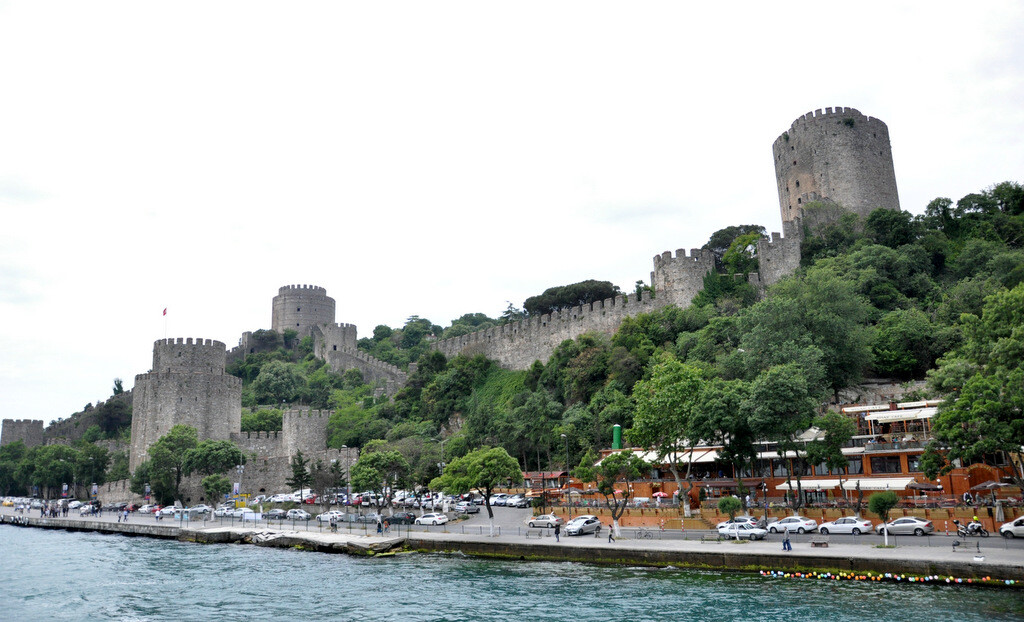
Beyond Bebek, Istanbul begins to change once again.
The Bosphorus widens, the hills grow steeper, and the city slowly starts to dissolve into a landscape. This is no longer the dense, layered Istanbul of monuments and crowded streets—it is something quieter, more spacious, and more connected to nature.
The transition becomes clear as you reach Rumeli Fortress.
Built in 1452 by Sultan Mehmed II at the narrowest point of the Bosphorus, the fortress once controlled all maritime traffic between the Black Sea and the city. Together with its counterpart on the Asian side, it transformed the strait into a strategic passage just before the conquest of Constantinople. Standing here, it is easy to understand how geography and history intersect in a single point.
Yet today, the atmosphere feels very different.
Around the massive stone walls of the fortress, a quiet neighborhood has developed—small cafés, narrow streets, and waterfront paths where people sit and watch ships pass by. The contrast between the site’s military past and its present-day calm is one of the defining characteristics of this area.
Continuing north, the city gradually opens even further.
The shoreline becomes less dense, and the rhythm of life slows down noticeably. Districts such as Emirgan, Yeniköy, and Tarabya introduce a different side of Istanbul—one shaped by summer residences, wooden waterfront mansions, and a long tradition of retreat from the city center.
In the 19th century, this part of the Bosphorus functioned almost like a seasonal extension of the capital. Ottoman elites, Levantine families, and European diplomats established their residences here, turning the area into a quieter yet highly prestigious environment along the water.
Walking through these neighborhoods today, traces of that past are still visible. Elegant wooden houses line the shore, and the relationship between architecture and landscape becomes more pronounced. The Bosphorus is no longer just a backdrop—it becomes the main element shaping the experience.
By the time you reach Sarıyer, the transformation is complete.
The city feels distant. The air is different. The Bosphorus begins to open toward the Black Sea, and Istanbul starts to resemble a coastal landscape rather than a historical metropolis.
This is not a route defined by landmarks, but rather by distance, atmosphere, and the gradual feeling of leaving the city behind.
6. Asian Side Walk (Kadıköy – Moda)
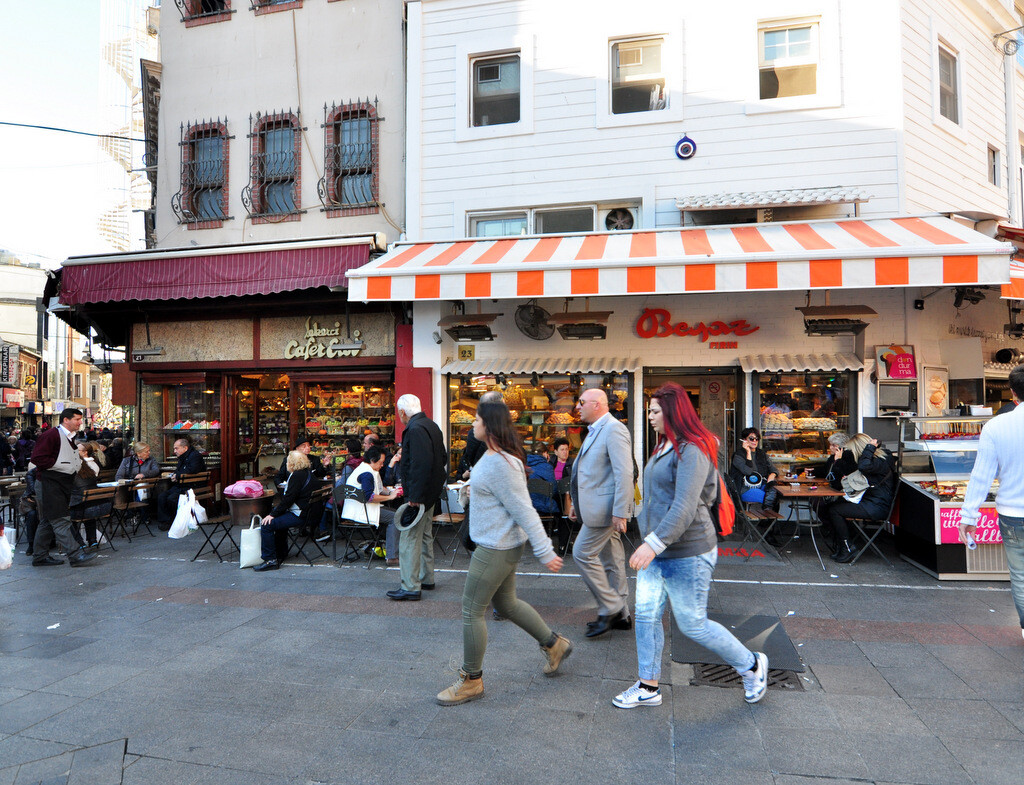
Crossing to the Asian side is not just a change of location—it is a shift in perspective.
After the historical weight of the Old City and the constant movement of Beyoğlu, arriving in Kadıköy feels different from the very first moment. The pace softens, the atmosphere becomes more local, and the city begins to reveal a side that is lived rather than displayed.
For many visitors, this transition starts on the ferry.
As the boat moves away from the European shore, the skyline of the Historic Peninsula slowly fades into the distance. By the time you approach Kadıköy, the rhythm of the city has already begun to change.
Unlike districts defined by monuments, Kadıköy is shaped by everyday life. Markets, cafés, street food, and constant movement create one of the most vibrant urban environments in Istanbul. Walking through the Kadıköy Market, you encounter a dense network of shops—fishmongers, spice vendors, bakeries, and small restaurants—all contributing to a living food culture that reflects the city’s daily rhythm.
Historically, this area was known as Chalcedon, founded centuries before Byzantium. While these early layers are not immediately visible today, they remain part of the deeper identity of the district—subtle, but present beneath the surface.
From the market, the walk continues toward Bahariye Street, where the energy of Kadıköy extends into a broader urban space. The nostalgic tram, small theaters, and local shops create a different kind of continuity—less monumental, but equally meaningful.
As you move further toward Moda, the atmosphere begins to change once again.
The streets grow quieter, the buildings open up, and the presence of the sea becomes more pronounced. This transition is gradual but noticeable. What was once a dense and energetic urban center slowly turns into a more relaxed and reflective environment.
Reaching Moda, the walk finds its natural balance.
The coastline opens toward the Marmara Sea, offering wide views toward the Princes’ Islands across the water. People sit along the shore, walk slowly, or simply watch the city from a distance.
I was born and raised in Kadıköy, and over the years I have come to see this route not as a list of places, but as a shift in how Istanbul is experienced. After everything the city shows you on the European side, this is where it becomes quieter, more personal, and easier to understand.
7. Üsküdar Route (Üsküdar – Kuzguncuk – Çengelköy)
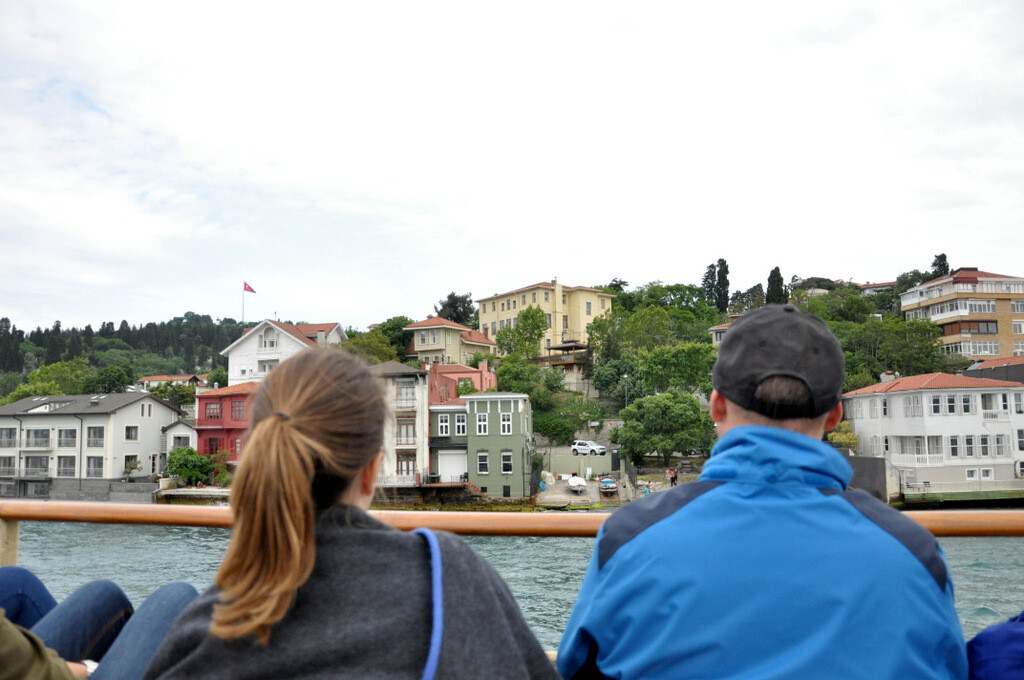
After the energy of Kadıköy, the city becomes quieter once again.
Crossing along the Asian shoreline toward Üsküdar, the atmosphere shifts from outward movement to something more inward and reflective. This is a part of Istanbul shaped less by display and more by continuity—of traditions, routines, and a slower engagement with the city.
In antiquity, this area was known as Chrysopolis, marking the endpoint of major trade routes arriving from Asia. During the Ottoman period, Üsküdar became the starting point for journeys toward the holy cities, giving the district a strong spiritual identity that still defines its character today.
Along the waterfront, structures such as the Mihrimah Sultan Mosque and the more intimate Şemsi Paşa Mosque reflect this heritage—placed directly at the edge of the water, where architecture and landscape come into quiet balance.
Moving north toward Kuzguncuk, the scale of the city begins to change once more.
The monumental presence of Üsküdar gives way to smaller streets, wooden houses, and a neighborhood atmosphere that feels more personal. Historically, Kuzguncuk developed as a multi-cultural settlement where Jewish, Armenian, Greek, and Muslim communities lived side by side. Even today, this layered past remains visible—not as a spectacle, but as part of everyday life.
At the center of the neighborhood, the Kuzguncuk Bostanı offers a rare glimpse into this continuity. Surrounded by the city, this open green space has functioned as a community garden for generations, maintaining a direct connection between people and land.
Continuing along the shoreline, the city becomes quieter still.
By the time you reach Çengelköy, the atmosphere has fully settled into a slower rhythm. This is a place defined not by landmarks, but by routine—tea by the water, conversations under the shade of old plane trees, and the steady movement of the Bosphorus.
Historically, this coastline has long been associated with retreat. From Byzantine imperial residences to Ottoman waterfront houses, the area has served as a place of withdrawal from the intensity of the city. That character remains present today.
Ending the walk here feels natural.
After moving through different layers of Istanbul—its history, its transformations, and its energy—this is where the city becomes quiet enough to simply observe.
Conclusion
Istanbul is often described through its monuments, but the city is best understood through movement.
Each route in this guide reveals a different layer. The Old City introduces the foundations of empire. The Golden Horn preserves the memory of communities that shaped everyday life. Beyoğlu reflects transformation and outward connection. The Bosphorus offers space and rhythm, while the northern shores extend that experience into landscape. On the Asian side, the city becomes more local, more personal, and ultimately quieter.
What connects all of these places is not just geography, but transition.
Walking through Istanbul means constantly moving between contrasts—between past and present, density and openness, energy and stillness. These shifts are not interruptions; they are the essence of the city itself.
For this reason, the best way to explore Istanbul is not by trying to see everything, but by allowing time for these transitions to unfold.
Take the ferry instead of the bridge. Walk instead of taking a taxi. Pause where the city feels different.
In doing so, Istanbul stops being a list of places—and becomes an experience you carry with you.
Written by Serhat Engul, licensed tour guide, Istanbul

Hello Serhat!
Thank you for the excellent recommendations. The blog is extremely useful for travelers.
Thank you for all your work,
Anna
Hello Anna!
Many thanks for your positive feedback. Such nice comments show that my effort for this blog was not in vain. I am so glad the article was useful to you.
Have a nice holiday in Istanbul!
Serhat