Istanbul’s commercial life reflects the same layered history that defines its architecture and streets. From Byzantine trade routes to Ottoman caravan networks and 19th-century European-style shopping avenues, the city has continuously reshaped how goods are exchanged and displayed.
Many of Istanbul’s historic bazaars date back several centuries. Others — particularly the shopping streets formed in the 19th century — represent the modernization period of the Ottoman capital. Together, they create a retail landscape that ranges from covered markets to open-air boulevards and neighborhood streets.
In a previous article, I focused on modern shopping malls in Istanbul. This guide shifts attention to the city’s historic bazaars and traditional shopping districts — places where commerce is intertwined with urban memory rather than organized around contemporary retail design.
Best Shopping Places in Istanbul 2026
Most visitors to Istanbul naturally shop in Sultanahmet and Taksim. Sultanahmet is known for its historic bazaars, while Taksim and İstiklal Street represent the city’s modern commercial avenues. However, limiting your shopping experience to these two districts offers only a partial view of Istanbul’s retail culture.
This guide is organized by neighborhood, presenting shopping areas within their historical and spatial context. From the structured corridors of the Grand Bazaar to the fashion boutiques of Nişantaşı and the neighborhood markets of Kadıköy, each district reflects a different chapter of the city’s commercial identity.
Rather than functioning as a simple list, this article is designed as a structured overview of where and how shopping takes place across Istanbul. The goal is not only to suggest where to buy certain products, but also to explain why these areas developed as commercial centers in the first place.
Having worked as a licensed tour guide in Istanbul for many years, I have observed how visitors navigate these districts and what they typically look for. This experience has helped shape the selection and organization of the neighborhoods included here. While the guide covers a broad range of areas, it aims to make the city’s shopping geography clearer rather than more complicated.
1. Istiklal Street (Beyoğlu)
Istiklal Street is one of the most iconic shopping streets in Istanbul — not only today, but since the late Ottoman period. In the 19th century, Beyoğlu became the city’s European-facing district, where consulates, banks, and grand hotels were established. Wealthy non-Muslim families competed to build elegant apartment blocks and commercial buildings, many of which still line the street today.
While browsing shop windows, it’s easy to overlook the architectural beauty above eye level. Yet these façades still reflect the cosmopolitan life of Beyoğlu during the final decades of the Ottoman Empire. After Sultan Abdülmecid moved the imperial residence to Dolmabahçe Palace, the dynamism of Beyoğlu began to surpass that of the Old City. At the time, the avenue was widely known as “Grand Rue de Pera”.
Today, Beyoğlu — together with Galata, Cihangir, and Karaköy — continues to evolve, blending historical passages with contemporary retail culture.
What truly distinguishes Istiklal Street from other shopping areas in Istanbul is its network of 19th-century passages. If you step away from the international chain stores and explore these hidden corridors, you’ll discover some of the most atmospheric shopping spots in the city.
Below are the key historical passages and shopping areas around Istiklal Street.
a. Atlas Passage
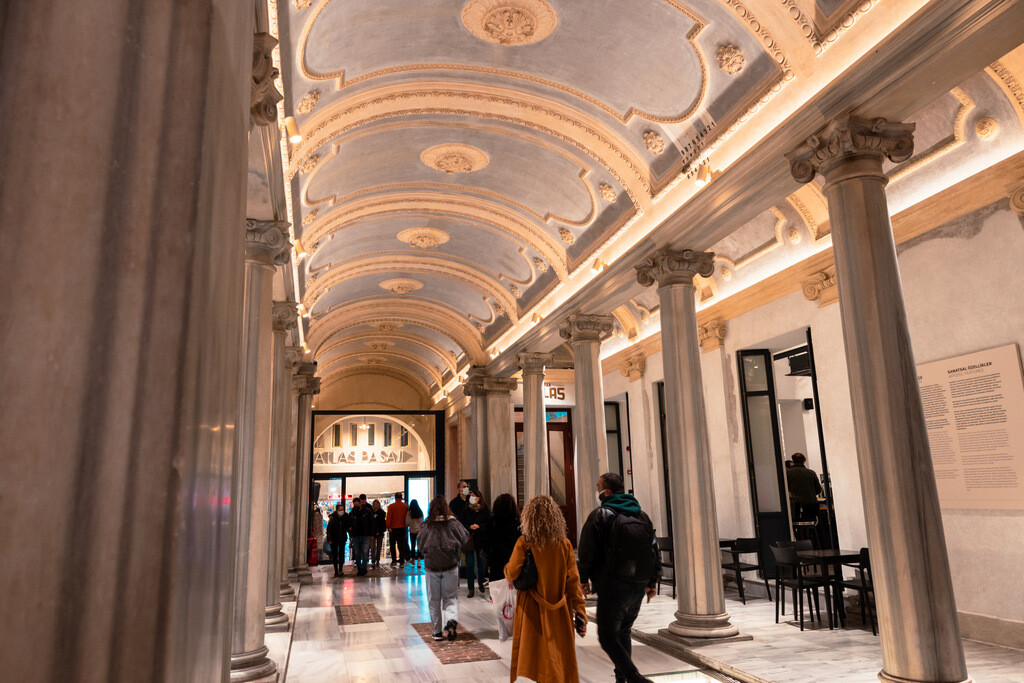
Built in 1870 by Agop Köçeoğlu, a prominent member of Istanbul’s Armenian community and a close acquaintance of the Sultan, Atlas Passage is one of the most elegant buildings of its era. Its high ceilings, frescoes, and gilded decorations reflect the architectural ambition of late 19th-century Beyoğlu.
The building temporarily served as the PTT (Post Office) headquarters and today houses Atlas Cinema along with clothing and souvenir shops. You can find authentic garments, bags, and retro sunglasses here.
b. Halep Passage
Constructed in 1884 by Hacıyâr Hacar, a businessman originally from Aleppo, Halep Passage stands out with its eclectic architectural style. If you look carefully at the façade, you’ll notice a medal depicting the silhouette of Aleppo Fortress — a subtle reference to the founder’s roots.
On the ground floor, you’ll find silver shops, bookstores, painting and frame stores, as well as small artisan boutiques. Münhasır Restaurant offers a pleasant break inside the passage. The lower level is home to Beyoğlu Cinema.
c. Hazzopulo Passage
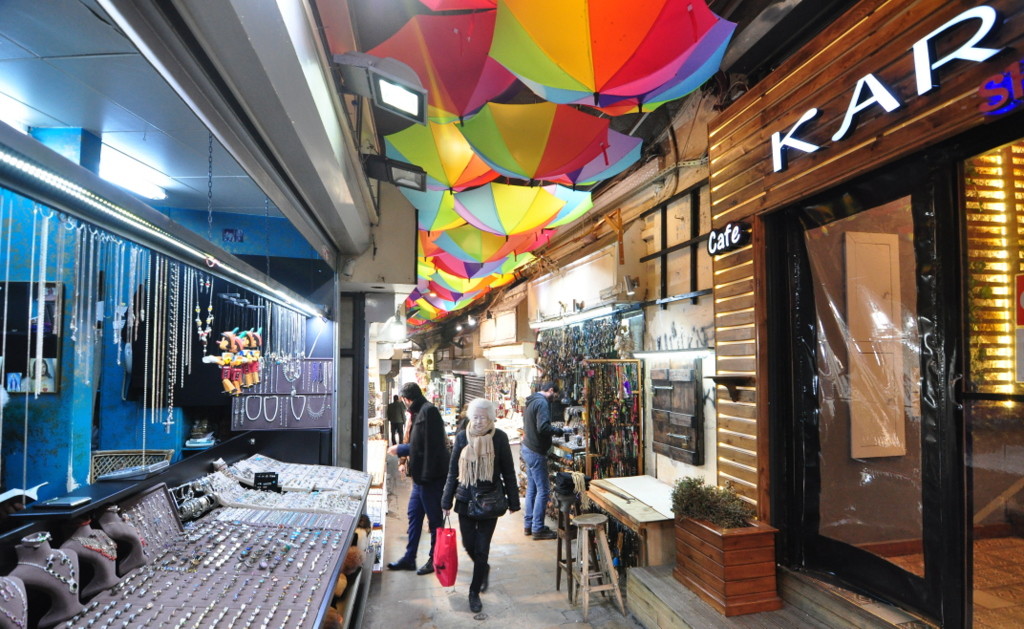
Hazzopulo Passage was built in 1871 by Kiryaki Hazzopulo, a businessman of Greek origin. Its defining feature is the open courtyard at the center — a lively space where people gather to chat and enjoy drinks throughout the day.
During the Ottoman period, many influential non-Muslim merchants operated here. The father of world-renowned photographer Ara Güler once ran a pharmacy inside this passage. In the past, hat orders for weddings held in Beyoğlu’s churches were placed here, and the shop “Şapkacı Katia” still sells nostalgic women’s hats today.
With around 40 shops offering perfumes, bags, jewelry, and books, the passage also serves as a shortcut connecting Istiklal Street to Meşrutiyet Street.
d. Aznavur Passage
Built in 1893 by the Aznavur family, this passage reflects Italian architectural influence. In the late Ottoman era, famous novelists and intellectuals reportedly spent time in its cafés and restaurants.
Today, the nine-story building contains shops selling jewelry, hats, toys, and bags, along with cafés and even a billiards hall. It is located directly opposite Galatasaray High School.
e. Avrupa Passage
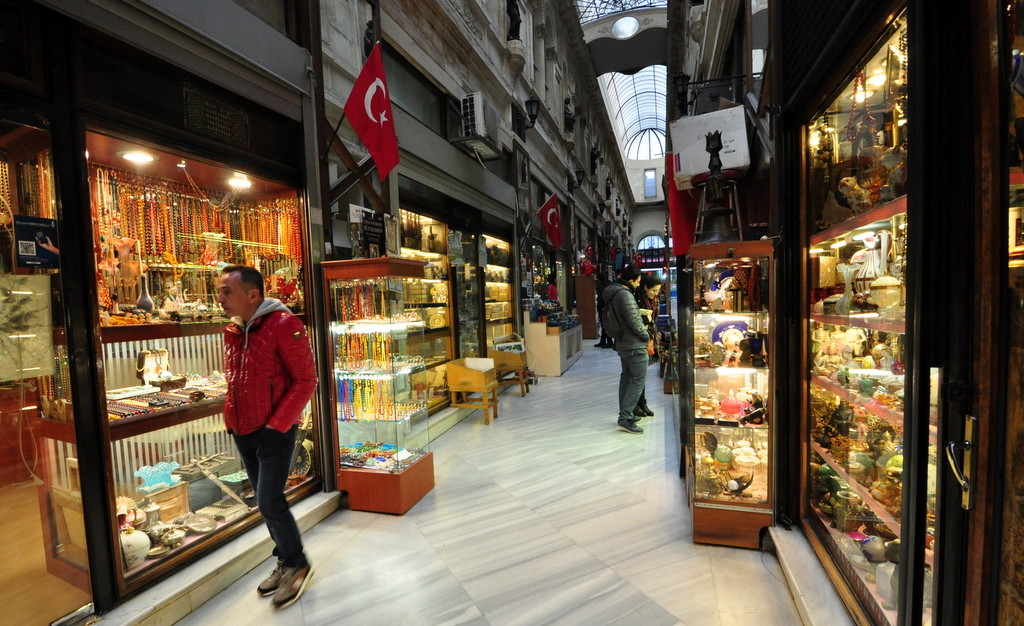
Avrupa Passage is often overlooked, even by visitors who have walked Istiklal Street many times. Its entrance is not directly on the main street, but through the Beyoğlu Fish Market, making it more of a “hidden” discovery.
Following the Great Beyoğlu Fire of 1870, the neighborhood underwent major reconstruction. Avrupa Passage was completed in 1874 during this rebuilding phase. Designed in Renaissance style by Austrian architect Domenico Pulgher, the passage is approximately 56 meters long and houses 22 shops.
The sculptures and decorative details at the shop entrances are particularly noteworthy. The passage connects the Fish Market to Meşrutiyet Street.
f. Çiçek Passage
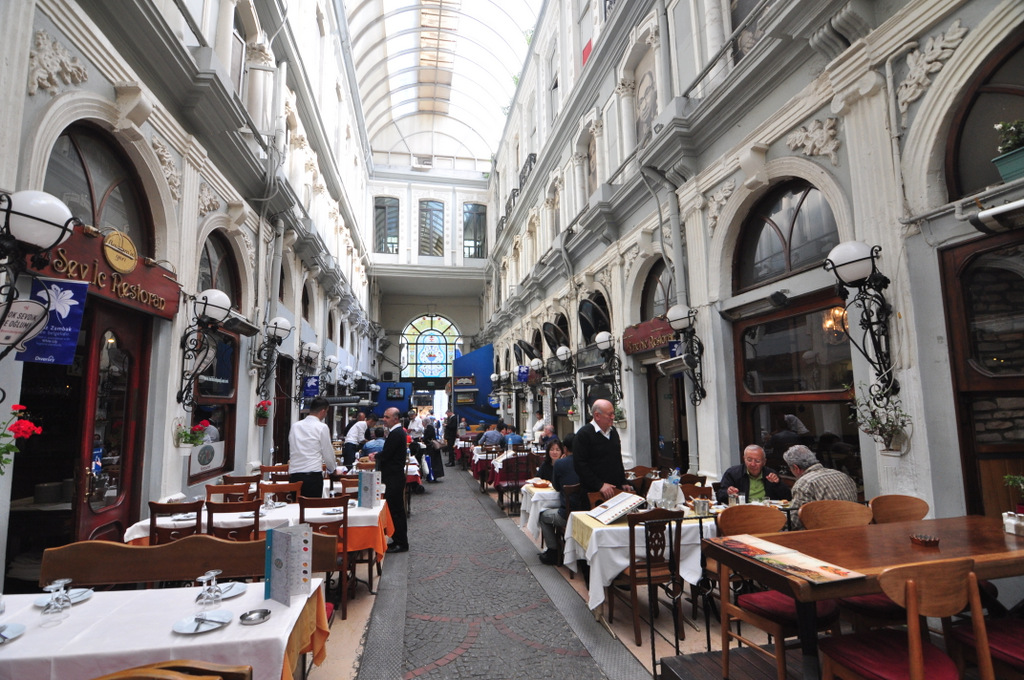
Çiçek Passage (Çiçek Pasajı) is more famous for its fish restaurants and traditional meyhanes than for shopping. However, if you are spending time in Beyoğlu, it offers a nostalgic setting for a meal break between shopping stops.
g. Beyoğlu Fish Market
Located next to Çiçek Passage, Beyoğlu Fish Market reflects the historic character of the district. While walking through the market, I recommend visiting Üç Yıldız Şekerleme, a traditional Turkish delight shop. Stepping inside feels like entering a scene from an old Turkish movie.
h. Beyoğlu İş Merkezi
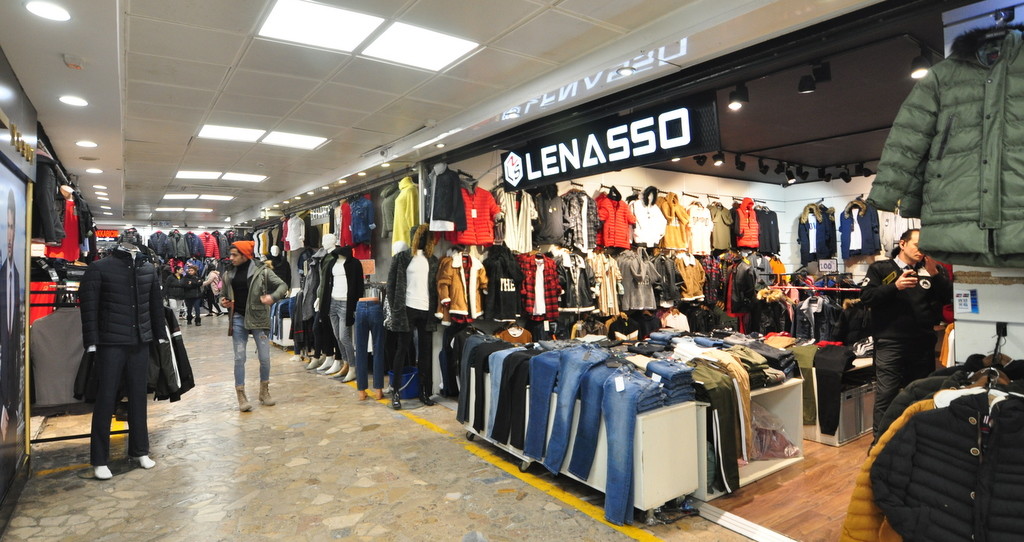
Beyoğlu İş Merkezi (Beyoğlu Business Center) has a labyrinth-like atmosphere. With more than 200 shops selling export surplus goods, it is a practical stop for affordable clothing, underwear, shoes, and accessories.
If you are looking for budget-friendly shopping near Taksim, this is one of the more functional options. It is about a 10-minute walk from Taksim Square.
i. Terkoz Çıkmazı
Located on the right-hand side on the way toward Tünel, Terkoz Çıkmazı feels like an open-air local bazaar. You can find inexpensive T-shirts, jeans, and everyday clothing displayed on street stands.
The original name of this site is D’andria Passage, built in 1882. Over time, it became known as Terkoz (or Terkos) Passage, after the street it is located on.
2. Galata
Galata has become one of the fastest-evolving districts of Istanbul in recent years. One of the driving forces behind this transformation has been the development of Galataport, the city’s modern cruise terminal. At the same time, the broader area — including nearby Karaköy — has undergone a noticeable wave of renewal.
Today, some of Istanbul’s most stylish hotels, restaurants, and cafés are concentrated here. What was once a quiet historical quarter has turned into one of the most vibrant urban zones in the city.
The main shopping areas in Galata are located on the streets surrounding the iconic Galata Tower. These streets now attract as much attention as the historical bazaars of the Old City, but with a very different atmosphere.
a. Galip Dede Street
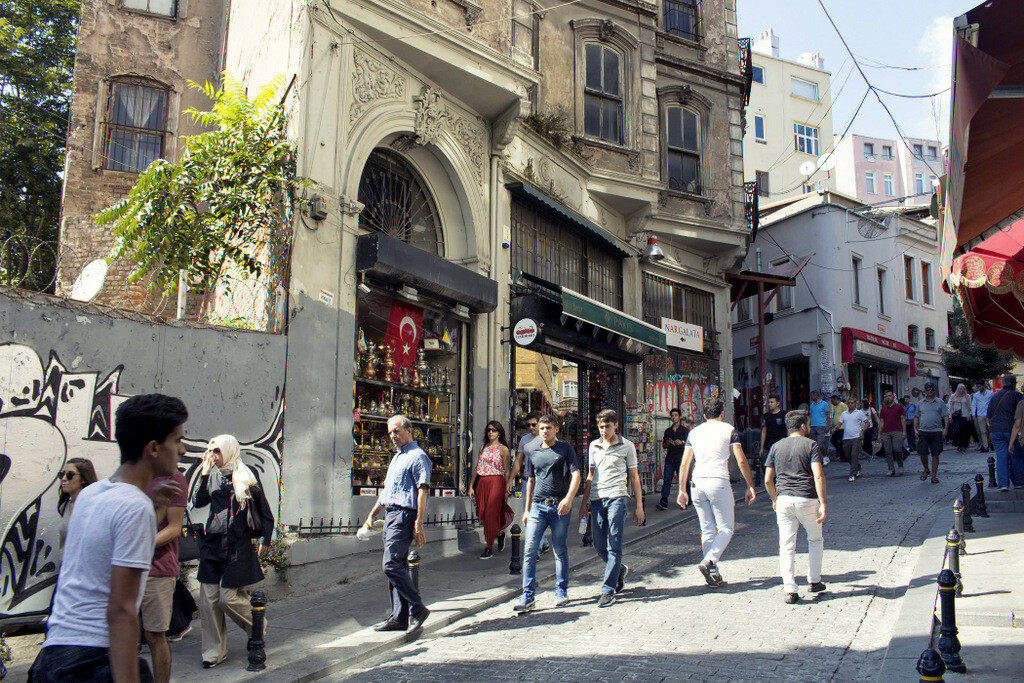
Galip Dede Street begins at Tünel Square — where Istiklal Street ends — and stretches down toward Galata Tower. This street has long been associated with music. Around the Galata Mevlevi House (Whirling Dervishes Museum), you will find numerous musical instrument shops catering to both professional and amateur musicians.
In recent years, tourism has introduced new layers to the street. Souvenir shops have appeared alongside the traditional instrument stores. However, many of these shops offer more carefully designed and visually appealing items compared to the standard souvenirs often seen in the Old City. For visitors looking for gifts that feel slightly more curated, Galip Dede Street provides an interesting alternative.
b. Serdar-ı Ekrem Street
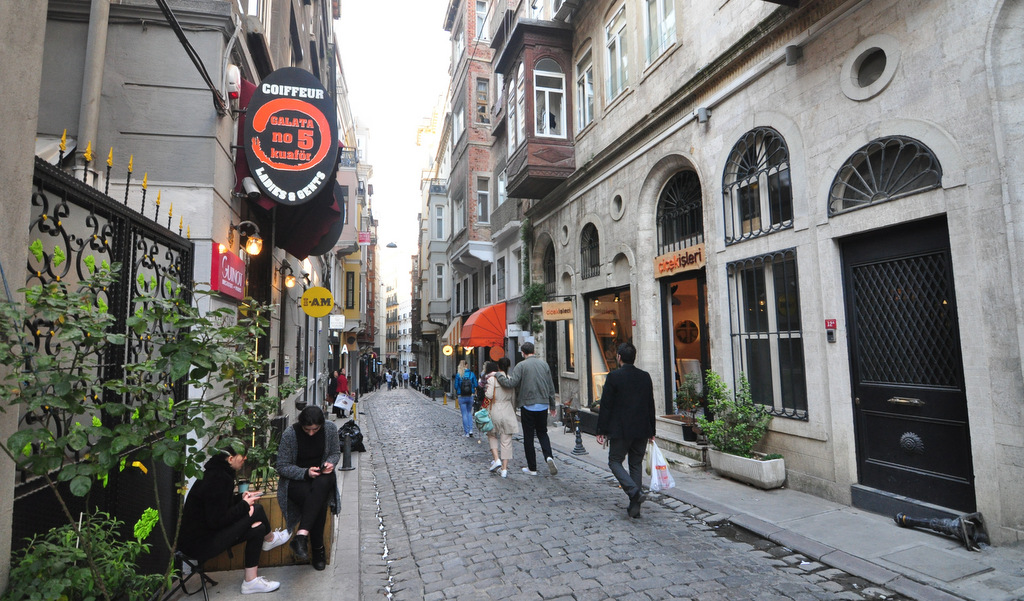
Serdar-ı Ekrem Street runs from Galata Tower toward Cihangir. The street is known for boutiques selling specially designed products and creative reinterpretations of everyday goods.
The shops here tend to focus on design rather than mass production, making it a pleasant stop for those interested in contemporary Istanbul style. In addition, several well-known cafés are located along this street, adding to its appeal as a place to browse slowly rather than shop in a hurry.
c. Büyük Hendek Street
The Ottoman tradition of clustering shops that sell similar products in the same area can still be observed in Istanbul today. Historic examples include places such as Hırdavatçılar Çarşısı (Hardware Market) or Mefruşatçılar Çarşısı (Furniture Market).
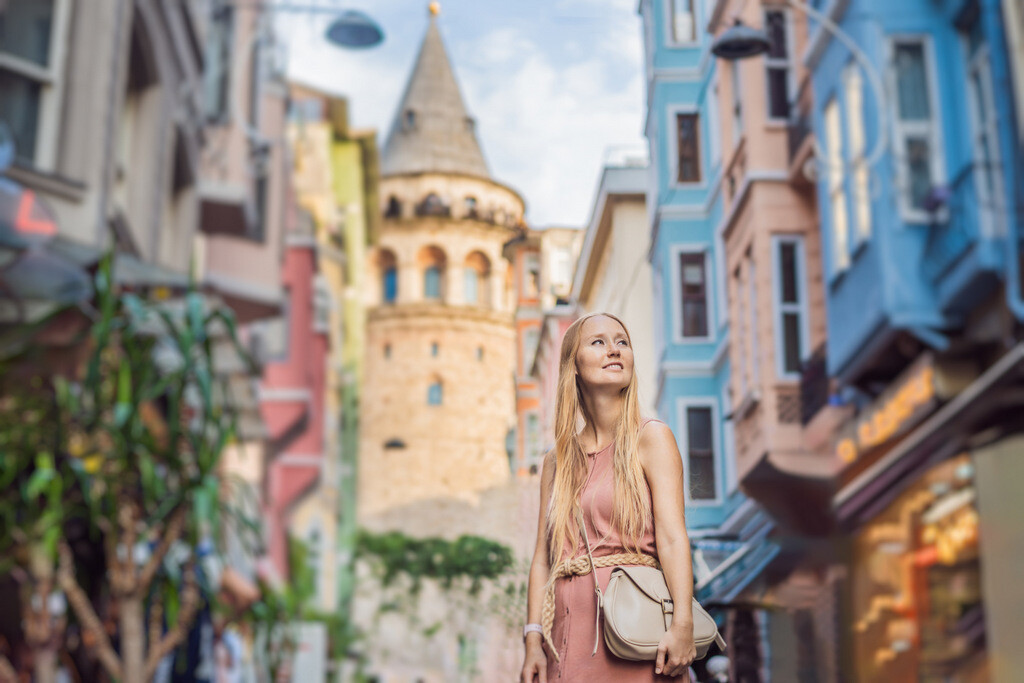
Büyük Hendek Street reflects this same logic: it is lined with shops specializing in lighting products. If you are looking for chandeliers, lamps, or decorative lighting, you will find a wide concentration of options here.
In recent years, the brightly painted historic houses along Büyük Hendek Street have also turned it into a popular photography spot. Its colorful façades attract many visitors who come not only to shop but also to capture the atmosphere of Galata.
3. Çukurcuma
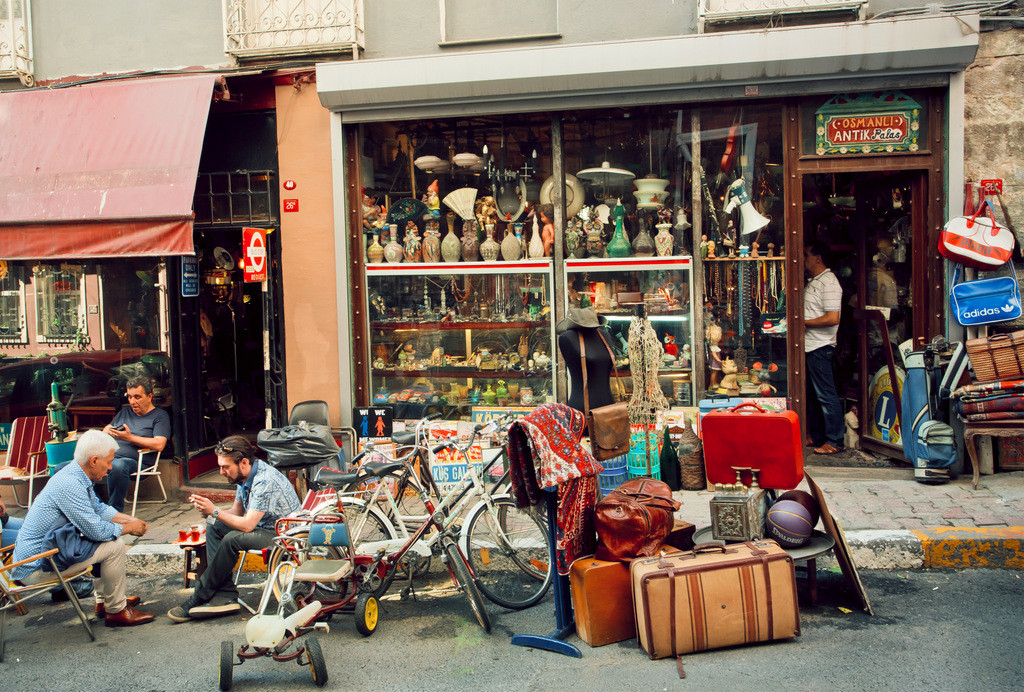
Çukurcuma is one of the most distinctive neighborhoods of Beyoğlu. It is also home to the Museum of Innocence, created by Nobel Prize–winning novelist Orhan Pamuk as a companion to his novel of the same name.
The area is particularly known for its antique shops. Walking along Çukurcuma Street and browsing the closely packed antique stores is one of the most enjoyable shopping experiences in Istanbul. Rather than functioning as a traditional market, the neighborhood offers a slow, exploratory atmosphere where each shop feels slightly different from the next.
Together with nearby Cihangir, Çukurcuma is among the most pleasant districts in Istanbul for an afternoon walk. After exploring the antique shops, you can continue toward Cezayir Sokağı (also known as La Rue Française), where cafés and live music venues create a relaxed evening setting.
The combination of historic buildings, narrow streets, and carefully arranged shop windows also makes Çukurcuma one of the more picturesque shopping areas in the city.
4. Karaköy
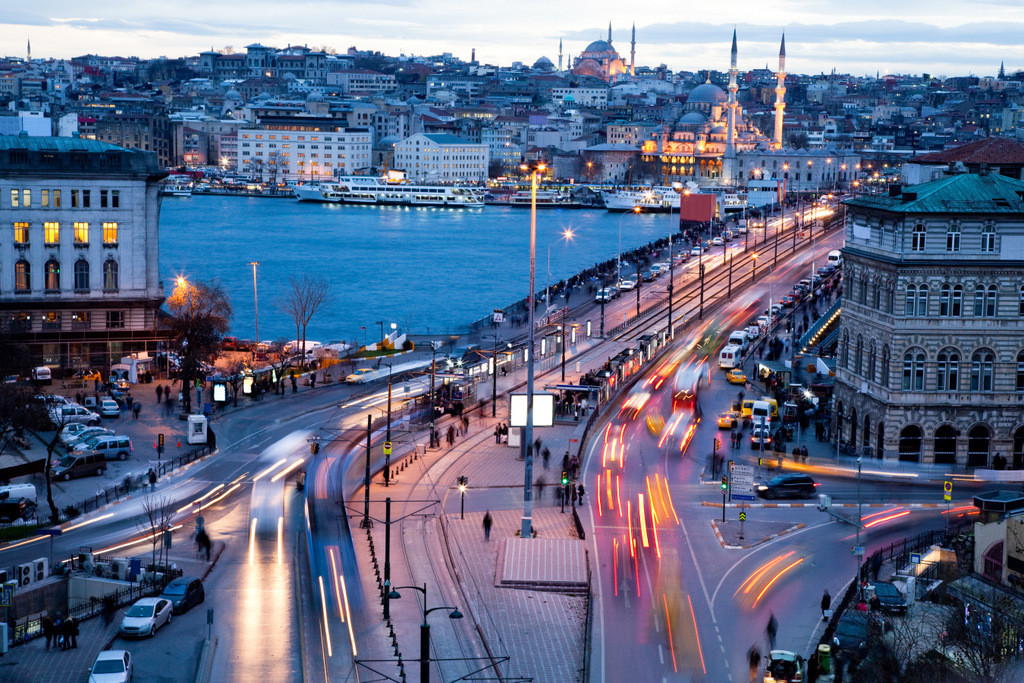
Karaköy is a historically cosmopolitan neighborhood that functioned as one of the city’s main port districts during both the Byzantine and Ottoman periods. Together with nearby Galata, it was once a key point where valuable goods arriving via the Silk Road were collected and exported to Europe by Italian trading colonies.
As a port district, Karaköy has always been commercially active. Its transformation accelerated in the 19th century, when domestic and foreign businessmen invested heavily in the area. From that era, you can still encounter elegant buildings such as Minerva Han, which reflect the district’s commercial importance.
Today, Karaköy continues its trading character in a different form. Shops specializing in outdoor equipment are among the most prominent here. Several well-stocked stores offer a wide range of products. Atlas Outdoor, known for quality winter clothing, is one of the better-known examples in the area.
For more specialized shopping, Hırdavatçılar Çarşısı (Hardware Market) can be found along Tersane Street, which extends toward the Golden Horn. Meanwhile, Kemeralti Street — running in the direction of Kabataş — is lined with diving equipment shops positioned side by side, maintaining the old Istanbul tradition of clustering similar trades in one location.
With the opening of the Istanbul Cruise Port (Galataport) after years of restoration, Karaköy — together with Galata — has become one of the most visited and commercially active districts in the city. While its atmosphere has shifted in recent years, it remains one of the most dynamic shopping areas in modern Istanbul.
5. Nişantaşı
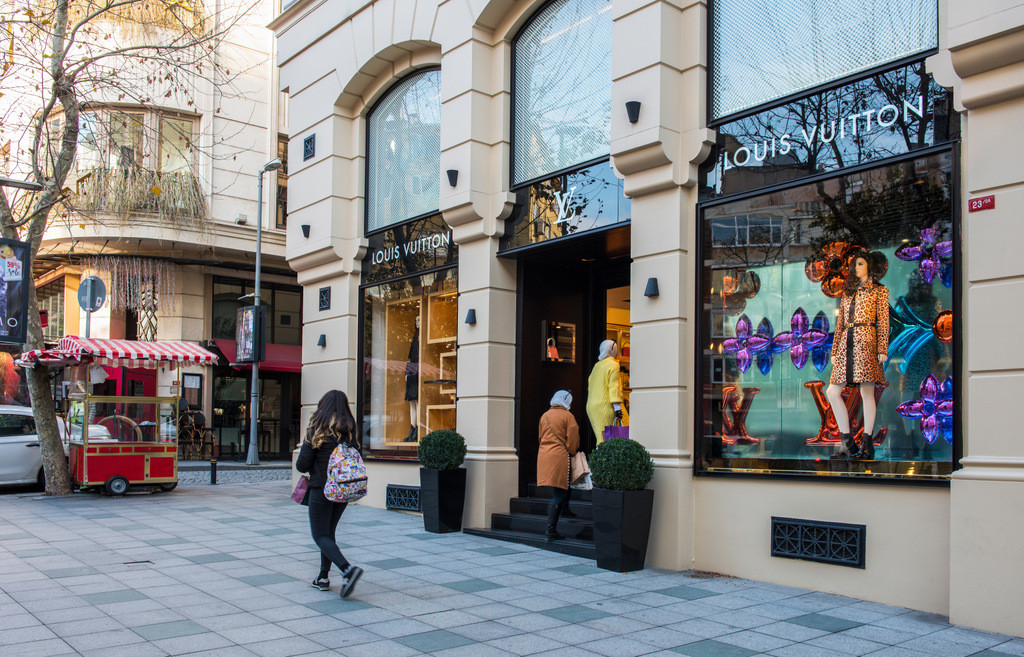
Nişantaşı is one of Istanbul’s most established districts for fashion and boutique shopping. In addition to international luxury brands, the area is known for its specially designed product boutiques and independent fashion stores.
The most prominent streets in Nişantaşı are Abdi İpekçi Street and Teşvikiye Street. Abdi İpekçi Street, which stretches from Maçka toward the heart of Nişantaşı, hosts more than fifty luxury brand stores and gives the impression of an open-air shopping center. The concentration of flagship boutiques makes it one of the most polished retail streets in the city.
Beyond the main avenue, the backstreets of Nişantaşı are equally worth exploring. If you are searching for an evening gown or a contemporary design piece, you can find boutique shops offering carefully curated collections. Many well-known Turkish fashion brands present their latest women’s collections here, making Nişantaşı a natural destination for those interested in local fashion design.
For visitors looking for a more refined and fashion-focused shopping experience in Istanbul, Nişantaşı offers a distinctly different atmosphere from the historic bazaars and commercial streets of the Old City.
6. Eminönü
Eminönü is widely regarded as the commercial heart of Istanbul’s Old City. It is also a transportation crossroads, as vehicles arriving from both the Asian Side and Taksim pass through this district. For many locals, Eminönü remains the practical answer to the question of where to shop in central Istanbul.
While the previous sections focused on what is often described as “Modern Istanbul,” Eminönü — together with the following areas such as Sirkeci and Sultanahmet — represents the shopping landscape of the historic peninsula.
a. Spice Bazaar
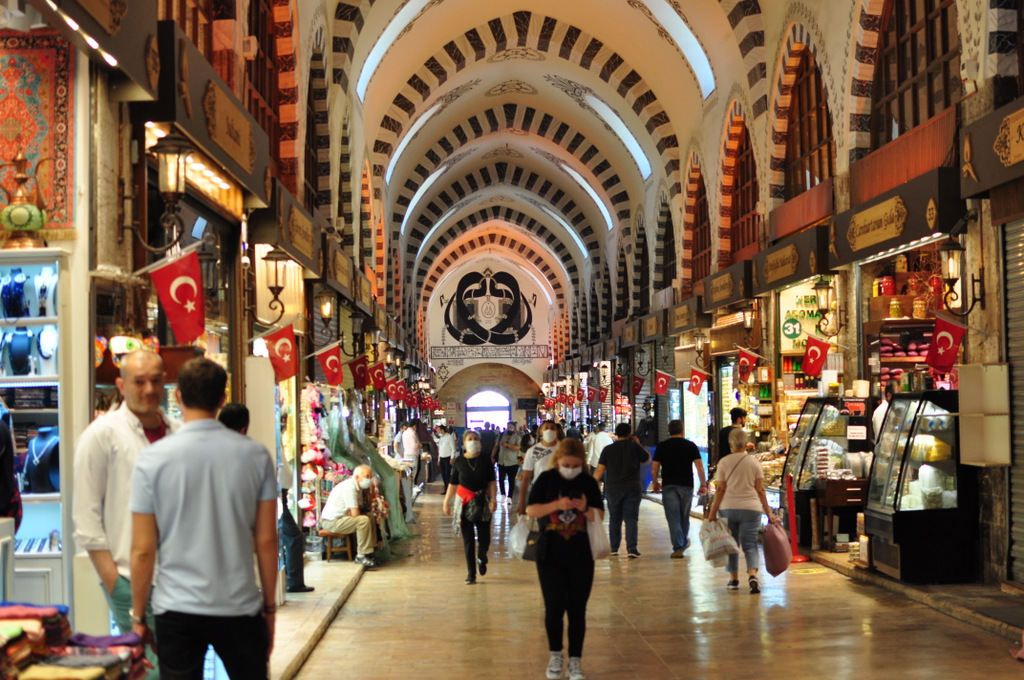
For centuries, silk fabrics and spices from India were transported by caravan to Egypt and then shipped to Istanbul. From here, valuable goods were exported to Europe by Venetian and Genoese merchants, while a portion was offered to the local population.
Spice Bazaar (Mısır Çarşısı) stands next to the New Mosque (Yeni Cami), in the very center of Eminönü. It remains one of the most popular markets in Istanbul among both domestic and international visitors. On weekends, the density of the crowd can make walking through the bazaar quite challenging — a reflection of its enduring appeal.
b. Uzunçarşı Street
Uzunçarşı Street has functioned as a commercial artery of the Old City since the Ottoman period. It stretches from the Eminönü waterfront toward the Grand Bazaar and is lined with business centers, small shops, restaurants, and cafés.
Walking along Uzunçarşı offers a more everyday experience of the Old City. Compared to some of the more touristic areas, prices here can be noticeably lower, and the atmosphere feels closer to local trade traditions.
c. Mahmutpaşa Bazaar
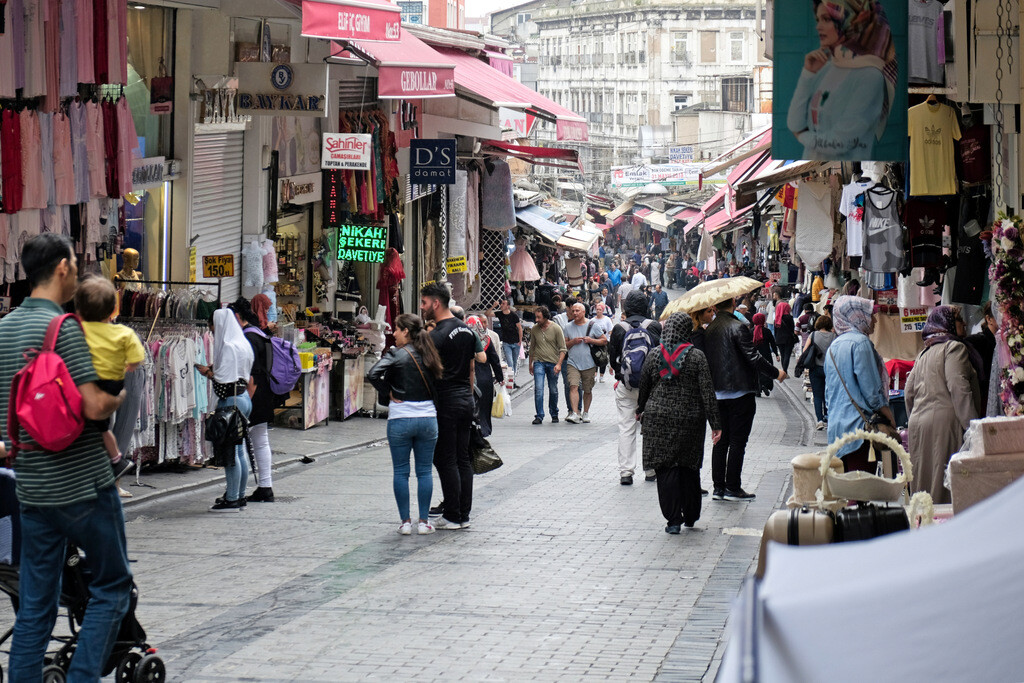
Mahmutpaşa Bazaar begins at the Mahmutpaşa Gate of the Grand Bazaar and descends along a steep street toward the backstreets of Eminönü. The slope itself is part of the character of the area.
Mahmutpaşa is traditionally associated with shopping for engagement and wedding preparations. It is also one of the most affordable shopping zones in Istanbul, where you can find children’s clothing, shirts, basic garments, and everyday items at low prices.
Although prices are generally attractive, product quality may vary from shop to shop. For that reason, it is worth taking the time to compare options before making a purchase.
7. Sirkeci
Sirkeci has long been one of the practical shopping districts of Istanbul. Located within the Historic Peninsula, it combines a commercial character that dates back to the Ottoman period with a reputation for affordable purchases.
Compared to the more touristic streets nearby, Sirkeci is often associated with functional shopping rather than browsing for atmosphere.
a. Doğubank
Doğubank is located in the heart of Sirkeci and has long been known as a destination for affordable mobile phones and electronic devices.
Here, you may encounter what are commonly referred to as grey-market or parallel import products — items sold outside official distributor channels — alongside options for trading in older phones for newer models. For visitors who need small electronic accessories, memory cards, chargers, or replacement gadgets during their trip, Doğubank offers a concentrated marketplace within a single building.
Its main advantage is the ability to compare multiple sellers in a compact space, rather than visiting larger chain technology stores.
b. Hayyam Passage
Photography equipment can be expensive, especially when purchased from large retail chains. Hayyam Pasajı has long been known in Istanbul as a place to search for more competitively priced cameras and lenses.
Numerous photography shops are located side by side within the passage, allowing buyers to compare brands and prices easily. Whether you are looking for a camera body, a lens, or smaller accessories, Hayyam Pasajı remains one of the first places locals consider when shopping for photographic equipment.
8. Sultanahmet
Sultanahmet is one of the most visited districts in Istanbul and naturally one of its most active shopping areas. While some of the tourist-oriented streets have higher prices, it is still possible to find reasonably priced items with careful browsing. Many products associated with Turkish culture — from ceramics to textiles — can be found in this district.
a. Arasta Bazaar
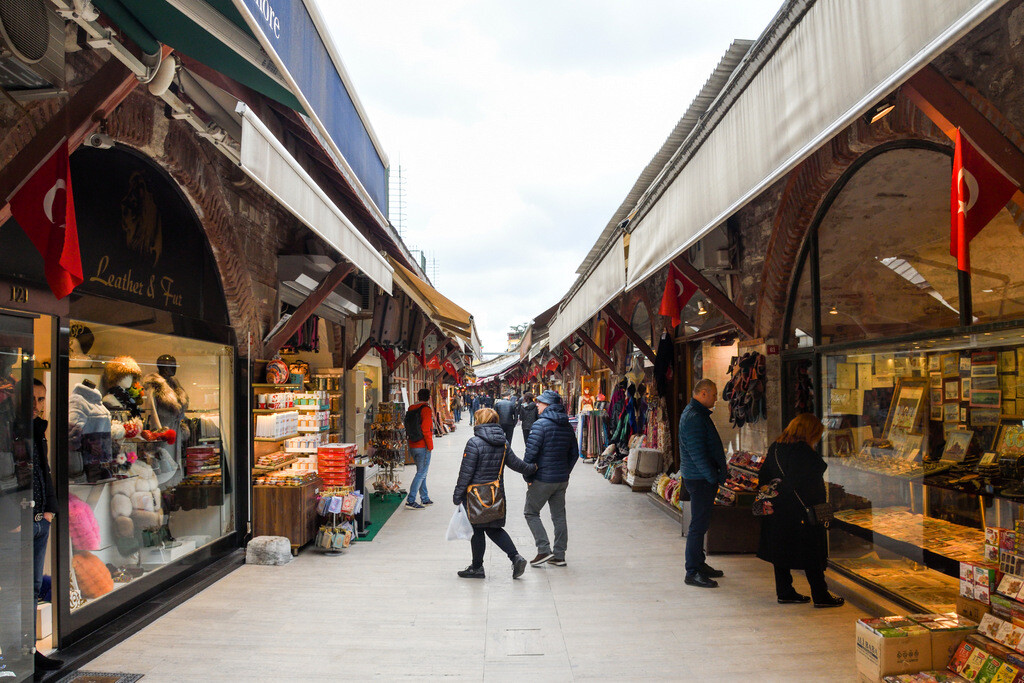
In the Ottoman era, it was common practice to build a bazaar next to a major mosque. The rental income from these shops helped finance the maintenance and operation of the mosque complex. In a similar way, the Spice Bazaar was constructed next to the New Mosque in Eminönü.
Arasta Bazaar, located just behind the Blue Mosque, was built in the 17th century following the same tradition. Today, it stands adjacent to the Great Palace Mosaic Museum and primarily attracts international visitors. The bazaar offers a curated selection of souvenirs, including textiles, ceramics, and handicrafts that reflect Istanbul’s artistic heritage.
Some well-known shops within Arasta Bazaar have even been featured in international travel publications — Jennifer’s Hamam is one such example. For additional details about this area, you may also consult the separate article dedicated to shopping in Sultanahmet.
b. Nuruosmaniye Street
Nuruosmaniye Street connects Sultanahmet to the Grand Bazaar and is particularly busy during the spring and summer seasons. The street contains business centers, office buildings, cafés, and several high-end carpet and jewelry shops.
With the return of cruise tourism to Istanbul, the pedestrian flow along Nuruosmaniye Street has increased noticeably, reinforcing its role as a key commercial corridor leading directly to the Grand Bazaar.
c. Grand Bazaar
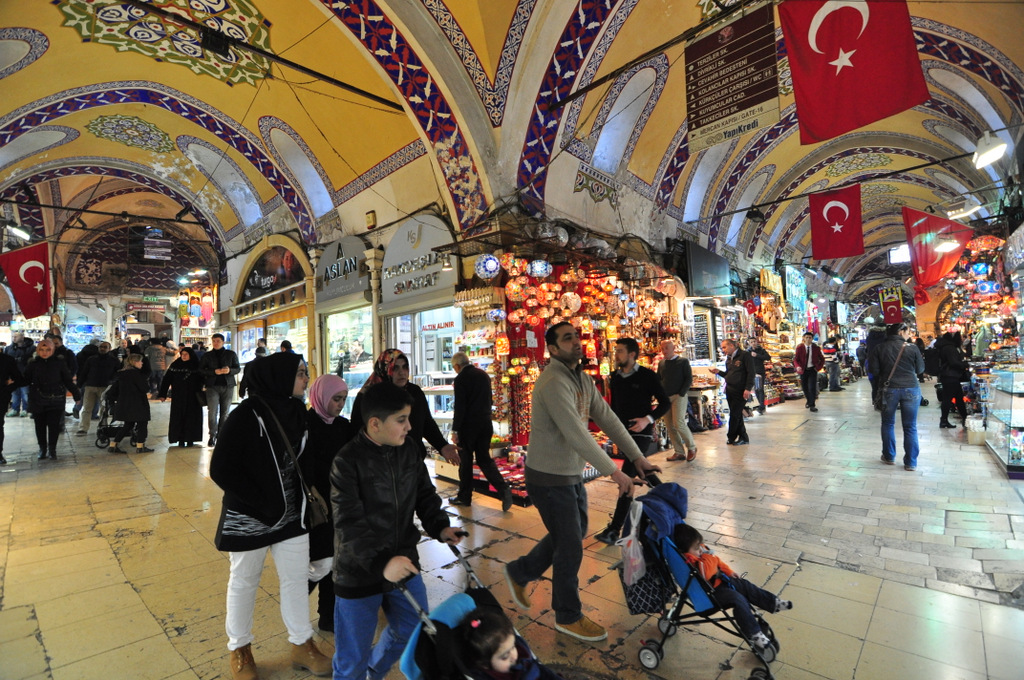
The Grand Bazaar is not a single market but a historic complex that evolved over centuries. It consists of 67 streets and more than 3,000 shops, forming one of the largest covered markets in the world.
Getting lost inside the Grand Bazaar is almost inevitable for first-time visitors — and for many, that sense of disorientation is part of the experience. The bazaar has multiple entrances, but Nuruosmaniye Gate (Gate No. 1) and Beyazıt Gate (Gate No. 7) are among the most commonly used.
The street connecting these two gates is called Kalpakçılarbaşı Street, often considered the main artery of the Grand Bazaar. Remembering the direction of this street can help visitors orient themselves while navigating the interior.
Although the Grand Bazaar is internationally recognized as one of Istanbul’s most famous shopping destinations, it represents only one segment of the city’s broader commercial landscape. Istanbul’s shopping culture extends far beyond its historic walls, encompassing diverse districts with very different characters.
9. Balat
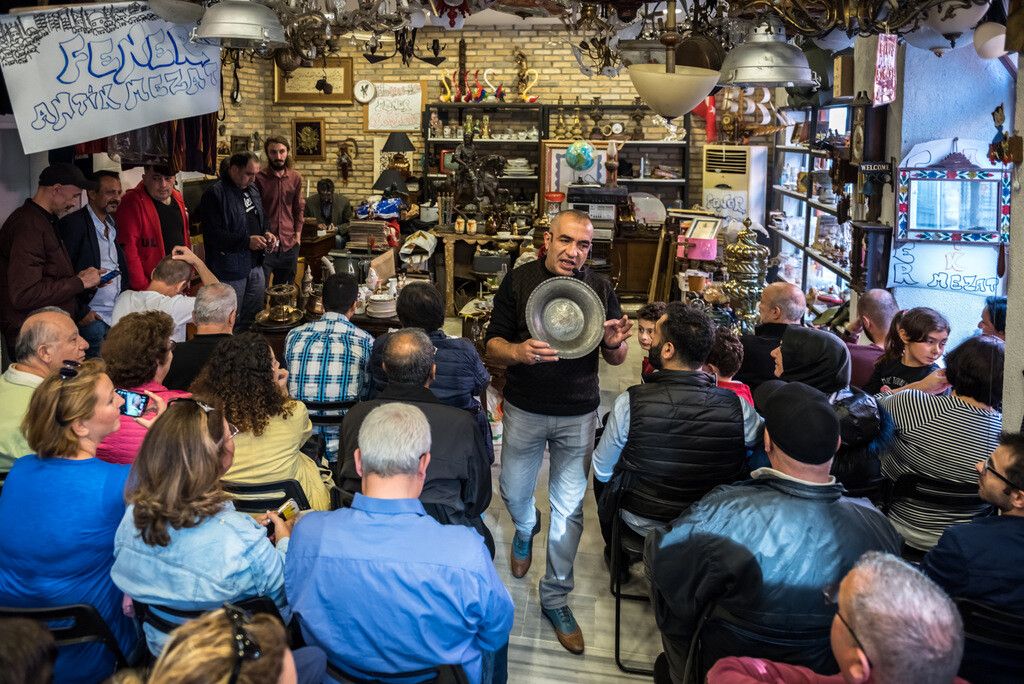
Fener and Balat have become increasingly popular neighborhoods in recent years. One of the advantages of visiting this area is the ability to combine cafés, local restaurants, neighborhood culture, and small-scale shopping within walking distance of each other.
After starting the day with breakfast at a café near the Patriarchal Church of St. George, many visitors continue toward Vodina Street, which connects Fener and Balat. Along this street and its surrounding lanes, you can find retro shops and small second-hand stores that reflect the district’s layered past.
As you move deeper into the backstreets of Fener and Balat, you may encounter shops holding informal auctions, with items displayed along the sidewalks. These stores often specialize in antique or vintage goods. Prices can vary significantly depending on the item and the condition, but the appeal lies in the possibility of discovering unique pieces in an unpolished setting.
The lively atmosphere — with customers entering and leaving shops continuously — adds to the character of the neighborhood and reinforces its reputation as one of Istanbul’s more unconventional shopping areas.
10. Kadıköy
For many foreign visitors, the most attractive feature of Kadıköy is the atmosphere of its Fish Market. Travel writers frequently highlight this area because it preserves a strong sense of neighborhood culture and traditional shopping patterns that are less visible in the more crowded parts of the European side.
Kadıköy Pier and the Fish Market reflect centuries of urban life. The rhythm here feels more local and less tour-oriented, allowing visitors to observe everyday shopping habits more clearly.
Traditional confectionery shops such as Şekerci Cafer Erol, Baylan, and Ali Muhiddin Hacı Bekir add color to the bazaar streets. On the way toward Moda, you will also encounter second-hand bookstores, vintage clothing shops, and small souvenir stores.
Kadıköy is one of the most active shopping districts on the Asian Side. Kadıköy Fish Market and its surrounding streets provide a compact yet diverse commercial landscape.
a. Tellalzade Street
On the European side, Horhor Antique Mall and Çukurcuma are well-known for antique shopping. On the Asian side, Tellalzade Street — located between Kadıköy center and Moda — plays a similar role.
Antique shops line both sides of the street, offering furniture, decorative items, and vintage collectibles. For visitors interested in browsing historical objects outside the main tourist districts, this street provides a quieter alternative.
b. Çilek Street (Old Tuesday Bazaar)
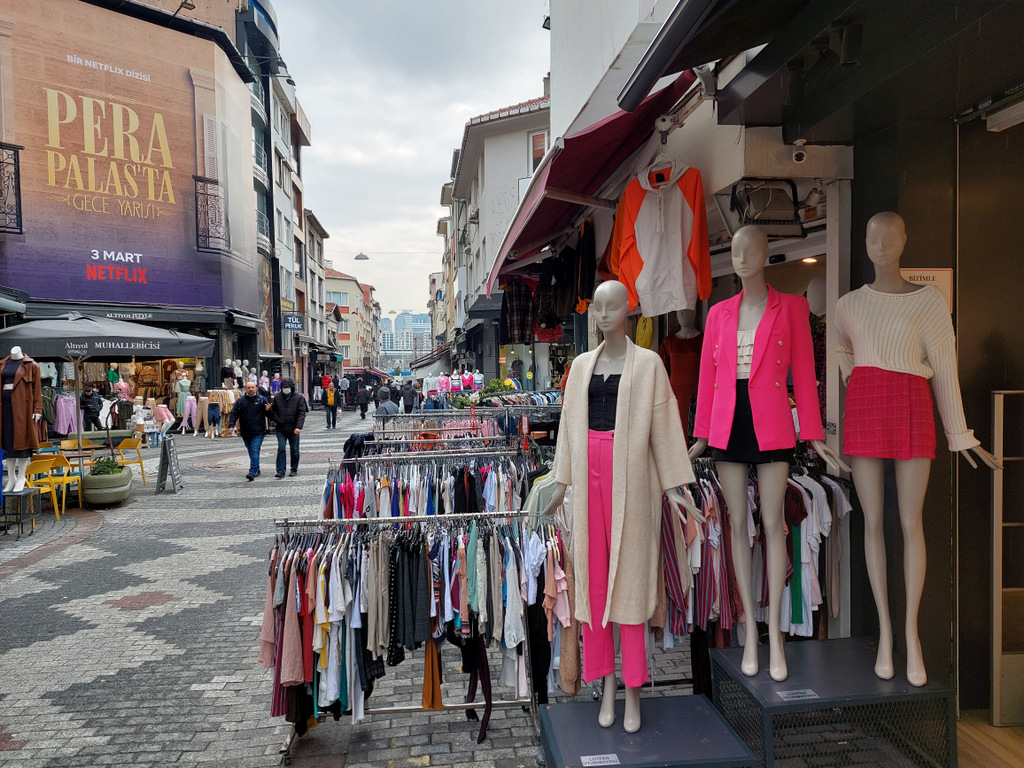
Çilek Street once hosted the Old Tuesday Bazaar in Kadıköy. Today, it consists entirely of permanent shops and remains one of the liveliest retail streets in the district.
Located just across from the famous Bull Monument at Altıyol, the street is busy throughout the week. At its entrance, a long-standing hat seller has become something of a local landmark.
Boutique stores line both sides of Çilek Street, offering trendy dresses, makeup products, and shoe shops. It is particularly popular among locals looking for affordable women’s clothing.
For visitors curious about where residents of Istanbul shop in everyday life, Çilek Street provides a practical answer.
c. Bahariye Street
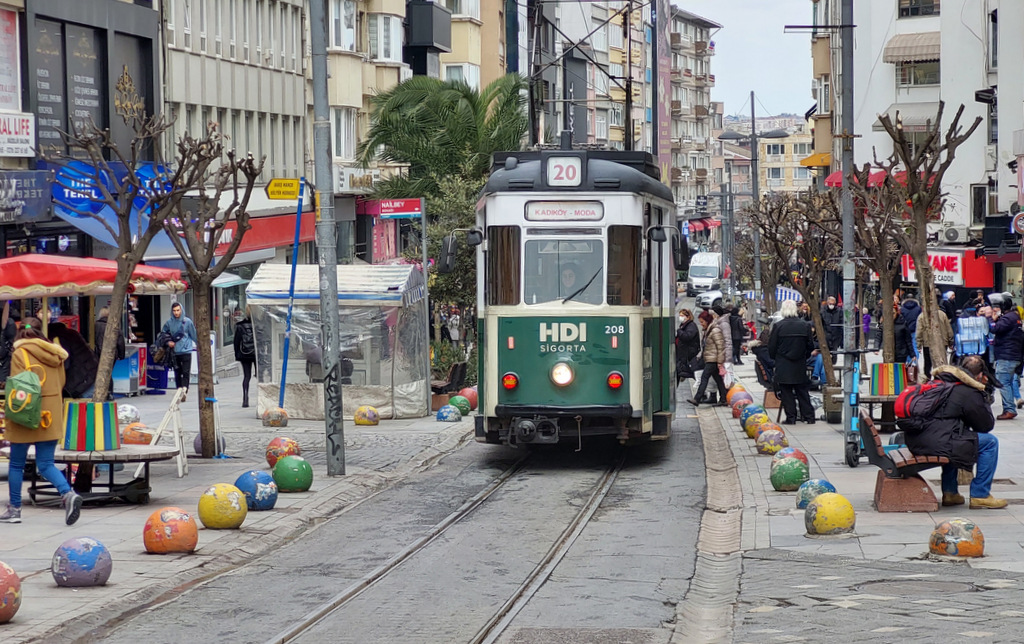
Bahariye Street stretches from the Bull Monument toward Moda and is one of the most pleasant streets in Kadıköy for a walk. A nostalgic tram runs along the avenue, similar to the one on İstiklal Street. Historic buildings such as Süreyya Opera House add architectural character to the area.
While Bahariye itself hosts well-known brands, many of the more affordable clothing options are found in the side passages around the street.
Opera Onur Çarşısı (Opera Onur Bazaar) is one such passage. It offers budget-friendly clothing alternatives, including casual wear and everyday garments inspired by high-end designs. For years, it has been known among locals as a practical shopping stop within Kadıköy.
d. Bağdat Street
Bağdat Street was once considered among the most prestigious shopping avenues in Istanbul. Urban transformation projects in recent years have altered parts of the street, leading to temporary closures and changes in its retail structure.
Despite these shifts, Bağdat Street remains one of the longest and most prominent shopping corridors on the Asian Side. Stretching approximately seven kilometers from Bostancı toward central Kadıköy, it is lined with luxury brand stores, cafés, and residential neighborhoods.
Areas such as Şaşkınbakkal, Caddebostan, and Göztepe offer a combination of retail shops, parks, and seaside proximity. For visitors interested in a more contemporary and upscale shopping environment outside the historic center, Bağdat Street remains a relevant option.
Conclusion
Shopping in Istanbul is rarely just about buying something.
The city’s commercial districts developed along trade routes, around mosques, near ports, and beside transportation hubs. Each neighborhood mentioned in this guide reflects a different layer of that history — from the structured corridors of the Grand Bazaar to the fashion avenues of Nişantaşı, from the hardware passages of Karaköy to the neighborhood markets of Kadıköy.
What makes Istanbul distinctive is not the number of shops, but the continuity of its commercial culture. In some districts, you still see trades grouped together on the same street, following patterns established centuries ago. In others, you witness how global brands have merged with local habits. The contrast between these worlds is part of the experience.
As someone who has guided visitors through these streets for many years, I have noticed that the most meaningful shopping moments are rarely planned. They often happen in a side passage, in a conversation with a shopkeeper, or in a small store discovered by chance. Istanbul rewards patience more than speed.
If you approach its markets not only as places to purchase goods but as extensions of the city’s history, you will notice details that are easy to overlook at first glance — the architecture of a han, the alignment of a street, the persistence of a family business, or the rhythm of a neighborhood morning.
In that sense, shopping becomes another way of reading the city.
And like Istanbul itself, it is best explored slowly.
Written by Serhat Engul

Thank You Serhat Engül it is an insightful article. I am planning to visit Istanbul in the near future for training, shopping and visiting. This article is an eye opener for me. I will recommend to any one who is visiting Istanbul for the first time to read this article. My Name is Regassa from Addis Ababa, Ethiopia.
Hi Regassa, I’m so glad you found this article informative. I hope you have a nice sightseeing and shopping experience in Istanbul. Have a nice holiday.