Istanbul offers one of the most layered visual environments in the world. Within a relatively small area, you move between Roman remains, Byzantine monuments, Ottoman architecture, and modern urban life — often within the same frame.
This guide focuses on the best photo spots in Istanbul, not as a checklist of locations, but as a structured overview of where the city becomes most visually expressive. The aim is to help you understand where to go, what kind of scenes to expect, and how different parts of the city photograph under changing light conditions.
The selections in this article are based on long-term, on-site experience across Istanbul’s main districts — from the Historic Peninsula to the Bosphorus and the Asian side. Rather than listing only well-known viewpoints, the guide also includes areas where composition, timing, and movement play a more defining role.
Each section below is organized by area, allowing you to build your own route depending on time, light, and interest.
📍 Old City (Sultanahmet & Historic Peninsula)
If you are visiting Istanbul for the first time, this is where your photography journey naturally begins. The area around Sultanahmet Square is not just visually impressive — it is where the city’s historical layers are most clearly visible within a single frame.
Within a few minutes’ walk, you move between the remains of the Roman Hippodrome, the monumental presence of Hagia Sophia, and the architectural balance of the Blue Mosque. For photography, this proximity is what makes the area unique. It allows you to build compositions that combine multiple periods of the city’s history without changing location.
In the early morning, before the crowds arrive, the square feels almost still. By mid-morning, guided groups begin to fill the area, and by midday it becomes one of the busiest points in the city. Towards sunset, however, the light softens again, and the domes and minarets regain their depth.
1. Sultanahmet Square
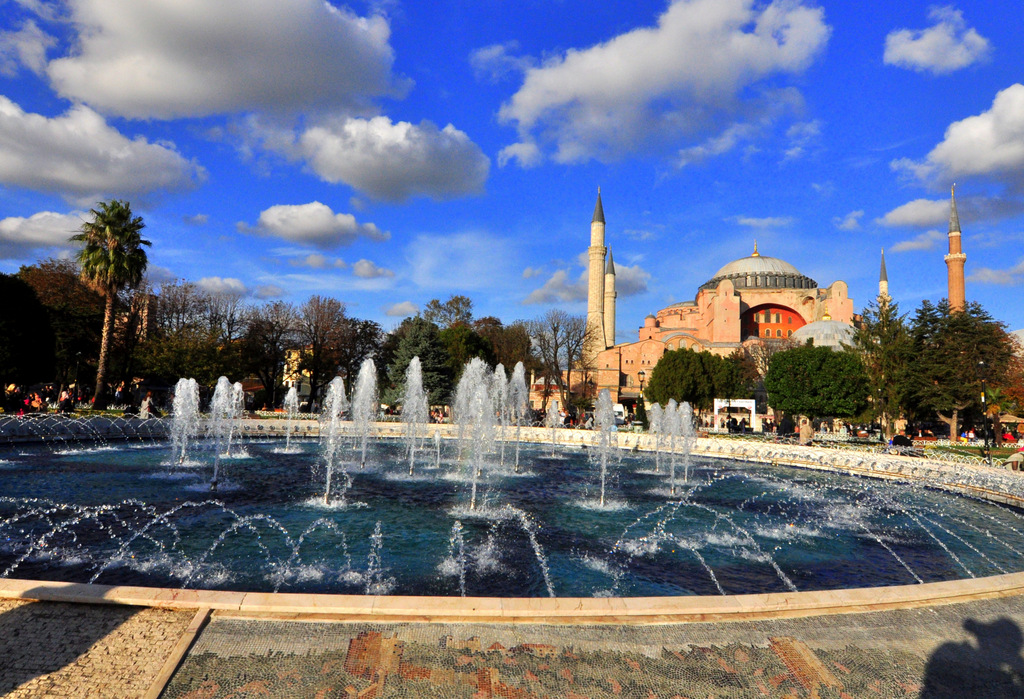
This is the most accessible and versatile photography location in Istanbul. The open space between Hagia Sophia and the Blue Mosque allows you to frame two of the city’s most iconic structures within the same composition.
The small fountain pools in the center of the square are often used for reflections, particularly in the early morning when the water is still. However, slightly shifting your position towards the Hippodrome usually produces a stronger result. From there, the Egyptian Obelisk can be included in the foreground, adding both scale and historical context to the image.
On some mornings, the ground remains slightly wet after cleaning or light rain. In those conditions, reflections on the pavement can be more effective than the fountain pools.
Best time: Early morning or late afternoon
Photo type: Landmark composition, wide-angle shots
2. Hagia Sophia
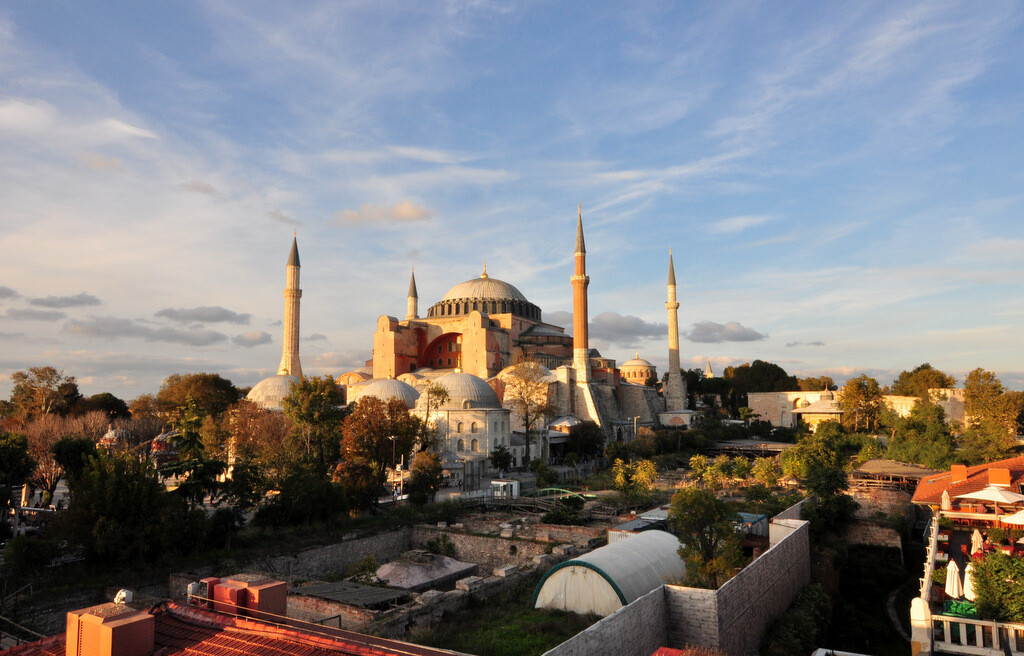
Few places in Istanbul offer as many photographic possibilities as Hagia Sophia — both inside and outside.
From the square, the structure’s massive dome and semi-domes create a layered skyline that changes depending on the light. In softer light, surface textures become more visible, while strong midday light tends to flatten details.
Inside, photography is shaped by the scale of the interior and the way light enters through the upper windows. The space is not symmetrical in the way many visitors expect, and this often leads to stronger images when the focus shifts from symmetry to depth.
Access conditions inside Hagia Sophia have changed in recent years, and visitor movement is now more structured. This affects where and how photographs can be taken, especially in elevated sections.
Best time: Early morning or near sunset
Photo type: Architecture, interior atmosphere
3. Süleymaniye Mosque
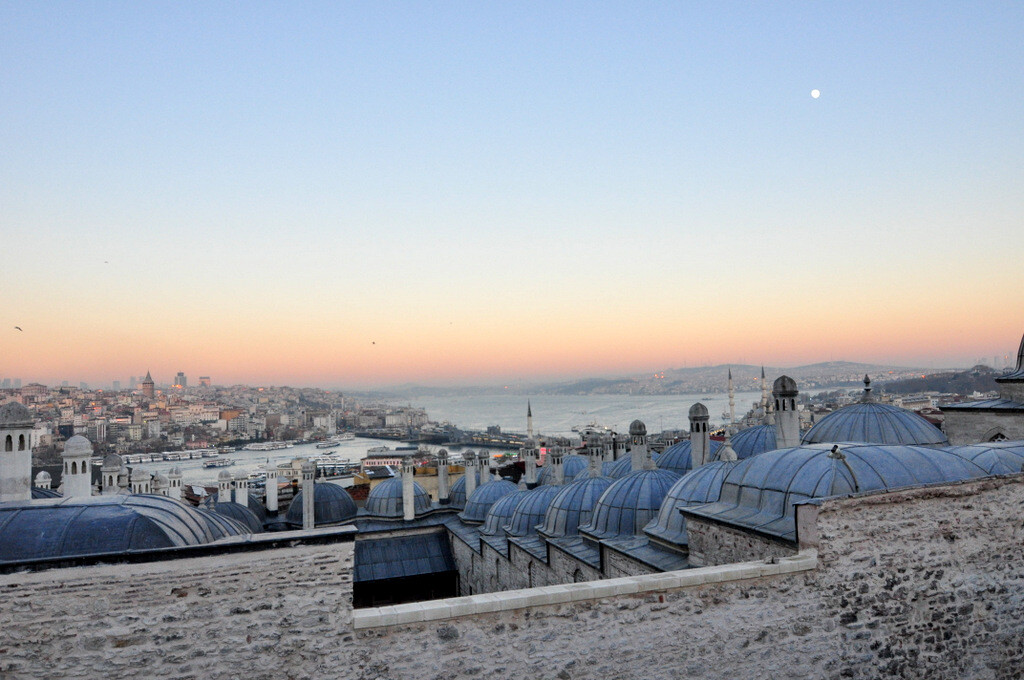
A short walk uphill brings you to Süleymaniye Mosque, which offers a different photographic perspective compared to Sultanahmet.
The area is less crowded and more open, allowing for wider compositions. While the courtyard is often the first stop, the more distinctive views are found beyond it.
From the terraces behind the mosque complex and the streets descending towards the Golden Horn, it is possible to capture layered skyline views that include historic domes, water, and the modern city. These viewpoints provide one of the clearest visual summaries of Istanbul’s geography.
Inside the mosque, the focus shifts to proportion and balance. The light is more controlled, and the interior space lends itself to symmetrical compositions, especially during the morning hours.
Best time: Morning or late afternoon
Photo type: Panorama, skyline, architectural symmetry
From here, the city changes. Moving towards Beyoğlu, the focus shifts from monumental landmarks to more layered urban scenes shaped by streets, elevation, and movement.
📍 Beyoğlu (Karaköy – Galata – İstiklal Street)
Crossing the Golden Horn and moving into Beyoğlu marks a clear shift in the visual character of the city. The monumental scale of the Old City gives way to narrower streets, layered facades, and a more textured urban environment.
This side of Istanbul developed differently from the historic peninsula. While the Old City represented political and religious power, the districts of Galata and Karaköy evolved as centers of trade, finance, and interaction with the wider Mediterranean world. As a result, the architecture, street layout, and atmosphere here offer a different kind of photographic experience.
Instead of isolated landmarks, this area works through combinations — streets, elevations, movement, and contrast. Light changes more quickly, perspectives shift with small movements, and the city feels more dynamic.
1. Karaköy
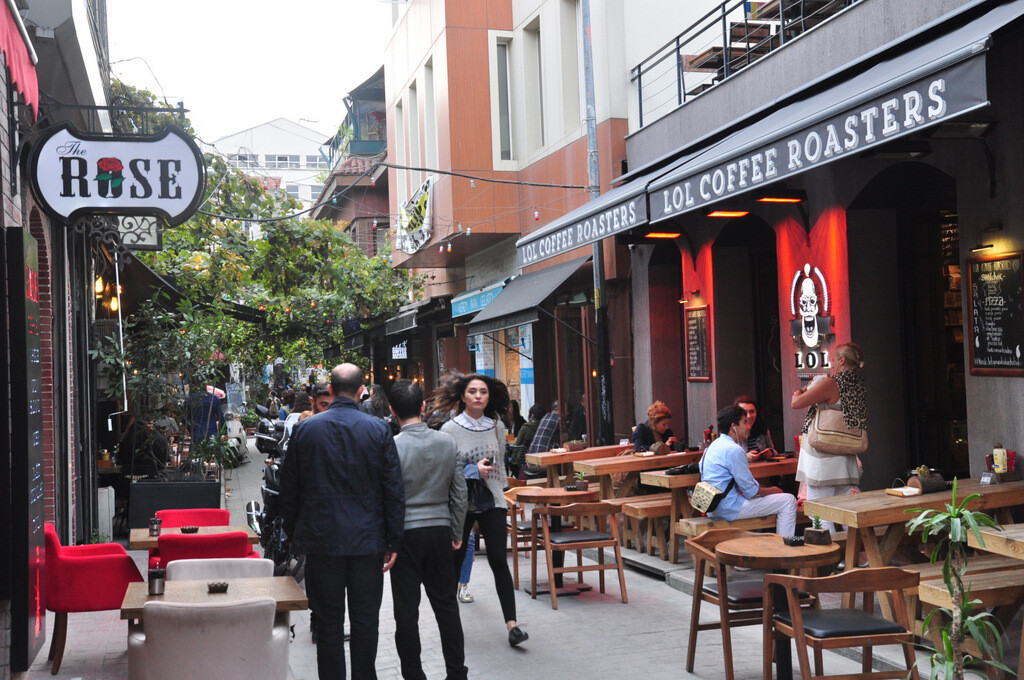
Karaköy offers a more layered and less predictable photographic environment.
Historically, this was the port area of Galata, where goods, people, and ideas moved in and out of the city. Today, that same sense of movement continues, but in a different form — through cafés, workshops, street art, and waterfront redevelopment.
The streets of Karaköy work best when approached without a fixed subject. Instead of searching for a single “spot,” it is more effective to observe how different elements come together — textures, colors, and everyday activity.
Some streets, such as the well-known umbrella-covered passages, attract consistent attention. However, the surrounding side streets often provide more balanced compositions, especially when the focus shifts from decoration to context.
Along the waterfront, the contrast between historic structures and newer buildings creates additional framing opportunities. The area also benefits from changing light conditions, particularly in the late afternoon when shadows begin to define the street geometry.
Best time: Morning or late afternoon
Photo type: Street photography, texture, urban detail
2. Galata Tower

Galata Tower is one of the most recognizable elements of Istanbul’s skyline, but photographing it effectively is not always as straightforward as it seems.
The tower was built by the Genoese in the 14th century as part of their fortified settlement in Galata. Today, it still defines the surrounding area, rising above a dense network of streets.
Most visitors focus on reaching the top for panoramic views. While the view is impressive, the most consistent photographic results are often found at street level.
Approaching the tower through the surrounding streets allows you to frame it within the urban fabric — with narrow passages, sloping streets, and moving crowds adding depth to the image. The area around Kuledibi is particularly effective for this type of composition.
From a distance, the tower can also be framed together with the Golden Horn, especially from the bridges or waterfront areas. In these cases, including movement — ferries, traffic, or pedestrians — helps create a more complete scene.
Best time: Early morning or late afternoon
Photo type: Urban composition, skyline layering
3. İstiklal Street

Istiklal Street is one of the most active pedestrian corridors in Istanbul and offers a different type of photographic subject: movement.
Historically known as the Grand Rue de Pera, this avenue developed as the European-oriented center of the city in the 19th century. Many of the buildings along the street still reflect that period, even if their original functions have changed.
Today, the street is defined by constant motion. The nostalgic red tram moving through the crowd provides a recognizable focal point, but the stronger images usually come from how it interacts with its surroundings.
Rather than isolating the tram, compositions that include the crowd, the architecture, and the rhythm of movement tend to be more effective. Side streets and historic passages branching off İstiklal also offer quieter alternatives, where details of the late Ottoman urban fabric can still be observed more clearly.
Lighting conditions vary significantly throughout the day. Early hours offer more control, while later in the day, the density of people becomes part of the composition.
Best time: Early morning or late afternoon
Photo type: Street photography, movement, urban rhythm
As you move towards the Golden Horn, the scale becomes more contained and the atmosphere more intimate. Photography shifts from urban density to quieter streets shaped by texture and everyday life.
📍 Golden Horn (Fener – Balat – Eyüp)
Moving along the inner curve of the Golden Horn introduces a quieter and more layered side of Istanbul. Compared to the open views of the Bosphorus or the density of the Old City, this area feels more enclosed and more intimate.
Here, photography shifts away from monumental structures and wide skylines. The focus moves towards streets, textures, and smaller details that reveal how the city has evolved over time.
The districts along this stretch developed as residential and community-based areas during the Ottoman period, and traces of that structure are still visible today. Walking through these neighborhoods, different layers of the city appear within a relatively small area — sometimes in the same street.
1. Fener

Fener offers one of the most distinct architectural contrasts along the Golden Horn.
The area is historically associated with the Greek Orthodox community and still hosts the Ecumenical Patriarchate. Among the most recognizable structures is the Phanar Greek Orthodox College, a large red-brick building that stands out sharply from its surroundings.
Photographically, the challenge here is scale. The building itself is difficult to frame fully due to the narrow streets around it. Approaching from lower angles or using wider perspectives generally produces more balanced results.
Beyond this landmark, the surrounding streets provide more flexible compositions. Sloping roads, older facades, and variations in elevation create natural depth within the frame.
Best time: Morning or late afternoon
Photo type: Architectural contrast, street layering
2. Balat
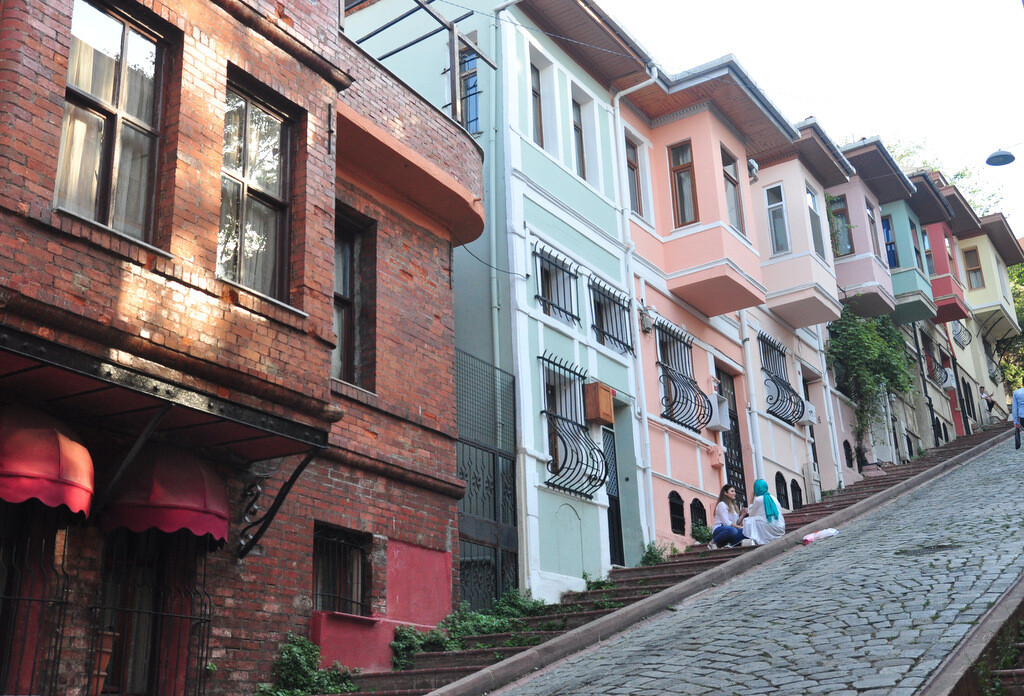
Balat is one of the most photographed districts in Istanbul, primarily known for its colorful houses and narrow streets.
However, the visual appeal of Balat is not limited to these well-known spots. While streets such as Kiremit Street or Merdivenli Yokuş attract most of the attention, similar textures and compositions can be found throughout the neighborhood.
What distinguishes Balat is not a single viewpoint, but the continuity of its street fabric. Cobblestone paths, closely spaced buildings, and everyday activity create a more layered photographic environment.
At certain times of the day, especially later in the morning, some of the most popular streets become crowded. In those conditions, shifting focus to adjacent streets often leads to more balanced compositions.
Best time: Early morning or late afternoon
Photo type: Street photography, color, urban texture
3. Eyüp
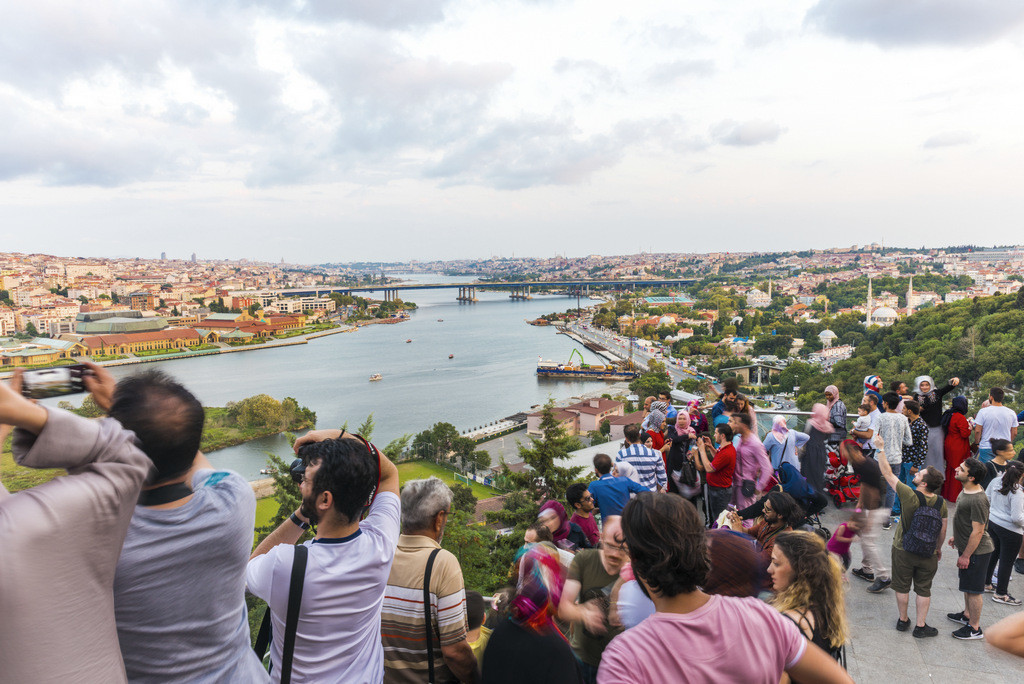
Eyüp marks a transition not only in geography, but also in atmosphere.
The area around the Eyüp Sultan Mosque functions as one of the most important religious centers in Istanbul, and this is reflected in its spatial organization and movement patterns. Compared to other parts of the city, the environment here feels more contained and more deliberate.
For photography, the main shift is in elevation. Moving uphill towards the cemetery and further to Pierre Loti Hill introduces wider views over the Golden Horn.
From higher points, the curve of the inlet becomes more visible, and the relationship between the historic peninsula and its surroundings can be understood more clearly within a single frame.
Best time: Late afternoon or near sunset
Photo type: Elevated views, landscape, layered composition
From here, the city opens outward again. As you leave the enclosed curve of the Golden Horn and move towards the Bosphorus, the horizon expands, and photography returns to wider frames shaped by water and distance.
📍 Bosphorus (Ortaköy – Bebek – Rumeli Fortress)
Moving north along the Bosphorus introduces a different visual rhythm. The density of the city gradually dissolves, and the horizon begins to open.
Unlike the layered compositions of the Old City or the textured streets of Beyoğlu, this part of Istanbul is defined by space. Water becomes the dominant element, and photography shifts towards wider frames, longer sightlines, and changing light conditions.
The stretch from Ortaköy to Rumeli Fortress offers one of the most continuous waterfront experiences in the city. Along the way, the character evolves gradually — from busy and compact to quieter and more residential.
1. Ortaköy
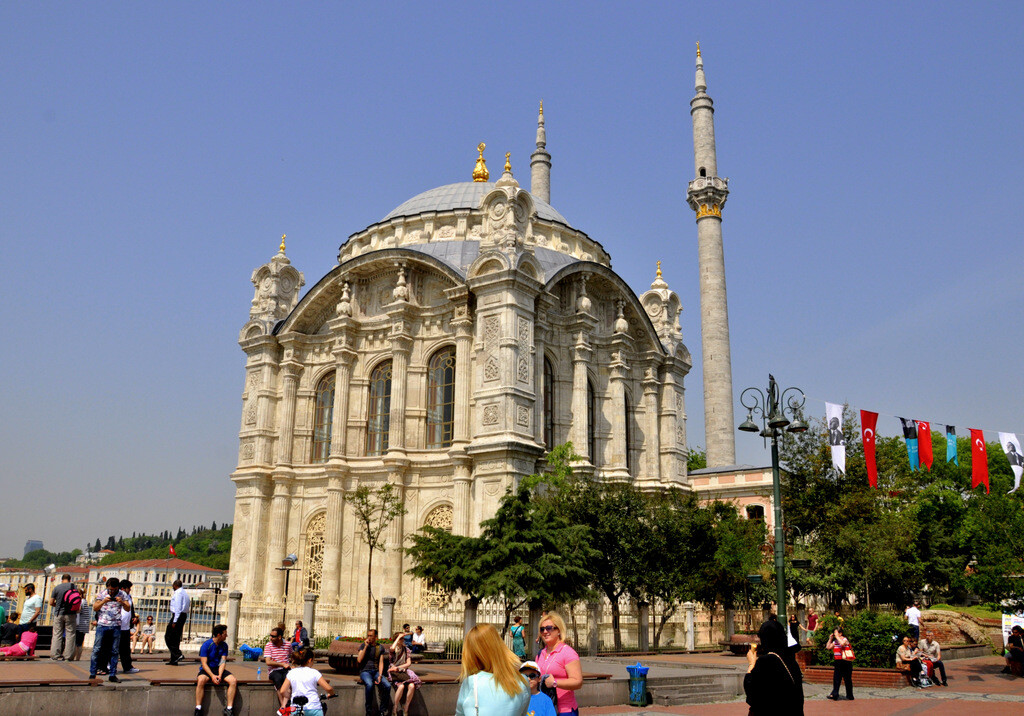
Ortaköy is one of the most recognizable photography points along the Bosphorus.
At the center of the square stands the Ortaköy Mosque (Büyük Mecidiye Mosque), positioned directly beneath the Bosphorus Bridge. This combination of a 19th-century Ottoman mosque and modern infrastructure creates one of the most iconic compositions in the city.
The strongest images are usually taken from the waterfront, where the mosque and the bridge can be aligned within a single frame. Early morning light is particularly effective here, as it comes from the opposite shore and defines the structure more clearly.
During the day, the area becomes crowded, and clean compositions are harder to achieve. In those conditions, including movement — people, birds, or passing boats — often produces more balanced results.
Best time: Early morning or late afternoon
Photo type: Landmark composition, waterfront framing
2. Arnavutköy
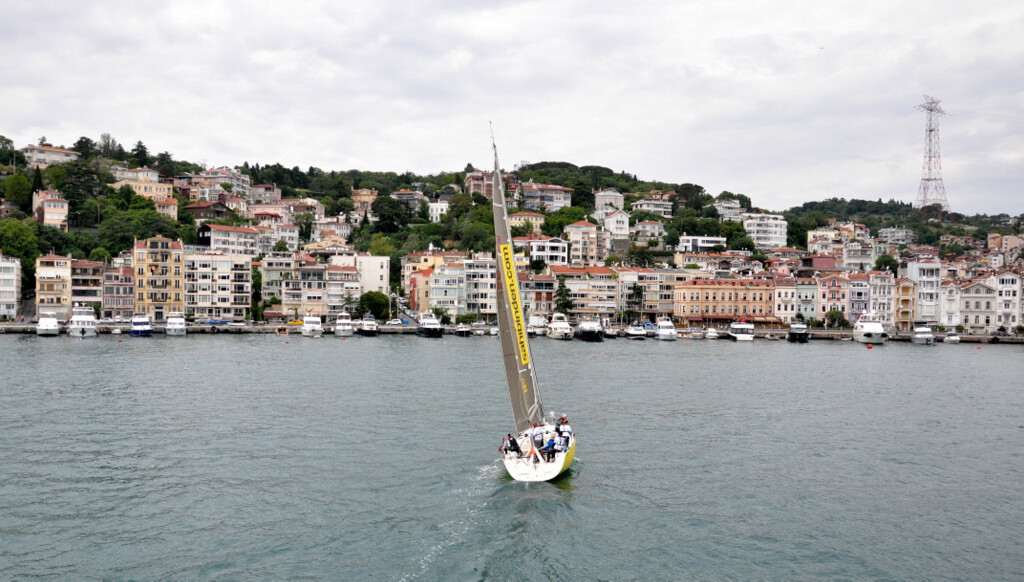
Walking north from Ortaköy, the atmosphere begins to shift again.
Arnavutköy does not function as a central stop, but it plays an important role in the transition between Ortaköy and Bebek. The waterfront becomes less structured, and the rhythm slows down.
Along this stretch, rows of historic wooden houses line the shore. Their colors and textures are most visible when the light softens, especially in the late afternoon. The narrow streets rising behind the coastline also offer additional layers for street-level photography.
At certain points, the current of the Bosphorus becomes more visible, particularly around the small projections along the shore. These subtle movements of water add another dimension to otherwise static compositions.
3. Bebek
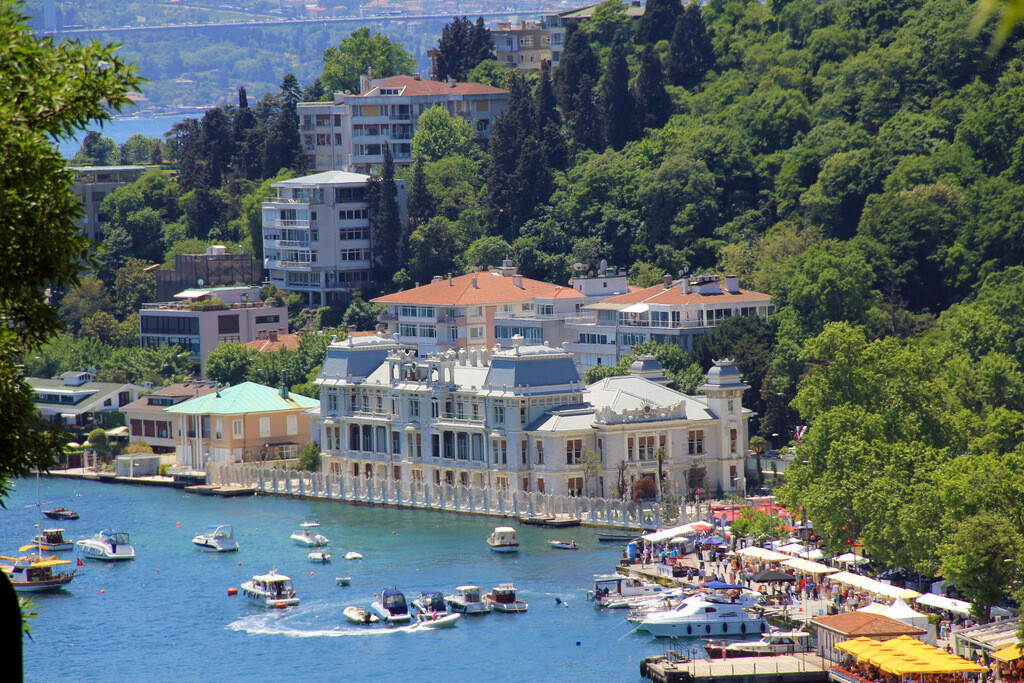
Bebek introduces a more open and balanced setting.
The natural curve of the bay creates a wider field of view, allowing for compositions that combine water, shoreline, and distant hills in a single frame. Compared to Ortaköy, the environment here feels less compressed and more continuous.
The waterfront promenade is one of the most consistent photography lines in the city. Boats, reflections, and changing light conditions provide multiple variations of the same scene.
In the morning, the water surface is usually calmer, making reflections more stable. Later in the day, increased movement on the water can add energy to the frame.
Best time: Morning or late afternoon
Photo type: Wide-angle views, reflections, waterfront scenes
4. Rumeli Fortress
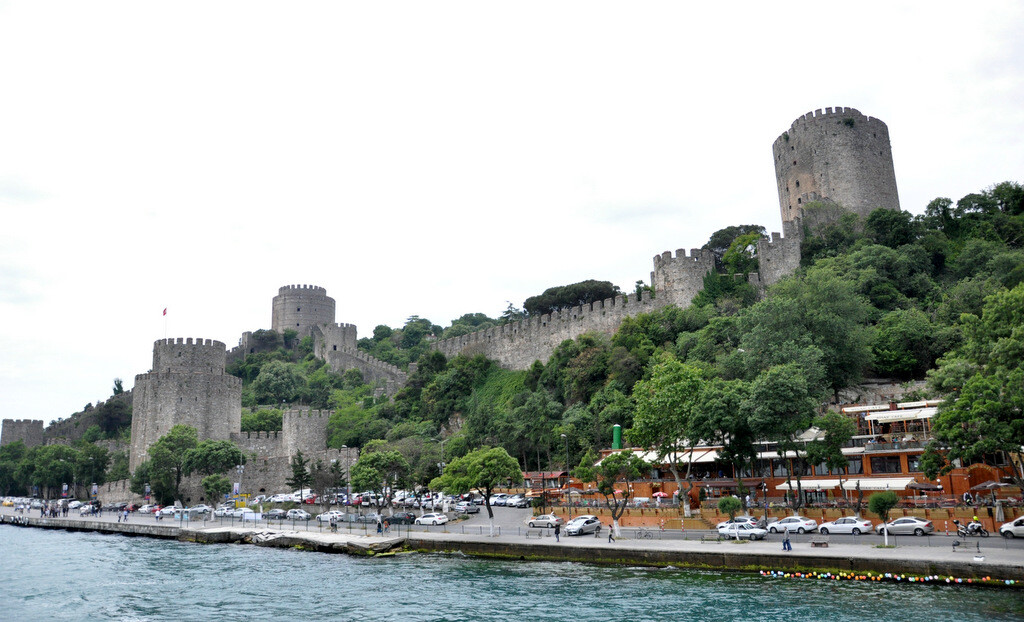
As the Bosphorus narrows, the landscape becomes more defined. This is where you reach Rumeli Fortress.
Built in the 15th century at the narrowest point of the strait, the fortress dominates the surrounding area with its scale and position. For photography, it introduces a different type of subject — structure within landscape.
The stone walls and towers provide strong foreground elements. From certain angles, they can be used to frame the Bosphorus and the bridge beyond, creating layered compositions that combine history and geography.
The best results are often achieved when the light comes from behind the structure, illuminating the opposite shore and creating contrast between the dark stone and the brighter background.
Best time: Afternoon or late afternoon
Photo type: Framing compositions, landscape with structure
Crossing towards the Asian side introduces a different rhythm. The city becomes more local, more residential, and less defined by major landmarks.
📍 Asian Side (Kadıköy – Moda – Çamlıca)
Crossing to the Asian side introduces a quieter and more local dimension of Istanbul. The visual intensity of the European side gradually gives way to a more lived-in rhythm, where photography shifts from landmarks to everyday scenes.
This part of the city is less defined by monumental structures and more by continuity — of streets, routines, and small-scale interactions. As a result, the photographic experience here becomes more observational, relying less on iconic views and more on timing and atmosphere.
1. Kadıköy
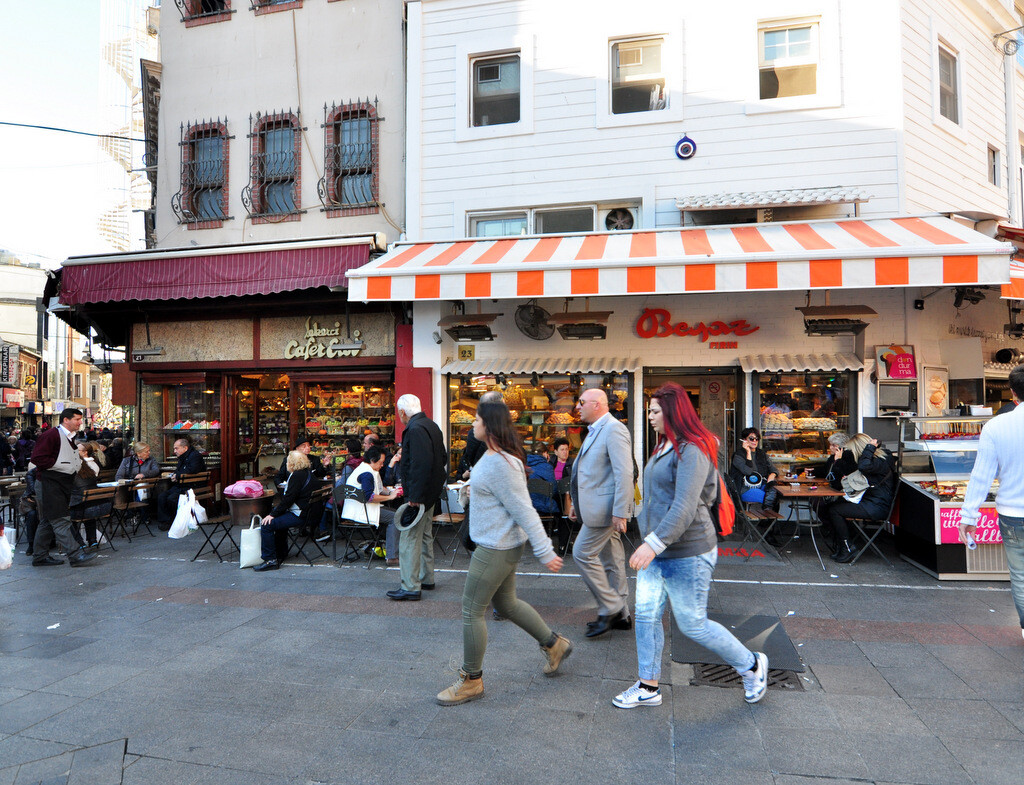
Kadıköy offers one of the most active street environments in the city.
Unlike the historic districts on the European side, Kadıköy is not organized around major landmarks. Instead, it is shaped by movement — markets, cafés, small shops, and constant pedestrian flow.
The central market area provides a dense and layered setting for photography. Fish stalls, produce displays, and narrow streets create a continuous sequence of visual elements. In these conditions, the focus shifts from isolated subjects to composition within movement.
Further along, streets such as Bahariye extend this rhythm with a slightly more open structure. The nostalgic tram moving through the street introduces a familiar focal point, but the stronger images often come from the interaction between people, space, and motion.
Best time: Morning or late afternoon
Photo type: Street photography, candid scenes, urban rhythm
2. Moda
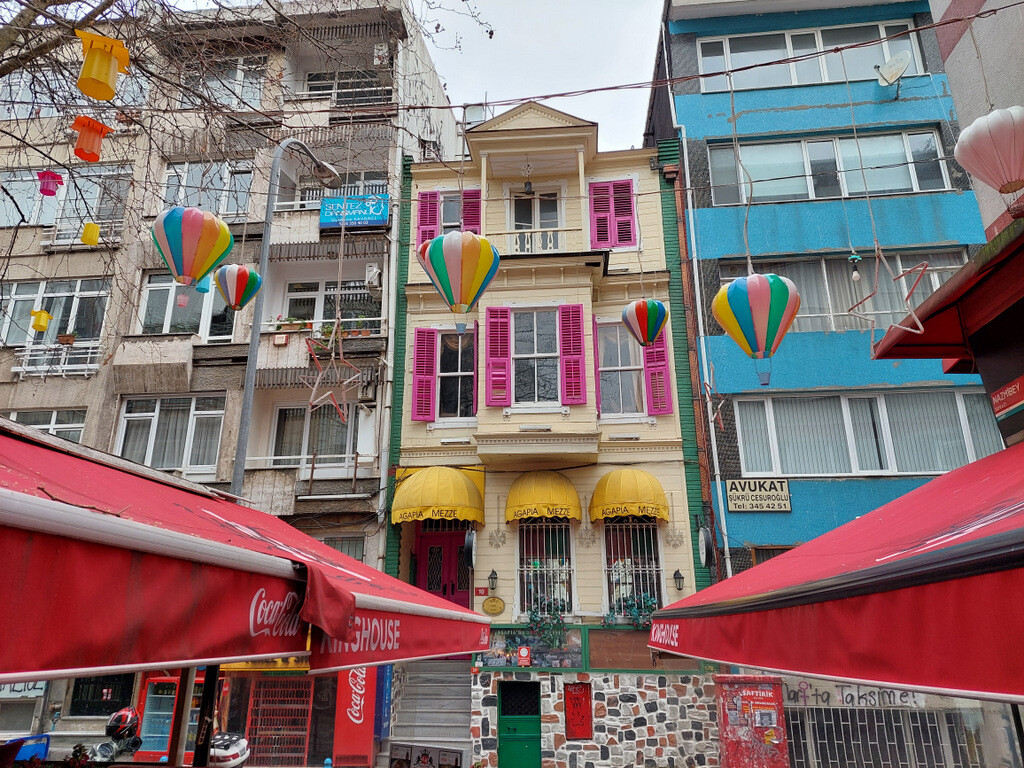
Moving south from Kadıköy, the atmosphere begins to soften as you reach Moda.
The density of the streets gives way to open coastal paths and wider views of the Marmara Sea. Compared to the Bosphorus, the water here feels calmer, and the horizon appears more continuous.
Photography in Moda is less about structure and more about balance. The combination of shoreline, trees, and distant silhouettes of the historic peninsula creates a more relaxed visual field.
At certain times of the day, especially towards sunset, the light aligns with the skyline across the water. From this angle, the outlines of the historic peninsula become visible in the distance, allowing for long-range compositions that connect both sides of the city within a single frame.
Best time: Late afternoon or sunset
Photo type: Coastal views, silhouettes, wide compositions
3. Çamlıca Hill
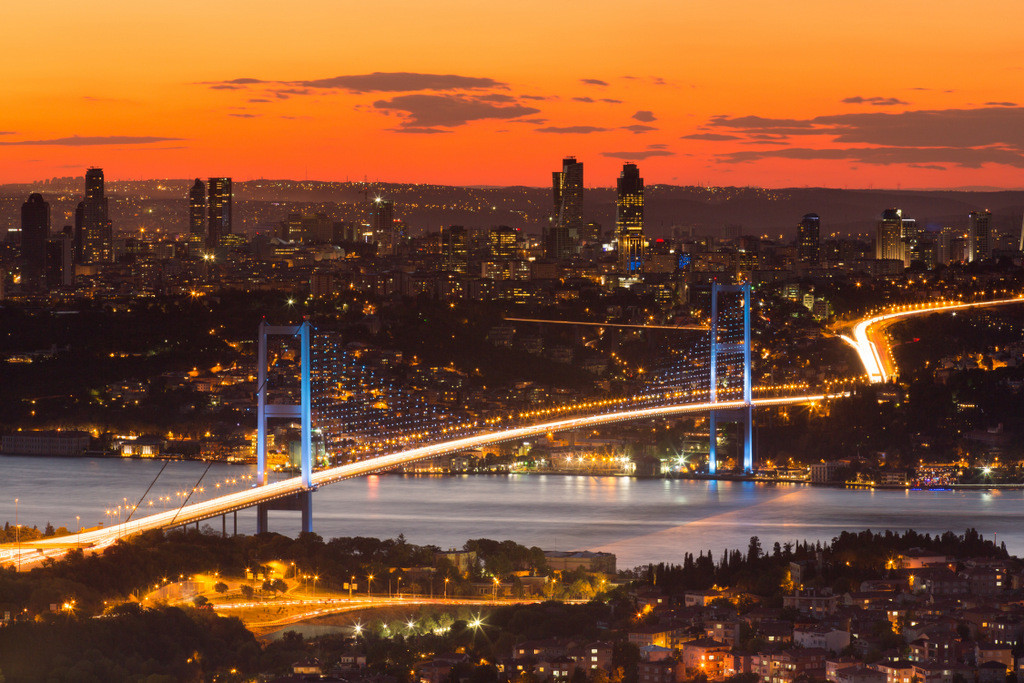
For a broader perspective, Çamlıca Hill provides one of the highest viewpoints in the city.
From here, Istanbul can be seen as a whole — the Bosphorus, the historic peninsula, and the expanding urban areas beyond. Unlike street-level photography, this vantage point shifts the focus towards scale and spatial relationships.
Wide-angle views allow you to capture the full extent of the city, while more focused compositions can emphasize the layered structure of the Bosphorus and the bridges connecting the two continents.
The clarity of the view depends heavily on weather conditions, but when visibility is good, this location offers one of the most comprehensive visual summaries of Istanbul.
Best time: Morning or late afternoon
Photo type: Panorama, cityscape, long-range composition
From here, the structure of the city becomes easier to read. The districts that once felt separate — the historic peninsula, the Golden Horn, the Bosphorus, and the Asian side — begin to form a single, connected landscape.
Conclusion
Istanbul is not a city that reveals itself through a single viewpoint. Its visual character changes from one district to another — from monumental silhouettes in the Old City to layered streets in Beyoğlu, from the enclosed curve of the Golden Horn to the open horizons of the Bosphorus, and finally to the quieter rhythm of the Asian side.
For photography, this means that the experience is not defined by individual locations alone, but by how you move between them. Light, timing, and context often shape the result as much as the subject itself.
Rather than trying to capture everything at once, it is usually more rewarding to focus on a single area and allow the scene to develop. In some places, this means waiting for the right light; in others, it means observing the movement of the city.
Over time, the most memorable images tend to come not from the most famous spots, but from moments where the city feels balanced — between structure and life, scale and detail, stillness and motion.

Thank you for sharing these wonderful places! I have been to Istanbul a few times now and didn’t know some of them existed! And I definitely didn’t know squirrels lived in Turkey! Can’t wait to come back 🙂
Thank you for your great comment Sapphire. Now you know where to get great photos in Istanbul for your next visit! I’m glad that it helps!