Süleymaniye Mosque is one of the rare places in Istanbul where monumentality and serenity feel perfectly balanced. Rising on one of the city’s highest hills above the Golden Horn, it is not only a masterpiece of Ottoman architecture but also the heart of a vast imperial complex designed to serve education, charity, healthcare, and daily urban life.
Commissioned by Sultan Süleyman the Magnificent in the 1550s and designed by Mimar Sinan, the chief architect of the Ottoman Empire, the mosque represents the classical peak of Ottoman architectural harmony. Unlike more decorative monuments, Süleymaniye achieves its impact through proportion, light, and structural clarity.
As a licensed Istanbul tour guide with over 20 years of experience, I visit this hill regularly — sometimes as part of standard Old City routes, and often during more focused architectural walks centered on Sinan’s works. That consistent on-site experience matters here, because Süleymaniye is an active place of worship, and the smoothest visit usually depends on timing rather than tickets.
In this guide, you’ll find practical 2026 visiting information first, followed by historical and architectural context to help you understand why Süleymaniye Mosque remains one of Istanbul’s most refined imperial landmarks.
History of Suleymaniye Mosque
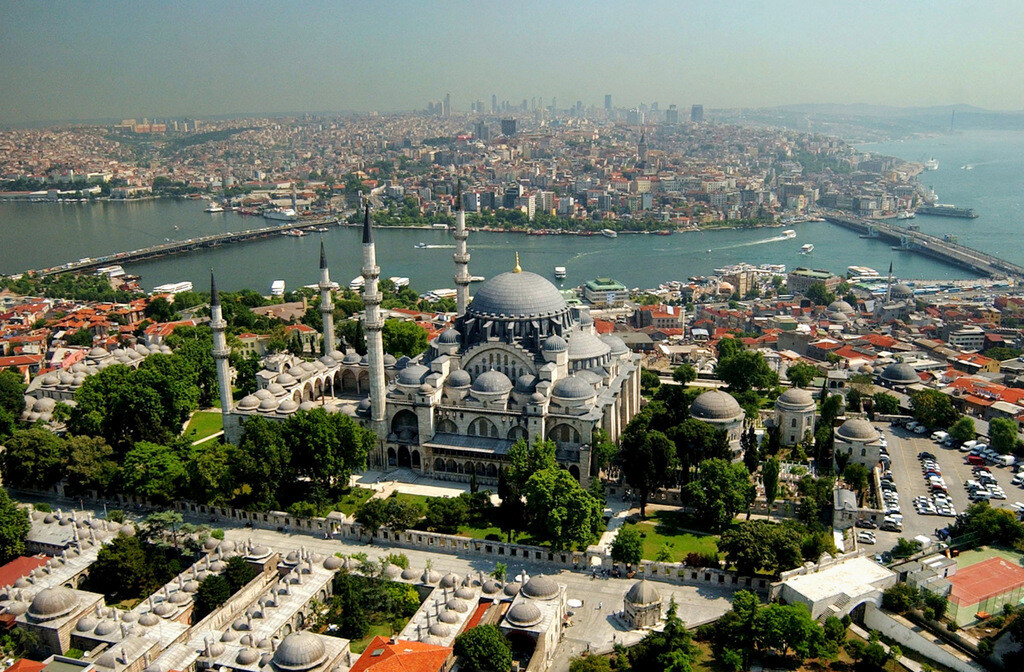
After the Ottoman conquest of Constantinople in 1453, Istanbul gradually developed a new architectural identity. Byzantine domes and city walls remained, but the skyline began to transform with Ottoman imperial mosques.
By the mid-16th century, during the reign of Sultan Süleyman, the empire had reached its political and cultural height. It was in this period that Mimar Sinan rose to prominence. Before Süleymaniye, he had already designed major structures such as Şehzade Mosque, but Süleymaniye would become one of his defining achievements in Istanbul.
Completed in 1557, the mosque was not conceived as a standalone building. It formed the center of a large külliye (imperial complex), including medreses (schools), a hospital, a public kitchen, a library, shops, and a hammam. This broader social function distinguishes Süleymaniye from later monuments such as Blue Mosque (Sultanahmet Mosque), which, despite its visual drama, did not develop into a similarly expansive civic complex.
Süleymaniye Mosque expresses imperial confidence not through excessive ornamentation, but through disciplined architectural geometry — a hallmark of Sinan’s mature style.
Interior of Suleymaniye Mosque
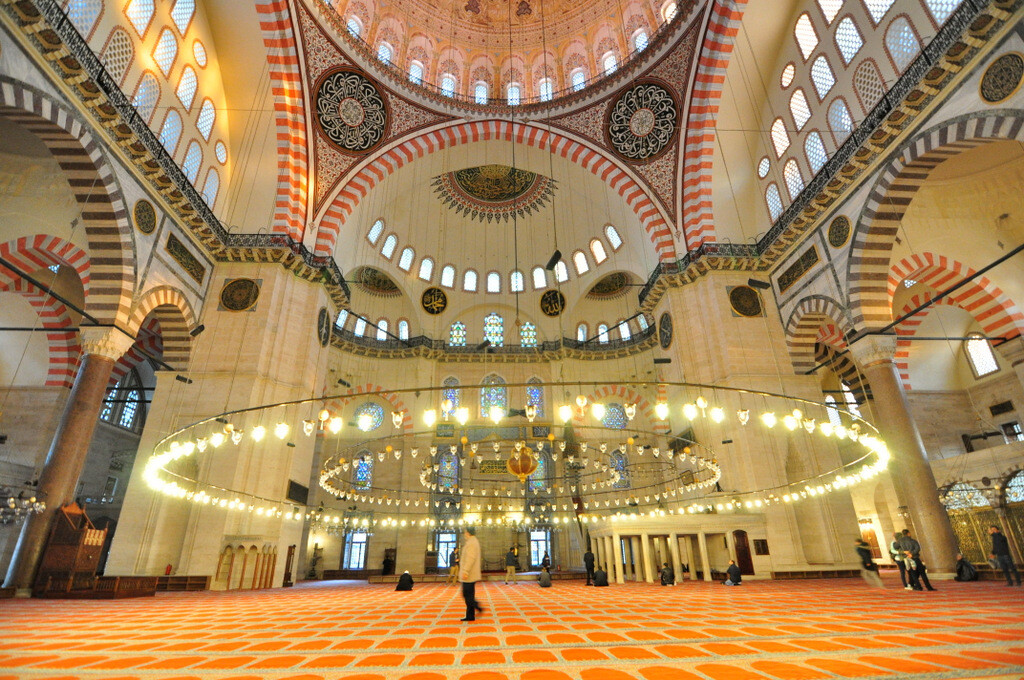
Visitors are often surprised by the interior’s restraint. Unlike Blue Mosque, which features dense İznik tile decoration, Süleymaniye feels open and measured.
The central dome rises above a carefully proportioned prayer hall, supported by massive yet visually balanced structural elements. Decorative details — calligraphy panels, painted motifs, and selective tile work — enhance the space without overwhelming it.
Standing beneath the dome, the architectural experience is one of clarity and equilibrium. It reflects Sinan’s philosophy: harmony between scale, light, and spiritual atmosphere.
Suleymaniye Mosque Opening Hours 2026
Süleymaniye Mosque is generally open to visitors between 09:00 and 18:00, but like all active mosques in Istanbul, it closes temporarily during prayer times.
The information in this guide was reviewed for 2026, but prayer times shift throughout the year according to daylight hours. As a result, visitor access windows may vary slightly from season to season.
Practical Prayer-Time Rule
In major mosques, touristic visits typically pause about 30 minutes before the call to prayer and resume after the congregational prayer ends.
For example, if noon prayer is at 13:00, visitor access may realistically pause between approximately 12:30 and 13:30. This is not a strict formula, but a reliable planning guideline based on regular on-site observation.
If you arrive during a temporary closure, you can spend time in the courtyard, enjoy the panoramic terrace overlooking the Golden Horn, or visit the nearby tombs of Sultan Süleyman and Hürrem Sultan.
Entrance Fee & Dress Code (2026)
Entrance to Süleymaniye Mosque is free of charge.
Visitors are expected to dress modestly:
- Women should cover their hair with a scarf.
- Shoulders and knees should be covered.
- Men should avoid shorts above the knee.
Because Süleymaniye is less crowded than Blue Mosque, the atmosphere here often feels calmer and more relaxed — but the same respect rules apply.
How to Get to Süleymaniye Mosque
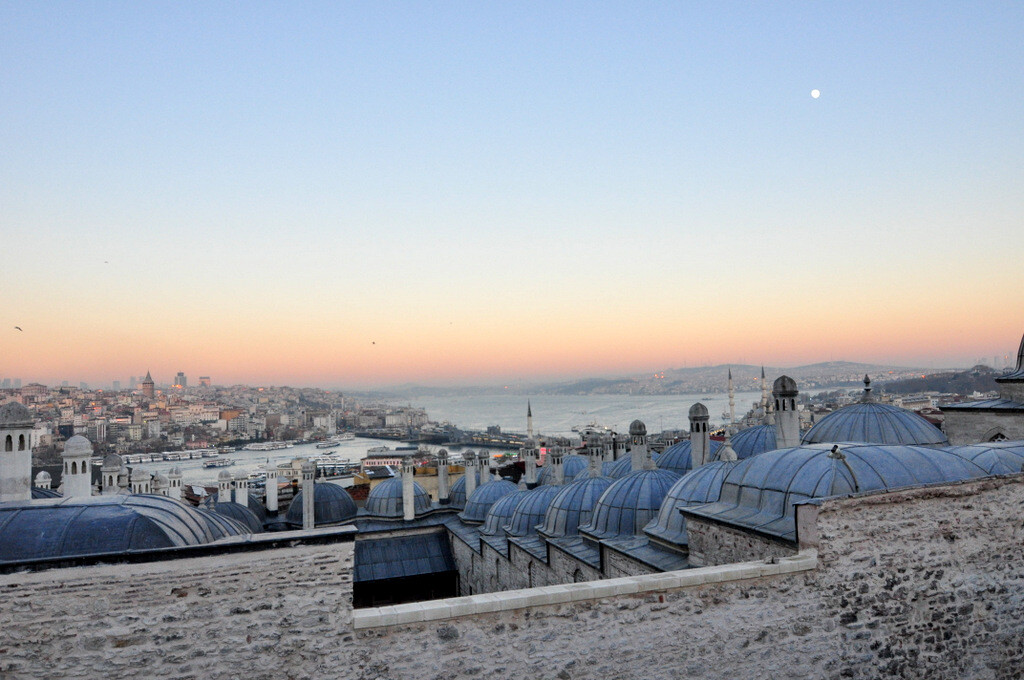
Süleymaniye Mosque is located on Istanbul’s Third Hill, overlooking the Golden Horn. The elevated position gives the mosque its panoramic character — but it also means that some routes involve uphill walking.
The good news is that with the right approach, reaching Süleymaniye is straightforward and comfortable.
Below are the most practical options depending on where you are staying.
1. T1 Tram (From Sultanahmet, Sirkeci, or Eminönü Area)
If you are staying in the Historic Peninsula, the T1 Tram line is the simplest choice.
- Take the tram toward Bağcılar.
- Get off at Laleli–Üniversite station.
- From there, it is about a 10–15 minute walk to the mosque.
The walk from Laleli is relatively manageable compared to other routes and passes through the Vezneciler area near İstanbul University.
You can also use Beyazıt–Kapalıçarşı station, though that route tends to be slightly busier due to Grand Bazaar foot traffic.
2. M2 Metro (From Taksim, Galata, or Beyoğlu)
If you are staying in Taksim, Galata, or the Beyoğlu district, the M2 Metro line is often the most efficient option.
- Take the M2 Metro toward Yenikapı.
- Get off at Vezneciler station.
- Follow signs toward Süleymaniye or İstanbul University.
- From the station exit, the mosque is roughly a 5-minute walk on relatively level ground.
This route avoids tram congestion and minimizes uphill walking. For many visitors coming from the northern side of the city, it is the most comfortable approach.
3. Walking from Eminönü or the Spice Bazaar
From Eminönü Square, the mosque appears visually close because it dominates the skyline above you.
However, walking uphill from the waterfront involves a steep climb through the Tahtakale market streets. While this route offers a lively glimpse into local commercial life, it can feel physically demanding — especially during warmer months.
If you enjoy exploring on foot, a more comfortable strategy is to visit Süleymaniye first and then walk downhill toward the Spice Bazaar afterward.
4. Taxi
Taxis can bring you close to the mosque, though pedestrian-only areas mean you may still walk the final few hundred meters.
If using a taxi, you can ask to be dropped near the “Kuru Fasulyeciler” street, located just beside the mosque complex. From there, it is a short and easy approach to the main courtyard.
What to Do Around Süleymaniye Mosque
Süleymaniye is well positioned for a half-day Historic Peninsula route.
1) Local Restaurants – The “Kuru Fasulye” Street
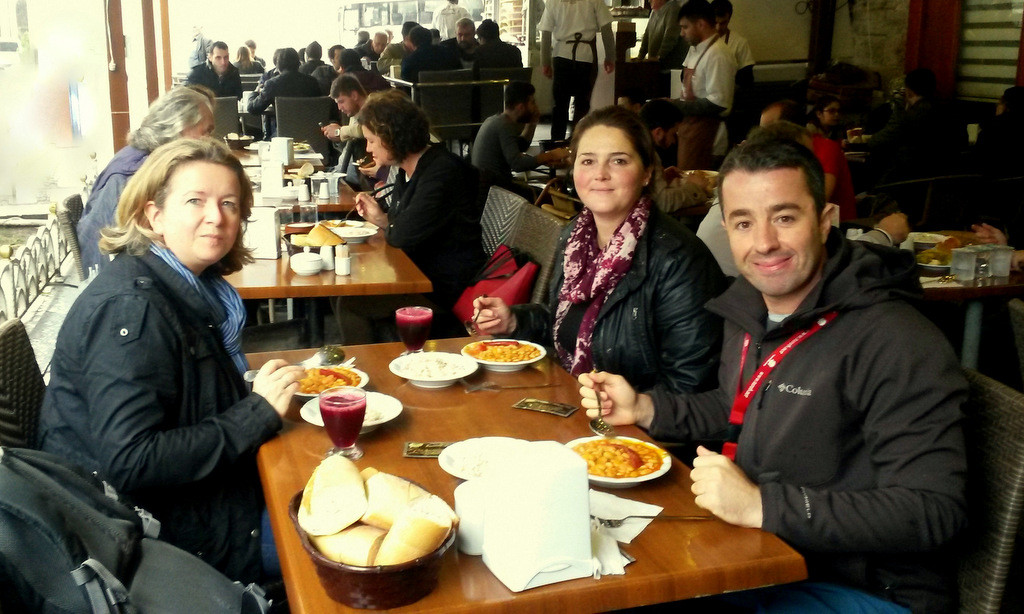
The neighborhood beside the mosque is known for traditional kuru fasulye (Turkish-style stewed beans). Small local restaurants line the street, and one of the well-known names is Erzincanlı Ali Baba. It’s a simple and authentic lunch stop after your visit.
2) Grand Bazaar (Walking Distance)
Grand Bazaar is within walking distance. Walking downhill via Fuat Paşa Street connects you directly to the market area while passing through lively local streets.
3) Süleymaniye Hammam
Part of the broader külliye tradition, Süleymaniye Hammam is one of Istanbul’s historic bathhouses. It is also known for allowing couples to use the same section — unlike many traditional hammams that operate separate areas for men and women.
Conclusion
Süleymaniye Mosque is not simply another monument on Istanbul’s skyline. It is a statement of balance — between power and humility, geometry and light, empire and faith. More than four centuries after its completion, it continues to function exactly as it was intended: as a living place of worship that quietly anchors the Historic Peninsula.
Unlike some of the city’s more crowded landmarks, Süleymaniye rewards those who slow down. The courtyard views over the Golden Horn, the disciplined harmony of Sinan’s architecture, and the presence of Sultan Süleyman and Hürrem Sultan’s tombs create an experience that feels complete rather than overwhelming.
If you plan your visit with the prayer-time rhythm in mind and allow enough time to explore both the mosque and its surroundings, Süleymaniye becomes more than a stop on an itinerary — it becomes a perspective point on Istanbul itself.
For travelers interested in understanding how Ottoman architecture evolved under Mimar Sinan, or how this hill connects to nearby sites such as Şehzade Mosque and the older Byzantine layers of the city, this district offers one of the most coherent historical landscapes in Istanbul.
Written by Serhat Engul

Leave a Reply