The Harem Rooms are among the most fascinating parts of Topkapi Palace. Nineteenth-century Orientalist paintings often imagined the Harem as a place of luxury and entertainment, where women spent their days dancing and relaxing. In reality, however, it was a highly organized residential and educational institution where women from different parts of the Ottoman world were trained for life in the palace.
The most powerful woman in the Harem was the Sultan’s mother, known as the Valide Sultan. The Sultan’s sisters, daughters, wives and other female relatives also lived within this secluded section of the palace, creating a strict hierarchy shaped by family ties, education and proximity to the throne.
In this article, you can learn about the history and daily life of the Topkapi Palace Harem, follow the main visitor route and see photographs of the rooms and courtyards that are open to the public today.
Is the Harem in Topkapi Palace Worth It?
The entrance to the Harem Rooms is located in the Second Courtyard of Topkapi Palace, beside the Imperial Council building, one of the most distinctive structures in this part of the palace.
Admission to the Harem requires an additional ticket, but the visit is well worth the extra cost. The rooms and courtyards reveal the private world of the Ottoman dynasty and offer a much clearer understanding of daily life inside the palace.
As a local guide, I consider the Harem an essential part of a Topkapi Palace visit. The following twelve sections follow the main visitor route and introduce the most important courtyards, chambers and passageways along the way.
1. Courtyard of the Zülüflü Baltacılar
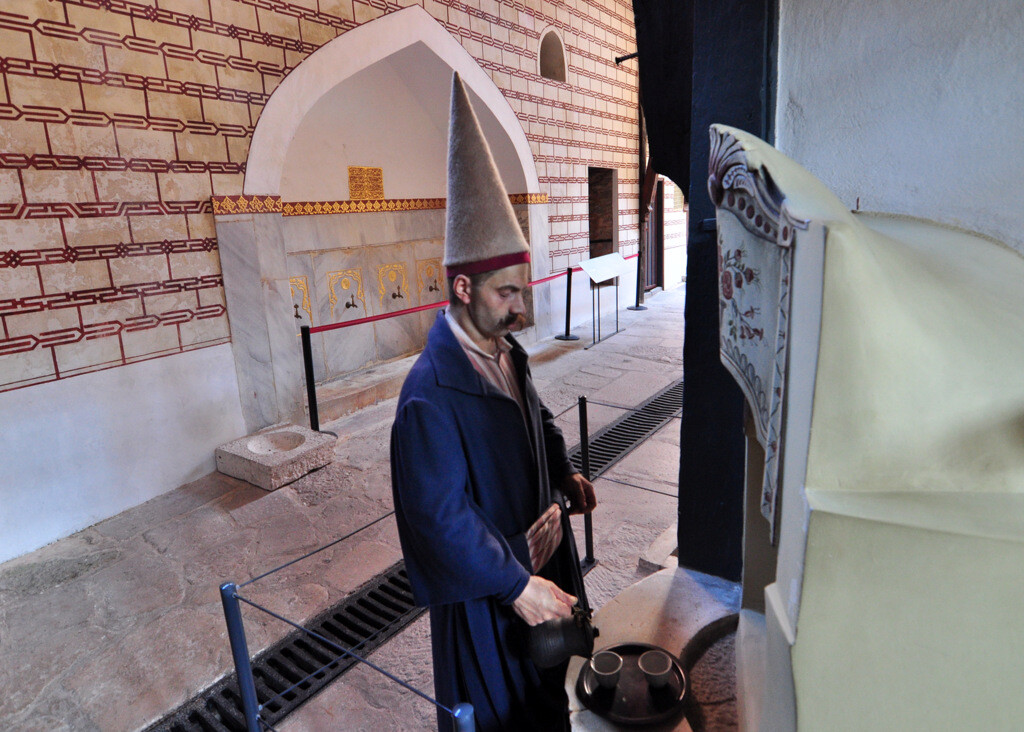
Before entering the main section of the Harem, you will see a staircase descending on the left. It leads to the courtyard and living quarters of the Zülüflü Baltacılar, a palace service corps responsible for much of the Harem’s heavy labour and daily maintenance.
The courtyard contains dormitories, a small mosque, a bath and a room known as the Pipe Room, where the men could rest during their duties. Its wooden galleries and modest interiors offer a rare glimpse into the everyday life of palace servants, far removed from the richly decorated chambers of the imperial family.
The Zülüflü Baltacılar carried firewood, maintained the stoves, cleaned service areas and transported furniture when the imperial household moved between palaces. Their name referred to the long locks or tassels hanging from their ceremonial headgear. During military campaigns, they also joined the Ottoman army and traditionally helped clear roads through wooded terrain.
2. Courtyard of the Black Eunuchs
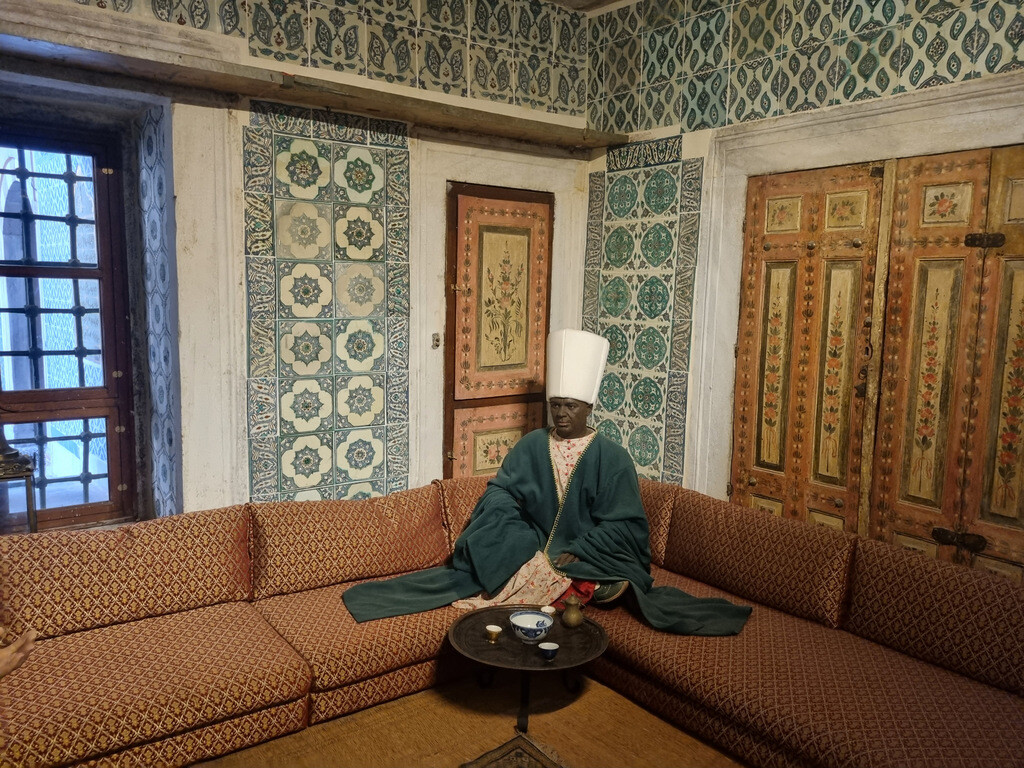
After passing through the main gate of the Harem, visitors enter the Courtyard of the Black Eunuchs, the final controlled passage between the outer palace and the private residence of the Ottoman dynasty. The Black Eunuchs guarded the entrances, supervised security and carried messages between the Harem, the Sultan and the wider palace administration.
The most senior officer was the Darüssaade Ağası, also known as the Kızlar Ağası. His direct access to the Sultan and the Valide Sultan, together with his responsibility for the imperial Harem and the charitable endowments serving Mecca and Medina, made him one of the most influential officials at the Ottoman court.
The courtyard contains three-storey dormitories arranged according to rank, a small mosque and the apartments of the chief eunuch. Its tiled walls, wooden galleries and lattice windows reveal that this was not simply a guarded entrance, but an important administrative and residential centre within the palace.
3. Courtyard of the Concubines and Imperial Consorts
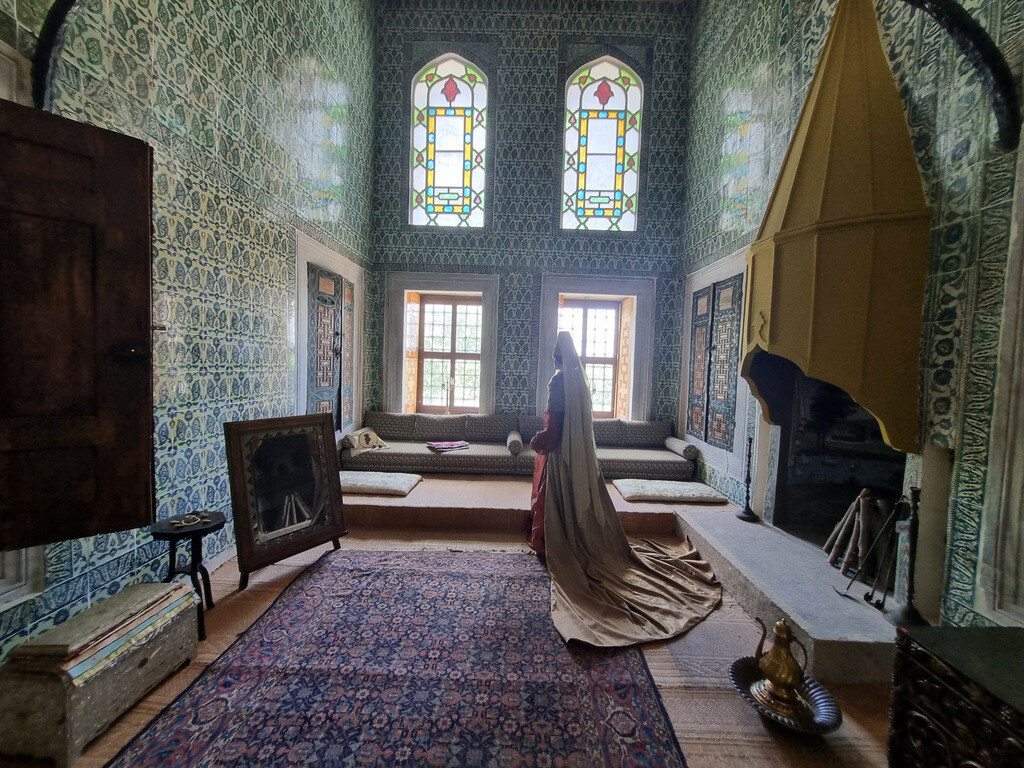
The Courtyard of the Concubines and Imperial Consorts was one of the main centres of daily life in the Harem. The surrounding buildings housed the dormitories of young women in palace service, apartments for the imperial consorts, and practical spaces such as the bath, laundry, kitchens and storerooms.
The Harem functioned partly as a palace school. Young women received training in language, religion, music, handicrafts and court etiquette while living within a strict hierarchy. With experience, some rose to become kalfas or ustas, senior women responsible for training and supervising others, while a much smaller number gained closer access to the Valide Sultan or the Sultan.
The courtyard’s narrow galleries, small rooms and restrained architecture contrast sharply with the ceremonial chambers deeper inside the Harem. Following extensive restoration, the surrounding living and service areas can now be explored through period objects and life-size figures that help visitors understand how the women studied, worked and lived together.
4. Apartments of the Valide Sultan
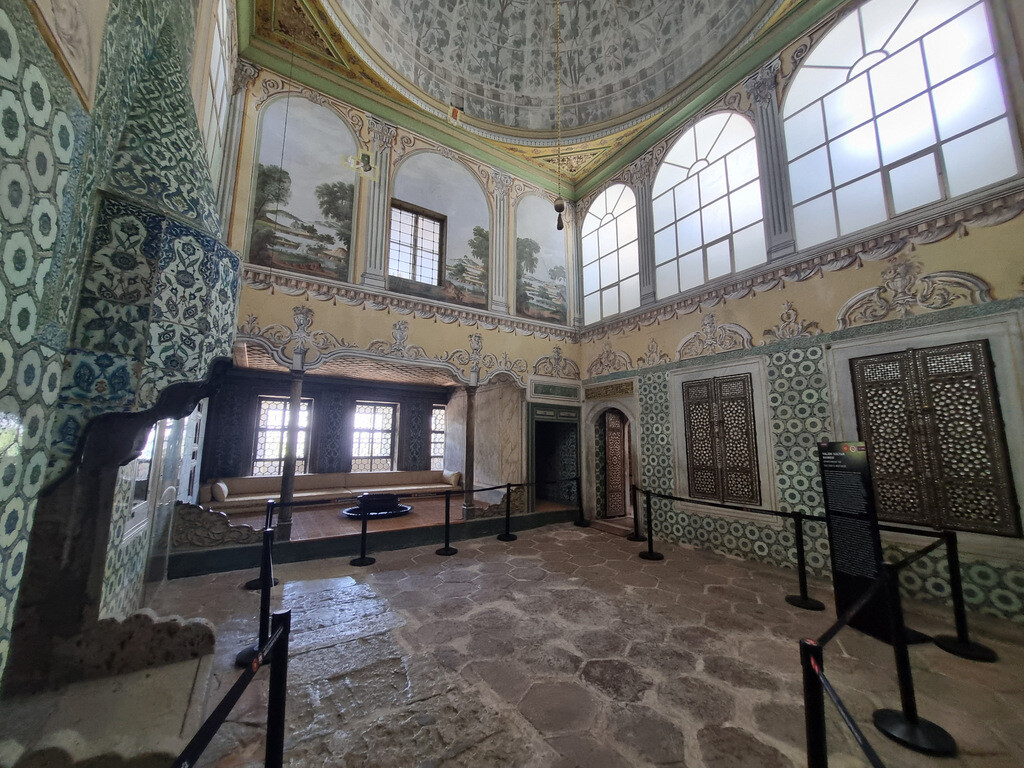
The apartments of the Valide Sultan formed one of the most important sections of the Harem. As the Sultan’s mother and the head of the imperial household, she supervised the women, servants and daily administration of the Harem and could exercise considerable influence over her son.
Her apartments included private rooms, a prayer space and a domed reception hall where she received senior women and palace officials. Although much of the section is frequently closed for restoration, visitors can still see the tiled fireplace, the divan arranged beneath the dome and finely crafted wooden cupboard doors inlaid with mother-of-pearl.
A doorway at the side leads towards the adjoining imperial baths shared by the Valide Sultan and the Sultan. Her political influence became particularly visible when young or inexperienced rulers occupied the throne, making these apartments not only a private residence but also an important centre of authority within the palace.
5. The Imperial Hall in the Harem
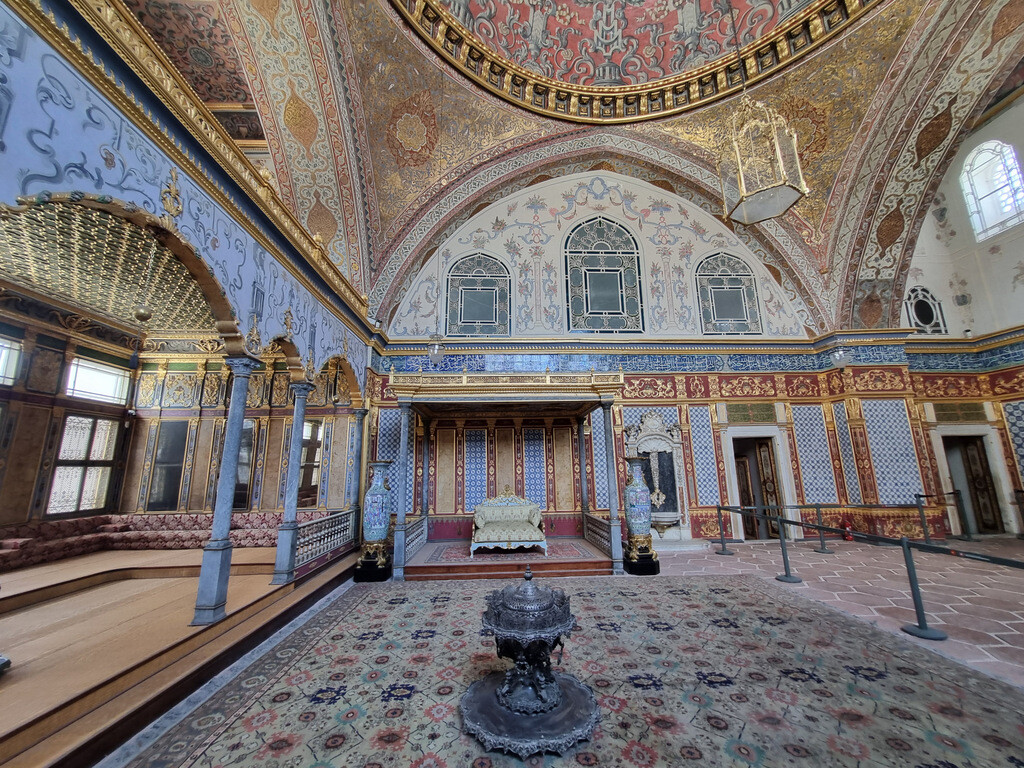
The Imperial Hall, known in Turkish as the Hünkâr Sofası, was the largest ceremonial room in the Harem. The Sultan received members of the imperial family here, and the hall was used for religious celebrations, dynastic ceremonies, music and other special occasions.
The room was originally created during the classical Ottoman period, but its present appearance reflects later renovations in the 18th and 19th centuries. Gilded decoration, large mirrors, painted surfaces and Baroque and Rococo details now dominate the interior, while traces of the earlier Ottoman design remain beneath these later additions.
This makes the hall especially striking when compared with the adjoining Privy Chamber of Murad III. The Imperial Hall represents the palace’s later fascination with European styles, while Murad III’s chamber preserves the more restrained harmony of 16th-century Ottoman architecture and İznik tiles.
6. Privy Chamber of Murad III
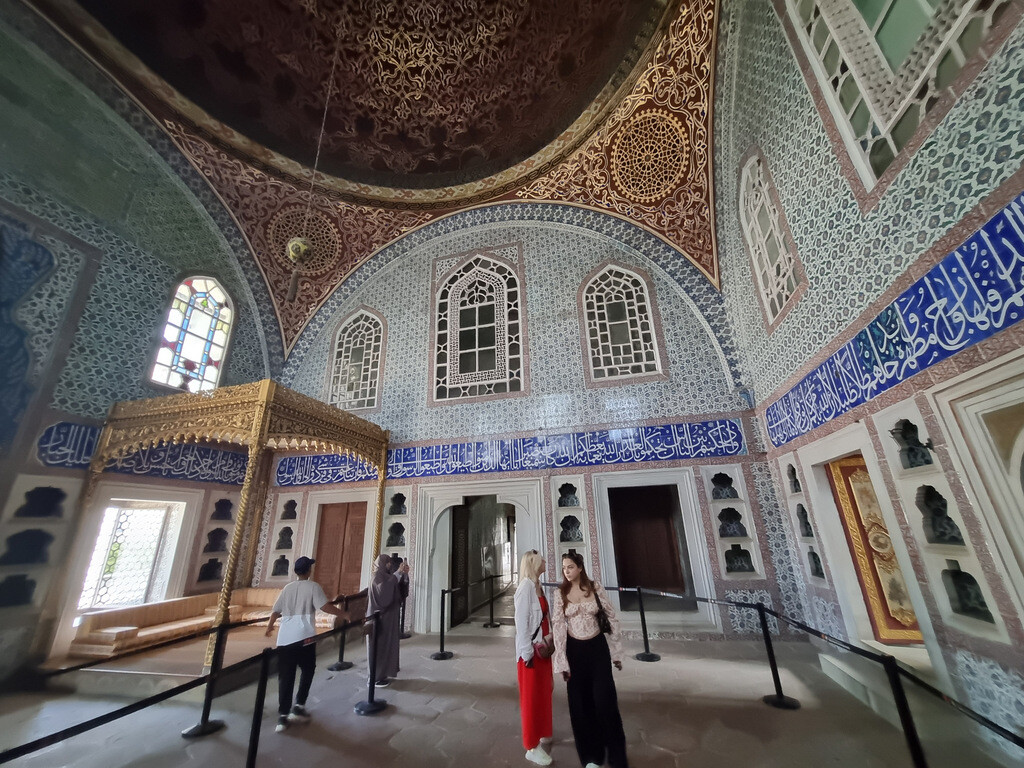
Passing from the Imperial Hall into the Privy Chamber of Murad III creates one of the most striking architectural transitions in the Harem. The gilded mirrors and Baroque decoration of the previous hall suddenly give way to the symmetry, restraint and refined craftsmanship of the classical Ottoman period.
Built in 1579 and traditionally attributed to Mimar Sinan, the chamber is one of the oldest and best-preserved imperial rooms in the Harem. Its high dome, balanced proportions and double rows of windows create a remarkably spacious interior, while the walls are covered with exceptional 16th-century İznik tiles decorated with tulips, carnations, flowering branches and the distinctive coral-red colour of the period.
A marble selsebil, or cascading fountain, stands on one side of the room. The sound of flowing water brought freshness and tranquillity to the chamber and may also have helped soften conversations from outside. Opposite it is a monumental fireplace with a gilded bronze hood, completing the room’s carefully balanced design.
The chamber represents the height of classical Ottoman palace art. After the later European influences of the Imperial Hall, entering this room feels almost like stepping back into the architectural world of the 16th century.
7. Reading Room of Ahmed I
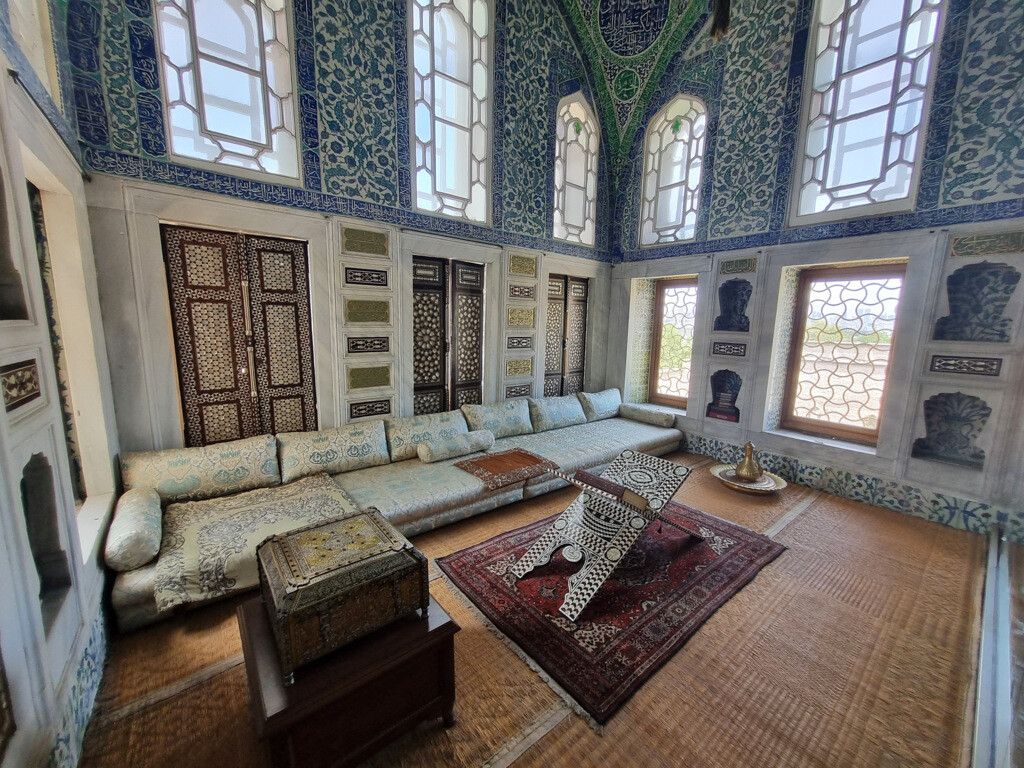
Adjoining the Privy Chamber of Murad III is the small chamber of Sultan Ahmed I, commonly known as the Reading Room because of the built-in cupboard designed to hold books and manuscripts. After remaining under restoration for many years, the room has now reopened to visitors.
Although modest in size, the chamber is richly decorated with İznik tiles, gilded inscriptions and finely crafted cupboard, window and door panels inlaid with mother-of-pearl. A small fountain set into one corner completes the intimate atmosphere of a room intended for reading, reflection and private retreat.
Nearby is the Fruit Room, known in Turkish as the Yemiş Odası, created for Sultan Ahmed III in the early 18th century. Its painted wooden panels, decorated with bowls of fruit, flowers and vases, introduce a lighter and more naturalistic style that anticipates the changing artistic taste of the later Ottoman palace.
8. Princes’ Chambers
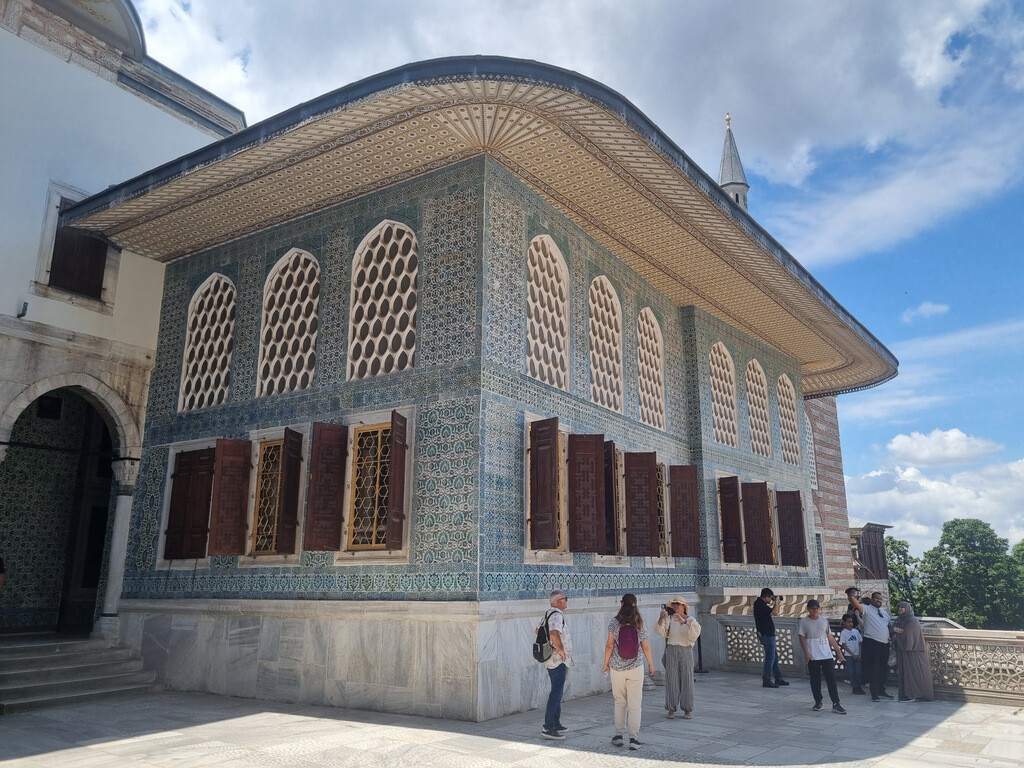
The Princes’ Chambers consist of two richly decorated rooms overlooking the Courtyard of the Favorites and the Golden Horn. Their painted wooden ceilings, stained-glass windows, carved woodwork and 17th-century tiles make them among the most elegant residential spaces in the Harem.
Their history, however, reflects an important change in the Ottoman system of succession. From the 17th century onward, princes were increasingly kept within the palace under close supervision rather than being sent to govern provinces. This arrangement later became known as the Kafes, or “Cage” system.
The princes lived in considerable comfort, but their contact with the outside world was strictly limited while they waited to see whether they would one day inherit the throne. The beauty of these chambers therefore stands in quiet contrast to the uncertainty and isolation associated with life inside the Kafes.
9. Courtyard of the Favorites
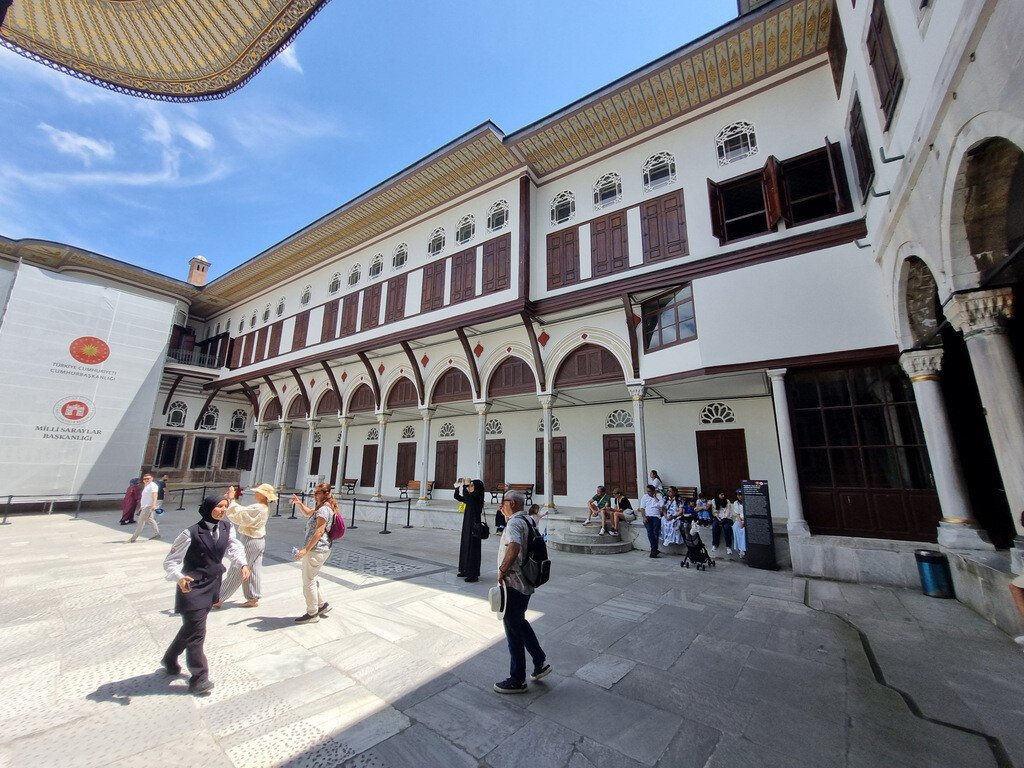
The Courtyard of the Favorites belonged to women who had risen to the upper levels of the Harem hierarchy. Favorites of the Sultan, imperial consorts, senior female officials and members of the dynasty lived in the apartments surrounding this more private section.
Compared with the enclosed courtyards seen earlier in the Harem, this area feels noticeably brighter and more spacious. Its wooden galleries, large windows and apartments overlooking the Golden Horn reflect the more outward-looking architectural taste that developed in the palace during the 18th century.
The Courtyard of the Favorites therefore marks an important transition within the Harem. The heavy stone walls and inward-facing rooms of the classical period give way here to a more residential style, closer to the wooden mansions that later shaped Ottoman life along the Bosphorus.
10. Harem Prayer Room
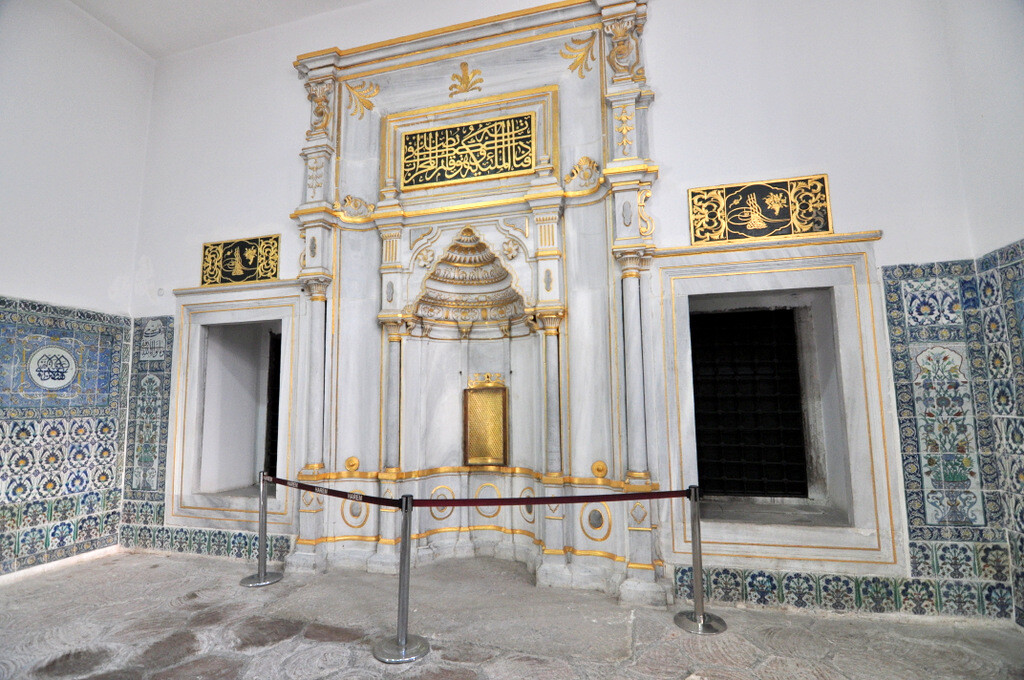
The Harem Prayer Room was used by the concubines, kalfas, ustas and imperial consorts for daily worship and religious instruction. Its presence reflects the Harem’s role not only as a royal residence, but also as a disciplined institution where young women received religious education alongside music, handicrafts and court etiquette.
The interior is decorated with blue and turquoise tiles, while elegant gold calligraphy stands out against dark panels above the walls. At the centre of the room, a finely carved marble mihrab marks the direction of prayer and forms the main visual focus of this modest but carefully decorated space.
Compared with the ceremonial rooms of the Harem, the prayer room feels quiet and restrained. Its tiles, calligraphy and traditional furnishings reveal the importance of religious practice in the everyday life of the palace women.
11. The Golden Road
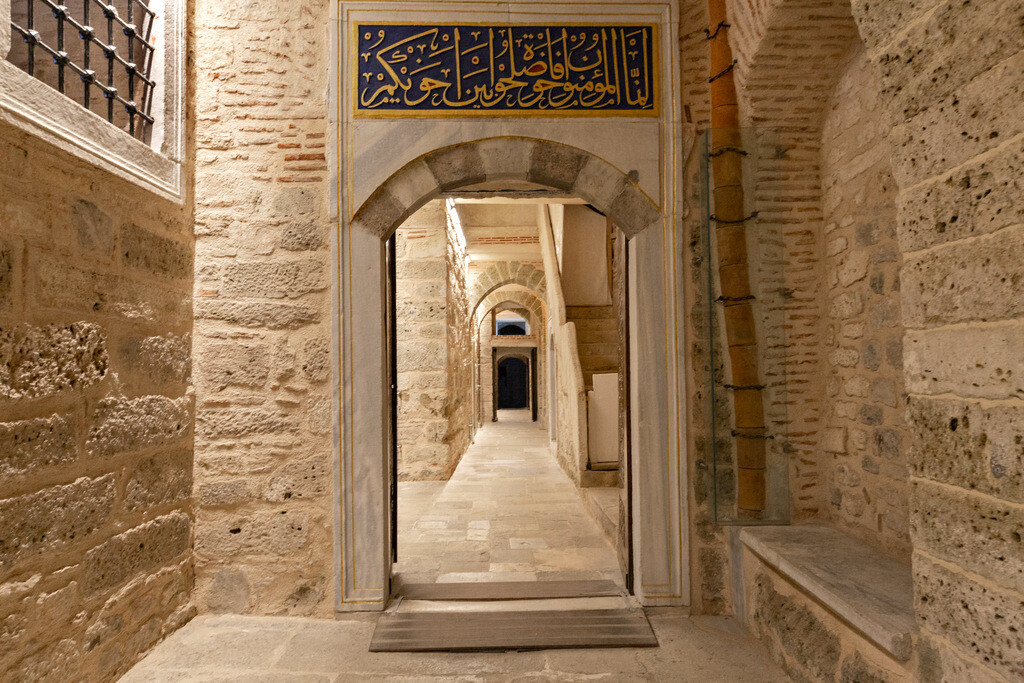
The Golden Road, known in Turkish as the Altınyol, is the long corridor that connects the Sultan’s private apartments and the Harem with the Third Courtyard of Topkapi Palace. The Sultan, the Valide Sultan and senior members of the household used this route when moving between the private and official sections of the palace.
Despite its name, the corridor is architecturally simple, with stone floors, plain walls and limited natural light. According to palace tradition, its name came from the gold coins that Sultans distributed to members of the Harem during religious holidays, accession ceremonies and other special occasions.
The Golden Road also illustrates how strictly access to the Sultan was controlled. Although hundreds of women could live and work within the Harem, only a small number rose high enough in the hierarchy to enter the Sultan’s private apartments. For most, this corridor remained a route of service and ceremony rather than a path to the Sultan’s chamber.
12. Courtyard of the Valide Sultan
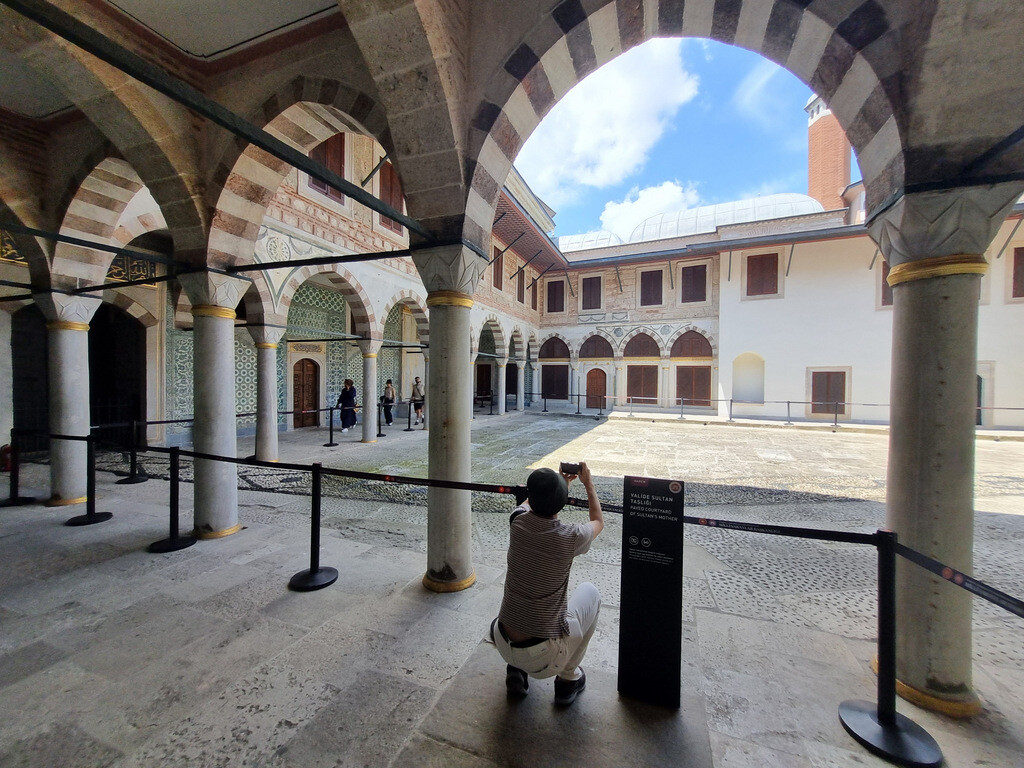
Near the end of the Golden Road, just before the Harem opens onto the Third Courtyard, visitors reach the Courtyard of the Valide Sultan. Added to the visitor route after recent restoration work, this was the open-air centre connected with the apartments and household of the most powerful woman in the Harem.
The surrounding rooms accommodated senior female officials, attendants and members of the Valide Sultan’s household. Its multi-storey architecture also allowed light and air to reach this otherwise enclosed part of the Harem.
Its position beside the Golden Road was especially important. From here, the Valide Sultan’s household remained closely connected with the main ceremonial route used by the Sultan and senior members of the dynasty. Today, the courtyard forms the final major stop before visitors leave the private world of the Harem and return to the more official spaces of Topkapi Palace.
Harem (Topkapi Palace) Entrance Fee 2026
The entrance fee for the Harem is 1,050 Turkish liras for foreign visitors in 2026. However, since the Harem is located inside Topkapi Palace and cannot be reached without entering the palace grounds, most visitors will find the combined ticket more practical.
The combined ticket costs 2,750 Turkish liras and includes Topkapi Palace, the Harem Rooms and Hagia Irene. If you already plan to visit all three sections, purchasing the combined ticket at the beginning of your visit is the simplest option.
All information and recommendations regarding the Harem entrance fee were last reviewed and updated in July 2026.
Harem (Topkapi Palace) Opening Hours 2026
The Harem Rooms are open between 09:00 and 17:30 as of 2026. The ticket offices close at 17:00, so it is best not to leave your visit until the final hour of the day.
The Harem follows the opening schedule of Topkapi Palace and does not have a separate entrance from outside the palace. Visitors enter the Harem from the Second Courtyard after passing through the main palace entrance.
Topkapi Palace is closed on Tuesdays, and the Harem Rooms cannot be visited on that day. Dolmabahçe Palace, which contains another imperial Harem section, can be considered as an alternative for a Tuesday visit.
Information regarding the Harem opening hours was last reviewed and updated in July 2026.
Conclusion
The Harem is one of the most revealing sections of Topkapi Palace, yet its private world is almost invisible from the palace courtyards. Hidden behind high walls, it was home to the Sultan’s mother, wives, daughters, sisters, princes and the many officials and servants who maintained the imperial household.
Following the visitor route through its courtyards, chambers and corridors shows that the Harem was not simply a royal residence. It was a carefully organized institution shaped by education, ceremony, family hierarchy and palace administration. The recently restored rooms and reconstructed interiors now make this daily life much easier to understand.
As a local guide, I consider the Harem an essential part of a Topkapi Palace visit. Without it, visitors see the official face of the Ottoman court but miss the private world in which the dynasty lived.

Leave a Reply