For more than five centuries, the Grand Bazaar has been one of Istanbul’s most distinctive public spaces — not just a marketplace, but a living piece of the city’s daily life. Despite the rise of modern shopping malls across Istanbul, the Grand Bazaar continues to attract visitors with its scale, craftsmanship, and atmosphere.
This guide is designed as a complete Grand Bazaar reference for 2026. Inside, you’ll find practical information on opening hours, shopping etiquette, what to buy, how to get there, and what to see nearby — all explained from a local, experience-based perspective rather than a checklist approach.
Shopping in the Grand Bazaar
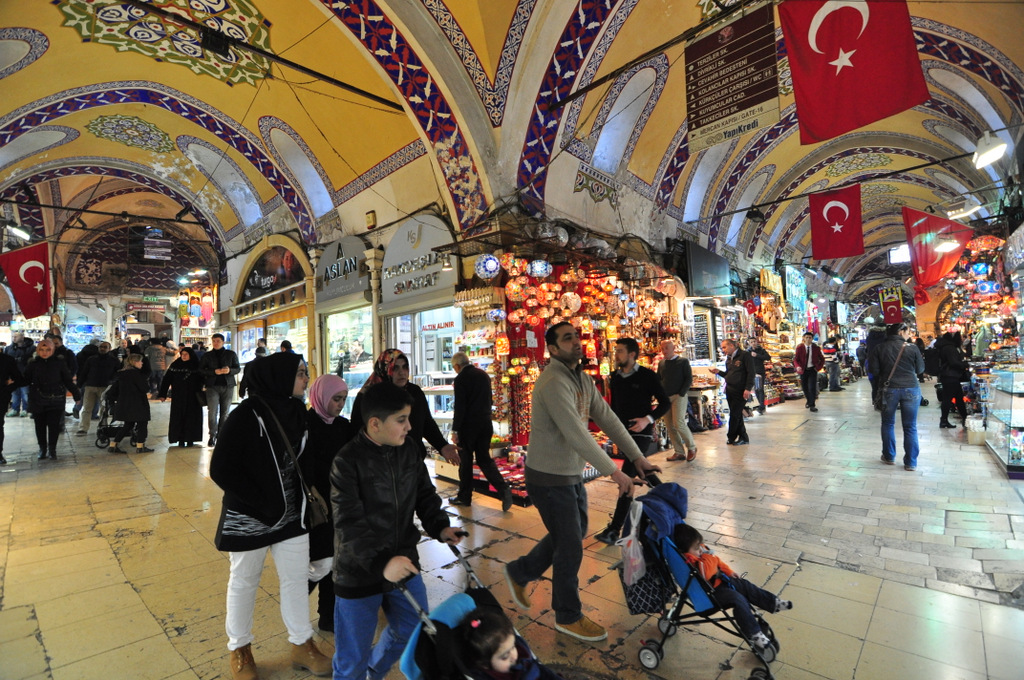
Shopping in the Grand Bazaar follows its own rhythm and traditions. Instead of rushing through a checklist, it helps to understand how pricing works, what locals actually come here for, and what to expect from shop interactions.
Bargaining (and when it makes sense)
Yes — bargaining is normal in the Grand Bazaar. In many shops, the first price is a starting point rather than a fixed tag, especially for souvenirs and non-standard items. A calm, polite approach usually works best: compare a few shops, ask questions, and negotiate only if you’re genuinely interested.
As a general rule, small purchases often allow a modest discount, while higher-ticket items (such as handmade Turkish rugs or high-quality ceramics) may have more room — particularly if you are buying multiple pieces. That said, not every item is negotiable, and pushing too aggressively can backfire. Think of bargaining here as a local shopping custom, not a confrontation.
Outside the Historic Peninsula — in modern districts and shopping malls — prices are typically fixed, and bargaining is usually not welcomed.
Do locals shop from Grand Bazaar?
Istanbul has many modern malls and brand stores, so locals do not rely on the Grand Bazaar for everyday shopping. But there is one major exception: gold. Many Istanbul residents treat the Grand Bazaar as the heart of the city’s gold market — a place to buy gold by weight, or to commission jewelry with skilled workmanship.
This local presence is also why the jewelry section of the bazaar feels different from many other categories: it is less “souvenir-driven” and more connected to real trade.
With that context in mind, the list below focuses on the most common and meaningful things to buy in the Grand Bazaar today — and where it’s worth being selective.
Things to Buy from the Grand Bazaar (2026)
The Grand Bazaar offers a wide range of products connected to Anatolian and Ottoman culture, alongside souvenirs for every budget. While not everything sold here is unique or handmade, certain categories still stand out for their tradition, craftsmanship, and variety.
1. Jewelry
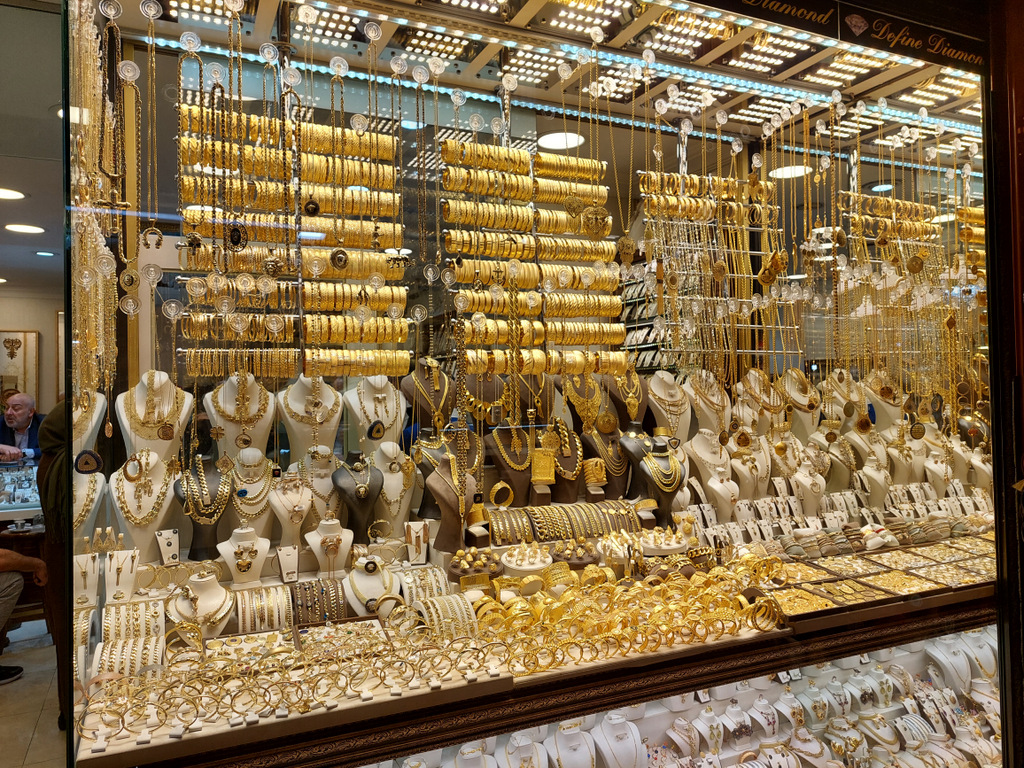
Jewelry remains one of the most important trades inside the Grand Bazaar. The area around Kalpakçılarbaşı Street is especially known for gold and jewelry shops, many of which have been operating for generations.
While replicas exist in the bazaar, gold jewelry is generally genuine. Istanbul locals also come here to buy gold, which adds an extra layer of trust to this part of the market. Prices are usually based on weight and workmanship, and designs range from classic to boutique-style pieces.
2. Turkish Carpets
Turkish carpets have been sold in the Grand Bazaar for centuries, and several carpet-trading families still continue this tradition today. You can find handmade rugs in a wide range of styles, regions, and materials.
That said, buying a carpet is not a simple decision. Even locals take time to research before purchasing. Visiting places like the Turkish and Islamic Arts Museum or the Istanbul Carpet Museum can help you understand basic distinctions, such as classical court carpets versus nomadic designs, before stepping into a shop.
3. Iznik Tiles

Iznik tiles represent the high point of Ottoman ceramic art, especially during the 16th century. Their distinctive blue, turquoise, green, and red tones can still be seen in monuments such as the Blue Mosque, Rüstem Pasha Mosque, and parts of Topkapı Palace.
In the Grand Bazaar, you’ll find both decorative tiles and tile-inspired ceramic pieces. Originals belong in museums, but high-quality reproductions can make meaningful decorative souvenirs if you appreciate Ottoman art.
4. Scarves
Scarves and shawls are among the most common textile items sold in the bazaar. There are countless shops offering silk, cotton, and mixed fabrics, with designs ranging from traditional to contemporary.
Since scarves are also widely used by local women, the variety is enormous. Some products are locally made, while others are imported, so quality and pricing can vary significantly from shop to shop.
5. Lanterns
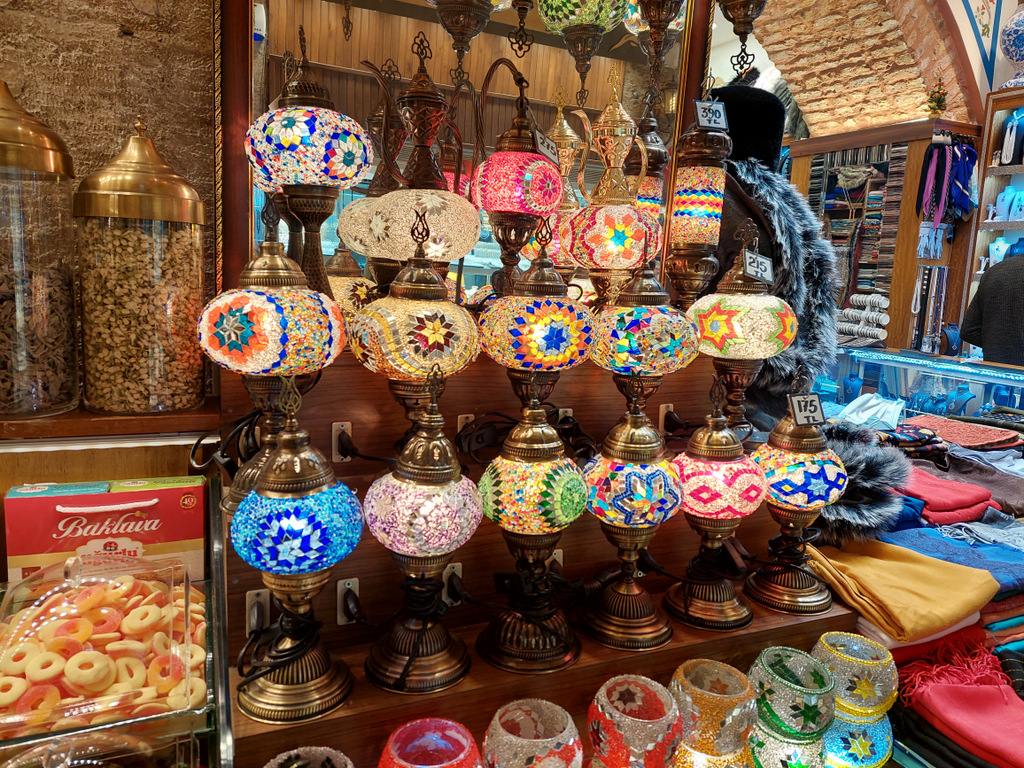
Colorful glass lanterns are one of the most visually striking items in the Grand Bazaar. Their mosaic patterns and warm colors make them especially popular with visitors — and they often appear in the most photographed corners of the market.
These lamps are primarily decorative and are best chosen based on craftsmanship rather than size. Many shops offer careful packaging for travelers.
6. Towels
Turkish towels, bathrobes, and hamam textiles are practical and long-lasting souvenirs. Made mainly from cotton, these items are lightweight, durable, and easy to use in everyday life.
Compared to purely decorative objects, towels are among the most functional things you can buy in the Grand Bazaar, especially if you prefer souvenirs that won’t sit unused on a shelf.
7. Kaftans
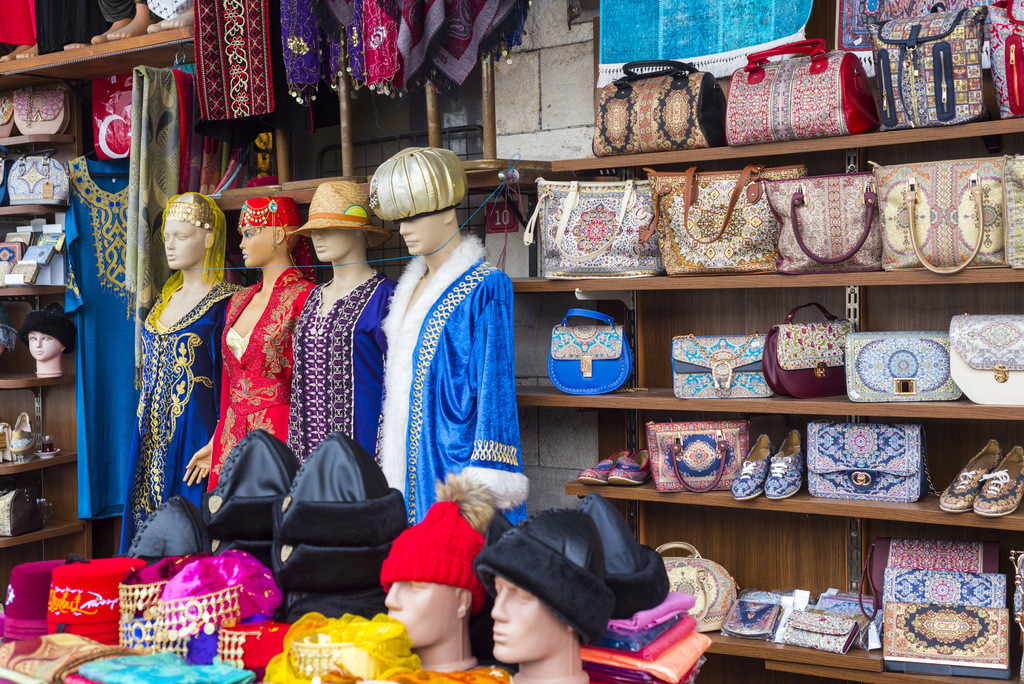
Kaftans played a significant role in Ottoman court culture, particularly during the classical period. Original imperial garments are now displayed in Topkapı Palace, but the tradition continues in modern form.
In the Grand Bazaar, you can find decorative or wearable kaftans, and in some tailor shops, custom-made pieces inspired by historical designs.
8. Handbags
Handbags occupy a large portion of the bazaar’s modern retail scene. Many shops sell colorful and fashionable designs, often reflecting current trends.
It’s important to note that most branded handbags sold here are replicas. While craftsmanship may vary, these items should be approached with realistic expectations.
9. Watches
Watches are one of the few product categories that traditionally attract male shoppers in the bazaar. Similar to handbags, many watches imitate well-known international brands.
Unlike gold or jewelry, most watches sold in the Grand Bazaar are not original, so careful attention is needed when browsing this category.
10. Turkish Delight
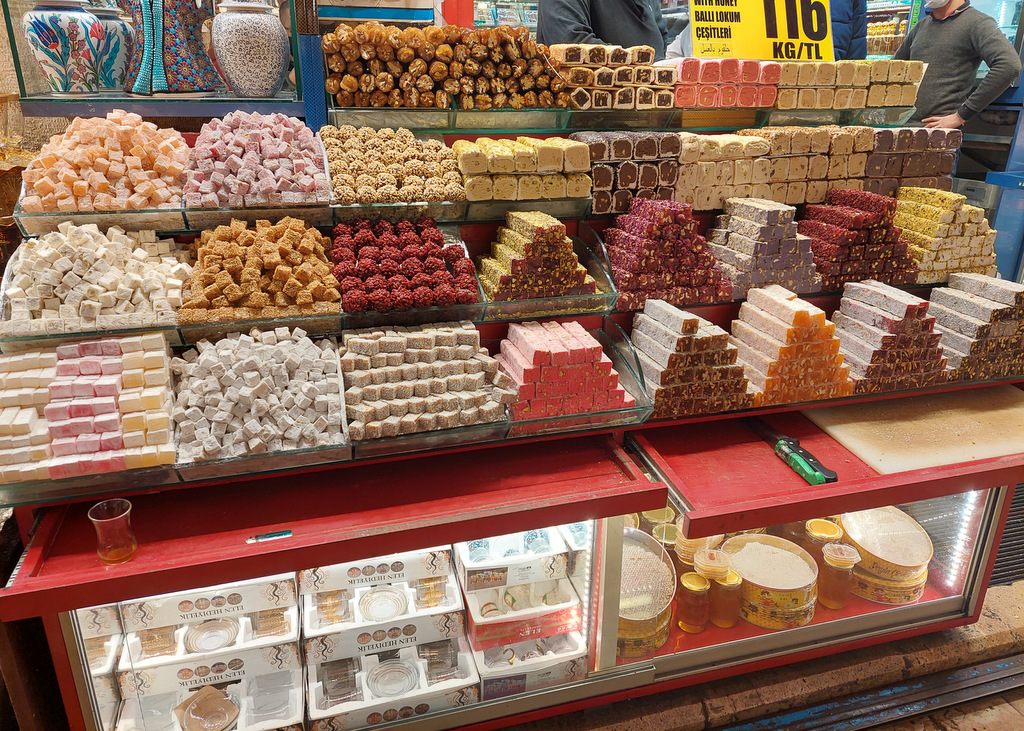
Turkish delight is one of Istanbul’s most iconic food souvenirs. While the Spice Bazaar remains the most specialized place for sweets, the Grand Bazaar has seen an increase in quality confectionery shops in recent years.
You can also find long-established Turkish delight shops in districts such as Eminönü, Beyoğlu, and Kadıköy, each offering slightly different styles and flavors.
Grand Bazaar (Istanbul) Opening Hours – 2026
The Grand Bazaar is generally open Monday to Saturday, from 09:00 to 19:00. From around 18:30 onward, shops begin to close gradually and the bazaar starts to quiet down.
The Grand Bazaar is closed on Sundays. It is also closed on major religious holidays, including Eid al-Fitr (Ramadan Feast) and Eid al-Adha (Sacrifice Feast). If your visit to Istanbul coincides with these holidays, the bazaar will most likely not be accessible.
While official opening hours are consistent, it’s worth keeping in mind that individual shops may open slightly later or close earlier, especially toward the end of the day.
How to Get to the Grand Bazaar
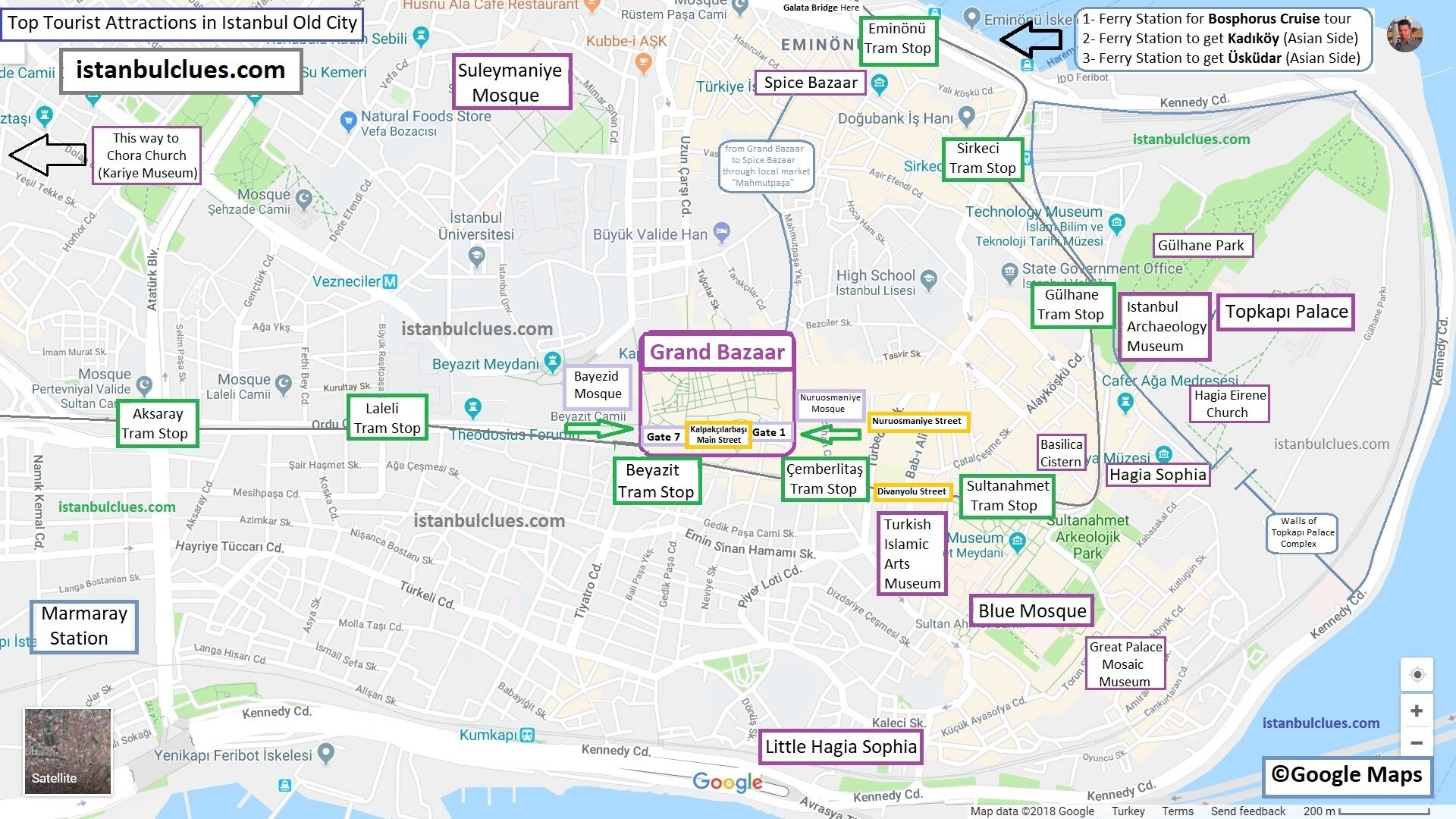
There are two main and convenient ways to reach the Grand Bazaar on foot from the historic center.
One option is to walk along Nuruosmaniye Street, a pleasant route running parallel to the tram line. This street is lined with carpet shops, jewelry stores, souvenir stalls, and cafés, often drawing visitors into shopping before they even reach the bazaar.
At the end of Nuruosmaniye Street, you’ll reach Nuruosmaniye Mosque, an 18th-century Ottoman monument. Passing through its courtyard brings you directly to Gate 1, one of the main entrances to the Grand Bazaar.
The second option is to follow Divanyolu Street, the main tram route, toward Beyazıt Square. From Beyazıt Tram Station, you can enter the Grand Bazaar through Gate 7, located near the historic Beyazıt Mosque from the 15th century.
Inside the bazaar, orientation can be challenging for first-time visitors. Since Kalpakçılarbaşı Street, connecting Gate 1 and Gate 7, functions as the main axis, it’s often the easiest reference point when navigating.
For a clearer overview, a detailed Grand Bazaar map can be helpful. You can also find additional orientation resources in the Istanbul tourist maps guide.
Things to Do around Grand Bazaar
The area surrounding the Grand Bazaar offers more than shopping. Within a short walking distance, you can explore local markets, historic bathhouses, and some of Istanbul’s best street food spots.
1. Mahmutpaşa Bazaar
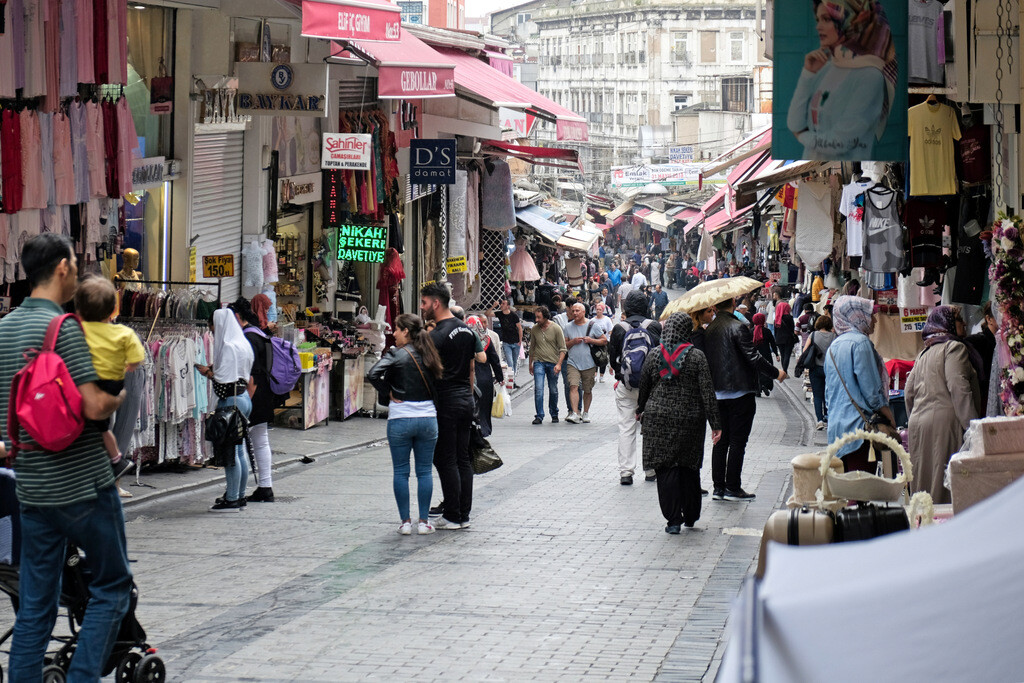
Mahmutpaşa Bazaar is a long, sloping market street connecting Beyazıt and Eminönü, stretching between the Grand Bazaar and the Spice Bazaar. It is particularly popular with locals looking for affordable clothing.
Known locally as Mahmutpaşa Yokuşu, this area is traditionally associated with dowry shopping, and it’s common to see families browsing together. Despite the low prices, clothing quality is generally good, reflecting Turkey’s strong textile industry.
Navigation here can feel confusing at first, but following the downhill flow naturally leads toward Eminönü and the Spice Bazaar.
2. Çemberlitaş Hammam
Çemberlitaş Hammam is located within easy walking distance of Gate 1, near Çemberlitaş Tram Station. Designed by Mimar Sinan in the 16th century, it remains one of the most well-known Turkish baths in Istanbul.
After spending time in the busy atmosphere of the bazaar, a traditional hammam experience can be a relaxing way to unwind and reset.
3. Dönerci Şahin Usta
Dönerci Şahin Usta is widely regarded as one of the best street food spots in Istanbul and is frequently recommended by international travel guides.
Classic Istanbul street food such as döner kebab, köfte, and kokoreç is especially concentrated in older districts. In addition to Beyazıt, you’ll find excellent street food options in Eminönü by the waterfront and across the Golden Horn in Beyoğlu, near Taksim Square.
Conclusion
The Grand Bazaar is one of Istanbul’s most iconic landmarks, but it can also be overwhelming if approached without a plan. With 67 streets and over 3,000 shops, it rewards visitors who pace themselves and set realistic expectations.
Even travelers who don’t enjoy shopping often find value here — whether through photography, architectural details, or simply observing daily life inside one of the world’s oldest covered markets.
Approached thoughtfully, the Grand Bazaar becomes less about buying things and more about experiencing a living historical space at the heart of Istanbul.
Written by Serhat Engul

Hello,
I am due in Istanbul on the 7th July to 12th, I will like to arrange a tour of the Grand Bazaar. Would you be available that week ?
Kindly be in touch.
Regards,
Hello Dammy, thank you for your interest in my tours. However, none of my tours this year include the Grand Bazaar. Have a nice trip!
Hello, we are planning to come Istanbul in this Eid al-Fitr. Can you tell what days will be holidays in Grand Bazaar .
The Grand Bazaar is closed on religious holidays. It is closed every year, without exception, for 3 days during Eid al-Fitr and 4 days during Eid al-Adha.
Hello! Do you know if there are resources near the Bazaar or at the airport for shipping purchases? We are flying through Istanbul at the beginning of a trip and won’t be able to carry our souvenirs with us. Thank you!
Hello, unfortunately I have no information about the luggage storage facilities around the Grand Bazaar. However, if you search for “lockers in Istanbul” on Google, many results come up. I think you can entrust your shopping bags to one of these companies.
Hi Serhat
Do you only do walking tours? I ask because i am limited in the distances i can walk
Dear John, yes I only do walking tours. Touring by car is not very efficient in the Old City. Because most of the streets in Sultanahmet (around Hagia Sophia and Blue Mosque) are already closed to traffic.
Dear Serhat,
We are planning to visit Istanbul during Kurban Beyrami days. Wanted to find out if the Grand Bazaar will be open on Saturday, 1st July 2023
Thanks in advance.
Tasneem
Hello Tasneem. The Grand Bazaar is closed on Eid al-Fitr (3 days) and Eid al-Adha (4 days). There is no exception for this in 2023.
Dear Serhat
I have a plan to visit Grand bazar On 30 December, will it be open on that they?
Hello Maria, in the relevant section of the article, it is clearly noted which days the Grand Bazaar is closed. For this reason, I think there is no point in asking any day of the year specifically.
Please don’t take this personally, but many people ask about the days that coincide with their trip. Normally I delete these comments. I answered this to avoid such personal questions.
Hi, I’m hoping you can help, my family and I are hoping to visit 11th July 2022 (just after Eid ul Adha)
Do you know which places will be closed during this time?
Grand Bazaar and Spice Bazaar are closed during Eid al-Adha. In other words, these historical bazaars will be closed on July 9, 10, 11 and 12 in 2022. On the other hand, museums and mosques are open on Eid. They may only be partially closed on the first day.
Thank you so much for confirming!
You are welcome. Have a nice trip!
Hello Serhat
I am getting in early but a group of friends and myself are coming to Turkey in October 2022. We are on a tour but have time where we are not been taking around. Looking at getting a guide for 10 of us around Istanbul for places that our tour does not take us.
Hi Rochelle, of course I can guide you and your friends. However, in order for the tour to be confirmed, I need to know the exact date. Also, to prepare an itinerary, I need to know what your other tour doesn’t include. Thus, a list of alternative places can be prepared.
If you wish, you can check the Fener Balat and Beyoglu walking tours from the private tours category. These two activities include places that aren’t on classical tourist tours. It would make sense to arrange one of these tours.
Hello there,
We are visiting Istanbul next month only for a couple of days and interested in taking a tour. Can you tell me the cost of your half day tour please? We are staying in Beyoglu during Nov 27th and 28th.
Hello Marina, thank you for reaching out. I can see your email address in the system and I will write a reply to your tour request tomorrow.