Planning your shopping in Istanbul becomes much easier when you know that different parts of the city are traditionally associated with different products. Locals often head to specific districts depending on what they want to buy, whether it is clothing, antiques, electronics, or home décor. The same logic also applies when asking where to buy Turkish carpets in Istanbul.
For example, Horhor is known for antique shops, Mahmutpaşa for budget-friendly clothing, Sirkeci for electronics, and Galata for lighting stores and decorative items. I covered these areas in more detail in my guide to the best shopping places in Istanbul.
Many first-time visitors assume that bargaining is part of everyday shopping culture across the city. In reality, this is mostly limited to traditional market areas such as the Grand Bazaar and the Spice Bazaar. In modern districts like Beyoğlu, Beşiktaş, or Kadıköy, prices are usually fixed and bargaining is generally not expected.
What to Buy in Istanbul
Some of the most popular things to buy in Istanbul include leather goods, jewelry, ceramics, and Turkish carpets. However, it is worth remembering that you do not need to purchase these items only from bazaars near the main tourist attractions.
For first-time visitors, shopping in Istanbul’s historic bazaars can sometimes feel challenging. In places where bargaining is common, it may be difficult to know whether you are seeing the real market value of an item.
For that reason, some travelers prefer to compare prices in the city’s modern districts or shopping malls rather than buying everything in the Historic Peninsula (Old City). So which products are better suited to Istanbul’s fixed-price modern shopping centers?
1. Jewelry and Leather
Jewelry and leather goods are among the easiest items to shop for outside the Old City. Many visitors prefer modern shopping malls or well-known retail streets, where prices are fixed and the buying process feels more straightforward.
For leather products, established Turkish brands such as Desa, Deriden, and Derimod are widely recognized for their quality jackets, bags, and accessories. You can usually find branches of these brands in major shopping malls across the city.
For jewelry, long-standing names such as Atasay, Altınbaş, and Koçak Gold are popular choices. These stores are especially convenient for visitors looking for gold, silver, diamond, or modern-designed pieces in a more standardized retail setting.
2. Gold
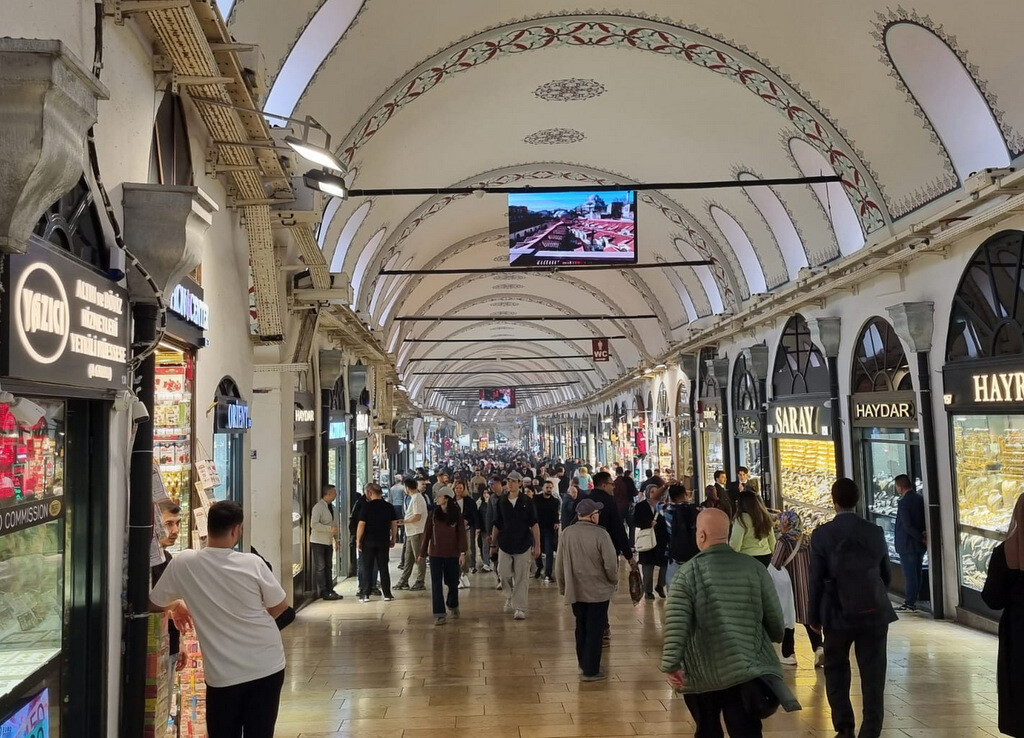
If you are specifically shopping for gold, the Grand Bazaar remains one of the most traditional and respected places in Istanbul. For centuries, it has been closely connected with the city’s gold trade, and many of Istanbul’s experienced jewelers still operate there today.
This is one area where many locals also continue to shop in the Grand Bazaar. Since the daily gram price of gold is publicly known, it provides a useful reference point when comparing designs, workmanship, and final prices.
3. Turkish Rugs and Iznik Tiles
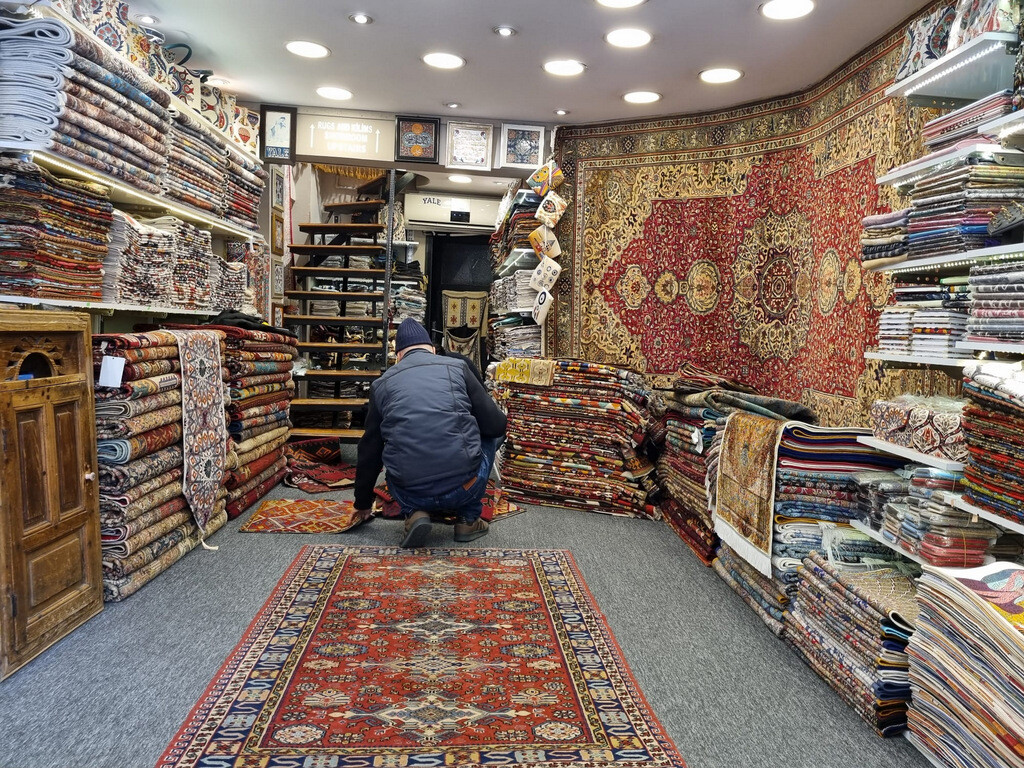
As mentioned earlier, products such as jewelry and leather goods can be found quite easily outside the Old City. The situation is a little different when it comes to Turkish carpets and Iznik tiles. These traditional art forms are still most commonly sold in Sultanahmet and the surrounding historic districts.
Authentic hand-knotted carpets and hand-painted Iznik tiles are not mass-produced items. They require skilled craftsmanship, years of training, and workshops that are often based in the towns and cities of Anatolia, where these traditions have been preserved for generations.
Because Istanbul remains the country’s main marketplace for international visitors, many of these pieces are brought here and offered through selected shops. But sourcing, evaluating, and pricing such handmade works is not always straightforward. For that reason, choosing the right place to buy Turkish carpets in Istanbul can make a significant difference.
History of Turkish Rugs
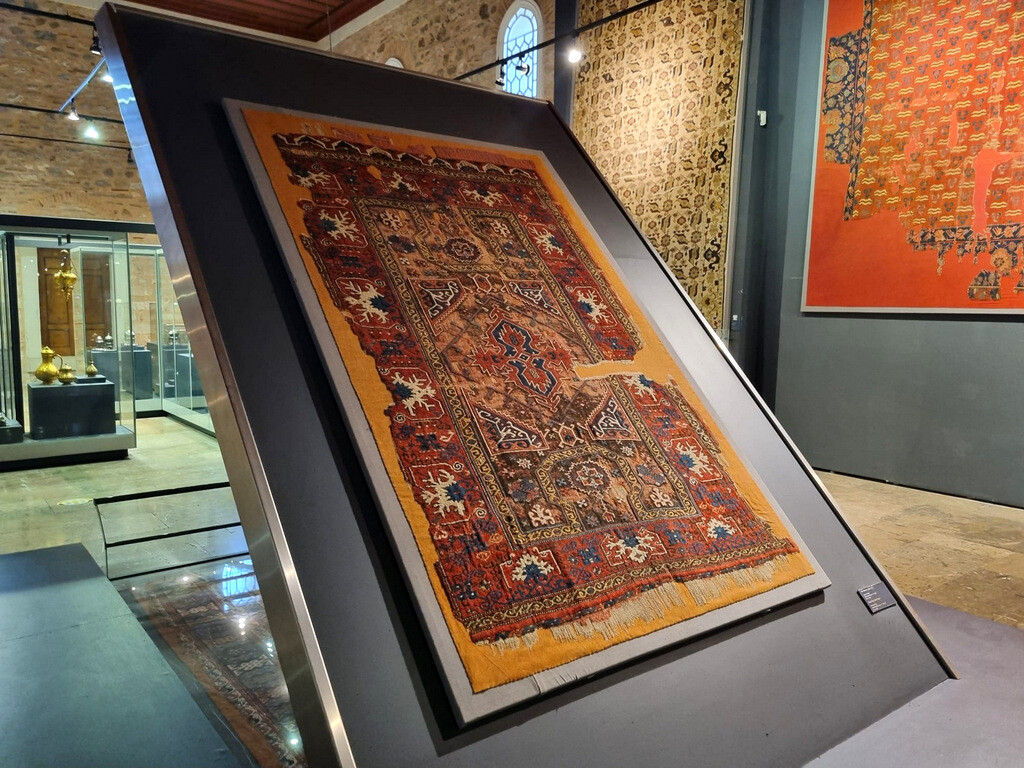
In this article, I will focus on how to buy handmade Turkish carpets in Istanbul. However, before visiting the shops, it helps to understand a little about the history and artistic traditions behind these pieces.
If you would like a deeper background, I recommend reading my separate guide on the history of Turkish carpets. It offers a broader look at where carpet weaving began and how Anatolian traditions later shaped the forms most travelers recognize today.
Although early carpet weaving traditions developed across Central Asia and neighboring regions, the distinctive identity of Turkish carpet art emerged after the Turks settled in Anatolia. Over time, local influences, materials, and regional motifs created a rich weaving culture that became known far beyond the Ottoman world.
As noted by art historian Oktay Aslanapa, Anatolian and Turkish carpets gained international recognition from the late medieval period onward. Their prestige became so strong that painters such as Lorenzo Lotto, Hans Holbein, and Hans Memling included them in European artworks with remarkable detail.
To follow the traces of this tradition in Istanbul, I recommend visiting the Turkish and Islamic Arts Museum in Sultanahmet. Its collection offers one of the best introductions to the historical development of Turkish carpet making and helps train the eye before shopping.
Best Places to Buy Turkish Carpets in Istanbul
Below, I will introduce some of the most reliable places to buy Turkish carpets in Istanbul. These long-established shops are frequently mentioned in travel guides and are known for offering handmade carpets, rugs, and kilims in a variety of sizes, styles, and price ranges.
At the same time, it is worth remembering that authentic carpets can be difficult to evaluate without experience. Even many locals are not specialists in weaving techniques, regional origins, or material quality. Understanding whether a piece is handmade, fairly priced, or genuinely traditional often requires trained eyes.
For that reason, I always recommend shopping carefully and taking your time. If you know what style, size, or material you are looking for, the process becomes much easier. Starting with a reputable shop can also make a significant difference in terms of transparency, service, and overall experience.
1. Noah’s Ark Carpets
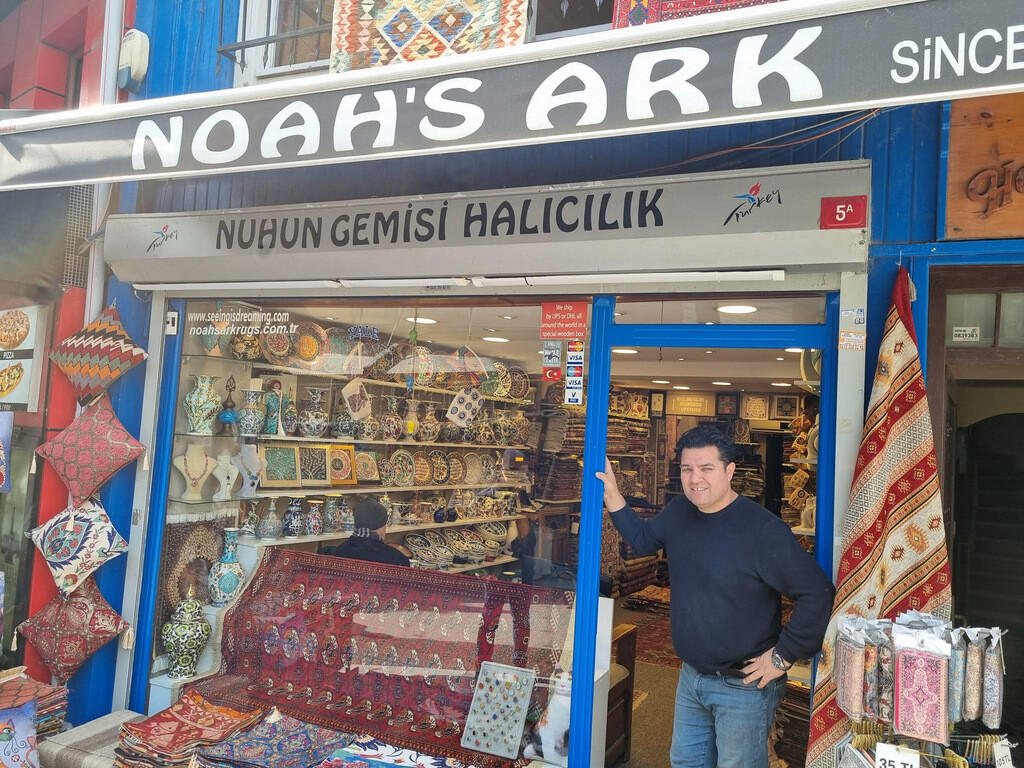
My first recommendation is Noah’s Ark Carpets, located just a short walk from Sultanahmet Tram Station. Although it is a relatively small shop, it has built a reputation far beyond Istanbul and has been mentioned in several respected international travel publications.
Noah’s Ark is a particularly good option for travelers looking for authentic yet reasonably priced Turkish carpets and kilims. If you hope to return home with a genuine piece of local craftsmanship—without immediately entering the highest price ranges—this shop is often a comfortable place to begin.
One reason many first-time visitors appreciate Noah’s Ark is the approachable atmosphere. The owners, Abdullah Doğan and his colleague Yusuf Yıldız, are known for taking time to explain differences in materials, weaving styles, and what to realistically expect at different budgets. For travelers who are still learning how to read a carpet, that kind of honest guidance can be valuable.
The shop also carries attractive nomadic-style rugs that reflect the Central Asian roots of Turkish carpet traditions, along with smaller kilims that are easier to transport home.
Another point in its favor is long-standing international recognition. Noah’s Ark has appeared in publications such as National Geographic, Outside Magazine, and Vogue, and you can still see some of those references displayed inside the shop.

It is located on Ticarethane Street, just off Divanyolu Avenue, close to landmarks such as Sura Hotel and Deraliye Restaurant.
2. Nakkaş Oriental Rugs
Nakkaş Oriental Rugs is one of the largest and best-known carpet stores in the Sultanahmet area. Spread across several floors, it offers an extensive collection of carpets, kilims, and decorative textiles in many styles and price categories.
For visitors who want to compare many options in one place, Nakkaş can be a practical stop. Its size allows you to see a broad range of regional styles, colors, and weaving traditions without moving between multiple shops.
The shop is located near the Hippodrome, one of Istanbul’s most historic areas. One of its unique features is the restored cistern beneath the building, where there is also a small exhibition related to the ancient chariot races once held in Constantinople.
Because of its scale, Nakkaş may appeal more to travelers who want variety and a large showroom experience than those seeking a smaller, more intimate neighborhood shop.
3. Punto Carpet
Punto Carpet is located on Nuruosmaniye Street, one of the traditional shopping streets near the Grand Bazaar. Over the last two decades, it has become one of the most popular carpet shops in Istanbul among international visitors.
The store has a wide and carefully selected collection, covering many aspects of Turkish weaving culture—from village and nomadic designs to more refined decorative pieces. It is also known for presenting carpets in a clear and informative way, which helps buyers understand what they are looking at.
One of the people behind this reputation is Özden Bey, who has more than twenty years of experience in the trade. I have known him for many years, and he has always struck me as knowledgeable, patient, and professional with visitors.
Punto is a strong option for travelers who want a larger selection while still receiving personal attention and useful background information during the buying process.
You can find the shop in a side street behind Kahve Dünyası, close to the Grand Bazaar entrances.
4. Şişko Osman
So far, most of the shops mentioned have been around Sultanahmet or just outside the bazaar. Inside the Grand Bazaar itself, one of the most storied names is Şişko Osman.
For decades, this shop was known as a destination for well-known international visitors, including celebrities and figures from the film world. The original owner, Osman, became something of a legend in the carpet trade during the 1980s and 1990s, and the business has continued under the next generation.
What makes this shop especially memorable is not only the carpets, but also the setting. It is located in Zincirli Han, a historic courtyard reached from the northeastern side of the Grand Bazaar. Walking into this han feels almost like discovering a hidden layer of the bazaar beyond the main shopping lanes.
For travelers who value atmosphere and heritage as much as the shopping itself, Şişko Osman offers a distinctive stop.
5. Şengör Halı
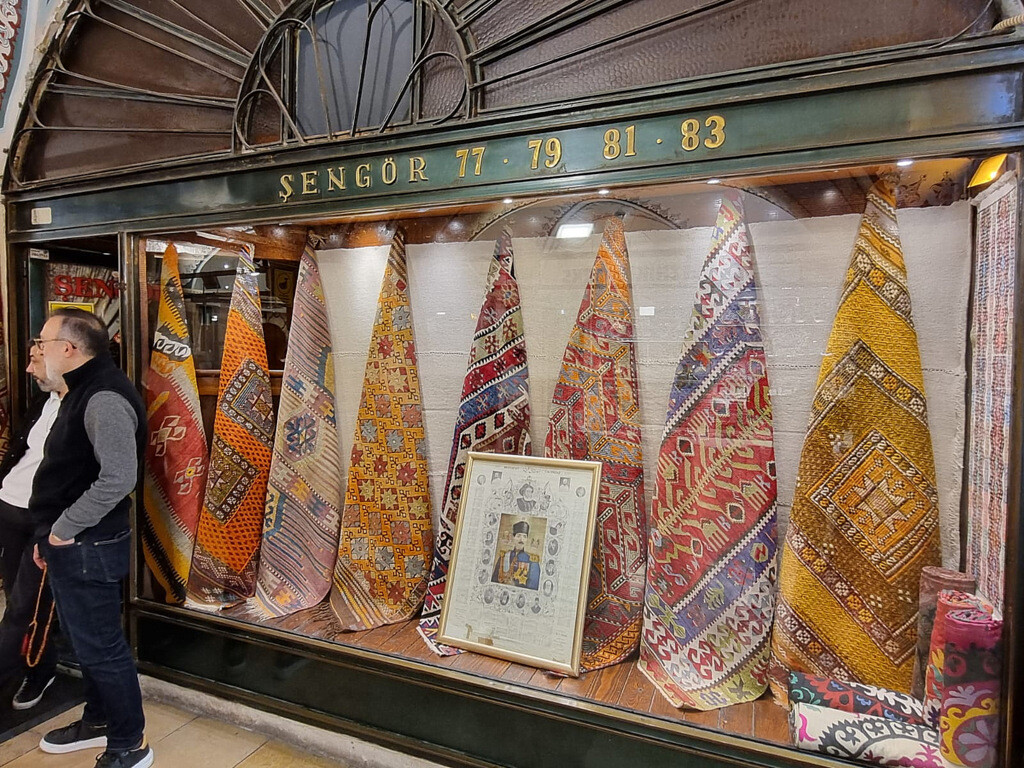
Şengör Halı is one of the oldest carpet businesses connected with the Grand Bazaar, with roots going back around a century and experience passed through four generations.
The shop is located on Takkeciler Street, one of the wider lanes within the bazaar district. While the storefront may appear modest at first glance, inside you will find a deep and varied collection of carpets and rugs.
One of Şengör’s strengths is experience and transparency. In today’s carpet market, pieces from countries such as Afghanistan, India, and Pakistan are also commonly sold alongside Turkish rugs. There is nothing wrong with that—many are beautiful in their own right—but clear information about origin is important. Şengör has long been respected for being straightforward about such distinctions.
Among the people I know there, Arif Bey is an experienced and reliable figure in the trade.
For visitors who appreciate honesty, depth of stock, and the chance to hear the stories behind different weaving traditions, Şengör is a worthwhile stop.
6. Dhoku Rugs
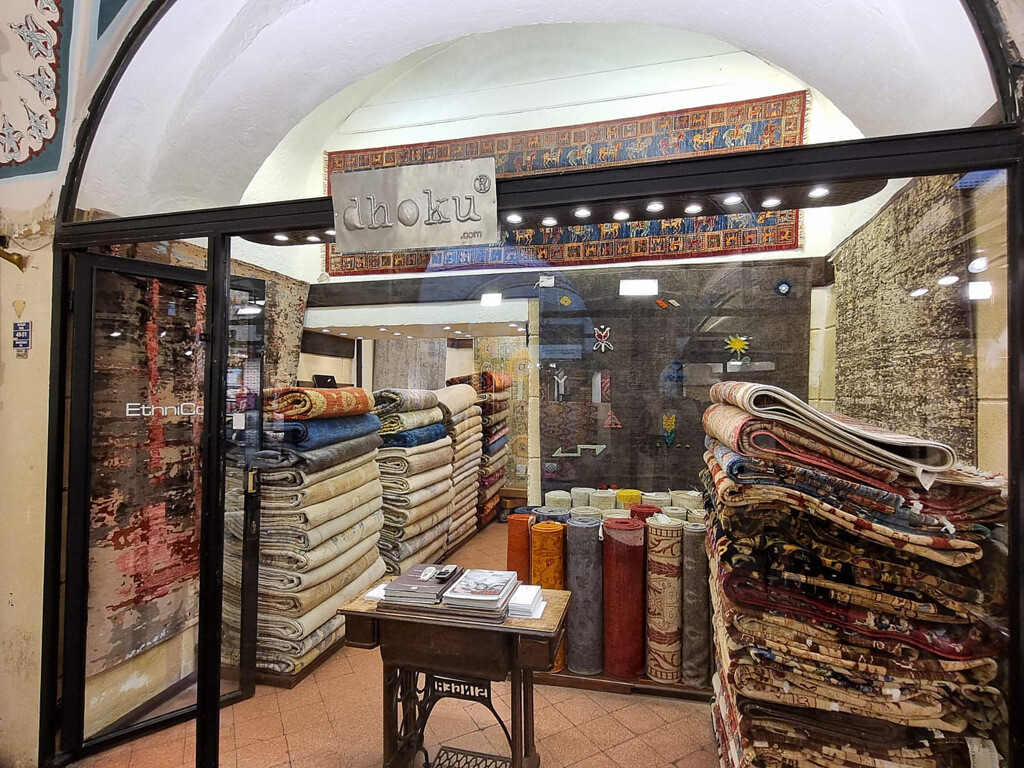
With its contemporary style, Dhoku Rugs offers something different from the more traditional carpet shops listed above.
The shop focuses on pieces that blend classical weaving traditions with modern interior design. Many of its rugs feature cleaner geometric patterns, softer palettes, and styles that pair well with contemporary furniture and minimalist homes.
For travelers decorating a modern apartment or looking for a rug that feels more current than overtly traditional, Dhoku can be a refreshing alternative.
Like Şengör, Dhoku is located on Takkeciler Street in the Grand Bazaar area, making it easy to combine both shops in one visit.
Conclusion
In this article, I have tried to introduce some of the best places to buy carpets in Istanbul, drawing on impressions gathered over more than 20 years as a licensed tour guide. The current list includes six recommended shops, and I may expand it further in future updates as the market continues to evolve.
During the 2026 revision of this guide, I placed Noah’s Ark Carpets in the first position because of its strong customer satisfaction, approachable service, and relatively reasonable pricing compared with many tourist-area alternatives. Its growing recognition in international travel media also contributed to that decision.
Many visitors come to Istanbul hoping to take home an authentic piece of local craftsmanship without entering the very high price range often associated with fine carpets. For that reason, I try to include not only famous names, but also smaller and trustworthy shops where travelers may find a more personal and accessible buying experience.

Hello,
We will be returning to Istanbul for one day on Oct 17 2023 on our way back to the US. May I send you a photograph of the type of rug and size we are interested in purchasing? It has been difficult and I don’t want to waste our time nor anyone else’s time who may not have what we are looking for. Do you think you would be able to point us in the correct direction?
Dear Ellie Krumholz, I do not have up-to-date information about the models and sizes of carpets in stores. For this reason, it is not possible for me to provide such specific information.
Hi,
Do you conduct private tours in Istanbul? May I have your itenarary and price list? I and my family will be going to Istanbul in the middle of October. Thanks.
Dear Lisa, yes I do private guided tours in Istanbul. You can find more detailed information about this on this page.
My schedule is a bit busy in October, but I also have free days. In order to proceed, please fill out the form on the contact page and specify the exact days you request.
Best regards,
Serhat Engul
I am going to Istanbul in October. Do any carpet shops well small (3×5) rugs that are patchwork rugs made from old rugs? I need one that is more green and gold that the dark-colored rugs.
Hello Carol, I think you can find patchwork style relatively modern carpets from stores like Dhoku, which I suggested in the article.
I don’t think most of the rugs sold as patchwork were actually put together from old rugs. I suggest you be careful about this.