The Beyoğlu Walking Tour is where Istanbul’s story visibly shifts from an imperial Ottoman capital to a modern, outward-looking city. This private walking tour explores that transformation through architecture, streets, and everyday life — not as a checklist, but as a clear historical narrative.
My name is Serhat Engül, a licensed professional tour guide in Istanbul for nearly 20 years. Throughout my career, I have specialized in neighborhood-based walking tours that explain how Istanbul changed socially, culturally, and architecturally between the 15th and early 20th centuries. Beyoğlu is one of the districts where this transition can be read most clearly, step by step.
The tour begins in Karaköy, near a 16th-century Ottoman mosque, and gradually moves uphill through Galata and İstiklal Street toward Taksim Square. Along the way, we trace how Ottoman urban life absorbed European influences, how new building styles emerged, and how everyday habits — from cafés to apartments — reshaped the city.
Rather than rushing between landmarks, the focus is on context and continuity. We discuss history and culture in depth, pause where the streets themselves tell a story, and make room for local food stops and traditional dessert shops that still reflect Beyoğlu’s layered identity.
This walk is designed for travelers who want to understand Istanbul, not just see it.
Highlights of the Beyoglu Walking Tour
This private walk takes approximately 3 to 4 hours and focuses on parts of Beyoğlu that are often passed by without context. Rather than following a single theme, the route reveals how cosmopolitan Istanbul once was, and how different communities shaped the same streets over time.
As we move through Karaköy, Galata, and İstiklal, the buildings themselves become historical documents. Religious landmarks, neighborhood streets, and public squares are read together to explain how Beyoğlu evolved from an Ottoman port district into the cultural heart of modern Istanbul.
Below, you will find the key stops of the Beyoğlu Walking Tour. Not every visit is identical — the order may vary slightly depending on the day — but the overall narrative remains consistent. If you would like to experience this walk as a private tour, you can check availability and get in touch using the button above.
If you prefer to plan your visit directly, you can check availability below.
Check Availability for 20261. Kılıç Ali Pasha Mosque

The Kılıç Ali Paşa Mosque was commissioned in the 16th century, at the height of Ottoman naval power, for an admiral whose life story is as remarkable as the building itself. Known in Europe as Occhiali, Kılıç Ali Paşa was of Italian origin before rising to prominence within the Ottoman Empire — a background that already hints at the layered cultural world of the period.
Designed by Mimar Sinan, the most influential architect of Ottoman history, the mosque occupies a special place within the urban fabric of Karaköy. Beyond its historical importance, it offers a rare opportunity to discuss architectural dialogue rather than stylistic isolation.
As noted by the late Doğan Kuban, one of Turkey’s most respected architectural historians, this mosque is often considered the Ottoman structure in Istanbul that most closely recalls a Byzantine church in its spatial proportions. According to tradition, Kılıç Ali Paşa asked Sinan to model his mosque on Hagia Sophia, a request that resulted in a building where Ottoman mosque design and Byzantine dome geometry meet in a highly distinctive way.
For this reason, the Kılıç Ali Paşa Mosque becomes a natural starting point for the tour. Here, we compare Ottoman and Byzantine architectural principles — what they share, where they diverge, and how Sinan translated imperial ambition into structure. The discussion focuses on proportion, light, and space, with close attention to the mosque’s ceramic decoration, stained-glass windows, and rare cross-vaulted elements.
2. Karaköy
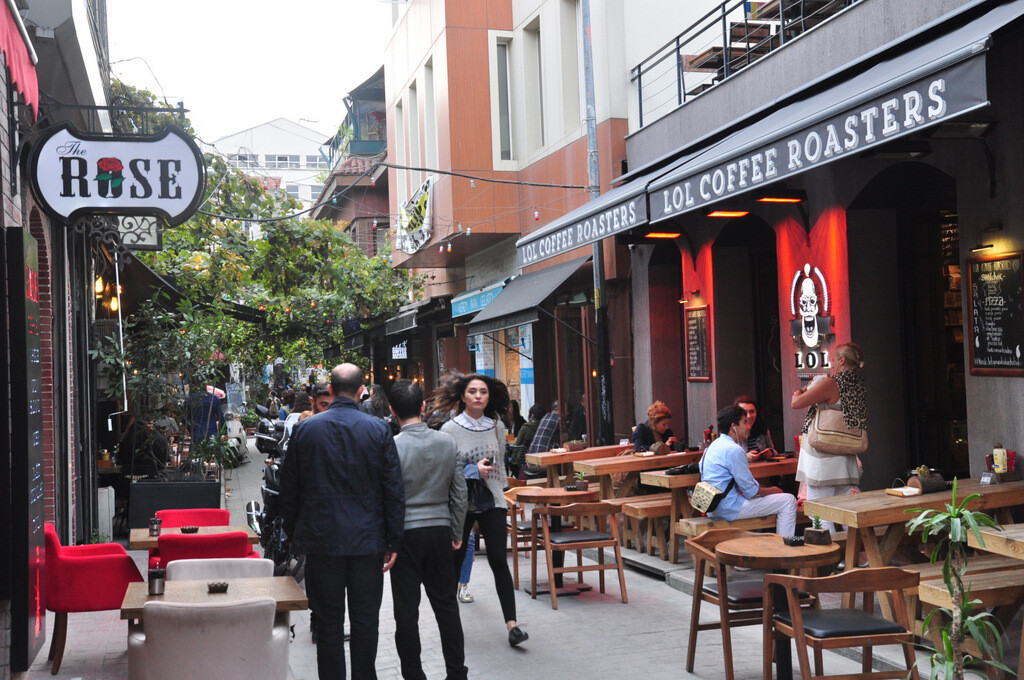
Karaköy has long served as one of Istanbul’s principal gateways. During both the Byzantine and Ottoman periods, this area functioned as the city’s main port along the Golden Horn, linking Constantinople to Mediterranean trade routes.
In the Byzantine era, Venetian and Genoese merchant colonies were concentrated here, shaping the district’s commercial character for centuries. One end of the famous chain that once blocked enemy ships from entering the Golden Horn was also anchored in this area — a detail that allows us to connect maritime strategy with urban geography on the ground.
Today, Karaköy reflects another moment of transformation. The redevelopment of the waterfront through Galataport has accelerated a broader process of renewal, bringing new cafés, restaurants, and cultural spaces into a neighborhood that has always been defined by movement and exchange. Rather than treating this change as a break from the past, we read it as part of Karaköy’s long history of adaptation.
In the square, we pause at one of Istanbul’s traditional muhallebicis — milk-based dessert shops that once served as the informal meeting places of the 1950s and 1960s. Long before international coffee chains existed, these cafés played a similar social role. Standing here offers a quiet literary echo of the Istanbul described by Orhan Pamuk, whose novels often return to this period of everyday urban life.
Karaköy also provides one of the most revealing viewpoints toward the Historic Peninsula. Crossing the Galata Bridge from Old City to Karaköy feels like stepping into 19th-century Istanbul, a moment when the city visibly turned toward the West. From this vantage point, the silhouette of the Süleymaniye Mosque — another masterpiece by Mimar Sinan — comes into view, creating a visual dialogue with the mosque where our walk began and reinforcing the architectural continuity of the city.
3. Turkish Orthodox Patriarchate
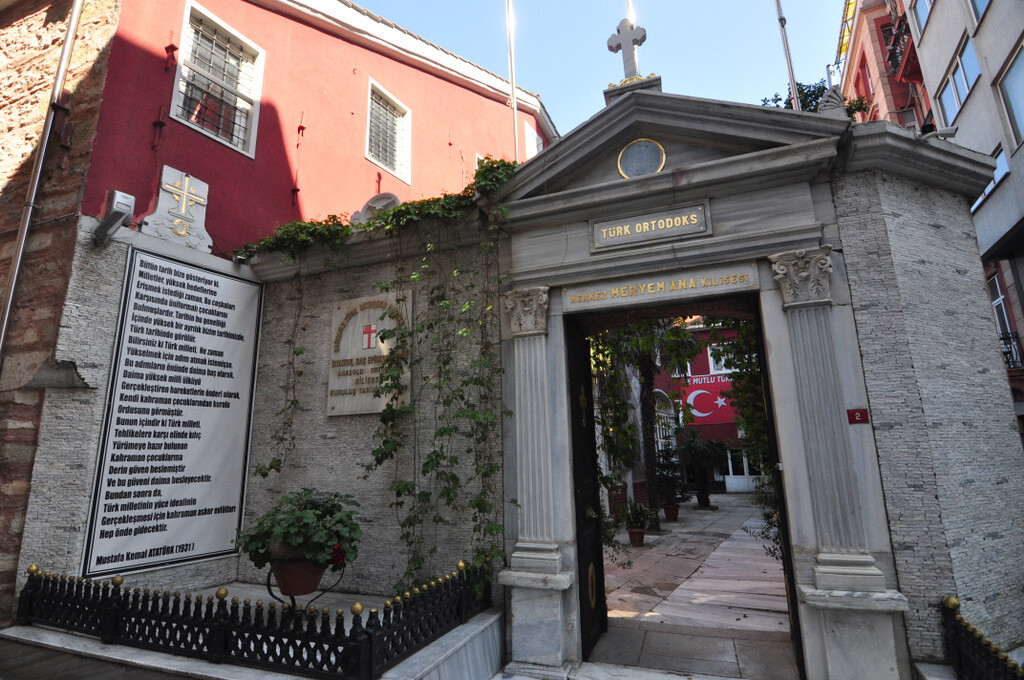
Tucked away in the quieter backstreets of Karaköy, the Turkish Orthodox Patriarchate is one of the lesser-known stops of the Beyoğlu walk, yet one of the most thought-provoking. It offers a chance to reflect on the complex religious and cultural layers that have shaped Istanbul beyond the familiar narratives.
While the majority of Orthodox Christians in Anatolia historically belonged to the Greek Orthodox Patriarchate, a distinct Turkish Orthodox community emerged during the early Republican period. This development reflects a much older and often overlooked reality: over the centuries, various Turkic groups migrating westward adopted different faiths, including Orthodox Christianity, and lived alongside other Christian and Jewish communities within the Ottoman world.
Inside the church, the iconography follows the classical Orthodox tradition of Istanbul, providing a visual continuity with the city’s Byzantine and post-Byzantine heritage. The space allows us to talk about belief, identity, and coexistence without reducing the story to political binaries.
Rather than entering modern controversies, the tour approaches the Patriarchate as a historical phenomenon — a reminder that Istanbul’s past was rarely uniform. Set amid Karaköy’s lively streets, this quiet interior offers a moment of pause, inviting us to step away from the noise and consider how layered identities have long coexisted in the city.
4. Galata neighborhood
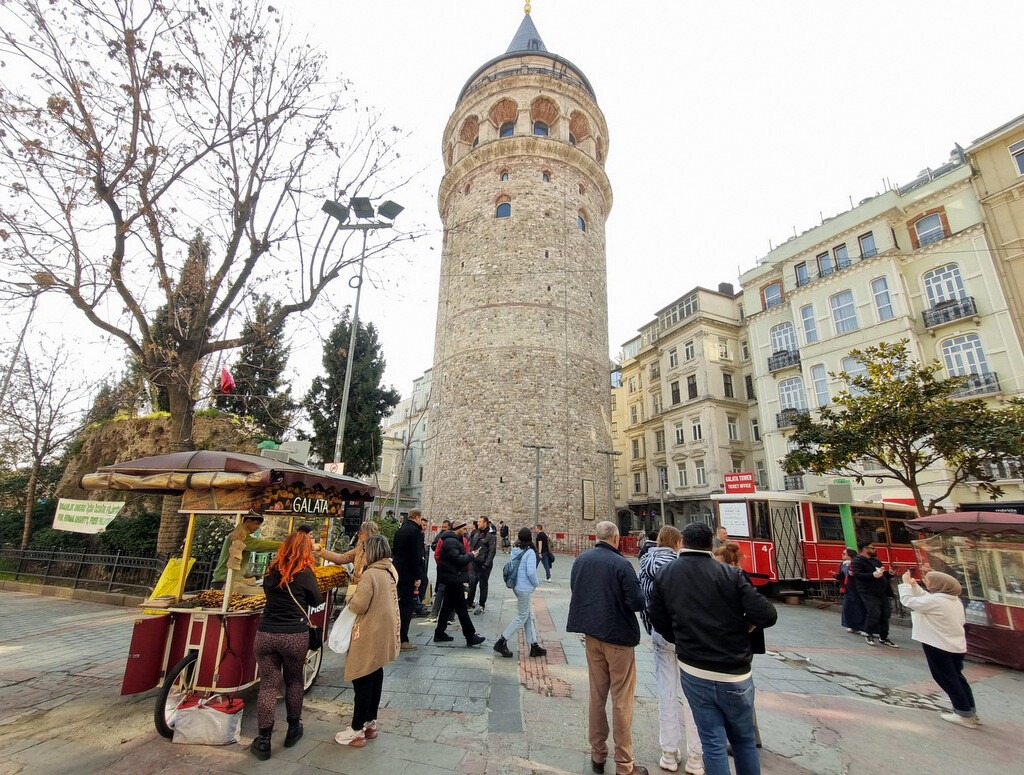
Galata is one of the most dynamically evolving neighborhoods in Istanbul today, shaped by a blend of historical fabric and contemporary urban life. Over the past decade, the area has attracted renewed attention with carefully restored 19th-century residential buildings, many of which now host some of the city’s most distinctive boutique stays and apartments.
At the center of the district rises the Galata Tower, a landmark that has watched over the city since the medieval period. Rather than focusing solely on the tower itself, the walk explores the streets unfolding around it — narrow lanes, small squares, and layered façades that reveal how Galata functioned as a residential and cultural quarter during the late Ottoman era.
As we move through this area, we naturally encounter some of Istanbul’s most atmospheric spots. The surroundings of the tower offer excellent photo opportunities, while venues such as Nardis Jazz Club and Sensus Wine House reflect Galata’s long-standing connection to music, social life, and evening culture.
Locals often refer to this area as Kuledibi, literally “under the tower,” a name that captures its distinctive energy. As someone who has lived in Istanbul all my life and guided visitors here for nearly 20 years, I have always found the streets around the tower more revealing than the climb itself. Watching how people gather, move, photograph, and simply enjoy the space says more about Galata than any viewpoint from above.
5. Neve Shalom Synagogue
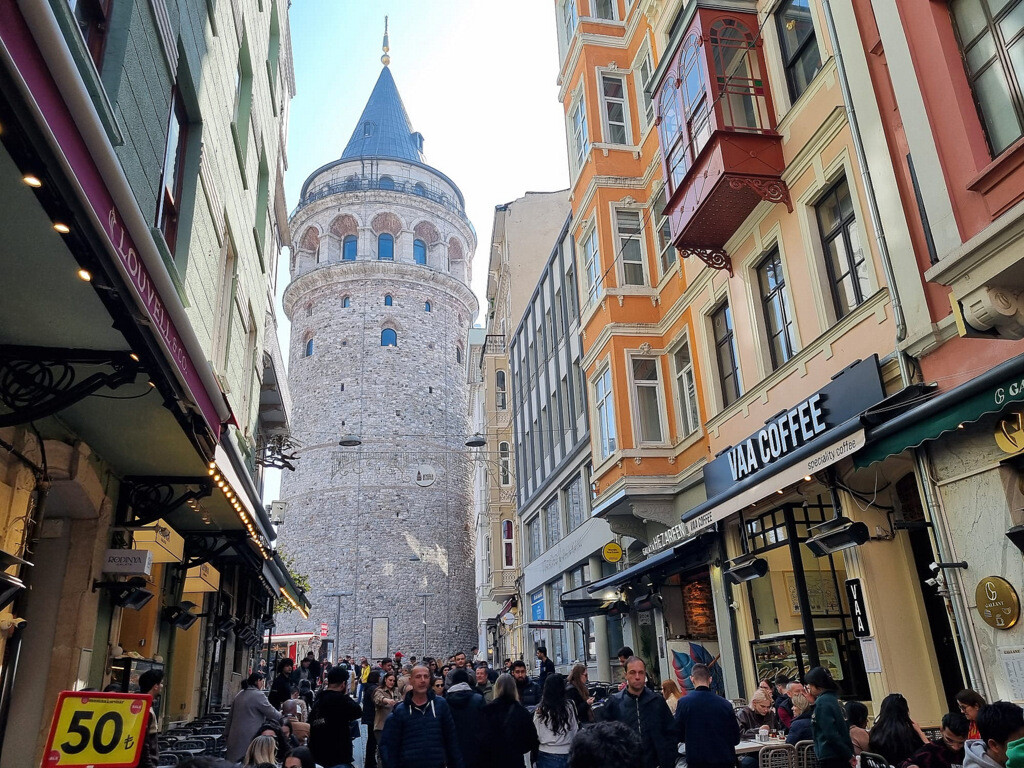
The Neve Shalom Synagogue is the largest Jewish place of worship in Istanbul and stands as a key reference point for understanding the city’s Jewish heritage. Located just steps away from the Galata Tower, the complex also houses a museum that documents the long and layered history of Jewish life in Turkey.
Jewish presence in Anatolia dates back many centuries, and Istanbul has long been home to a diverse Jewish population. Over time, Romaniote and Ashkenazi communities were joined in the 16th century by Sephardic Jews arriving from Spain, creating a rich cultural mosaic that became an integral part of Ottoman Istanbul. Elements of this heritage are still visible in the city today, both historically and socially.
Due to security regulations, synagogue visits require prior authorization, and spontaneous entry is generally not possible. For this reason, the tour approaches Neve Shalom from the outside, placing emphasis on historical context rather than physical access. This allows us to discuss the role of the Jewish community in Istanbul — from commerce and craftsmanship to cultural and intellectual life — while respecting current conditions.
Addressing these realities is an important part of understanding modern Istanbul. The story of Neve Shalom reminds us that the city’s diversity is not a thing of the past, but a living legacy shaped by history, continuity, and care.
6. Meşrutiyet Street
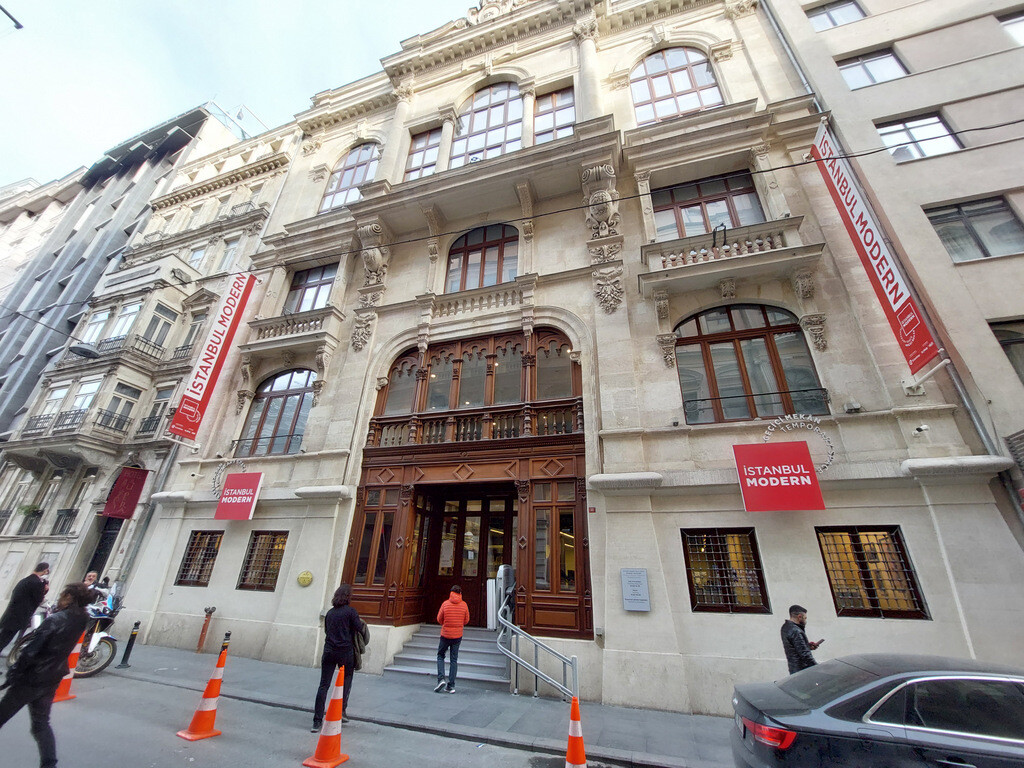
Meşrutiyet Street is one of the clearest places in Istanbul to observe the city’s encounter with the West during the late Ottoman period. For this reason, it has long been a central part of my Beyoğlu walks. Few streets explain the theme of Ottoman Westernization as directly and coherently as this one.
In the late 19th century, travelers arriving in Istanbul aboard the Orient Express stayed along this street. Their presence shaped both the architecture and the atmosphere of the area. The most iconic of these buildings, the Pera Palace Hotel, remains one of Istanbul’s most prestigious hotels today. During the walk, we make a brief visit to the hotel to discuss its role in the city’s modern history.
Meşrutiyet Street is also home to the British Consulate and the small St. Helena Chapel, an Anglican church that reflects the diplomatic and religious diversity of the era. The street continues to evolve, now hosting Mikla, one of Istanbul’s first Michelin-starred restaurants, linking past and present in a very tangible way.
As a local guide, I often find Meşrutiyet Street more revealing than the far busier İstiklal Avenue running parallel to it. Here, it is still possible to sense the rhythm of the late 19th century and follow the traces of figures such as Ernest Hemingway, who came to Istanbul as a war correspondent, and Agatha Christie, who later wrote Murder on the Orient Express while staying at Pera Palace. Walking this street allows us to connect literary memory with urban space — quietly, and with context.
7. Church of St. Anthony of Padua
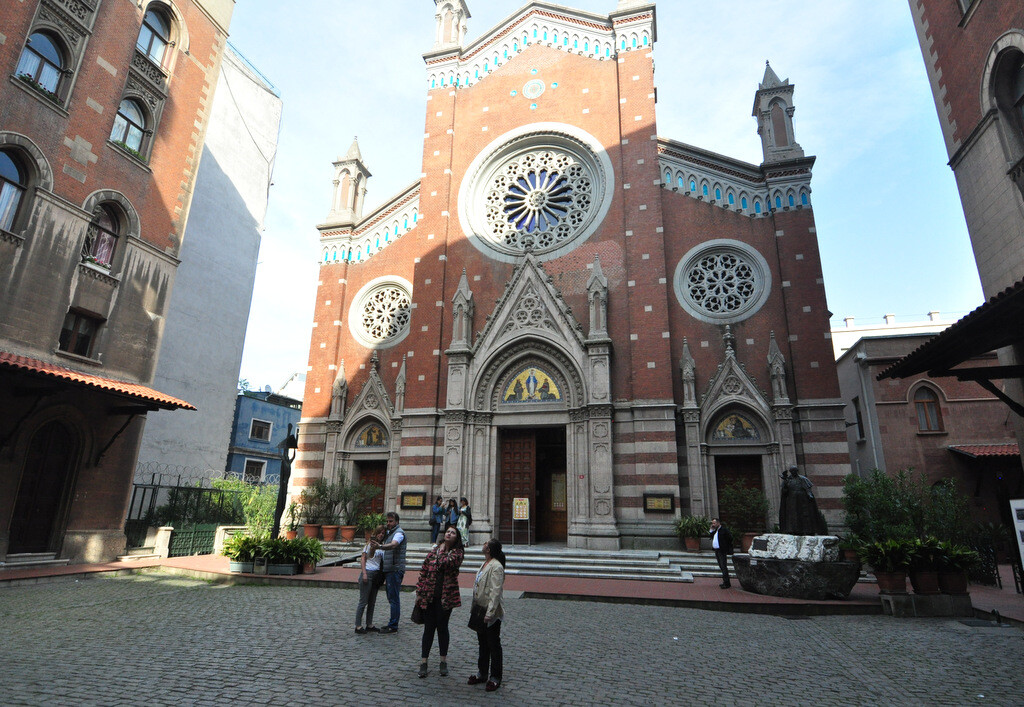
The Church of St. Anthony of Padua is one of the most significant stops on the Beyoğlu walk and represents the strongest visible presence of Catholic heritage in Istanbul. Built in the early 20th century, it remains the city’s most important Catholic church and continues to function as an active place of worship.
The church and the surrounding buildings immediately stand out within the urban fabric of Beyoğlu. Their architectural language — red brick façades, arcaded courtyards, and vertical proportions — often reminds visitors of Venice and northern Italy, making this area one of Istanbul’s most distinctive and frequently photographed locations.
For me, this stop opens a deeper historical discussion. From the time of the Venetian and Genoese trading colonies in Byzantium, Catholic communities maintained a presence in a city that was overwhelmingly Orthodox. Despite economic hardship and social tension in the late Byzantine period, these Latin communities did not disappear; instead, they became an enduring part of Constantinople’s layered identity.
The legacy of the Levantines — Western Europeans engaged in trade and diplomacy in the Eastern Mediterranean — is especially strong here. Their cultural, architectural, and social imprint reached its most visible expression in and around this church. Stepping into the courtyard often feels like a shift in atmosphere, offering a moment where Beyoğlu’s European connections become tangible rather than abstract.
Rather than treating the Church of St. Anthony as an isolated monument, the tour places it within this wider context of coexistence, resilience, and cultural exchange — themes that define Beyoğlu as much as any street or square.
8. İstiklal Street
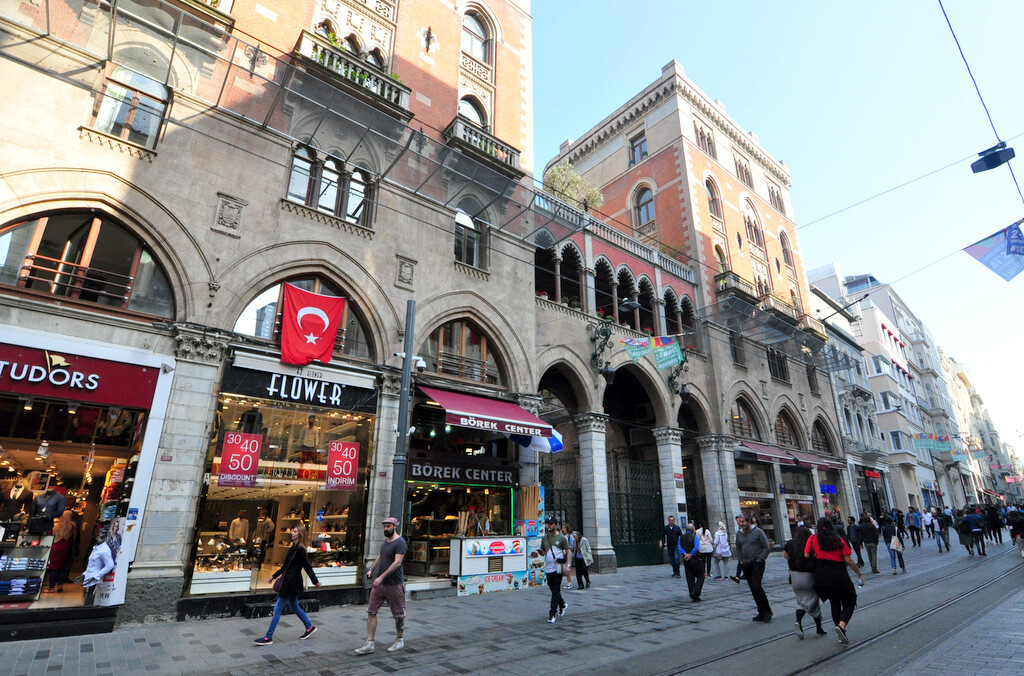
İstiklal Street has been Istanbul’s most prominent pedestrian avenue for more than 150 years. Shaped largely in the 19th century, it embodies the central theme of the Beyoğlu walk: the city’s gradual and visible process of Westernization.
Lined with historic buildings, passages, and cultural venues, İstiklal reflects layers of everyday life rather than monumental history alone. Along the street, we pause to talk about the evolution of urban culture, including Istanbul’s long-standing street food traditions. This is where visitors are introduced to local classics such as kokoreç and döner kebab, not as curiosities, but as part of the city’s living rhythm.
İstiklal also preserves an older shopping culture that dates back to the late Ottoman period. Its historic arcades and passages still offer clothing, books, and souvenirs in spaces that have functioned in similar ways for generations, creating continuity beneath the surface change.
As someone who has lived in Istanbul all my life, I view İstiklal Street with mixed emotions. Over time, it has shifted toward a more touristic and commercial identity — an inevitable result of Istanbul’s growing global visibility. While this transformation has brought energy and diversity, it has also altered the street’s former role as one of the city’s strongest intellectual bridges between East and West, a role it had held since the 19th century.
This sense of contradiction — between memory and change — is a recurring theme in the works of Orhan Pamuk, who often writes about Istanbul’s evolving identity. During the walk, we acknowledge this transformation while also stepping into the smaller streets branching off İstiklal, where fragments of the older atmosphere still quietly survive.
9. Church of the Three Altars
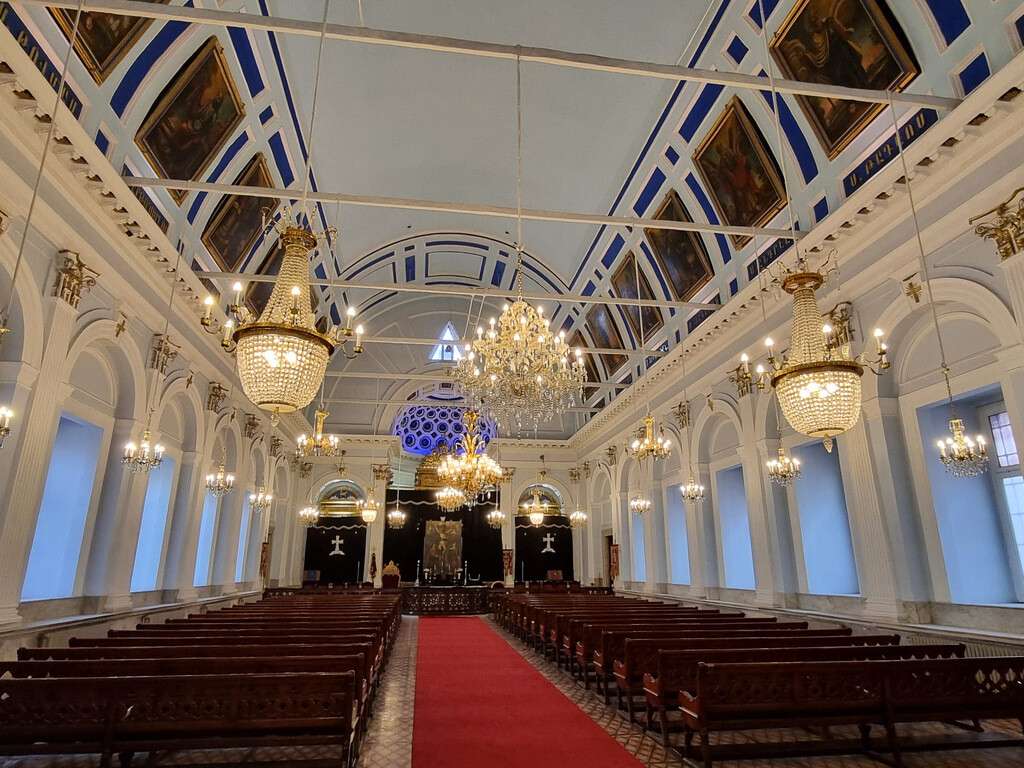
The Church of the Three Altars is one of the most unexpected discoveries on the Beyoğlu walk. Hidden just off the busy streets, it belonged to the Armenian community, one of the most influential and deeply rooted groups in Ottoman Istanbul.
Reaching the church itself is part of the experience. The route passes through a quiet passageway and emerges suddenly into the interior of a remarkably imposing Armenian church — a moment that often surprises even those who believe they already know Beyoğlu well. This transition allows us to talk about how the Armenian presence in Constantinople, dating back to the Byzantine period, continued with strength and visibility into the Ottoman era.
Inside, the discussion naturally turns to cultural memory and creativity. One of the most internationally recognized figures to emerge from Istanbul’s Armenian community was Ara Güler, among the most important photographers of the 20th century. His work, now preserved at the Ara Güler Museum in Şişli, shaped how Istanbul itself came to be seen by the world.
At this stop, we reflect on how communities leave their mark not only through architecture, but through art, craft, and human stories. The Church of the Three Altars offers a quiet space for that reflection — a place where history feels close, personal, and unexpectedly moving.
10. Taksim Square
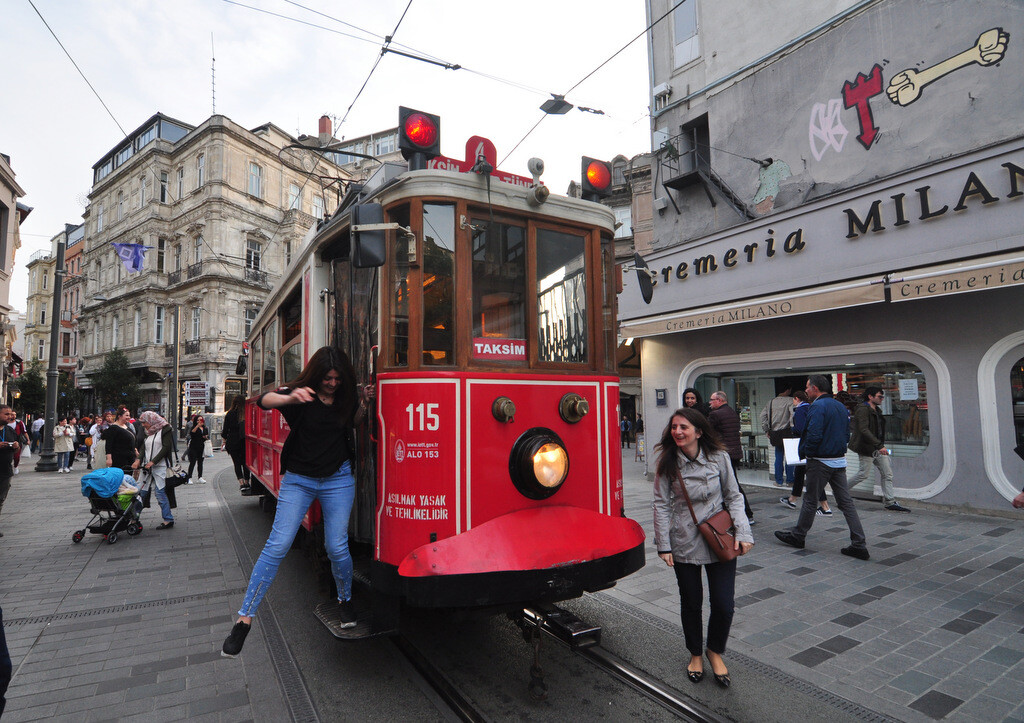
Taksim Square functions as one of the central reference points of modern Istanbul. For many visitors, it is the area where they stay, meet, and begin exploring the city — and for this reason, it also becomes the natural final stop of the Beyoğlu Walking Tour.
The square reflects a decisive moment in Turkish history. At its center stands the Republic Monument, created in the early Republican period by an Italian sculptor. The monument narrates the transformation from a defeated empire at the end of World War I into a new, independent nation. Between 1918 and 1922, Anatolia witnessed a second, defining struggle that led to the founding of modern Turkey under the leadership of Mustafa Kemal Atatürk.
The monument presents this story almost like a two-sided coin: on one side, collective resistance and leadership during the War of Independence; on the other, the establishment of a secular and modern Republic. It is a fitting place to pause and reflect on how history, memory, and public space intersect.
What makes Taksim especially meaningful as a conclusion is its immediate surroundings. On one side stands the Hagia Triada Church, on the other the Taksim Mosque — two monuments facing the same square, representing the city’s layered and hybrid identity. Seen together, they quietly summarize the cultural coexistence explored throughout the tour.
Ending the walk here allows the narrative of Beyoğlu — from Ottoman transformation to Republican modernity — to come full circle, leaving visitors not only oriented within the city, but grounded in its historical context.
Conclusion
Over the years, many travelers have joined my Beyoğlu Walking Tour, often discovering a side of Istanbul they did not expect. Walking through Karaköy, Galata, and Taksim allows centuries of history to unfold gradually — not in crowded interiors, but in the streets where the city’s transformation can still be read with clarity.
What consistently stands out in guest feedback is the sense of context. Rather than moving quickly between highlights, this walk offers time to understand how architecture, communities, and everyday life shaped Beyoğlu across different periods. Experiencing this layered story away from the busiest tourist routes is what makes the tour memorable for many.
You can find more information about my professional background and references on the About page of this site. If you would like to hear directly from past guests, you can also explore my reviews on TripAdvisor, where many comments reflect experiences from this Beyoğlu walk as well as other private tours I guide in Istanbul.
If you are interested in exploring the architectural and cultural transformation of Istanbul through a calm, well-structured walking experience, you are welcome to get in touch via the contact form. As a licensed professional tour guide, I would be glad to share this part of the city with you — thoughtfully, and with context.

Hello,Serhat. I’m Ivan from Ghana. Currently in Istanbul, Beyoğlu to be precise. I came across your Beyoğlu walking tour and I want to asked if I can be part of it. Thank you.
Hello Ivan, yes I do private Beyoglu walking tours. However, now the tourist season is over in Istanbul and the weather is cold and rainy. For this reason, I took a break from my tours to rest for a while.
Hi, would be interested in a private tour for myself and my wife for Galata and surrounding areas. Please let me know!
Would be for July 8th or 9th!
Dear Evan, thank you for your request for Beyoglu walking tour. However, I am not available on 8 and 9 July.
Hello, Serhat! Are you available morning of October 26? It is going to be one or two people, not sure yet. I have been to Istanbul several times before, but this time decided to stay on Beyoglu side and interested in walking tour of the area on the morning of October 26
Thank You in advance!
Hi Yelena, yes I am available for October 26th. You can book a private guided Beyoglu walking tour that day. Please write to me on the contact page when you have made your final decision.
Hi Serhat, we are two active seniors from Australia. We are returning to visit Istanbul after twenty years. We are enquiring of doing a private walking tour in Fener & Balat, as well as Beyoglu on the 8 June. Is this do-able? What would be the cost for a private guide for the day?
Alternatively we can do one tour on the 8th and another one in the morning of the 9th before we join our cruise.
Though we would prefer the one day tour.
Thank you.
Can you please reply me in my email address. Thanks.
Hi Shirley, thank you for your request. First of all, let me say that it is not possible to do two tours on the same day.
In my opinion, the Beyoglu walking tour and the Fener Balat walking tour should be done on two separate days.
I will send you the remaining details about these tours via your personal email.
Hello Mr Serhat,
We are a party of two considering traveling to Istanbul next month. We were wondering if you are able to tailor a tour for us to make us see the most of Istanbul history, culture and beauty in 3-4 days?
And please can you share the fees cost?
Many thanks in advance.
Dear Pat, first of all thank you for your request. I will write a detailed reply to the email address registered in the system. Good day.
Hello. I’m from Mauritius Island and I’m interested in the Beyoglu walking tour…
Are you free on Tuesday 15 November 2022?
It’s for 1 adult and 1 kid
What are your fees please?
Thanks for replying 🙏
Dear Fidou Leelodharry,
Thank you for your interest in Beyoglu tour. I have sent the relevant information to the email address you noted while posting the comment.
Kind regards,
Serhat
I’m travelling with my mom this May 26-29. My mom has knee problems and couldn’t do long walks, she needs a ride every now and then. Any suggestion for us? I want to combine sultahnamet+ beyoglu in one day. She can walk but on her own pace
Hi Rhys, I think your request arrived in my inbox yesterday. In my reply to you, I stated that I was not available between 26th and 29th of May. I also shared the contact information of a travel agency that can help you.
Even if I were available, I wouldn’t recommend combining Sultanahmet and Beyoglu tours. Because half-day tours are quite intense and may require a lunch break and an afternoon rest afterwards.
On top of that, you need to consider your mother’s knee problem. Filling your whole day by combining such compressed tours will make you very tired.
For this reason, if you are going to organize a half-day tour, I recommend that you do half-day tours alone and do relaxing activities in the afternoon.
Your walking tour description (described above) is very intriguing. We are coming to Istanbul in early May. Do you provide this tour in the morning or afternoon and how much is it please? We are party of two.
Dear Corinne Roe, yes I have days available at the beginning of May. Beyoglu tour is a private walking tour that takes about 4 hours. It is normally recommended to do it between 10:00 in the morning and 14:00 in the afternoon. But it can also be arranged in the afternoon. I will send you an e-mail for details.
Hi Serhat,
I am interested in the Walking Tour of Beyoglu. Please can you contact me.
Thanks
Dear Olegario Meneses, thank you for reaching out. I have sent an email regarding the availability and options.
Hi Serhat,
Can you please let us know if you are available in October as we are planning a trip and what are your charges for the private tours.,
Thanks
Hi Anu, I received the email you sent yesterday. I will write a detailed answer to your request as soon as possible.