Constantinople was not built to be an ordinary city. It was designed to be the capital of an empire that called itself Rome long after Rome itself had fallen. Today, beneath the streets and monuments of modern Istanbul, the physical remains of that imperial vision still survive — sometimes hidden in plain sight, sometimes preserved in extraordinary detail.
As a licensed tour guide specializing in Byzantine history, I have spent many years walking these streets and studying the surviving churches, cisterns, palaces, and fortifications of the Byzantine capital. Some of these monuments, such as Hagia Sophia and the Theodosian Walls, are immediately recognizable. Others, like forgotten palace fragments or underground cisterns, reveal themselves only to those who know where to look.
Most of the Byzantine sites in Istanbul date between the 4th and 15th centuries, when the city served as the political, religious, and cultural center of the Eastern Roman Empire. Although centuries of change have reshaped the city, these structures still preserve the architectural and historical framework of Constantinople.
In this guide, you will find the most important Byzantine churches, cisterns, palaces, monuments, and fortifications that can still be visited today. I also regularly update this list as restoration projects progress and previously inaccessible sites reopen to visitors.
If you are interested in exploring these sites with historical context and architectural insight, you can also contact me through the contact page to learn about my current Byzantine walking tours in Istanbul.
Byzantine Sites in Istanbul (2026)
Most surviving Byzantine monuments in Istanbul are located within the Historic Peninsula, the area once enclosed by the walls of Constantinople. This was the administrative and ceremonial center of the Byzantine Empire, where emperors ruled, patriarchs presided, and the daily life of one of the world’s greatest capitals unfolded.
The legacy of Byzantium here is not limited to a single type of structure. It includes monumental churches that shaped the development of Christian architecture, vast underground cisterns built to sustain the city during sieges, imperial palace complexes overlooking the Marmara Sea, and defensive walls that protected the capital for over a millennium. Together, these sites form the physical framework of Constantinople — a city that remained one of the most powerful urban centers of the medieval world.
The following list brings together the most important Byzantine sites in Istanbul that can still be visited today. Some stand as fully preserved monuments, while others survive as fragments integrated into the modern city. Each offers a direct connection to the architectural, political, and cultural history of the Byzantine capital.
1. Hippodrome of Constantinople
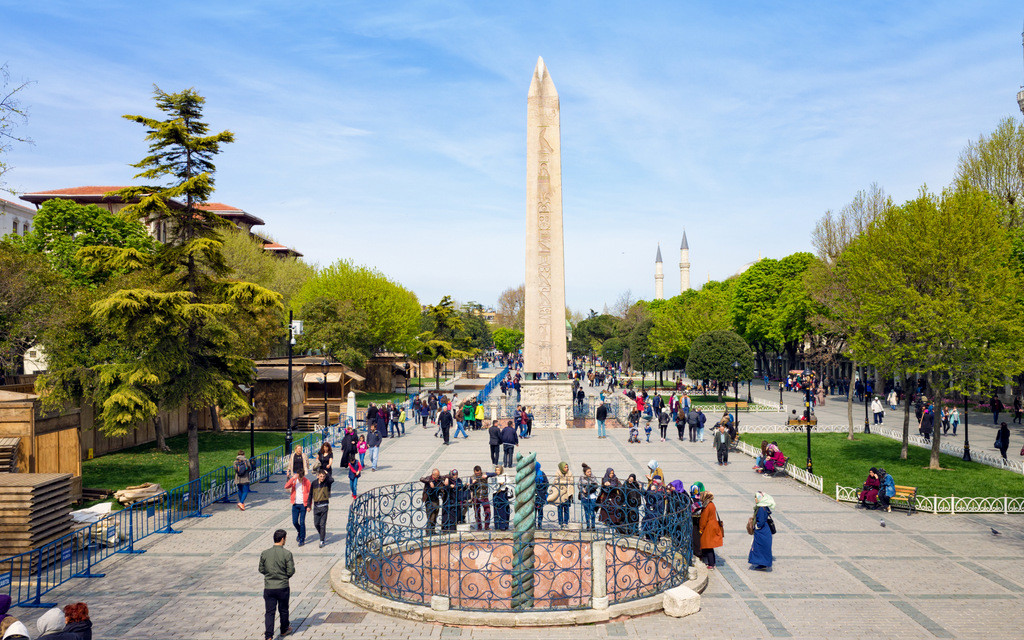
The Hippodrome was the ceremonial and political heart of Constantinople, long before the city was defined by its churches and domes. Built in the Roman period and expanded by Constantine the Great in the 4th century, it followed the model of Rome’s Circus Maximus and could hold tens of thousands of spectators who gathered here not only for chariot races, but for moments that shaped the fate of the empire.
These races were more than entertainment. The emperor watched from his private lodge overlooking the arena, while rival factions of the city — the famous Blues and Greens — turned the Hippodrome into a stage where sport, politics, and public opinion merged. When tensions erupted into violence, the consequences could be dramatic. The Nika Revolt of 532, the most destructive uprising in Constantinople’s history, began here and nearly brought down Emperor Justinian before the city was brutally brought back under imperial control.
Although the track itself has disappeared beneath the modern square of Sultanahmet, several monuments still stand along its central spine, preserving a direct link to the city’s imperial past. The Obelisk of Theodosius, carved in Egypt over 3,500 years ago, is the oldest surviving monument in Istanbul. Nearby, the Serpent Column, brought from Delphi in the 4th century AD, and the later Walled Obelisk mark the same axis where chariots once raced at full speed.
2. Great Palace Mosaic Museum
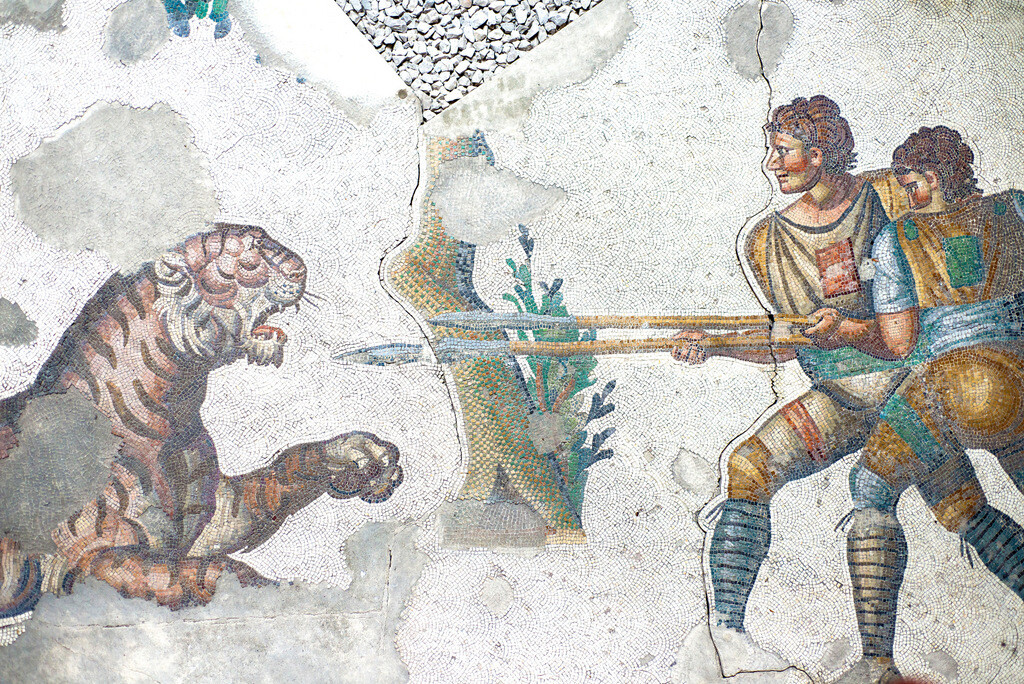
The Great Palace Mosaic Museum preserves one of the very few surviving fragments of the Great Palace of Constantinople, the vast imperial residence that stood at the center of Byzantine political life for over seven centuries. Built in the early 4th century after Constantine chose Byzantium as the new capital of the Roman Empire, the palace stretched across the slopes between the Hippodrome and the Sea of Marmara. It was not a single building, but an entire ceremonial landscape of courtyards, audience halls, private apartments, and chapels — a secluded imperial world overlooking the public arena of the city.
What survives today are the remarkable floor mosaics that once decorated one of the palace courtyards. These mosaics, now displayed in situ inside the museum, offer a rare and intimate glimpse into the visual culture of early Byzantine Constantinople. Unlike the later religious mosaics seen in churches, these scenes depict animals, hunters, rural life, and mythological figures. Lions chase their prey, children play among animals, and everyday moments unfold with extraordinary detail. They reflect a transitional moment in Byzantine art, when the classical artistic traditions of the Roman world were still very much alive.
Standing here, it becomes easier to imagine the scale and sophistication of the Great Palace itself. Just beyond these walls once stood the emperor’s private chambers, reception halls where foreign envoys were received, and corridors that connected directly to the Hippodrome, allowing the ruler to appear before the public in carefully staged ceremonies. Although the palace disappeared centuries ago, these mosaics preserve the quiet, human dimension of imperial life — not the grand rituals, but the artistic environment that surrounded them.
3. Hagia Sophia
Hagia Sophia was built in 537 under Emperor Justinian I, at a moment when Constantinople was still recovering from the devastation of the Nika Revolt. Determined to restore both the city and his imperial authority, Justinian commissioned two brilliant scholars, Anthemius of Tralles and Isidore of Miletus, to design a sanctuary unlike anything the world had seen before. When it was completed, its vast dome seemed to float above the city, redefining the possibilities of architecture for centuries to come.
For nearly 900 years, Hagia Sophia served as the spiritual and ceremonial center of the Byzantine Empire. It was here that emperors were crowned, victories were celebrated, and the religious life of the empire reached its highest expression. The building was not simply a church, but a symbol of Constantinople itself — a visible statement of imperial power, faith, and artistic achievement. Its scale and engineering were so advanced that comparable structures would not appear in Europe until the great cathedrals of the late medieval and Renaissance periods.
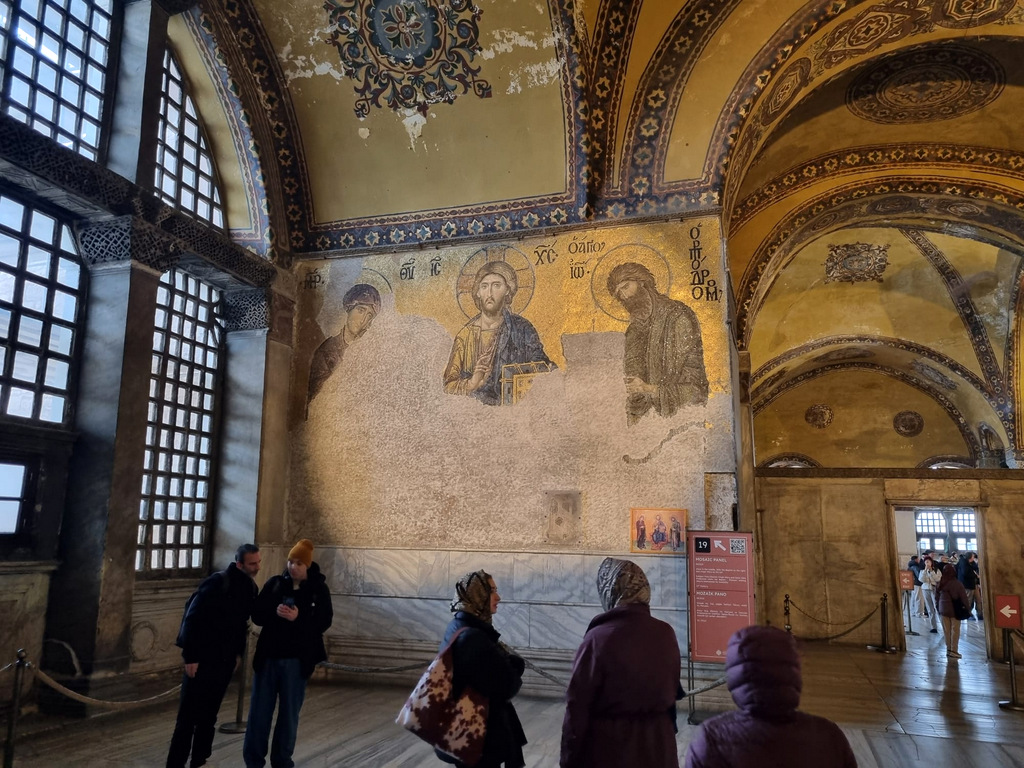
Although Hagia Sophia was converted into a mosque after the Ottoman conquest in 1453, much of its Byzantine character survives, especially in the upper galleries where the original mosaics remain visible. These mosaics — depicting Christ, the Virgin Mary, and Byzantine emperors — offer a direct connection to the building’s original function and the civilization that created it. Walking beneath the dome and then ascending to the galleries allows visitors to experience both the architectural ambition and the spiritual atmosphere that defined Byzantine Constantinople.
4. Hagia Irene
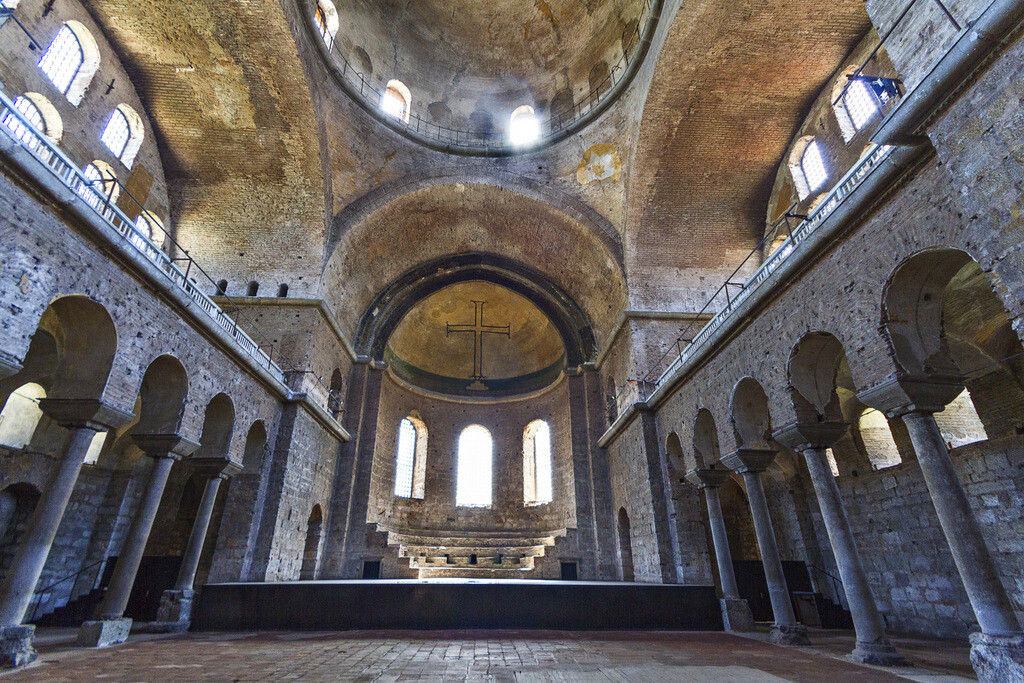
Hagia Irene is one of the oldest surviving churches in Constantinople, standing today within the first courtyard of Topkapi Palace, just a short distance from Hagia Sophia. Its origins date back to the reign of Constantine in the 4th century, when Christianity was still establishing its physical presence in the newly founded imperial capital. The church was rebuilt on a monumental scale under Emperor Justinian in the 6th century, but the structure seen today largely reflects its reconstruction following the earthquake of 740, during the period of Byzantine Iconoclasm.
This moment in history left a visible mark on the building. Unlike other major Byzantine churches, Hagia Irene was rebuilt with an unusually austere interior, free from the rich figurative mosaics that once defined imperial church decoration. Instead, a simple mosaic cross still dominates the apse — a powerful symbol of the Iconoclastic era, when religious imagery was restricted and abstract forms replaced human representation. Because of this, Hagia Irene preserves architectural and artistic evidence from a controversial chapter of Byzantine history that is rarely visible elsewhere.
The church also occupies an important position in the ceremonial and institutional life of the empire. It stood within the outer precincts of the imperial complex, close to the Great Palace and Hagia Sophia, forming part of the sacred and political core of Constantinople. In later centuries, after the Ottoman conquest, Hagia Irene was preserved within the palace grounds and used for imperial purposes rather than being converted into a mosque, allowing its Byzantine structure to survive largely intact.
5. Column of the Goths

Hidden among the trees of Gülhane Park, the Column of the Goths is one of the oldest surviving monuments from the Roman period in Istanbul. This solitary marble column, rising approximately 18.5 meters high, was erected in the late 3rd or early 4th century to commemorate a Roman victory over the Gothic tribes — powerful enemies who threatened the empire’s northern frontiers during Late Antiquity.
The column takes its name from a Latin inscription at its base, which honors Fortuna Redux, the goddess of victorious return, and celebrates the defeat of the Goths. Although the exact emperor responsible for the monument remains uncertain, many scholars associate it with the victories of Claudius II Gothicus or Constantine the Great, both of whom played decisive roles in stabilizing the empire during this turbulent era.
Its location is equally significant. The column stands on the northeastern edge of the ancient acropolis of Byzantium, overlooking the strategic point where the Bosphorus, the Golden Horn, and the Sea of Marmara meet. Long before Constantine transformed Byzantium into Constantinople, this elevated ground formed the ceremonial and symbolic heart of the city. The column may once have supported a statue — possibly representing the city’s legendary founder Byzas or the protective goddess Tyche — reinforcing its role as a monument of civic identity and imperial victory.
Unlike the grand churches and palaces of the later Byzantine period, the Column of the Goths belongs to an earlier layer of the city’s history, when Constantinople was still emerging as a Roman imperial capital. Its survival through centuries of transformation — from pagan Byzantium to Christian Constantinople and later Ottoman Istanbul — makes it a rare physical link to the city’s pre-Constantinian past. Standing quietly within the gardens that now surround Topkapi Palace, it marks a moment when the Roman world was still defining the future of this strategic crossroads between Europe and Asia.
6. Basilica Cistern (Yerebatan Sarnıcı)
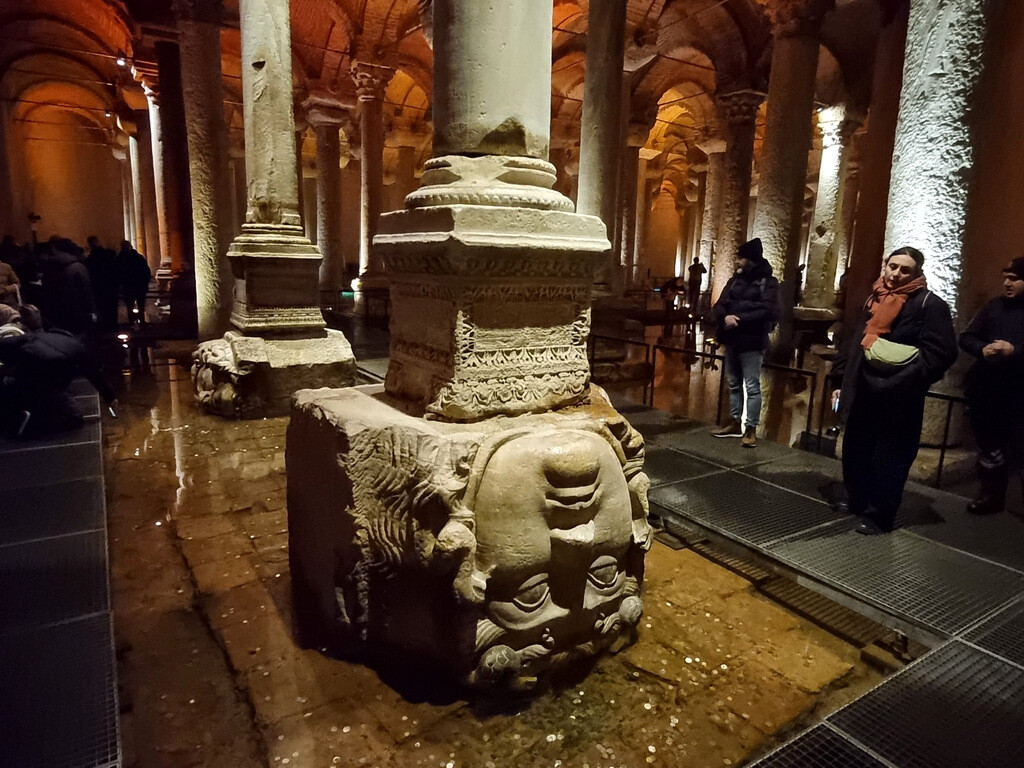
The Basilica Cistern is the largest and most impressive of the many underground reservoirs that sustained Constantinople during its long history as an imperial capital. Built in the 6th century under Emperor Justinian I, at the same time as Hagia Sophia, it formed part of a vast infrastructure designed to secure the city’s water supply during periods of siege. In an age when Constantinople could be isolated for months or even years, these hidden reservoirs ensured the survival of one of the most important cities in the medieval world.
Descending into the cistern reveals a vast subterranean space supported by hundreds of marble columns rising from still, dark water. Many of these columns were reused from earlier structures, reflecting the Byzantine practice of incorporating materials from older monuments into new imperial projects. The careful symmetry of the columns, combined with the filtered light and reflections on the water, creates an architectural environment that feels both functional and ceremonial — a reminder that infrastructure in Constantinople was built on an imperial scale.
The cistern’s popular name, the “Sunken Palace,” reflects this unexpected grandeur. Among its most famous features are the carved Medusa heads that serve as column bases, likely reused from earlier classical buildings. Their presence illustrates how elements of the ancient Roman world were absorbed into the fabric of Byzantine Constantinople, often in ways that blurred the boundary between engineering and artistic expression.
More than a technical structure, the Basilica Cistern reveals the hidden systems that made life in Constantinople possible. While churches and palaces symbolized imperial power above ground, reservoirs like this sustained the city during its most vulnerable moments. Walking through its silent forest of columns offers a rare opportunity to experience the unseen foundations that supported one of history’s greatest capitals.
7. Theodosius Cistern (Şerefiye Sarnıcı)
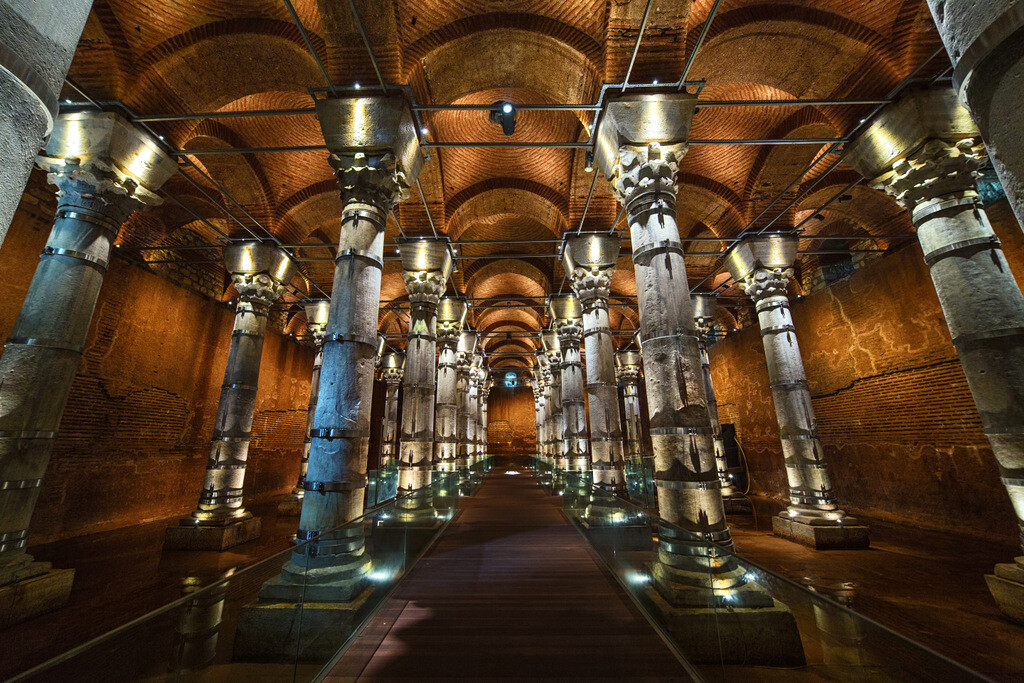
The Theodosius Cistern, known locally as Şerefiye Cistern, was built in the late 4th or early 5th century during the reign of Emperor Theodosius II, one of the rulers who reshaped Constantinople into a fully developed imperial capital. This period saw major infrastructure projects, including the construction of the famous Theodosian Walls and the expansion of the city’s water system. The cistern formed part of this network, storing and distributing fresh water brought from distant reservoirs and aqueducts into the heart of the city.
Although smaller than the Basilica Cistern, the structure reflects the same advanced engineering principles that sustained Constantinople for centuries. Its rectangular chamber is supported by rows of marble columns connected by brick arches and vaults, creating a stable underground reservoir designed to hold a substantial volume of water beneath the densely built urban center. These cisterns compensated for the lack of natural freshwater sources within the historic peninsula, allowing the capital to withstand long sieges and support a large population.
The cistern’s location, near the Forum of Constantine and the main ceremonial route of the city, highlights its strategic importance. Water stored here would have supplied nearby public buildings, baths, and imperial institutions, forming part of the invisible infrastructure that kept the capital functioning. Like many Byzantine engineering works, it was both practical and carefully integrated into the urban fabric above.
8. Cistern of Philoxenos (Binbirdirek Sarnıcı)
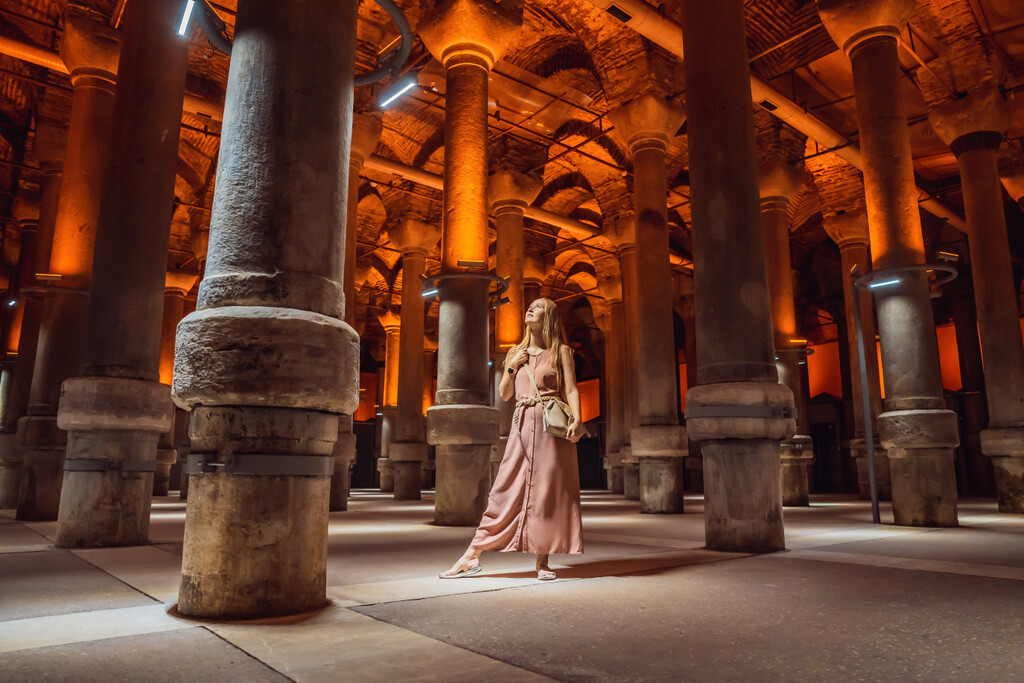
The Cistern of Philoxenos, known today as Binbirdirek Cistern, is one of the oldest and largest surviving Byzantine reservoirs in Constantinople. It was built in the 4th century, most likely during the reign of Emperor Constantine or his immediate successors, at a time when the city was rapidly expanding as the new capital of the Roman Empire. Its original name refers to a high-ranking official, Philoxenos, who is believed to have overseen or commissioned the construction as part of the early imperial infrastructure.
The cistern consists of a vast underground chamber supported by more than two hundred marble columns arranged in regular rows, creating a dense architectural grid beneath the historic peninsula. These columns, connected by brick arches and vaulted ceilings, were designed to support the enormous weight of the city above while storing water brought through aqueducts from sources located many kilometers away. Like other cisterns in Constantinople, it played a crucial role in maintaining a reliable water supply in a city that lacked natural freshwater springs within its walls.
Unlike the Basilica Cistern, which features more elaborate architectural decoration, the Cistern of Philoxenos reflects an earlier phase of Byzantine engineering, where structural efficiency was the primary concern. Today, its forest of columns and quiet underground space offer a clear impression of the hidden infrastructure that sustained Constantinople during its rise as one of the most powerful cities of Late Antiquity and the medieval world.
9. Church of Sergius and Bacchus (Little Hagia Sophia)
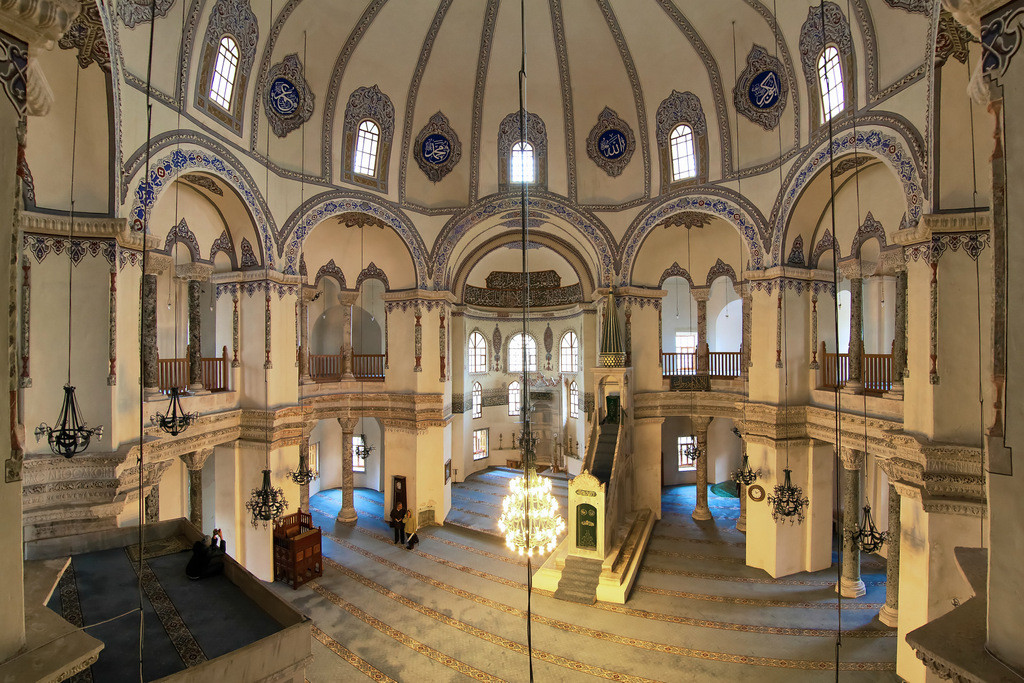
The Church of Saints Sergius and Bacchus, known today as Little Hagia Sophia, is one of the earliest surviving imperial churches of Constantinople and a key monument from the reign of Emperor Justinian in the early 6th century. Built shortly before Hagia Sophia, this church reflects the same architectural ambition on a more intimate scale, offering valuable insight into the experimental phase that preceded Justinian’s greatest architectural achievement. Dedicated to two Roman soldier-saints venerated in the Eastern Christian world, the building formed part of a larger religious complex near the imperial palace.
Its interior reveals the defining features of early Byzantine architecture: a central domed space, elegant marble columns, and finely carved capitals bearing monograms and decorative motifs from Justinian’s time. The octagonal layout, crowned by a shallow dome, creates a sense of balance and harmony that would later be developed on a monumental scale in Hagia Sophia. Standing inside, it becomes clear that this church was not merely a smaller version of later buildings, but an important step in the evolution of Byzantine architectural design.
The church’s location near the shores of the Marmara Sea also reflects its connection to the ceremonial and residential heart of Constantinople. In the 6th century, this district formed part of the imperial landscape, where religious buildings, palace structures, and administrative centers were closely integrated. After the Ottoman conquest, the church was converted into a mosque, which contributed to its preservation and ensured the survival of its essential Byzantine structure.
10. Boukoleon Palace
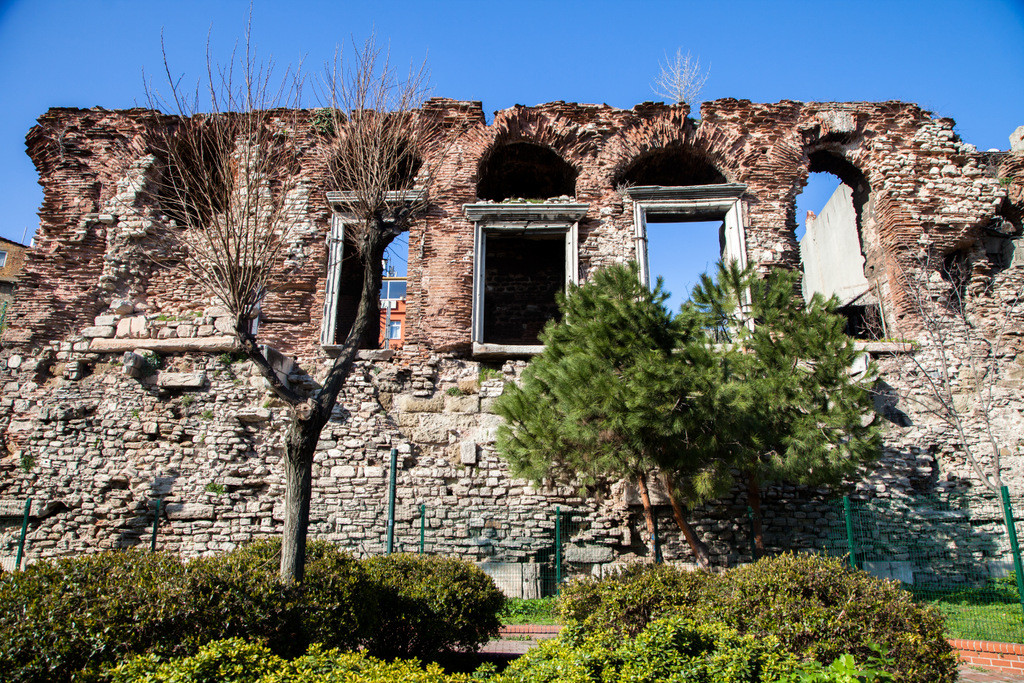
The Boukoleon Palace was one of the principal imperial residences of Byzantine Constantinople, built along the Marmara Sea at the southeastern edge of the Great Palace complex. Its strategic waterfront location allowed direct access from the imperial harbor into the private quarters of the emperor, reinforcing the connection between the palace and the maritime routes that linked Constantinople to the wider Byzantine world. The name “Boukoleon” is believed to derive from a sculptural group depicting a lion and a bull, symbols associated with imperial strength and authority.
The palace developed gradually between the 5th and 10th centuries, reaching particular importance during the reigns of emperors such as Theophilos and Nikephoros II Phokas. Its sea-facing terraces, ceremonial halls, and private apartments formed part of a larger imperial landscape that stretched from Hagia Sophia and the Hippodrome down to the Marmara shoreline. Foreign envoys, dignitaries, and members of the imperial court would have entered the palace through its seaward gates, making it both a residential and ceremonial center of imperial power.
By the late Byzantine period, however, the political and defensive priorities of the empire shifted. Emperors increasingly preferred the Blachernae Palace near the land walls, which offered greater protection during an era of growing external threats. As a result, the Boukoleon Palace gradually fell into disuse, and after the Latin occupation of Constantinople in 1204 and the Ottoman conquest in 1453, much of the complex declined or disappeared.
Today, the surviving remains of the Boukoleon Palace — including sections of its sea walls, terraces, and structural foundations — still stand along the Marmara coast, just below the historic peninsula. Although only fragments remain, they preserve the outline of a residence that once formed part of the ceremonial and residential heart of the Byzantine Empire. Recent conservation efforts have aimed to stabilize and protect these ruins, highlighting the palace’s importance as one of the last visible links between Constantinople’s imperial center and the sea that sustained it.
11. The Forum of Constantine (Çemberlitaş)
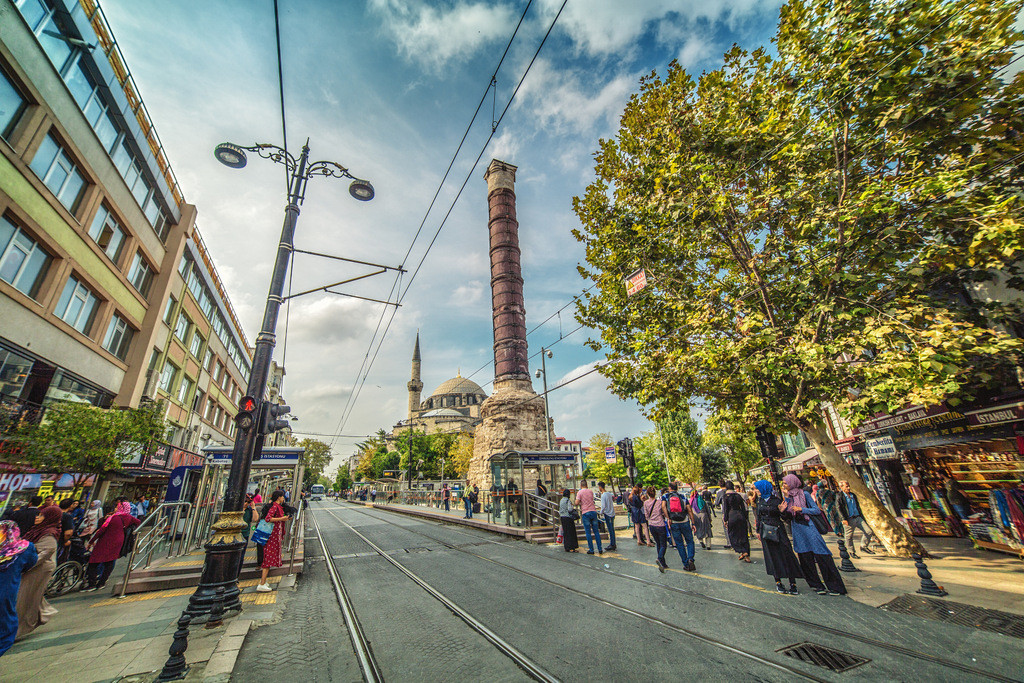
The Forum of Constantine was one of the first monumental spaces created when Constantine the Great transformed Byzantium into his new imperial capital in the early 4th century. Conceived as the ceremonial and political center of “New Rome,” this circular public square stood along the city’s main avenue, the Mese, which connected the imperial palace to the land walls. It was here that imperial ceremonies unfolded, public announcements were made, and the symbolic identity of Constantinople as a Roman capital was established.
At the center of the forum rose the Column of Constantine, a massive porphyry column that still stands today in the district known as Çemberlitaş. Originally crowned by a statue of Constantine depicted in the manner of a Roman sun god, the monument embodied the fusion of imperial authority and classical symbolism that defined the early Byzantine period. The column itself was assembled from massive drums of porphyry, a rare purple stone reserved exclusively for imperial use, reinforcing the emperor’s association with Roman tradition and divine legitimacy.
The forum formed a key node along the Mese, the city’s principal ceremonial artery. Triumphal processions, imperial entries, and public gatherings passed through this space, linking it directly to other major squares such as the Forum of Theodosius and eventually to the Great Palace and Hagia Sophia. This sequence of monumental spaces structured the ceremonial geography of Constantinople, allowing the emperor to move through the city in carefully choreographed displays of power.
12. Valens Aqueduct (Bozdoğan Kemeri)
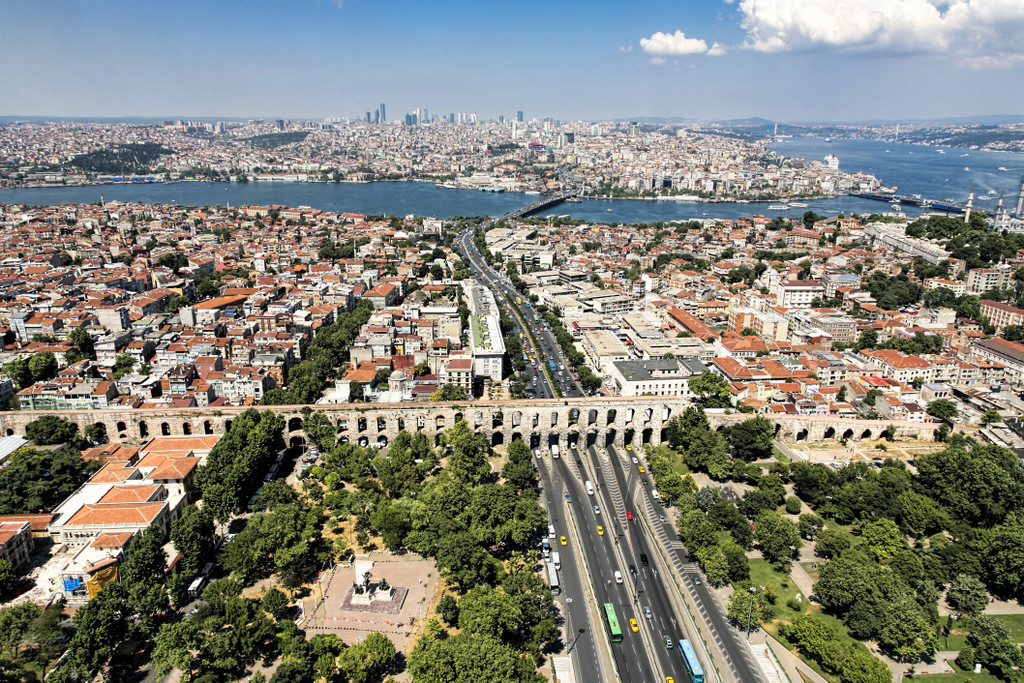
The Valens Aqueduct is one of the most visible and enduring components of the vast water system that sustained Constantinople as an imperial capital. Completed in the late 4th century during the reign of Emperor Valens, this monumental structure formed part of an extensive network of channels and bridges that carried fresh water from distant sources in Thrace into the heart of the city. At a time when Constantinople’s population was rapidly expanding, securing a reliable water supply was essential to maintaining urban life, public baths, imperial palaces, and the large cisterns that stored water beneath the city.
Stretching across the valley between two hills of the historic peninsula, the aqueduct originally measured nearly one kilometer in length and rose high above the surrounding landscape. Its carefully engineered arches allowed water to flow gradually downhill using gravity alone, demonstrating the advanced hydraulic knowledge inherited from Roman engineering traditions. The water transported by this system fed major reservoirs such as the Basilica Cistern and the Cistern of Philoxenos, forming an integrated infrastructure that allowed Constantinople to withstand long sieges and function as one of the largest cities of the medieval world.
Even after the end of the Byzantine Empire, the aqueduct continued to serve the city under Ottoman rule, when it became known as the Bozdoğan Aqueduct. Its continued use for centuries reflects the durability and effectiveness of the original Roman design. Today, the surviving arches rise above one of Istanbul’s busiest modern streets, creating a striking contrast between ancient infrastructure and contemporary urban life.
Standing beneath its massive stone arches, it becomes clear that structures like the Valens Aqueduct were just as essential to the survival of Constantinople as its walls, churches, and palaces. While less ceremonial than imperial monuments, this aqueduct represents the hidden systems that allowed the Byzantine capital to grow, endure repeated sieges, and remain one of the most important cities of its time.
13. Monastery of the Pantocrator (Zeyrek Mosque)
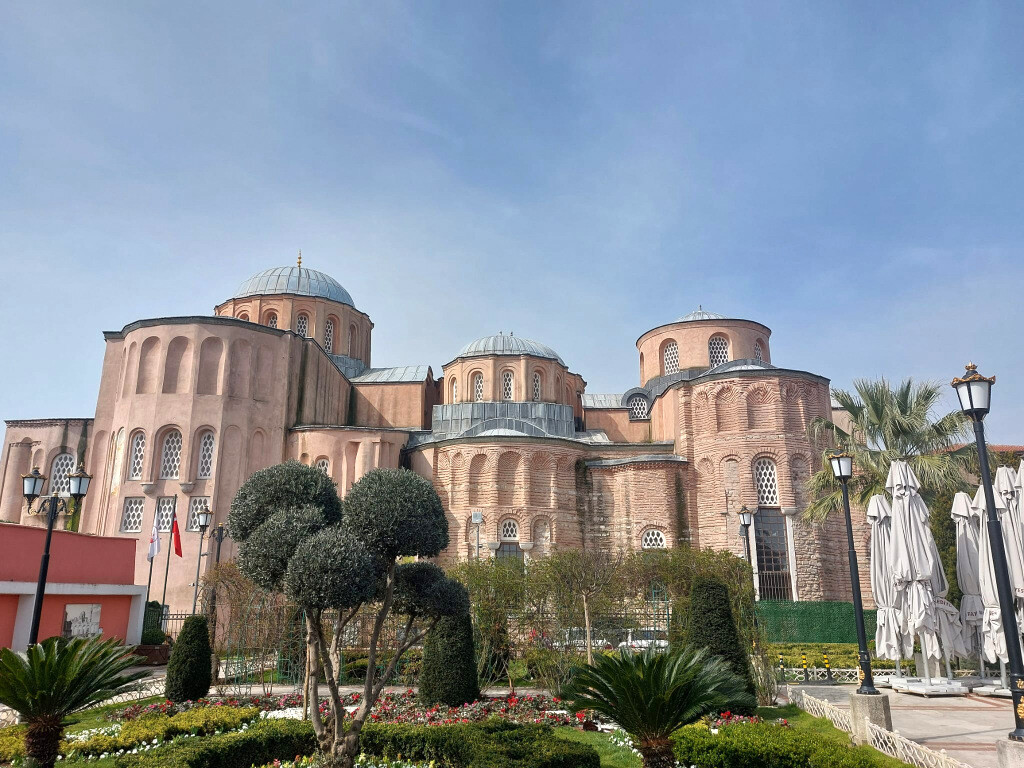
The Monastery of Christ Pantocrator was one of the most important religious complexes of late Byzantine Constantinople, built in the early 12th century during the reign of Emperor John II Komnenos and his wife Empress Irene. Unlike earlier imperial churches concentrated near Hagia Sophia, this vast monastic foundation reflected the shifting political and religious landscape of the Komnenian period, when new centers of patronage emerged beyond the original ceremonial core of the city. The complex consisted of three interconnected churches, forming one of the largest surviving Byzantine religious structures after Hagia Sophia.
More than a monastery, Pantocrator functioned as an imperial institution at the heart of Byzantine spiritual and political life. It served as the burial place of members of the Komnenos dynasty, reinforcing its role as a dynastic mausoleum as well as a place of worship. Contemporary sources also describe an associated hospital and charitable facilities, illustrating the broader social role monasteries played in Byzantine urban life. Through these functions, the complex became one of the most prestigious religious foundations in Constantinople during its final centuries as an imperial capital.
Architecturally, the surviving structure reveals the mature style of middle Byzantine design. Its layered domes, brickwork patterns, and carefully proportioned interior spaces reflect a period when Byzantine architecture had moved beyond the experimental forms of the 6th century into a more refined and balanced expression. The three churches — dedicated to Christ Pantocrator, the Virgin Eleousa, and the imperial mausoleum chapel — were integrated into a single monumental composition that dominated the skyline of the surrounding district.
After the Ottoman conquest, the complex was converted into a mosque and became known as Zeyrek Mosque, a function that contributed to its preservation over the centuries. Today, standing on one of the hills overlooking the Golden Horn, it remains one of the most prominent surviving Byzantine landmarks in Istanbul. Its elevated position and massive structure still convey the presence of a monument that once served not only as a place of worship, but also as a center of imperial memory during the final centuries of Byzantine Constantinople.
14. Pammakaristos Church (Fethiye Museum)
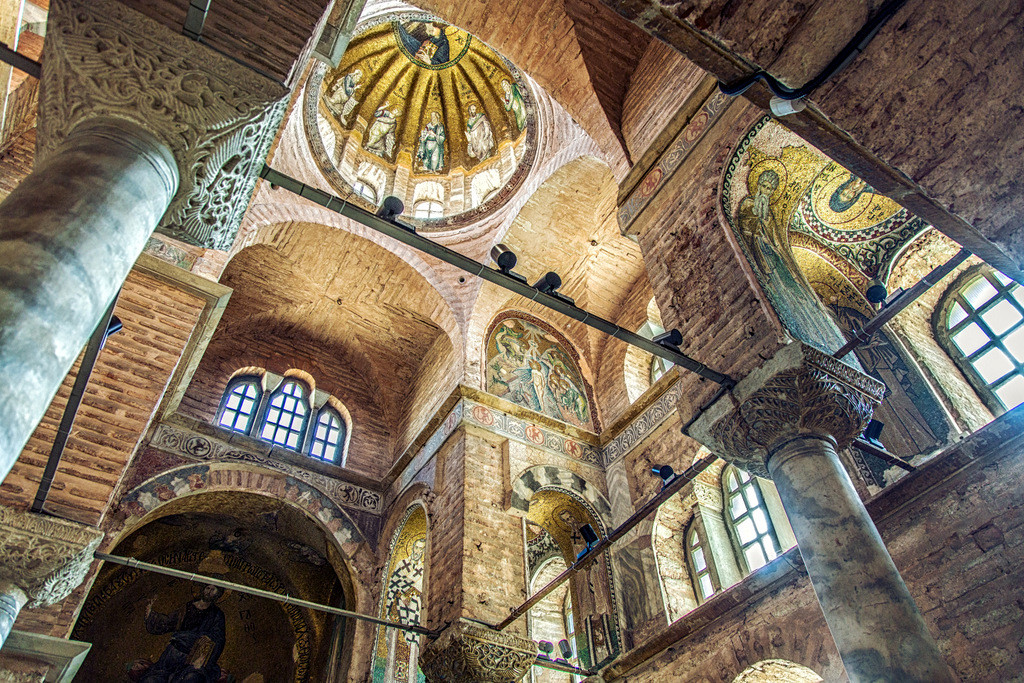
The Church of the Theotokos Pammakaristos was one of the most important monastic churches of late Byzantine Constantinople, particularly during the final centuries of the empire. Built between the 11th and 12th centuries and expanded in the Palaiologan period, the complex reflects the architectural and artistic revival that took place after the Byzantines recaptured the city from the Latin Crusaders in 1261. Its elevated location overlooking the Golden Horn placed it within one of the prominent religious districts of the later Byzantine capital.
The church gained even greater historical significance after the Ottoman conquest of 1453, when it became the seat of the Ecumenical Patriarchate for several decades. During this transitional period, it served as the spiritual center of the Orthodox Christian community in the Ottoman capital, preserving continuity with the Byzantine ecclesiastical tradition at a time of major political change. In the late 16th century, the main church was converted into a mosque under Sultan Murad III and became known as Fethiye Mosque, while one section of the original structure was preserved.
Today, the surviving parekklesion (funerary chapel) functions as the Fethiye Museum and contains some of the finest examples of late Byzantine mosaic art in Istanbul. These mosaics, dating from the 14th century, belong to the Palaiologan Renaissance, a period marked by renewed artistic expression following the restoration of Byzantine rule. Figures of Christ, the Virgin Mary, and biblical scenes are rendered with a greater sense of depth, movement, and emotional expression than earlier Byzantine works, reflecting the evolving artistic language of the empire’s final phase.
Architecturally, the church also preserves the characteristic features of middle and late Byzantine design, including its domed structure, brickwork patterns, and layered spatial composition. Although less monumental than Hagia Sophia or the Pantocrator complex, Pammakaristos offers one of the clearest insights into the religious and artistic life of Constantinople during its final centuries as a Byzantine capital.
15. Church of Saint Theodosia (Gül Mosque)
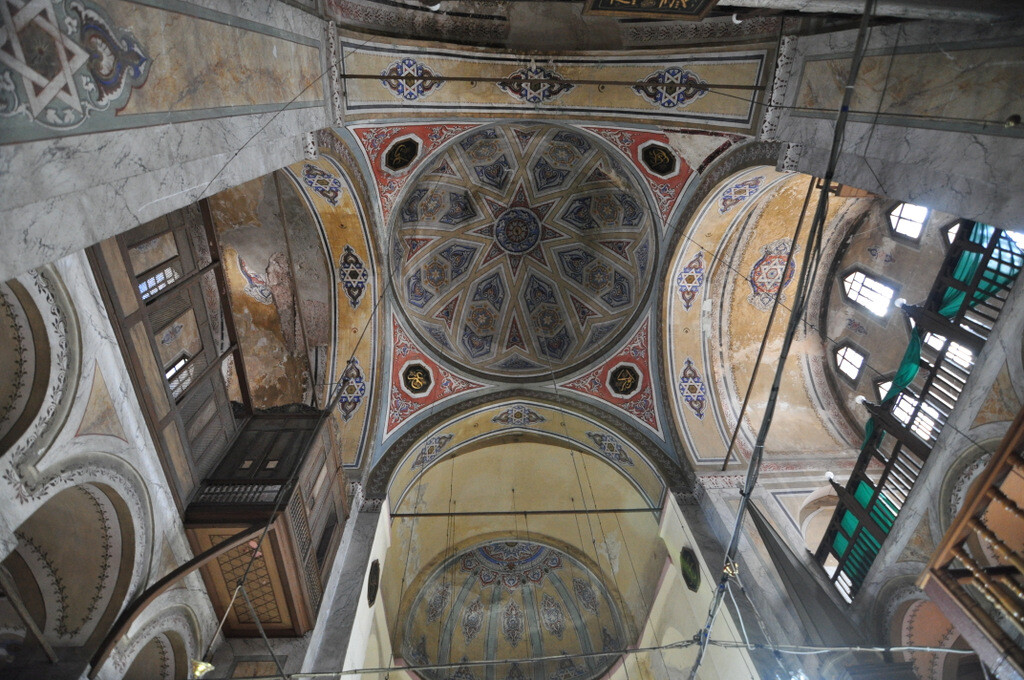
The Church of Saint Theodosia, known today as Gül Mosque, is one of the most atmospheric surviving Byzantine churches in Istanbul, located near the ancient sea walls along the Golden Horn. Built in the 11th century, during a period of renewed stability and artistic development in the Byzantine Empire, the structure reflects the mature architectural style of middle Byzantine Constantinople. Its tall dome and solid brick construction still dominate the surrounding neighborhood, preserving the presence of a monument that has stood here for nearly a thousand years.
The church was dedicated to Saint Theodosia, a Christian woman venerated for her resistance during the Iconoclast period of the 8th century, when imperial authorities attempted to suppress the use of religious images. According to Byzantine tradition, she was executed for defending an icon of Christ, and her memory became closely associated with the defense of sacred imagery during one of the most turbulent theological conflicts in the empire’s history. Over time, the church dedicated to her became an important place of devotion, particularly for those seeking spiritual protection and healing.
Architecturally, the building preserves key features of Byzantine church design, including its domed central space and carefully proportioned interior. Its position near the Golden Horn also reflects the historical importance of this district, which was densely populated during the Byzantine period and connected to the maritime defenses of the city. The church formed part of a religious landscape that extended along the northern edge of Constantinople, beyond the main ceremonial center near Hagia Sophia.
Following the Ottoman conquest, the structure was converted into a mosque and became known as Gül Mosque, a name traditionally associated with the roses that were said to decorate the church at the time of the conquest. Today, the building remains one of the lesser-known but most evocative Byzantine monuments in Istanbul. Its survival allows visitors to encounter a church that preserves not only the architectural language of Byzantine Constantinople, but also the memory of the religious struggles that shaped the spiritual identity of the empire.
16. Church of Saint George
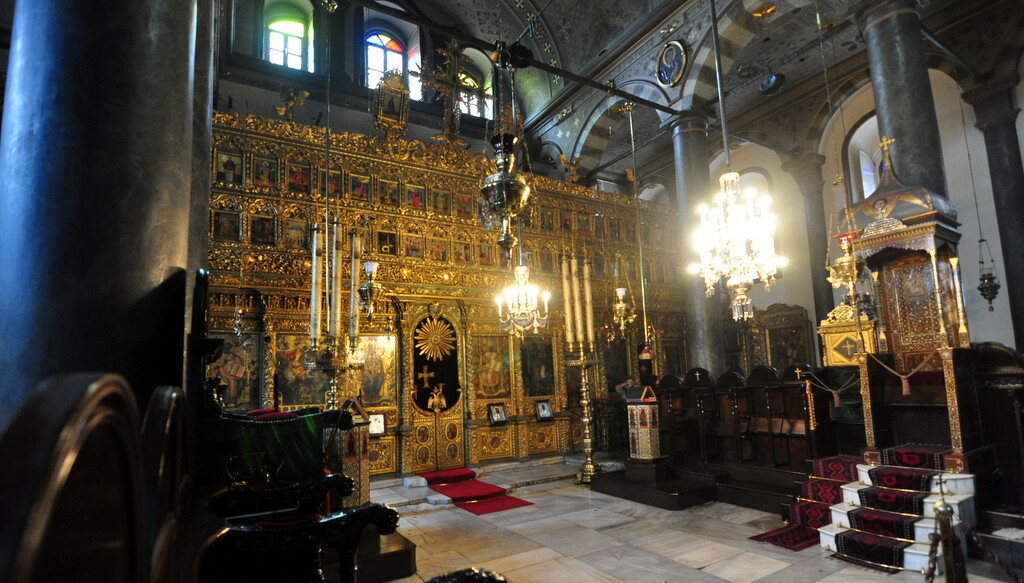
The Church of Saint George, located within the courtyard of the Ecumenical Patriarchate in the historic district of Fener, represents the living continuation of a religious institution whose roots extend back to the Byzantine Empire. While the present structure largely dates to the Ottoman period, its significance lies in its role as the current seat of the Ecumenical Patriarch of Constantinople — the spiritual leader of Eastern Orthodox Christianity. This continuity links the church directly to the Byzantine tradition, when the Patriarch once presided from Hagia Sophia, the empire’s greatest sanctuary.
After the Ottoman conquest of 1453, the Patriarchate was permitted to continue its existence and gradually relocated through several former Byzantine churches before settling permanently at this site in the 16th century. Since then, the Church of Saint George has served as the administrative and spiritual center of Orthodox Christianity, preserving a line of ecclesiastical authority that traces back more than seventeen centuries. This continuity makes the church not simply a historical monument, but an active institution shaped by the legacy of Byzantine Constantinople.
Inside, the church preserves an extraordinary collection of sacred objects and relics associated with the Byzantine world. Among them are relics attributed to early Church fathers such as Saint John Chrysostom and Saint Gregory the Theologian, two of the most influential theological figures of Late Antiquity. The iconostasis, richly decorated with icons and gilded ornamentation, reflects the artistic and liturgical traditions that developed in Byzantium and continue in Orthodox worship today.
Although modest in appearance compared to the great imperial churches of the Byzantine period, the Church of Saint George carries a unique historical weight. It represents the survival of the Byzantine ecclesiastical tradition beyond the fall of the empire and into the present day. Visiting this church offers a rare opportunity to encounter not only the architectural legacy of Byzantium, but also the uninterrupted spiritual tradition that emerged from Constantinople and continues to shape Orthodox Christianity around the world.
17. Church of St Mary of the Mongols
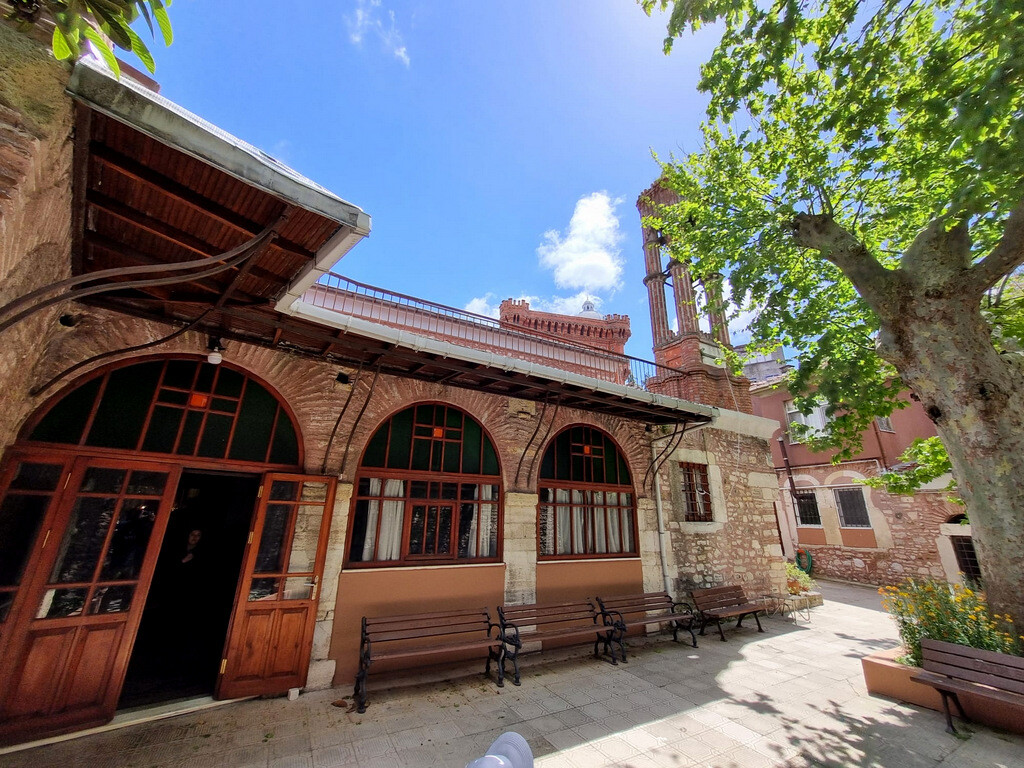
The Church of St Mary of the Mongols is one of the most remarkable surviving Byzantine churches in Istanbul, not for its size or decoration, but for its uninterrupted continuity. Built in the late 13th century during the final phase of the Byzantine Empire, the church is closely associated with Maria Palaiologina, a member of the imperial dynasty whose life reflects the far-reaching diplomatic and cultural connections of Constantinople. After being married to a Mongol ruler as part of a political alliance and later returning to the capital, she founded this church and spent her remaining years within its monastic community.
Architecturally, the building reflects the refined style of the Palaiologan period, when Byzantine architecture emphasized balanced proportions, domed interiors, and carefully articulated brick construction. Although smaller than the great imperial foundations, the church preserves the spatial character and devotional atmosphere of late Byzantine monastic life. Its elevated position on the slopes overlooking the Golden Horn also reflects the continued expansion of religious institutions into the northern districts of Constantinople during the empire’s final centuries.
What makes this church truly exceptional is its fate after the Ottoman conquest. Unlike most Byzantine churches within the city walls, it was never converted into a mosque and continued to serve the Orthodox Christian community. This unique status is traditionally linked to an imperial decree issued in the 15th century that granted the church protection, allowing it to remain in continuous religious use. As a result, it represents the only Byzantine church in Istanbul that has functioned as an Orthodox place of worship without interruption from the Byzantine period to the present day.
Today, the Church of St Mary of the Mongols stands as a rare physical link between Byzantine Constantinople and modern Istanbul. Its survival preserves not only the architectural form of a late Byzantine church, but also the continuity of a religious tradition that endured through the profound political and cultural transformations that reshaped the city after the end of the Byzantine Empire.
18. Chora Church (Kariye Mosque)
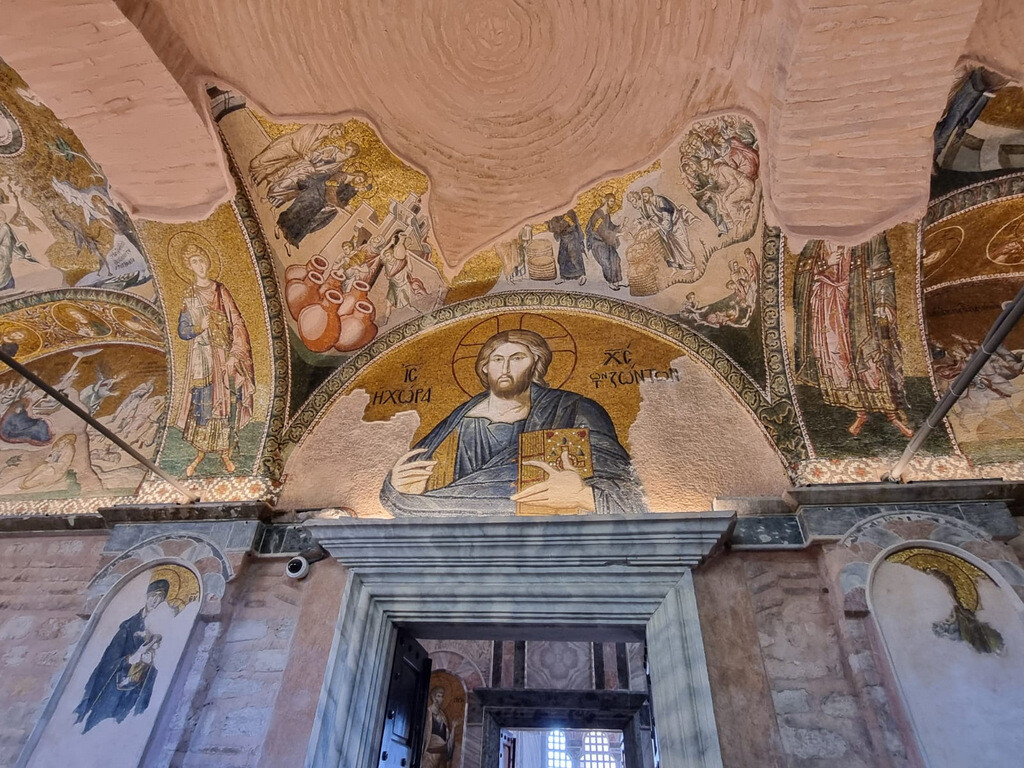
The Chora Church preserves one of the most extraordinary surviving artistic ensembles of the Byzantine world, offering a rare window into the final flowering of Byzantine art during the 14th century. Originally founded as a monastery outside the walls of Constantine’s early city, the church later became enclosed within the expanded defenses built under Emperor Theodosius II. Its name, “Chora,” meaning “in the countryside” or “outside the city,” reflects this earlier landscape, when the site stood beyond the urban core of Constantinople.
The church reached its artistic peak during the Palaiologan period, when the scholar and statesman Theodore Metochites sponsored a comprehensive renovation of the building in the early 1300s. Under his patronage, the interior was adorned with mosaics and frescoes of exceptional narrative complexity and artistic refinement. These works depict scenes from the lives of Christ and the Virgin Mary, as well as theological themes central to Byzantine spirituality. Their expressive figures, dynamic compositions, and sophisticated use of light represent the culmination of centuries of Byzantine artistic development.
Unlike the vast and monumental scale of Hagia Sophia, Chora offers a more intimate artistic experience, where visitors can closely observe the storytelling quality of Byzantine religious art. The mosaics lining the inner and outer narthexes guide the viewer through a carefully constructed visual narrative, while the funerary chapel, or parekklesion, contains powerful frescoes reflecting Byzantine beliefs about death and salvation. Together, these spaces preserve one of the most complete surviving decorative programs from the late Byzantine period.
Following the Ottoman conquest, the church was converted into a mosque and later served as a museum for much of the 20th century, contributing to the preservation and study of its mosaics. Today, as Kariye Mosque, it remains accessible to visitors and continues to display its remarkable artistic heritage. More than any other monument in Istanbul after Hagia Sophia, Chora reveals the intellectual, spiritual, and artistic sophistication of Byzantine Constantinople during its final centuries.
19. Palace of the Porphyrogenitus (Tekfur Palace)
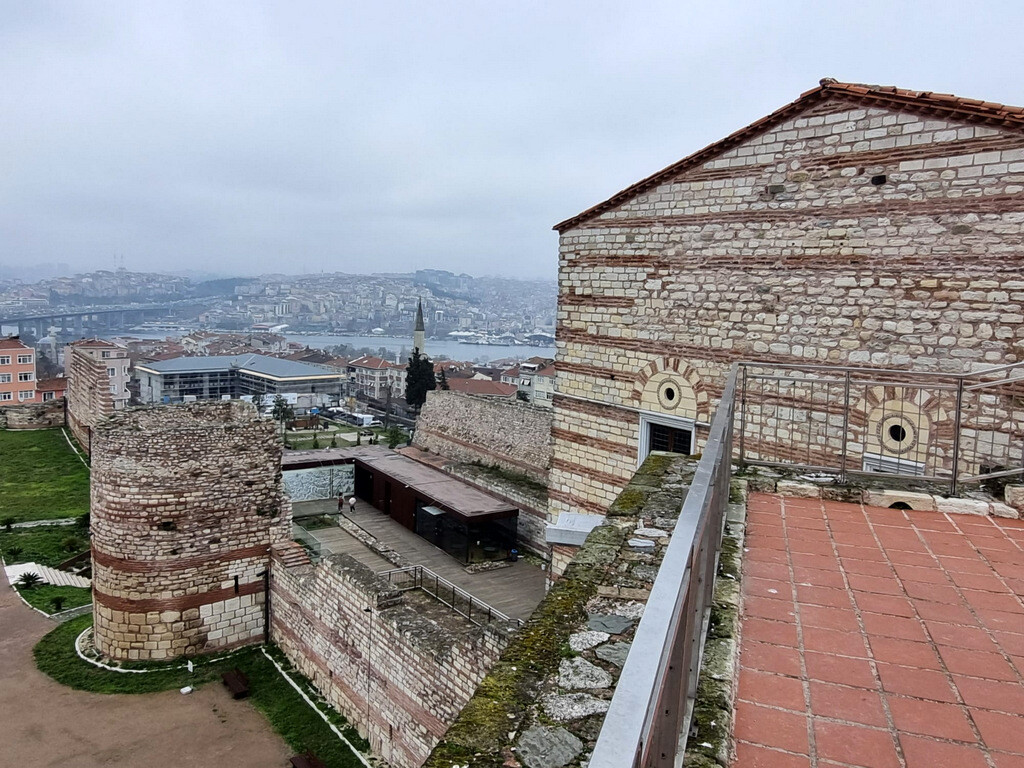
The Palace of the Porphyrogenitus, known in Turkish as Tekfur Palace, is one of the very few surviving examples of secular Byzantine architecture in Istanbul. Built during the late Byzantine period as part of the larger Blachernae Palace complex, it stood near the land walls at the northwestern edge of the city, an area that became the preferred imperial residence during the empire’s final centuries. As the political center of Constantinople gradually shifted away from the Great Palace near Hagia Sophia, the Blachernae district emerged as the new focal point of imperial life, and structures such as this palace formed part of that transformation.
The name “Porphyrogenitus,” meaning “born in the purple,” was traditionally associated with members of the imperial family who were born during their father’s reign, emphasizing their legitimacy as heirs. Although the precise date of construction remains debated, the palace is generally linked to the Palaiologan period, when Byzantine rulers maintained a reduced but still symbolically important imperial court. Its distinctive façade, built with alternating layers of brick and stone, reflects the refined architectural style of late Byzantine Constantinople, combining structural strength with decorative complexity.
Unlike the Great Palace and much of the Blachernae complex, which disappeared over time, this structure survived due to its continued use during the Ottoman period, when it served various functions, including workshops and storage. Its preservation allows visitors to encounter a rare fragment of the imperial residential architecture that once defined the political heart of Byzantium.
Today, restored and open as a museum, the Palace of the Porphyrogenitus offers a unique opportunity to visualize the final phase of Byzantine Constantinople. Standing beside the massive Theodosian Walls and overlooking the Golden Horn, it evokes a period when the empire, though diminished in territory, still preserved its ceremonial traditions within these last remaining imperial spaces.
20. Walls of Constantinople (Theodosian Walls)
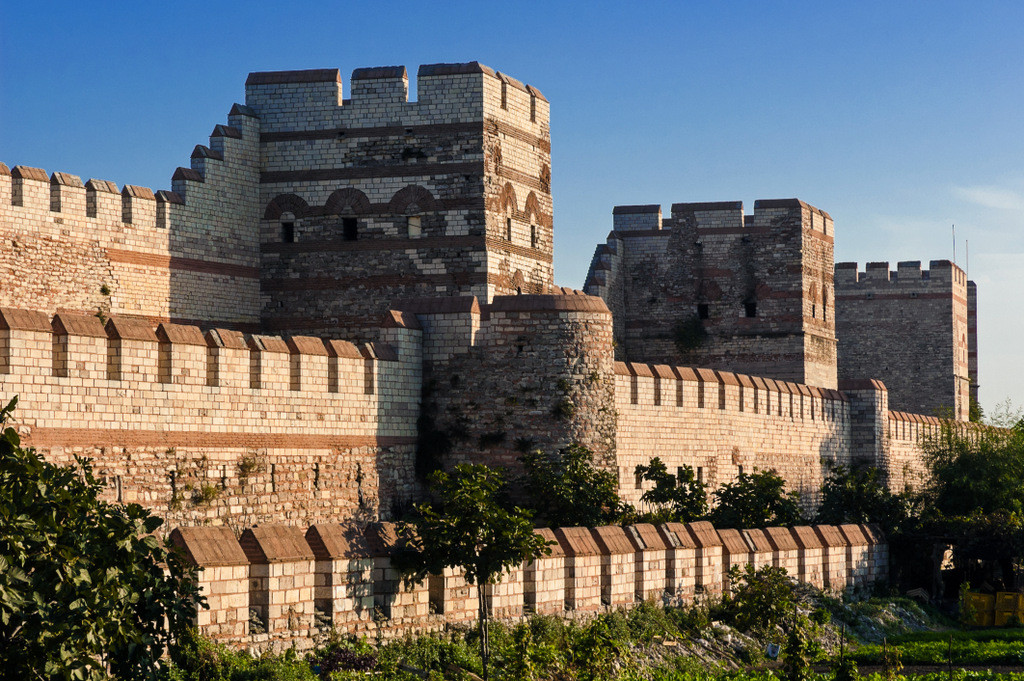
The Theodosian Walls were the most formidable defensive system of the medieval world, ensuring the survival of Constantinople as the capital of the Byzantine Empire for more than a thousand years. Built in the early 5th century during the reign of Emperor Theodosius II, these massive fortifications stretched across the western land boundary of the city, from the Golden Horn to the Sea of Marmara. Their construction marked a turning point in the history of Constantinople, allowing the rapidly expanding capital to grow beyond its earlier limits while securing it against external threats.
What made these walls exceptional was their sophisticated multi-layered design. Instead of a single barrier, the system consisted of a wide moat, an outer wall, and a much taller inner wall reinforced by towers placed at regular intervals. This defensive arrangement created successive lines of protection, forcing attackers to overcome multiple obstacles under constant exposure to defenders positioned above. The scale and engineering of the Theodosian Walls reflected centuries of accumulated Roman military knowledge, adapted to protect one of the most important cities of Late Antiquity and the medieval world.
For centuries, these fortifications successfully resisted repeated sieges by Persians, Avars, Arabs, Bulgarians, and other powers seeking control of the city. The walls became not only a physical barrier, but also a symbol of Constantinople’s resilience and its role as the last great stronghold of the Roman imperial tradition. Their strength was such that the city remained unconquered from the land for nearly a millennium.
It was only in 1453, with the introduction of large-scale gunpowder artillery, that the defensive balance shifted. The Ottoman army, equipped with powerful cannons, succeeded in breaching sections of the walls, bringing an end to Byzantine Constantinople. Yet even in defeat, the walls endured. Large portions remain standing today, allowing visitors to walk alongside the same fortifications that once defined the limits of one of history’s greatest imperial capitals.
Conclusion
Constantinople was more than a capital — it was the center of a civilization that preserved Roman statecraft, shaped Christian architecture, and influenced the medieval world for over a thousand years. Although the empire itself disappeared, its physical framework still survives in Istanbul. The churches, cisterns, palace ruins, and fortifications in this guide are not isolated monuments, but fragments of a once-unified imperial city.
Walking through these sites today allows you to see how Byzantium was organized, defended, and experienced by those who lived here centuries ago. Some monuments remain monumental, while others survive only in fragments. Yet together, they still reveal the architectural and historical continuity of Constantinople beneath the modern city.
If you wish to explore these places with deeper historical context, you can also join one of my Byzantine walking tours in Istanbul. Whether independently or with guidance, visiting these sites offers one of the clearest ways to understand how Constantinople became one of the most enduring capitals in world history.
Written by Serhat Engul

Very informative article! I wish I visited all this sites when I came to Constantinople. Next time for sure.
Hello Theo, it is a privilege for history buffs visiting Istanbul to know the Byzantine structures and to prepare an itinerary accordingly. Under another post, you noted that you have read many books on Byzantine history. I think you will enjoy it if you visit the Constantinople era buildings specifically for your next visit to Istanbul. It will probably take you 3 or 4 days to visit all sites related to Byzantine history in detail.
Very nice.
Hi Thomas, thank you for the feedback.
Excellent !!! Pictures and information.
I love the history and architecture, I have been there in September 2019, but I couldn’t visit all these places.
Hello Janett, thank you for the feedback. Yes Istanbul is a big city and it should be visited several times. I hope you will be able to come back to see the rest of it. Cheers!