Located in Eminönü, at the very heart of Istanbul’s Old City, the Spice Bazaar sits inside one of the city’s busiest transportation and trading zones. Ferries to Kadıköy and Üsküdar depart from just a few minutes away, while Bosphorus cruises leave regularly from the nearby waterfront.
In recent years, Eminönü and neighboring Sirkeci have also become key stops for Istanbul’s street food scene. Some of the city’s oldest dessert shops, traditional eateries, and spice merchants are clustered here, creating a dense mix of daily life and visitor curiosity.
Because the Spice Bazaar stands at the center of this constant movement, visiting it is rarely a standalone experience. It naturally blends shopping, walking, food stops, and short detours into surrounding streets — all of which are part of its appeal. The layout and surroundings mentioned above can be clearly seen on the Spice Bazaar map below.
Shopping in the Spice Bazaar
The Spice Bazaar is one of Istanbul’s most historically significant markets, originally designed as a regulated center for the spice trade during the Ottoman period. Today, it functions less as a wholesale hub and more as a specialized food market shaped by tourism, tradition, and presentation.
This section focuses on what the bazaar is genuinely good at — and how to approach shopping here with realistic expectations rather than assumptions.
1. What to Buy at the Spice Bazaar
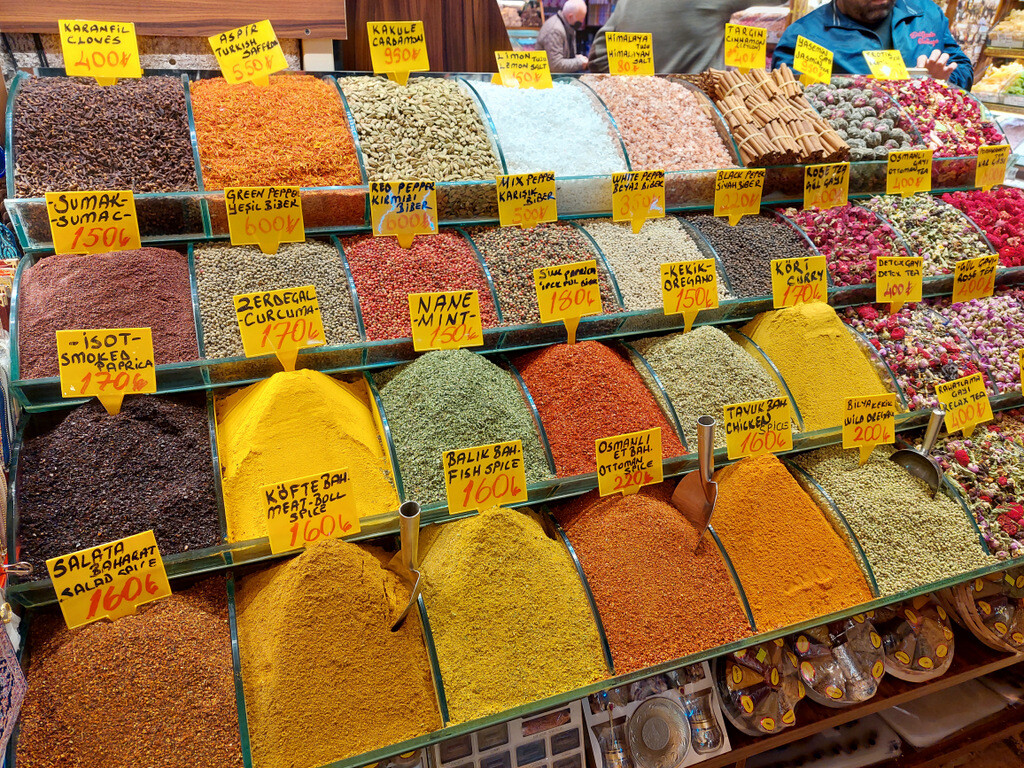
Historical records describe the Spice Bazaar as a place where spices were once sold in large barrels, arriving from distant trade routes across Asia and the Middle East. From the 15th to the early 20th century, spices were its primary — and often exclusive — merchandise.
Today, most shops follow a similar structure. In a typical Spice Bazaar store, you’ll find:
- Turkish delight
- Tea leaves and herbal blends
- Dried fruits and nuts
- Saffron and spice mixes
While food dominates the bazaar, a small number of shops also sell souvenirs, along with limited selections of jewelry and handbags, similar to what you might encounter in the Grand Bazaar.
From a local guide’s perspective, one long-established reference point inside the bazaar is Marmara Lokum, located on the main central corridor when entering from the seaside (shop no. 26). The store specializes in Turkish delight made in its own workshop and has been part of the same family-run business since the 1930s. The atmosphere is old-fashioned rather than flashy, which often says more than marketing ever could.
2. Do Locals Shop at the Spice Bazaar?
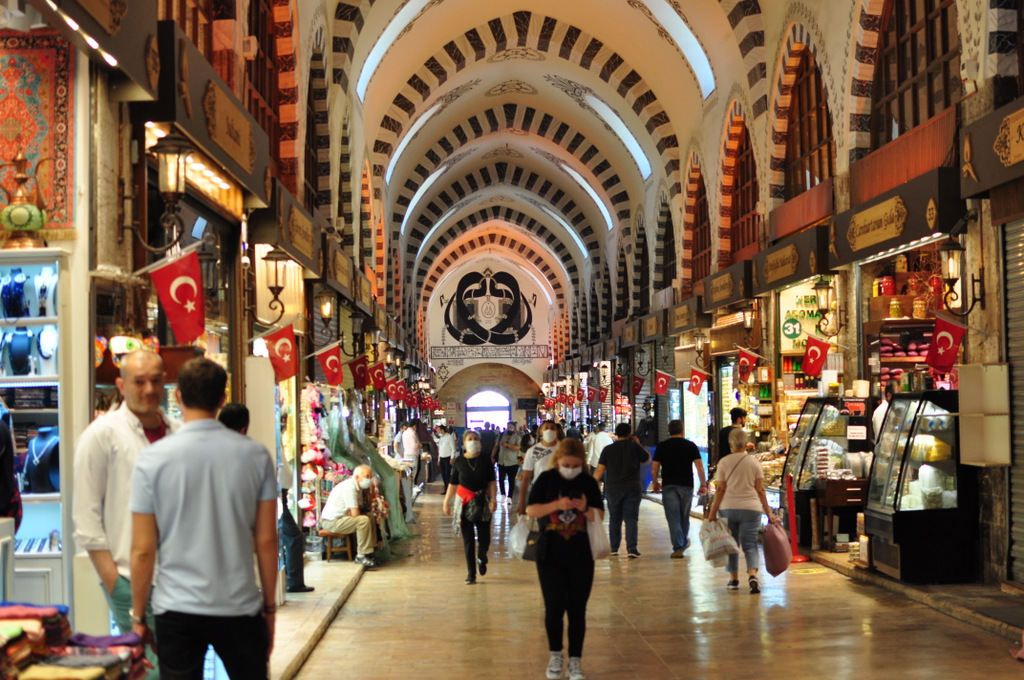
The short answer is partially.
Curious Istanbulites do enjoy walking through the Spice Bazaar, especially for its colors, smells, and atmosphere. It’s common to see locals pick up small items while exploring, particularly during busy seasons.
That said, the Spice Bazaar is generally perceived as touristic and relatively expensive. For everyday shopping, locals usually prefer neighborhood markets, long-familiar herbalists, or large supermarket chains spread across the city.
What is genuinely local, however, is the area surrounding the bazaar. Eminönü has long been known as a place where people come for specific needs — especially food-related shopping. Streets nearby are popular for:
- dried goods
- breakfast staples
- nuts, cheese, olives, and coffee
- bulk purchases before Ramadan or large gatherings
Because Istanbul is vast, residents from distant districts rarely travel across the city just to buy spices here. But within Eminönü itself, the traditional markets remain very active and culturally relevant.
Spice Bazaar (Istanbul) Opening Hours – 2026
As of 2026, the Spice Bazaar is generally open from 09:00 to 19:00. Unlike the Grand Bazaar, it is open every day, with one important exception.
The Spice Bazaar is closed during major religious holidays, including Eid al-Fitr and Eid al-Adha. During these periods, the interior of the bazaar remains closed. However, shops facing the surrounding streets may continue operating, allowing limited shopping in the immediate area even when the bazaar itself is inaccessible.
How to Get to the Spice Bazaar?
Reaching the Spice Bazaar is straightforward thanks to Eminönü’s central location.
From Sultanahmet, take Tram T1 from Sultanahmet Tram Station. The line passes Gülhane and Sirkeci, then stops at Eminönü, just a short walk from the bazaar.
From Taksim, take Funicular F1 down to Kabataş, then transfer to Tram T1 toward Eminönü. The tram ride from Kabataş to Eminönü takes around 10 minutes.
That said, many visitors find it more enjoyable to walk. From Sultanahmet, simply follow the tramway downhill. From Taksim, crossing the Galata Bridge on foot offers one of the most iconic approaches to the Old City before reaching the bazaar.
Things to Do around Spice Bazaar
The area surrounding the Spice Bazaar is as rewarding as the bazaar itself. Within a short walking radius, you’ll encounter historic mosques, local food streets, and one of Istanbul’s most iconic pedestrian crossings over the Golden Horn.
Rather than treating these stops as a checklist, it’s best to see them as natural extensions of your visit — places you pass through, pause at, or return to later in the day.
1. New Mosque (Yeni Cami)
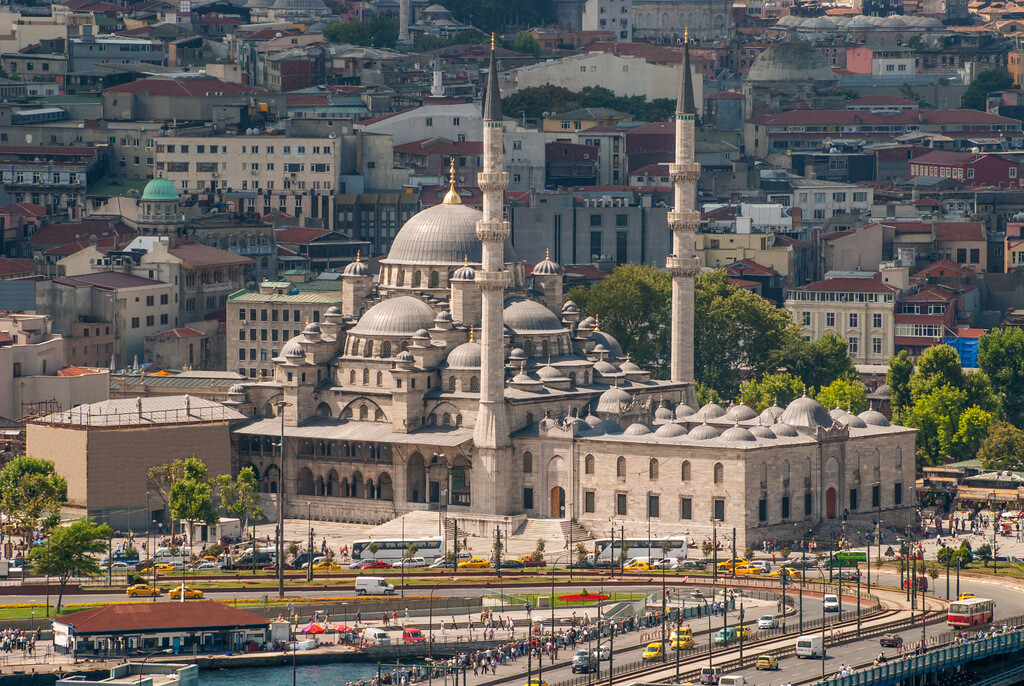
The New Mosque stands immediately next to the Spice Bazaar and defines the visual identity of Eminönü Square. In the Ottoman era, mosques were often supported by nearby commercial structures, and the Spice Bazaar itself was built to generate income for the mosque’s upkeep.
For Istanbulites, Eminönü is inseparable from this scene: the mosque, the square, the bazaar entrances, and flocks of pigeons in constant motion. It’s a setting that has been photographed endlessly, yet never feels staged.
One of the most evocative records of this atmosphere can be found in the work of Ara Güler, who captured daily life around Eminönü in the 1950s and 60s. His photographs reflect the same rhythm you still feel here today.
2. Mahmutpaşa Bazaar
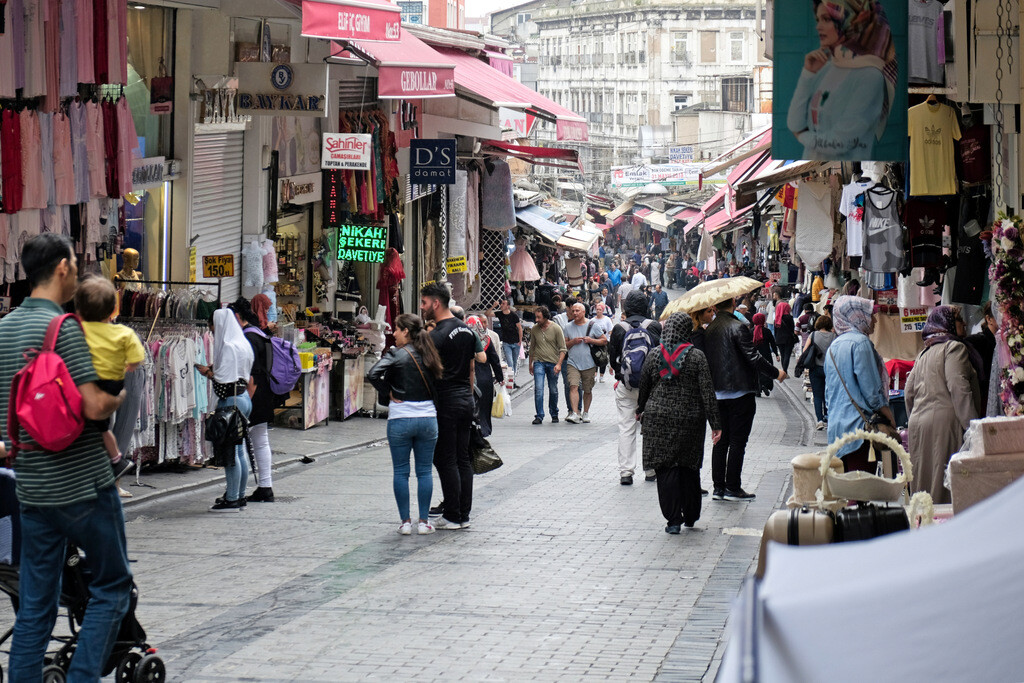
After exploring the Spice Bazaar, many visitors continue uphill toward Mahmutpaşa Bazaar, a long, sloping market street connecting Eminönü with the Grand Bazaar.
Mahmutpaşa is one of Istanbul’s most active local shopping corridors, especially known for affordable clothing. Traditionally, it has also been associated with dowry shopping, and it’s common to see families browsing together.
While the pace and density can feel overwhelming at first, Mahmutpaşa offers a useful contrast to the Spice Bazaar: less presentation, more volume; fewer souvenirs, more everyday trade.
3. Rüstem Pasha Mosque

Often overlooked by first-time visitors, Rüstem Pasha Mosque is one of Istanbul’s most visually striking religious buildings. Despite its modest exterior, the interior is decorated with some of the finest İznik tiles of the Ottoman period.
Designed by Mimar Sinan, the empire’s most influential architect, the mosque dates from the height of Ottoman power. Its elevated platform and discreet entrance add to its sense of discovery.
For travelers interested in Ottoman art rather than scale alone, this mosque is frequently a highlight.
4. Hocapaşa Street
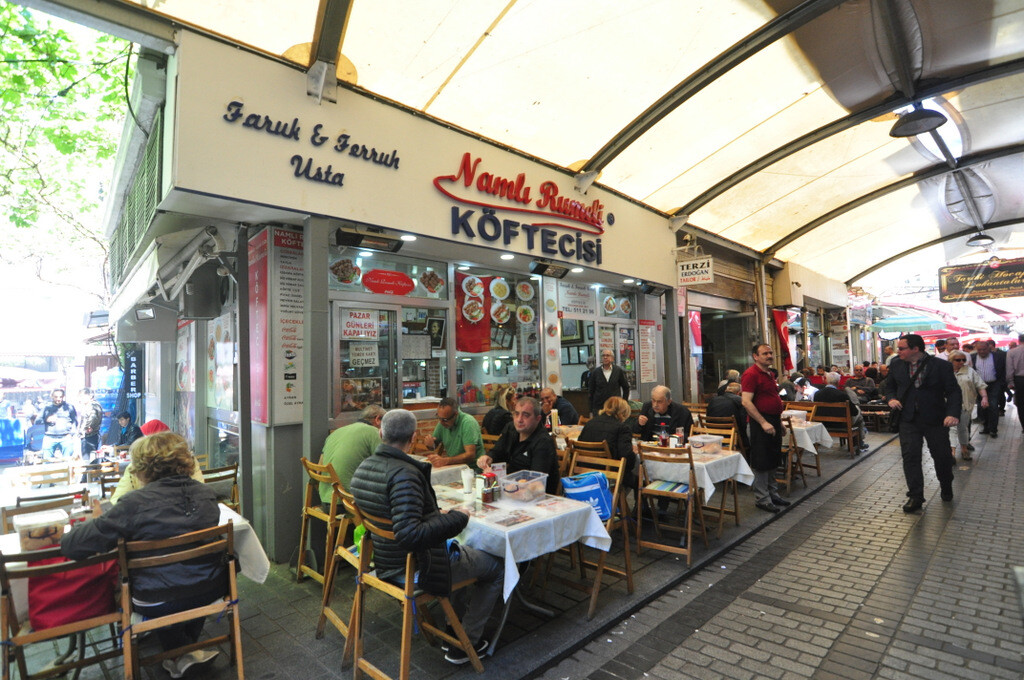
Just a short walk from the Spice Bazaar, Hocapaşa Street concentrates many of Istanbul’s classic street foods into a compact, walkable strip.
Here you’ll find long-established spots serving döner kebab, pide, köfte, and regional specialties — places that cater as much to locals as to visitors.
Hocapaşa is also home to the Hodjapasha Cultural Center, where traditional performances such as whirling dervish ceremonies are held. Similar shows can also be seen at the Galata Mevlevi House Museum, but Hocapaşa’s location makes it an easy addition to a Spice Bazaar visit.
5. Galata Bridge

Crossing Galata Bridge is one of the simplest ways to experience Istanbul’s geographic and cultural transition. With the Spice Bazaar behind you, the walk leads toward Karaköy, on the opposite side of the Golden Horn.
The bridge itself is always animated: fishermen lining the railings, ferries passing below, and uninterrupted views toward the Bosphorus. It connects the Old City with districts that feel more contemporary in rhythm and architecture.
From Karaköy, it’s easy to continue on foot to Galata, İstiklal Street, Cihangir, or Taksim Square, or to walk uphill toward the Galata Tower.
Conclusion
The Spice Bazaar is often described as a shopping stop, but its real value lies in where it places you within the city. From here, some of Istanbul’s most characteristic neighborhoods, food traditions, and walking routes unfold naturally.
The surrounding streets are home to some of the city’s most established food institutions, including historic Turkish delight and dessert shops that have been serving Istanbulites for generations.
Spending time around the Spice Bazaar is less about rushing from one highlight to another and more about observing everyday life — eating, walking, watching, and slowly absorbing the energy of Eminönü.
For many locals, that balance is exactly what keeps this area timeless.
Written by Serhat Engul

Hi Serhat, we plan to visit Turkey in Dec 2023. How can we get in touch with you?
Hi Austin, thank you for reaching out to me. I will contact you via your e-mail address registered in the system. Normally, the easiest way to contact me is by filling out the form on the contact page.
Serhat, you are an amazing writer.
Such clear and practical points.
Can virtually see the whole of istanbul thru your blogs!
Thanks for all the tips..
Just a question… Will going to Hocapasa Street enable me to taste all the various Turkish food or is there any other street which we need to go to? We are big fans of street food!!
We are going to be staying in Neorion Sirkeci Hotel.
Thanks again!!
Rustom Chinwalla, first of all, thank you for your feedback on the blog. Yes, you can find Turkish street food such as doner kebab, kofte, pide, cag kebab and fish sandwiches on Hocapasa Street (right next to Neorion Sirkeci Hotel).
Apart from this, you can also go to Buyuk Postane Street (Grand Post Office) in Sirkeci to eat kokorec. Chicken doner can also be found on this street.
To complete your street food experiences in Istanbul, you can take a ferry from Eminonu (aka Sirkeci) to Kadikoy and visit the Fish Market. Most food tours (taste of two continents) definitely include Kadikoy in the tour route.