The Byzantine Istanbul Tour offers a layered, time-travelling experience through the thousand-year story of Constantinople—capital of the Eastern Roman Empire and one of the most influential cities in world history. From the age of Constantine to the reign of Justinian, the city witnessed monumental construction, theological debates, imperial intrigues, devastating riots, and legendary sieges that shaped the medieval Mediterranean.
My name is Serhat Engül, a licensed professional tour guide in Istanbul for nearly 20 years. Since the early 2010s, I have specialized in guiding visitors who are curious about Byzantine history, especially around the Historical Peninsula of Istanbul. What captivates me most—and what I aim to convey during this tour—is the cinematic quality of Byzantine history: dramatic, human, and unexpectedly alive once you step into the streets where these stories unfolded.
Below you will find an overview of the tour, the monuments involved, and how the itinerary adapts to current conditions. If you prefer to skip the long text, feel free to contact me directly for the most up-to-date Byzantine Istanbul Private Tour program for 2026.
Byzantine Istanbul Private Walking Tour 2026
This private Byzantine tour is designed as a half-day walking experience, with the itinerary shaped carefully around crowd levels, monument accessibility, and the historical coherence of the day’s route. Rather than attempting to “see everything,” the focus is on creating a calm, well-paced narrative that allows Byzantine history to be understood as a continuous timeline rather than a series of disconnected sites.
As of 2026, the standard Byzantine Istanbul Tour typically includes the Hippodrome, Hagia Sophia, the Basilica Cistern, the Palace of the Porphyrogenitus (Tekfur Palace), and the Chora Church, with a total duration of approximately 5.5 to 6 hours. This route reflects current conditions on the Historic Peninsula. The Great Palace Mosaic Museum has remained closed for several years, and until it reopens, the program has been adjusted accordingly. When access to the museum is restored, the itinerary will be updated to reintegrate it into the tour.
Below, you will find a curated list of ten key Byzantine monuments that still survive in Istanbul today. A single walking tour does not aim to cover all of them. Instead, I select five or more monuments from this list based on what is most accessible, meaningful, and historically consistent on the day of your visit. The list is provided to give you a clear overview of the broader Byzantine landscape and to place each stop within a wider historical framework.
Light adjustments to the route can be made depending on your interests or mobility preferences. For travelers who wish to explore the later Byzantine period in greater depth, the Fener and Balat Tour serves as an ideal complementary experience, focusing on lesser-known churches, neighborhood layers, and sites that complete the story beyond the Imperial core.
When you get in touch, I will share the most suitable Byzantine route for your travel dates in 2026, along with current availability and pricing, based on real-time conditions rather than fixed templates.
1. Hagia Sophia
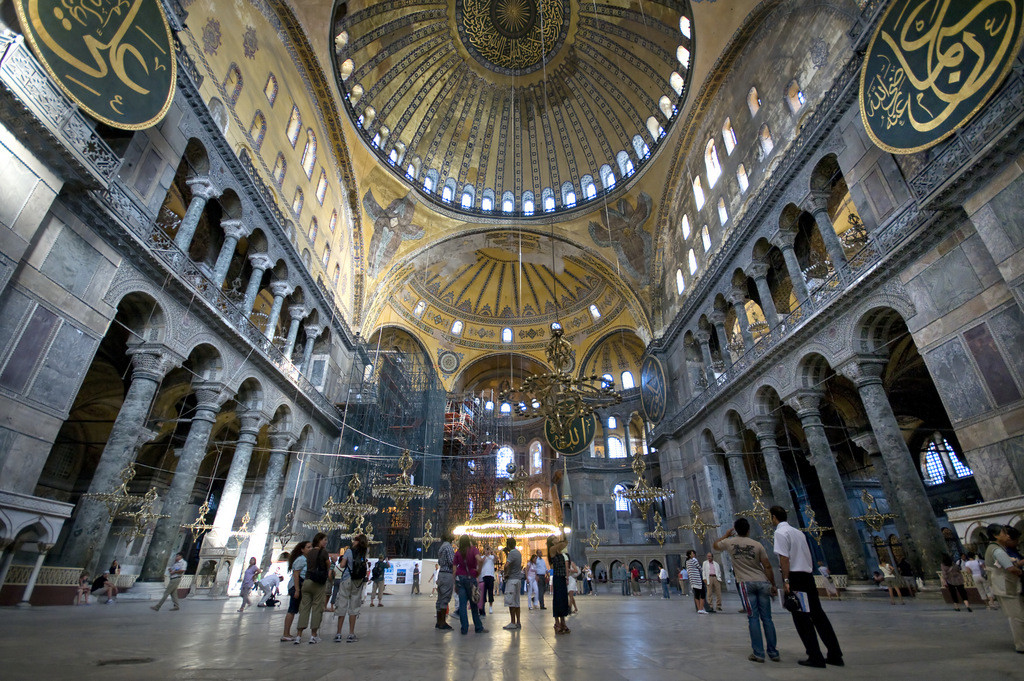
Hagia Sophia is undoubtedly the most significant monument on the Byzantine Istanbul Tour. Commissioned by Emperor Justinian and completed in 537, it remained the largest church in the world for nearly nine centuries and became the architectural symbol of the Eastern Roman Empire.
The site, however, has a much longer and more dramatic history. The first Hagia Sophia, built by Constantius II—the son of Constantine the Great—was destroyed during political unrest following the exile of John Chrysostom, one of the most influential patriarchs of Constantinople. The church was rebuilt by Theodosius II, only to be burned down once again during the violent Nika Riots of 532.
The present structure is the third and final Hagia Sophia, constructed by Justinian in an astonishingly short period and intended to surpass every sacred building of the ancient world. With its massive dome, innovative engineering, and imperial mosaics, Hagia Sophia encapsulates the power, ambition, and spiritual identity of Byzantine civilization like no other monument in Istanbul.
2. Hippodrome
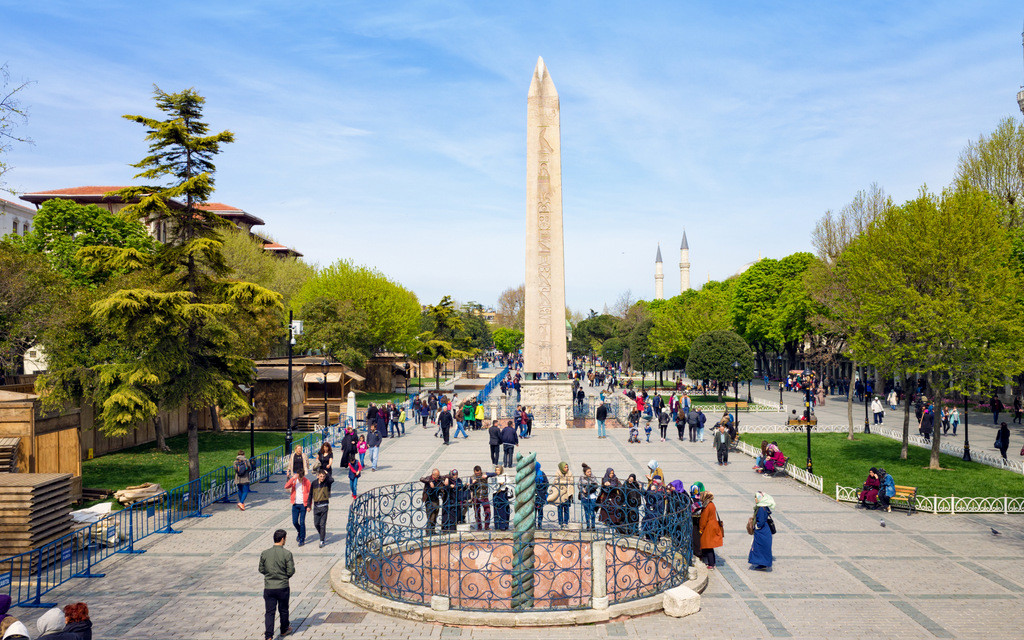
The Hippodrome was the beating heart of Constantinople and one of the city’s earliest Roman monuments. For more than a thousand years, this vast stadium hosted thrilling chariot races in which the Blues and Greens—the two great factions of the city—competed with extraordinary passion. With a capacity of nearly 40,000 spectators, the Hippodrome was not merely a sports arena; it was the political and social center of the Byzantine capital.
Some of the most dramatic events in Byzantine history unfolded here, including the Nika Riots of 532, during which the city was nearly destroyed and Justinian’s throne hung by a thread. The crowds of the Hippodrome held immense political influence; emperors were applauded, challenged, overthrown, or restored by the waves of public sentiment that surged through this arena.
Many legendary athletes, such as Porphyrius the Charioteer, achieved near-mythical status on this track. Their victories and rivalries shaped the rhythm of daily life in Constantinople.
Today, the Hippodrome survives as Sultanahmet Square, still marked by its ancient monuments: the Obelisk of Theodosius, the Serpent Column, and the Walled Obelisk. Each of these structures represents a different chapter of the city’s history and helps us visualize the grandeur of the Byzantine capital.
For me as a guide, the Hippodrome is one of the most important stops for establishing the historical timeline of Byzantium—from its rise in the 4th century to its final transformation in the 15th. Walking through this square is one of the clearest ways to sense the living memory of the Eastern Roman Empire.
3. Great Palace Mosaic Museum
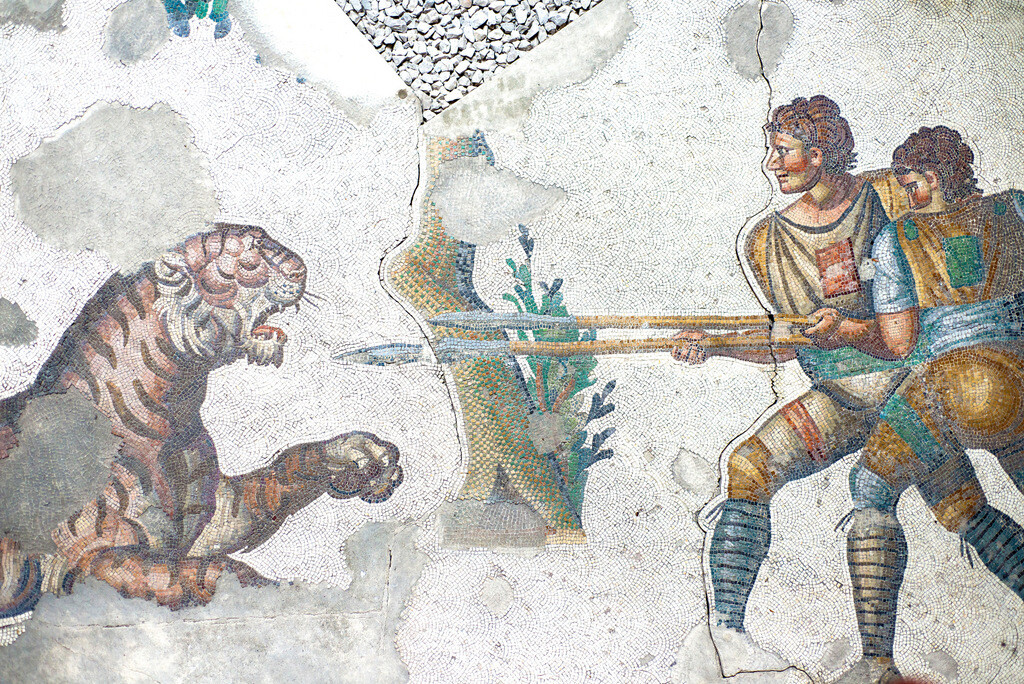
The Great Palace of Constantinople was one of the earliest monumental constructions built after the city became the new Roman capital in the 4th century. Commissioned by Constantine the Great, it served as the principal residence of Byzantine emperors for more than seven centuries. Spreading across a vast area between the Hippodrome and the Sea of Marmara, the palace was a legendary complex during the Middle Ages—an imperial city within the city.
Although the palace itself has not survived, its exquisite floor mosaics remain. These mosaics, originally decorating the courtyards of the imperial residence, are now preserved in the Great Palace Mosaic Museum. Visiting this collection offers a rare glimpse into daily life and artistic traditions before Byzantine art became fully Christianized. Many of the surviving scenes—including animals, hunters, and mythological motifs—reflect a lingering pagan influence, making this museum unique among Istanbul’s Byzantine sites.
Despite its central location in Sultanahmet, the museum typically stays quiet, allowing for in-depth explanation and reflection. For many visitors, it is the place where the story of Constantine’s new capital becomes most vivid.
The museum is still under restoration as of 2026, and I have temporarily removed it from the program. Once it reopens, I plan to reintegrate it into the tour in the most meaningful way possible.
4. Hagia Irene Church
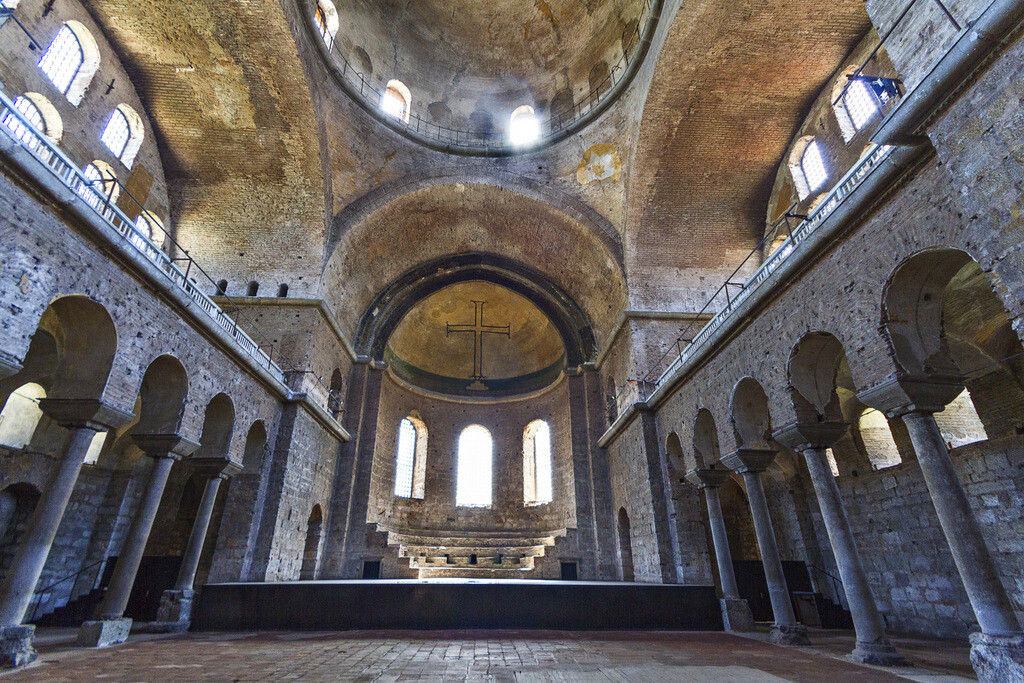
Hagia Irene is one of the earliest churches of Constantinople and holds a unique position among the city’s surviving Byzantine monuments. Like Hagia Sophia, it was damaged during several uprisings in Late Antiquity and rebuilt multiple times. The most significant reconstruction took place in the 8th century, during the era of Byzantine Iconoclasm, when religious images were banned throughout the empire. As a result, the church’s interior was designed with striking simplicity.
What sets Hagia Irene apart from other Byzantine churches in Istanbul are two exceptional qualities. First, it was never converted into a mosque, which means its architectural integrity remained unaltered after 1453. Second, because it was rebuilt during the iconoclastic period, the interior contains no figural mosaics—only a single, austere cross in the apse, making it one of the most authentic medieval Byzantine spaces still standing in the city.
For these reasons, Hagia Irene has long been one of the most meaningful stops on my Byzantine tours. Its untouched interior provides a rare opportunity to experience the atmosphere of an 8th-century Byzantine basilica exactly as intended.
In recent years, Hagia Irene has been incorporated into the Topkapi Palace Museum complex, and access now requires a combined ticket. Because independent entry has become more restricted, I have temporarily removed it from the standard program, but I plan to reintegrate it into the route whenever conditions allow.
5. Basilica Cistern
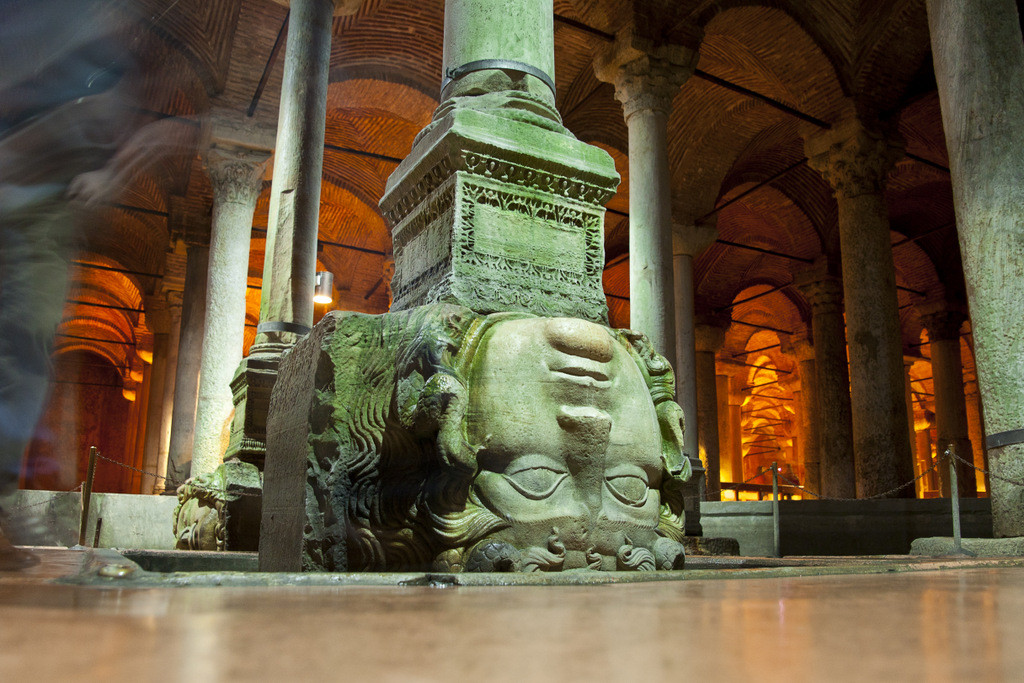
The Basilica Cistern is one of the most atmospheric Byzantine structures in Istanbul. Built during the reign of Justinian in the 6th century—making it contemporary with Hagia Sophia—it served as an enormous underground reservoir supplying water to the imperial quarter. The scale of the structure reflects the grandeur of Constantinople at its peak.
To reach the cistern, we descend a long staircase and gradually lose contact with daylight, stepping into a world that feels separated from the modern city above. Illuminated by soft, dramatic lighting after its recent restoration, the cistern reveals a forest of 336 ancient columns, earning its local nickname, the “Sunken Palace.”
Over the centuries, the Basilica Cistern has inspired countless visitors and even appeared in several Hollywood films. Deep within the structure lie the intriguing Medusa Heads, carved from repurposed Roman blocks, which remain one of the most memorable features of the site.
For many travelers, this cistern is where the mysterious side of Byzantine Istanbul becomes most tangible—a place where history, engineering, and legend meet beneath the streets of the old city.
6. Little Hagia Sophia Mosque
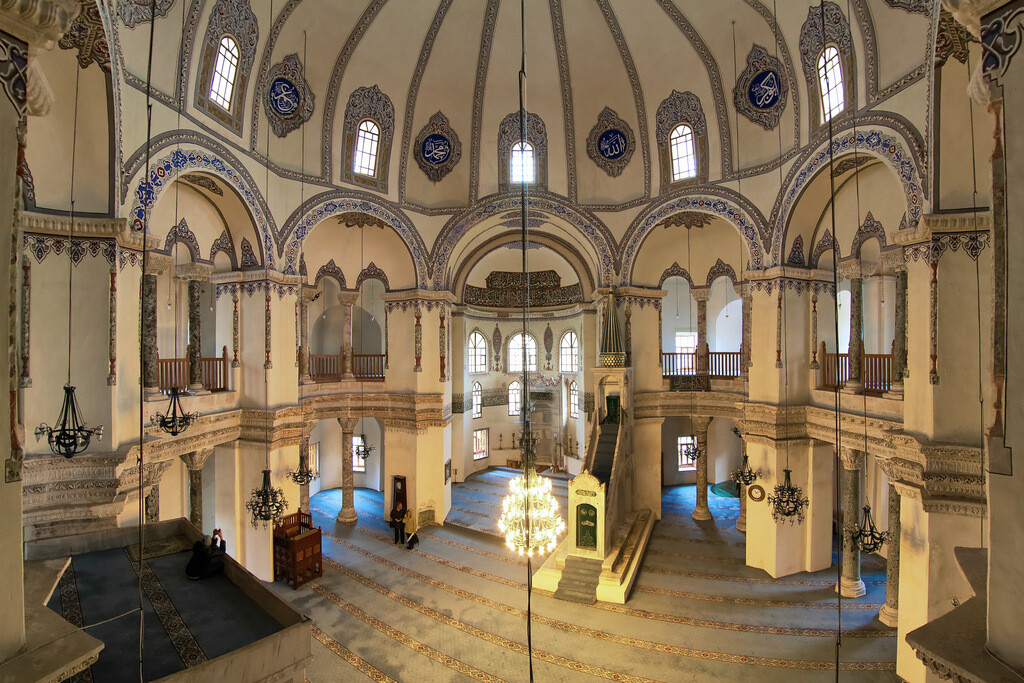
Commonly known today as the Little Hagia Sophia Mosque, this building was originally the Church of Saints Sergius and Bacchus, a masterpiece of early Byzantine architecture. Commissioned by Justinian and Theodora in the early 6th century, it predates Hagia Sophia and is nearly as old, making it one of the earliest imperial churches preserved in Istanbul.
Its interior still features decorative elements and column capitals from the Justinianic period, offering visitors a rare opportunity to experience early Byzantine aesthetics in an intimate and peaceful setting. While thousands queue outside Hagia Sophia, this equally historic structure often remains quiet—one reason it has become one of my favorite stops for explaining how Justinian rose to become the most powerful ruler of the empire.
Located just a short walk from the Hippodrome, Little Hagia Sophia also plays an important practical role during high season. When crowds in Sultanahmet make entry into major monuments more challenging, this church serves as an excellent alternative within the same historical context—equally satisfying for history enthusiasts and perfectly aligned with the narrative of the Byzantine tour.
7. Valens Aqueduct
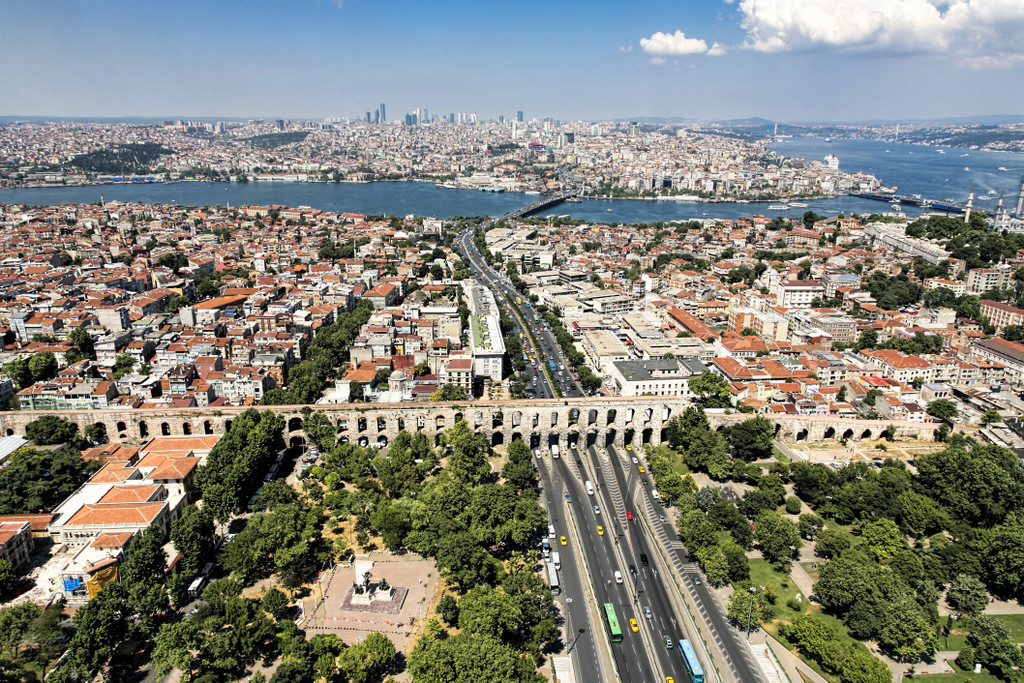
The Valens Aqueduct is one of the most impressive remnants of Constantinople’s ancient water system—an engineering network stretching nearly 200 kilometers across Thrace to supply the city with fresh water. Constructed during the reign of Emperor Valens in the 4th century, the aqueduct completed a project that had begun earlier under Constantine and remained essential throughout both the Byzantine and Ottoman periods.
Rising prominently over the modern boulevard of Atatürk Avenue, the aqueduct once fed many of the city’s major cisterns, including those that formed the backbone of Constantinople’s survival during sieges. Its presence in the very center of the Historical Peninsula is a reminder of how sophisticated and far-reaching the Roman hydraulic system was—especially in a region naturally lacking abundant water sources.
Although the Valens Aqueduct is not part of my standard Byzantine walking route today due to its distance from the Sultanahmet core, it sits near several important middle- and late-Byzantine churches. It is also close to the excavation site of the 6th-century Church of St. Polyeuktos, which has the potential to become a key stop on Byzantine tours in the future.
8. Monastery of Christ Pantocrator
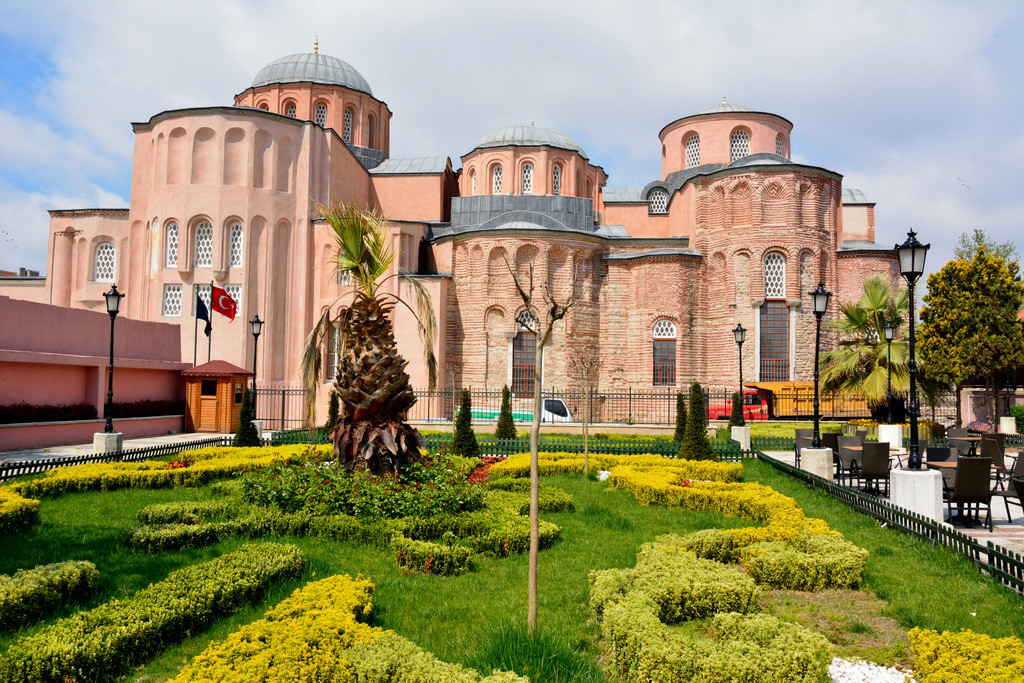
The Monastery of Christ Pantocrator was the third largest church complex in Constantinople and one of the most important architectural achievements of the Komnenos dynasty. Built in the 12th century, it served not only as an imperial monastery but also as the burial place of several late Byzantine emperors, giving it a central role in the ceremonial life of the city.
The complex originally consisted of three interconnected churches, forming a monumental ensemble that reflected the political power and artistic ambitions of the Komnenoi. Today, the building is known as Zeyrek Mosque and has undergone an extensive restoration, allowing its elegant brickwork, arches, and domes to be appreciated once again. Standing on a hill that overlooks the Golden Horn, the structure remains one of the most atmospheric Byzantine landmarks in the city.
Located within walking distance of the Valens Aqueduct, the Pantocrator complex is a highlight of my extended Byzantine routes outside Sultanahmet. It offers a deeper understanding of middle Byzantine architecture and the city’s religious landscape during one of its most dynamic dynastic periods.
9. Chora Church

Chora Church—known today as Kariye Mosque—houses one of the most extraordinary collections of Byzantine mosaics in the world. Created in the early 14th century, these scenes illustrate the final and most sophisticated phase of Byzantine art, and in terms of narrative richness and technique, they often rival—even overshadow—those of Hagia Sophia.
The mosaics were commissioned by the scholar and statesman Theodore Metochites, whose patronage transformed the church into a masterpiece of the Palaiologan Renaissance. The frescoes and mosaics adorning the narthexes and chapel are nearly 700 years old and remain remarkably well preserved.
After a long restoration period between 2020 and 2024, Chora Church is now open to visitors. Although the building has been reconverted into a mosque, its mosaics are still visible, offering a serene and beautifully curated setting for exploring the spiritual and artistic world of late Byzantium.
For these reasons, Chora has once again become an essential highlight of my Byzantine Istanbul tours over the past two years—a place where history, devotion, and art converge in a uniquely immersive atmosphere.
10. The Palace of the Porphyrogenitus
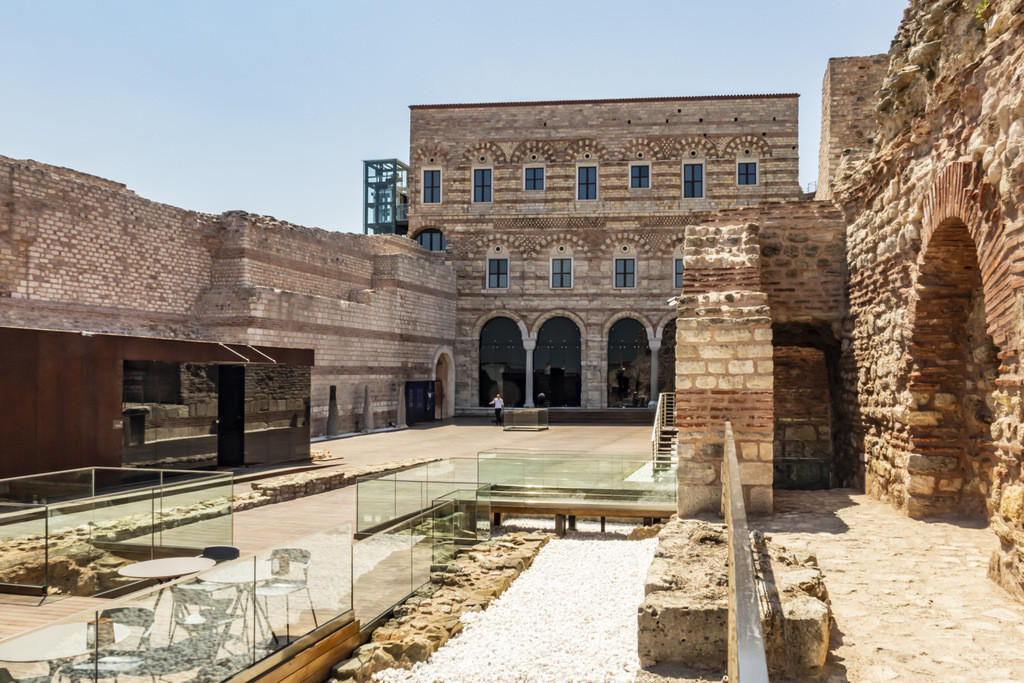
Although the major Byzantine palaces of Constantinople—such as the Great Palace, the Palace of Blachernae, and the Boukoleon Palace—have largely disappeared, one impressive fragment still stands: the Palace of the Porphyrogenitus, known locally as Tekfur Palace. Situated near the Golden Horn and adjacent to the mighty Theodosian Walls, it is one of the few surviving examples of late Byzantine secular architecture.
The palace is traditionally associated with Constantine VII Porphyrogenitus (10th century), one of Byzantium’s most erudite emperors. Recently restored and reopened as a museum, Tekfur Palace provides a rare glimpse into imperial life during the later centuries of the empire. Its brick-and-stone façade, elegant arches, and upper galleries reflect a refined architectural style uncommon among surviving Byzantine monuments in Istanbul.
Today, Tekfur Palace has become one of the most meaningful final stops of my Byzantine tours. Inside the structure, a detailed 3D model demonstrates the current condition of the Theodosian Walls, helping visitors understand the scale and complexity of Constantinople’s fortifications. The museum also allows access to the interior of a wall tower, offering the atmospheric experience of standing within the defensive core of the medieval city.
From the terraces of the palace, visitors enjoy a striking panorama of the Golden Horn and the ancient land walls—a memorable setting that beautifully concludes the narrative of Byzantium’s architectural and imperial heritage.
Conclusion
Over the years, I have had the pleasure of guiding travelers from all around the world—especially from the USA, the UK, Canada, and Australia—who share a deep curiosity about Byzantine history. Meeting people from such distant places yet united by the same passion has been one of the most rewarding aspects of my work as a guide.
If you would like to explore Istanbul through the lens of the Eastern Roman Empire—from the 4th century to the fall of Constantinople in the 15th—you can reach me through the contact form. As a licensed professional tour guide based in Istanbul, I would be delighted to share the stories, landmarks, and historical layers that make Byzantium one of the most fascinating civilizations in world history.
Written by Serhat Engul

Hello, do you have availability this week on Wednesday?
Dear Samuel Adams, thank you very much for your interest in my Byzantine history tours. However, unfortunately, since October is the high tourist season in Istanbul, I do not have any availability these days.
Hello. My wife, adult daughter, and myself will be visiting Istanbul June 8-13 and are interested in scheduling a tour. Please provide price, hours, and dates available.
Thank you very much!
Dear TJ Bruyere, I’m sorry if I’m a little late in responding to your request as it’s a public holiday in Turkey these days. I will send you the necessary information via your email address.
Good morning,
I am interested in the guided tour of Byzantine history and heritage. I await more info and the pricing by email
There will be 3 visitors: Johannes, Ina and Hanlie
Dear Johannes Wessels, thank you for your tour request. I have sent you the details about the Byzantine history tour via your email address.
Merhaba Serhat,
Ben adim Afrodite and I will be in Istanbul with my daughter 8-12 April 2023. Do you have any availability and tell me your tour itineraries and prices lutfen!
Cok tesekkur ederim.
Merhaba Afrodite, what a beautiful name you have! First of all, I would like to thank you for your request for the Byzantine tour in Istanbul.
I will send you the details of this private tour via your email address registered in the system. I will share all the details about the places to visit on the tour, the duration of the tour and the pricing.
Rica ederim.
Hi Serhat,
I would like to know if you have availability and pricing on the 26th or 27th of April 2023 for the Byzantine tour.
I look forward to hearing from you.
Thanks
Dan
Hi Daniel,
Yes, I am available on those dates. I will send the details of the tour to your e-mail address registered in the system.
Best,
Serhat
Merhaba, Serhat!
I will be in Istanbul in early October and would like to do a private Byzantine tour. October 9 or 10 would be best. Please let me know if this is possible.
Merhaba Wayne!
Thank you for reaching out. I am available on 10th of October. I will send you an email with the itinerary and details needed to finalize the booking.
Best regards,
Serhat
Merhaba! I tried to reach you once before but due to all the pandemic it was difficult. If you have a tour of Byzantine Istanbul I would love to join you! I will be there from 29th April to 8th of May. If you have a spot for me I would love to join your tour!
Hi Sharon, yes, I am doing tours about Byzantine Istanbul. However, these are not public group tours. I only do private guided tours. So you can arrange a private Byzantine history tour for yourself. I have available days on the dates you specified.