The Göreme Open Air Museum is one of the most extraordinary cultural sites in Cappadocia — a place where history, faith, and landscape converge in a way found almost nowhere else in the world. Inscribed on the UNESCO World Heritage List in 1985, this remarkable open-air complex is home to rock-cut churches, chapels, and monasteries carved directly into Cappadocia’s soft volcanic stone and decorated with centuries-old Byzantine frescoes.
Walking through the narrow valleys of Göreme feels like stepping into the early centuries of Christianity. These cave churches, once used by monks and monastic communities, still preserve vivid biblical scenes that reveal how faith, daily life, and art were intertwined in medieval Anatolia. Beyond its geological beauty, the museum offers a rare window into the spiritual and cultural foundations of Christian civilization.
This article is designed as a practical visitor’s guide for travelers planning to visit the Göreme Open Air Museum in 2026. However, as a historian and licensed guide, I also approach sites like Göreme as part of a larger historical continuum. For this reason, the historical background below is more detailed than in a typical ticket-and-hours article.
If you prefer to skip directly to practical information, you can easily jump to the relevant sections using the Table of Contents. The Quick Guide at the top of the page already summarizes entrance fees, opening hours, and key planning tips.
History of Göreme Open Air Museum
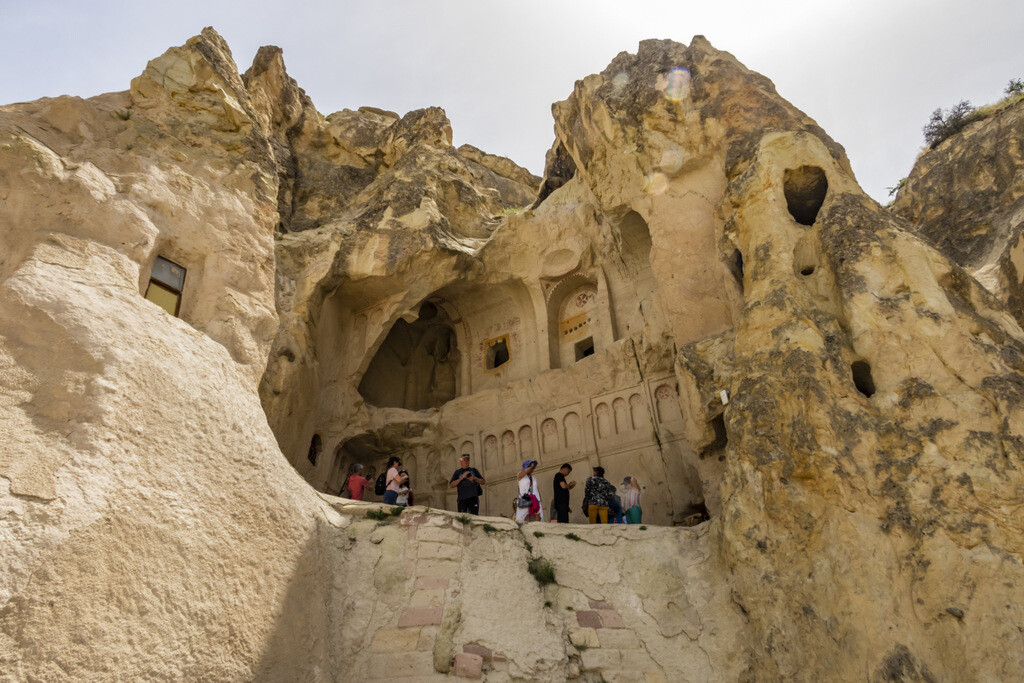
The history of the Göreme Valley stretches back to ancient Anatolia, with archaeological traces reaching as far as the Hittite period. However, the monuments visible today largely date from the Roman and Byzantine eras, when the region became a major center of early Christian life.
During the Roman period, Christianity was frequently persecuted, prompting believers to seek refuge in remote and defensible landscapes. Cappadocia’s soft volcanic rock made it possible to carve dwellings, tunnels, and chapels directly into the terrain. These natural shelters gradually evolved into organized monastic settlements, laying the foundations of Göreme’s religious landscape.
Göreme retained its spiritual significance throughout the Middle Ages. Most of the churches and monastic structures visible today were created between the 11th and 13th centuries, a period when monastic life flourished under Byzantine rule. Monks seeking ascetic devotion gathered here, forming communities governed by strict spiritual discipline. The Göreme Open Air Museum is therefore not a single monument, but a living record of centuries of religious practice.
Famous Saints of Ancient Anatolia
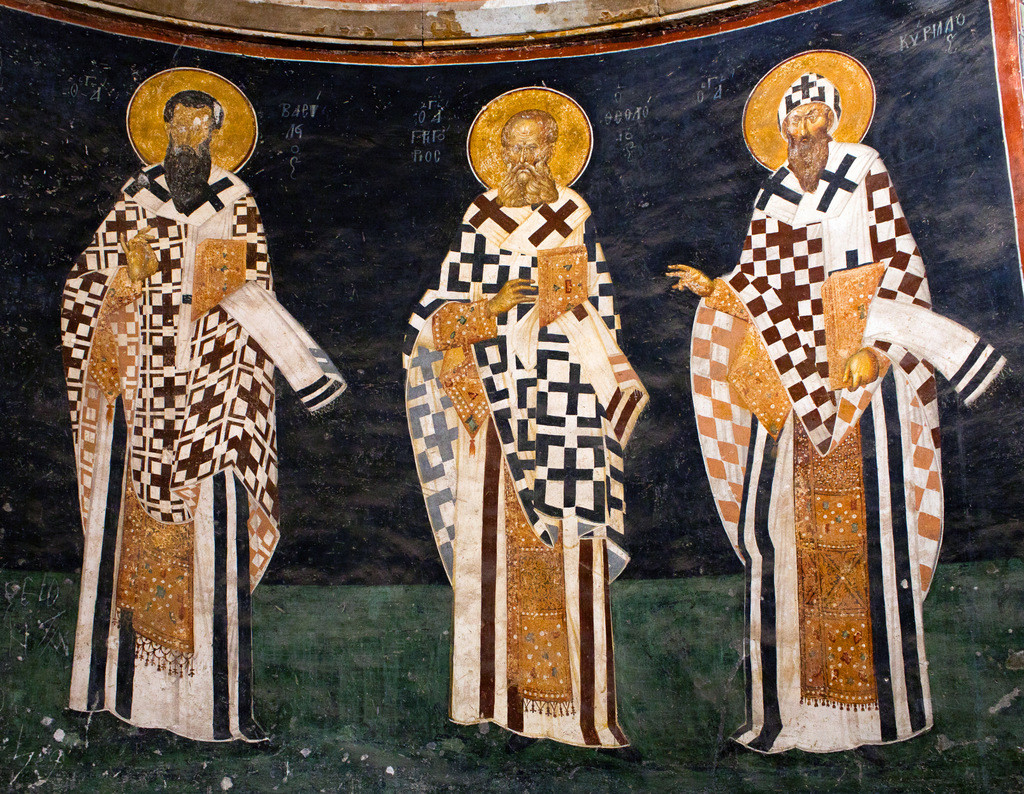
Anatolia played a central role in the formative centuries of Christianity. Many of the most influential saints and church leaders were born, lived, or taught in this region, placing several cities in modern-day Turkey along the Christian pilgrimage routes.
Saint Nicholas, known worldwide as Santa Claus, lived in Demre on the Mediterranean coast. Saint George, one of Christianity’s most venerated saints, was born in Cappadocia. The cave church traditionally associated with Saint Peter can still be seen in Antakya. Saint Simeon Stylites, famous for his ascetic life atop a column, influenced monastic traditions across Syria and Anatolia.
Among all these figures, Saint Basil the Great left the deepest mark on Cappadocia. Born in Caesarea (modern Kayseri) in the 4th century, Basil reshaped early monastic life by introducing a disciplined communal system. The monastic rules he established — known as The Rule of Saint Basil — became the foundation of Eastern Christian monasticism and directly shaped the communities centered around Göreme.
Understanding figures such as Basil the Great, John Chrysostom, and the stylite saints is essential to understanding both Byzantine spirituality and the Christian history of Constantinople. The monastic traditions developed in Anatolia later influenced church life across Europe, contributing profoundly to Western religious and artistic culture. When you walk through Göreme’s churches, you are not only visiting Cappadocia — you are standing at the roots of European Christian civilization.
Rock Churches of the Göreme Open Air Museum
The Göreme Open Air Museum contains some of the most important rock-cut churches in Cappadocia, each offering insight into medieval monastic life and Byzantine art.
1. Saint Barbara Church
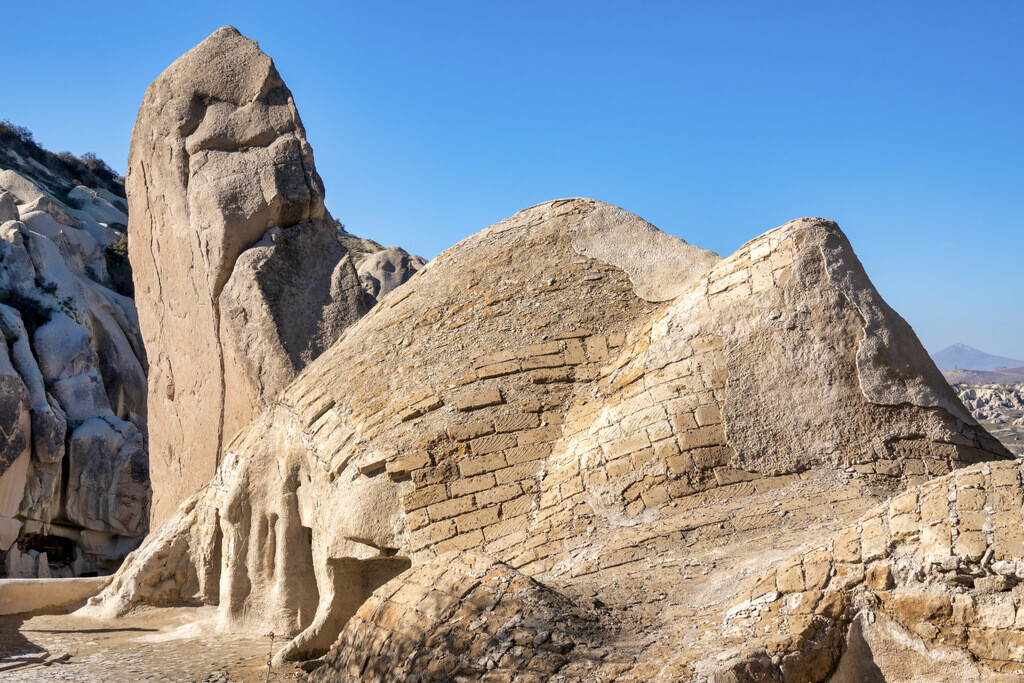
Dedicated to an early Christian martyr, Saint Barbara Church is notable for its symbolic frescoes and unusual decorative motifs. Animal figures such as dragons and serpents appear alongside Christian imagery, reflecting the symbolic visual language of the period. The Christ Pantocrator depiction remains one of its most striking features.
2. Elmalı (Apple) Church
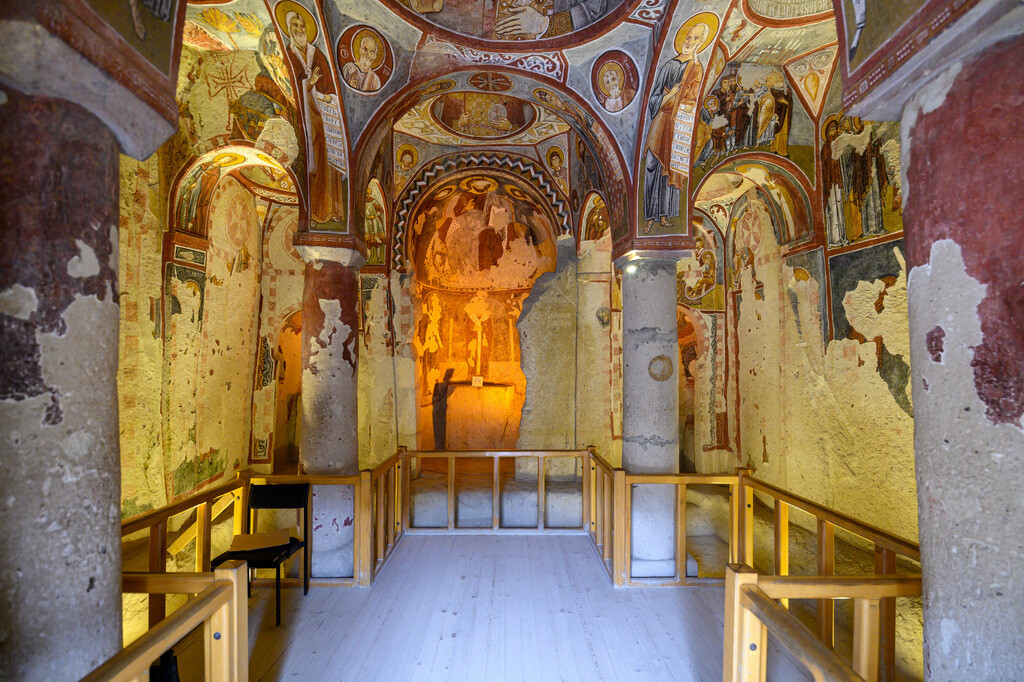
Dating to the 12th century, Elmalı Church is a cross-planned structure with nine domes supported by four columns. Its frescoes depict key biblical scenes, including the Last Supper, the Resurrection of Lazarus, and Christ’s entry into Jerusalem. Despite its age, the church is remarkably well preserved.
3. Yılanlı (Snake) Church

Built in the 11th century, Yılanlı Church takes its name from the depiction of Saint George battling a dragon-like creature. Though the frescoes are simpler in execution, they convey the spiritual intensity of the era and offer valuable insight into popular religious imagery.
4. Tokalı (Buckle) Church

Tokalı Church is the largest and most complex church in Göreme, consisting of four interconnected sections. The Old and New Churches feature some of the finest fresco cycles in Cappadocia, distinguished by their vivid blue tones and narrative richness.
5. Karanlık (Dark) Church in Göreme
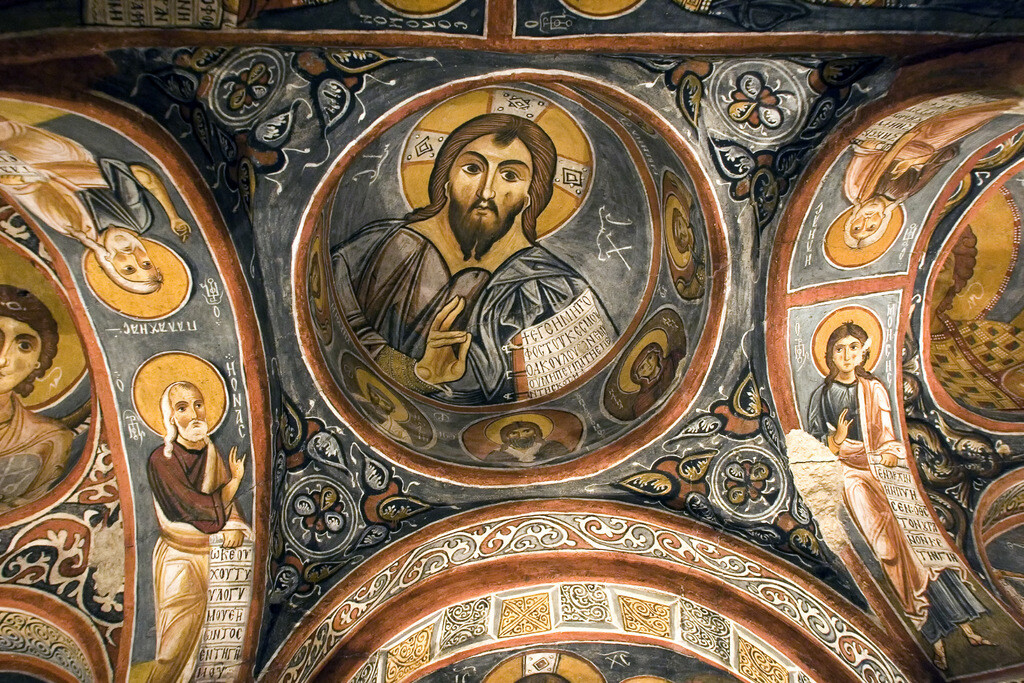
The Dark Church contains the best-preserved frescoes in Cappadocia, thanks to minimal exposure to light over the centuries. A separate ticket is required for entry. Its depiction of Christ Pantocrator is among the most celebrated examples of Byzantine art in Anatolia and is frequently featured in scholarly publications.
The artistic traditions visible in these churches later influenced Western European church art. Byzantine scholars who migrated west before and after the fall of Constantinople in 1453 carried classical knowledge that helped shape the Renaissance. In this sense, Göreme’s frescoes are not isolated works — they are part of the cultural genealogy of the West.
Göreme Open Air Museum Entrance Fee (2026)
The entrance fee for the Göreme Open Air Museum in 2026 is €20 per person. This ticket includes access to the national park area and the main rock-cut churches within the museum complex.
Please note that entry to the Dark Church (Karanlık Kilise) requires an additional ticket costing €6. This chapel is not included in the standard admission due to conservation measures protecting its frescoes.
Ticket prices last updated: February 7, 2026.
Göreme Open Air Museum Opening Hours (2026)
In 2026, the Göreme Open Air Museum is open daily from 08:00 to 17:00. The site remains open every day of the week.
Visiting hours at museums in Turkey may change seasonally or due to operational decisions. While this article is updated regularly, it is always advisable to check the official museum website shortly before your visit to confirm current opening hours.
Opening hours last updated: February 7, 2026.
Conclusion
The Göreme Open Air Museum is not simply a stop on a Cappadocia itinerary — it is a cornerstone of Christian and Byzantine history. Few places in the world allow visitors to experience faith, art, and landscape so seamlessly intertwined.
For travelers seeking a deeper understanding of Cappadocia, you will find additional detailed guides across this site. Articles such as Things to Do in Cappadocia provide broader context, while Best Cave Hotels in Cappadocia explores accommodation options that reflect the region’s unique architectural heritage.
Visiting Göreme with historical awareness transforms the experience. You are not only admiring frescoes carved into stone — you are stepping into a tradition that shaped centuries of belief, art, and culture.
Written by Serhat Engul

Leave a Reply