Galata Tower, rising proudly over Istanbul’s skyline, has witnessed nearly seven centuries of history. Built in 1348 by the Genoese, this medieval stone tower once served as a watchtower protecting one of the world’s busiest trade harbors. Its iconic silhouette has seen the rise and fall of empires, devastating fires, and countless ships passing through the Golden Horn — a reminder of the city’s layered past.
Today, the Galata Tower offers visitors a panoramic view of Istanbul, stretching from the Bosphorus to the historic peninsula. Having worked as a licensed tour guide in Istanbul for over 20 years, I often describe Galata not only as a viewpoint, but as a place where the city’s medieval and modern identities meet. In my in-depth Byzantine history tours, I frequently explain how this district developed alongside the older imperial center across the Golden Horn — a contrast that still shapes Istanbul’s urban character today.
Whether you’re passionate about history, photography, or simply enjoying the vibrant energy of the city, Galata Tower remains one of Istanbul’s most compelling landmarks. Over the years, I have guided hundreds of visitors here, and what continues to impress them is not just the view, but the context — understanding what they are looking at. In the rest of this guide, you’ll find updated entrance details, practical tips, and insider suggestions to help you make the most of your visit.
The History of Galata Tower

The history of Galata Tower dates back to the 14th century, when Istanbul was still known as Constantinople. During the Byzantine period, several Italian maritime republics were granted commercial privileges in the city — most notably the Venetians and the Genoese, whose rivalry would shape the future of Galata.
In the Middle Ages, the Golden Horn functioned not only as a natural harbor but also as a cultural and religious boundary. Orthodox Christian communities mainly lived on the southern shore, within Constantinople itself, while Catholic communities settled behind the fortified walls of Galata, on the northern side. This division reflected both religious differences and competing commercial interests.
The balance between these powers shifted dramatically after the Fourth Crusade in 1204, when Latin forces invaded and looted Constantinople. The Venetians, who had supported the crusaders, gradually lost favor with Byzantium. The Genoese, by contrast, aligned themselves with the Byzantine Empire and were subsequently granted control over the Galata district, transforming it into a semi-autonomous trading colony.
In 1348, the Genoese constructed Galata Tower as a key element of their defensive and surveillance system, primarily to observe and protect maritime traffic along the Galata coastline. Their architectural legacy extended well beyond the tower itself; Genoese-built structures such as Yoros Castle on the Black Sea coast also formed part of this broader network of fortifications.
Following the Ottoman conquest of Constantinople in 1453, trade remained a strategic priority for the new rulers. To ensure economic continuity, the Ottomans allowed both Venetian and Genoese merchants to retain many of the commercial privileges they had enjoyed under Byzantine rule — a pragmatic decision that helped sustain Galata’s role as a major trading hub.
In the later Ottoman period, Galata Tower assumed a new function as a fire watchtower. From its elevated position, guards could detect fires across the city and alert emergency units. During the Republican era, the tower was gradually transformed into a museum and observation point, eventually becoming one of the most iconic places to experience Istanbul’s skyline.
Things to See in Galata Tower
Following an extensive restoration led by the Ministry of Culture and Tourism, Galata Tower has evolved from a simple observation point into a carefully curated museum experience. While many older guidebooks still describe the tower mainly as a viewing terrace, today’s visitors will discover much more. From the ground floor to the upper levels, the tower now offers a layered journey through Istanbul’s history, ending with panoramic views over the city.
Your visit begins at the lower levels, where interactive exhibits, historical artifacts, and multimedia presentations bring the centuries-old story of the tower to life. As you ascend, each floor unveils a different chapter of Galata’s past — from maritime trade and Genoese heritage to Ottoman-era city life. Informative displays are complemented by ambient lighting and carefully restored architectural details, immersing you in the atmosphere of old Istanbul.
Higher up, dedicated exhibition spaces showcase rare photographs, detailed scale models of the city, and cultural installations that highlight the tower’s role in Istanbul’s skyline. These areas are designed not only to educate but also to inspire, offering new perspectives on a monument that has watched over the city for nearly seven centuries.
Your journey culminates at the panoramic observation terrace. From here, the view is nothing short of breathtaking: the Bosphorus glistening under the sunlight, the domes and minarets of the Historic Peninsula rising in the distance, and the vibrant neighborhoods of Beyoğlu unfolding beneath your feet. Whether bathed in the warm hues of sunset or illuminated by the city lights at night, the vista from Galata Tower remains one of the most unforgettable sights in Istanbul.
Things to Do near Galata Tower
The area surrounding Galata Tower offers a wide range of experiences that are easy to combine before or after your visit. You can spend time exploring the shopping streets around the tower, where small boutiques, design stores, and independent shops reflect the creative character of Galata. The neighborhood is also well suited for a relaxed break, with plenty of local restaurants and cafés offering everything from casual bites to more refined dining options.
Just a short walk away lies Istiklal Street, Istanbul’s most famous pedestrian boulevard. Lined with historic buildings, cultural venues, and everyday city life, it provides a natural continuation of your time around Galata Tower and allows you to experience a different rhythm of the city within minutes.
1. Büyük Hendek Street
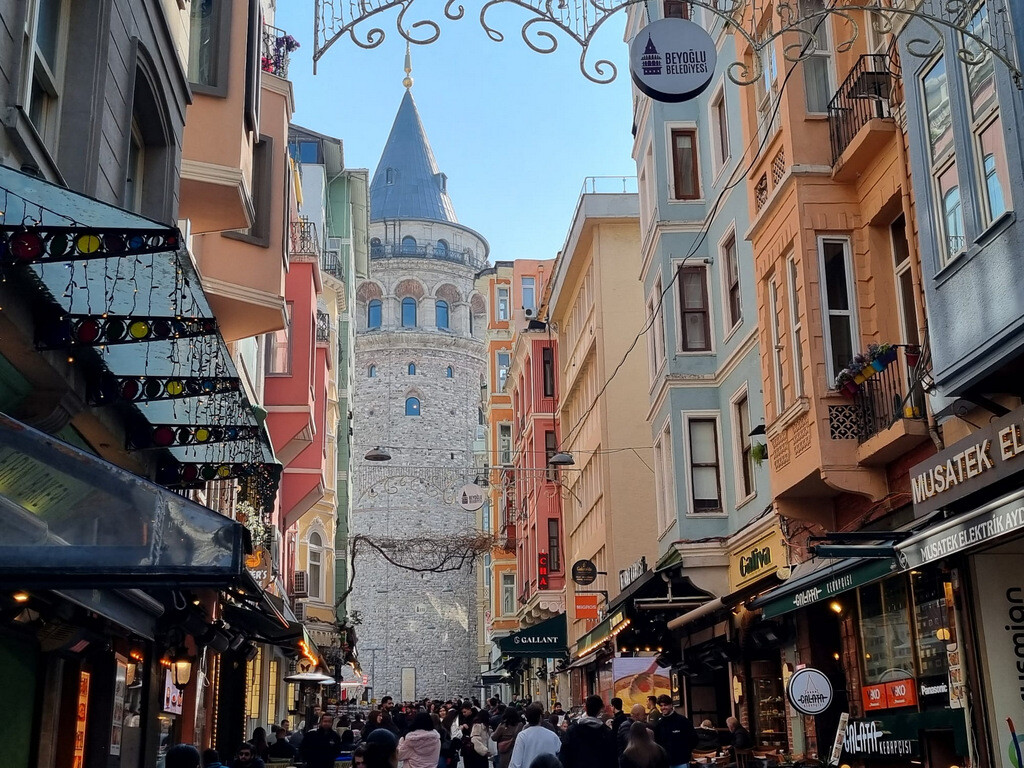
Büyük Hendek Street is one of Galata’s most historically layered streets and an important reference point for Istanbul’s Jewish heritage. One of the city’s most significant synagogues, Neve Shalom Synagogue, is located here, along with the Jewish Museum of Turkey, which forms part of the same complex. The museum traces the story of Jewish communities expelled from Spain in the late 15th century, who were later welcomed by the Ottoman Empire and gradually settled in Istanbul, leaving a lasting cultural imprint on the city.
Continuing along Büyük Hendek Street, you will arrive at Şişhane Square, a key junction connecting Galata with the broader Beyoğlu area. From here, it is easy to reach Meşrutiyet Street, an elegant avenue known for its historic hotels, embassies, and cultural institutions. Running parallel to Istiklal Street, this street offers a quieter but equally rewarding alternative route. Landmarks such as the Pera Museum and the historic Pera Palace Hotel are also located here, making this area a natural extension of your visit after exploring Galata Tower.
2. Serdar-i Ekrem Street
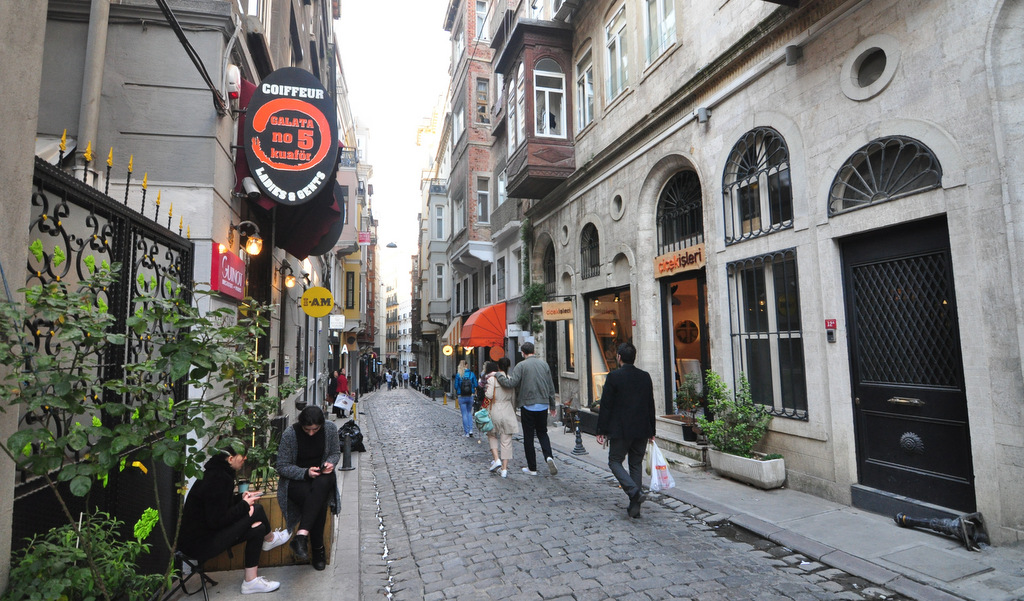
Serdar-i Ekrem Street stretches from Galata Tower toward the Cihangir neighborhood and is best known for its design-oriented boutiques and carefully curated shops. Along this gently sloping street, you will find stores offering well-crafted everyday objects, contemporary accessories, and items that reflect Istanbul’s modern creative scene rather than mass-market souvenirs. A selection of boutique cafés lines the route as well, making it a pleasant place to slow down and take in the atmosphere of Galata.
Continuing on foot toward Cihangir, you can visit the Museum of Innocence, created by Orhan Pamuk, the Nobel Prize–winning author. Nearby, Çukurcuma Street is well known for its antique shops, where visitors can browse a wide range of vintage objects and collectibles. Together, these streets add a more literary and artistic layer to the experience around Galata Tower, complementing its historical perspective with everyday urban culture.
3. Galip Dede Street
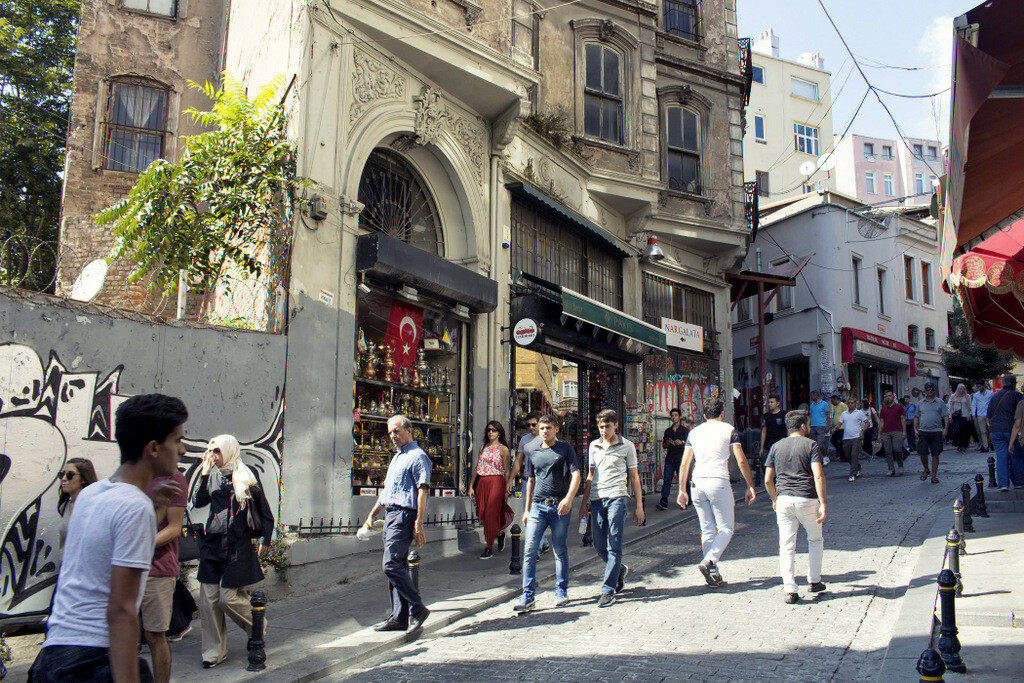
Reaching Istiklal Street from Galata Tower is straightforward and intuitive. With the tower behind you, simply follow Galip Dede Street uphill toward the north, and you will soon arrive at Tünel Square, which marks the historic starting point of Istiklal Street.
Galip Dede Street itself is lively and diverse, reflecting the creative spirit of Beyoğlu. Along the way, you will encounter souvenir shops, small cafés, hostels, art studios, and traditional musical instrument stores, many of which have operated here for decades. This mix gives the street a distinctly local rhythm, balancing tourism with everyday city life.
At the corner where Galip Dede Street meets Istiklal Street stands the Galata Mevlevi House Museum, one of the city’s key sites for understanding the Mevlevi Sufi tradition. On certain days, visitors may also attend Whirling Dervish ceremonies here, alongside other venues such as the Hodjapasha Cultural Center. The museum introduces the life and teachings of Rumi, the 13th-century Anatolian mystic whose philosophy remains central to Sufi thought and continues to shape Istanbul’s spiritual landscape.
Galata Tower Entrance Fee 2026
As of 2026, the standard entrance fee for Galata Tower is 30 Euros.
This ticket grants access to the tower’s lower floors, which feature interactive museum exhibits about the history of Galata and Istanbul, as well as the panoramic observation terrace at the top of the tower.
Museum Pass Istanbul is also valid for entry.
This section was last updated in March 2026.
Galata Tower – Ticket Options
You may reserve a Galata Tower entry ticket online to plan your visit in advance. Alternatively, a Bosphorus sunset cruise offers a different perspective of Istanbul’s skyline.
Galata Tower Opening Hours 2026
Galata Tower is open daily from 08:30 AM to 11:00 PM in 2026. The tower remains open every day of the week. This information was last updated in March 2026.
The visiting hours of museums in Istanbul may change due to events and renovations. Before going to the museum, I suggest you visit the official website of the museum and review the latest updates.
How to Get There?
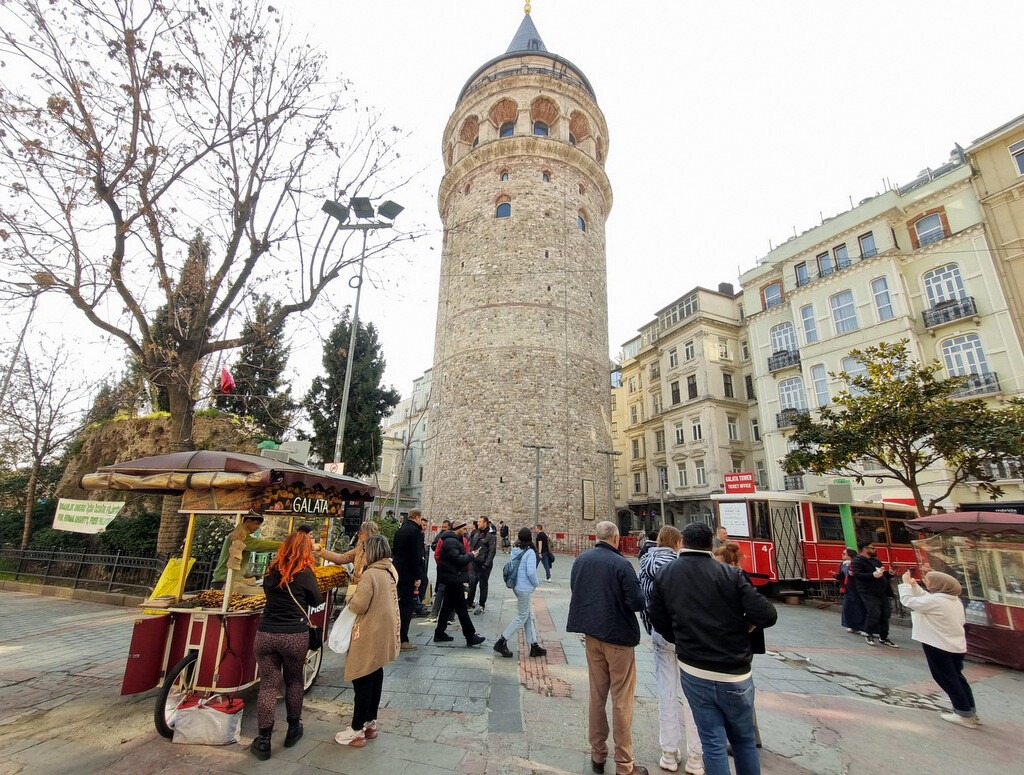
Galata Tower is located in Beyoğlu, one of Istanbul’s most central and walkable districts. If you are staying nearby, it is easy to reach the tower on foot from places such as Taksim Square, Istiklal Street, or Karaköy.
If you are coming from the Historic Peninsula, the most convenient option is the tram. Take the tram from Sultanahmet Tram Station in the direction of Kabataş, and you will reach Karaköy in approximately 15 minutes.
From Karaköy Tram Station, reaching Galata Tower is straightforward. You can walk uphill for about 10 minutes via Yüksek Kaldırım Street, a historic ramp connecting Karaköy with Beyoğlu.
As an alternative, you can take the historic Tünel Funicular after getting off the tram. This short, one-stop underground line takes you to Tünel Square, the traditional starting point of Istiklal Street. From there, it is only a 5-minute downhill walk to Galata Tower.
Conclusion
From the top of Galata Tower, you can enjoy a true bird’s-eye view of Istanbul’s Historic Peninsula, unfolding across the Golden Horn. From this vantage point, the city reveals itself not as a single skyline, but as a layered silhouette shaped by nearly 2,700 years of recorded history — where Byzantine domes, Ottoman minarets, and modern rooftops coexist in a rare visual harmony. As the light shifts throughout the day, the panorama changes its character, making each visit subtly different from the last.
Yet Galata Tower is not an endpoint — it is a gateway to exploration. Once back on the streets below, the surrounding neighborhood invites you to continue discovering Istanbul at a slower, more intimate pace. To plan the next steps of your journey, you may find it useful to explore related guides such as What to Do in the Galata District and Shopping Around Galata Tower, or extend your route toward the waterfront with Galataport (Istanbul Cruise Port). Together, these areas form a walkable network of culture, history, and everyday city life — best experienced by following your curiosity rather than a rigid plan.
Written by Serhat Engul

Leave a Reply