Ephesus is not the kind of place that can be reduced to opening hours, ticket prices, or a quick checklist of highlights. It is one of the most layered archaeological landscapes in the Mediterranean — a city shaped over centuries by myth, power, religion, and geography.
For readers familiar with Istanbul Clues, this approach will feel familiar. Just as Istanbul cannot be understood without tracing its Byzantine, Roman, and Ottoman layers, Ephesus cannot be meaningfully visited without understanding how and why this city mattered — and for how long.
That is why this guide begins with a deliberately in-depth historical overview. As a licensed tour guide who has spent over two decades explaining the long arc of history in Istanbul, I find it impossible to approach Ephesus without giving space to its past. This is not academic indulgence; it is a historian’s reflex — and a guide’s responsibility.
That said, this is still a practical CLUES guide.
If you are primarily looking for entrance fees, opening hours, or visiting logistics for 2026, you can easily jump ahead using the Table of Contents. A detailed Quick Guide at the top of the page already covers the essential planning information.
For those who choose to stay with the story, what follows is the historical backbone that makes Ephesus far more than a beautiful ruin.
The History of Ephesus Ancient City
The history of Ephesus stretches back to around 1000 BC, and in an intriguing way, its foundation story echoes that of Istanbul. Both cities trace their origins to oracular prophecies delivered by the Temple of Apollo at Delphi — reminders that myth and geography were deeply intertwined in the ancient world.
According to legend, Androcles, the son of King Codrus of Athens, sought guidance from the oracle after his father’s death. Unsure where to establish a new city, he was told to travel east, cross the Aegean Sea, and follow a cryptic sign:
“The fish will give you a signal, and the pig will guide you.”
Only after landing near the mouth of the Küçük Menderes River did the meaning become clear. While cooking fish by the shore, one fish leapt from the fire, startling a wild boar hidden in the bushes. The animal seized the fish and fled uphill. Androcles followed, killed the boar, and founded his city on that spot — fulfilling the prophecy exactly as foretold.
This blend of myth, geography, and fate sets the tone for Ephesus’ long and complex story.
Below, the city’s history is presented under twelve chronological themes. Since visualizing ancient time periods is never easy, the narrative focuses on turning points — moments when Ephesus changed direction and redefined its role in the ancient world.
1. The Ionian League
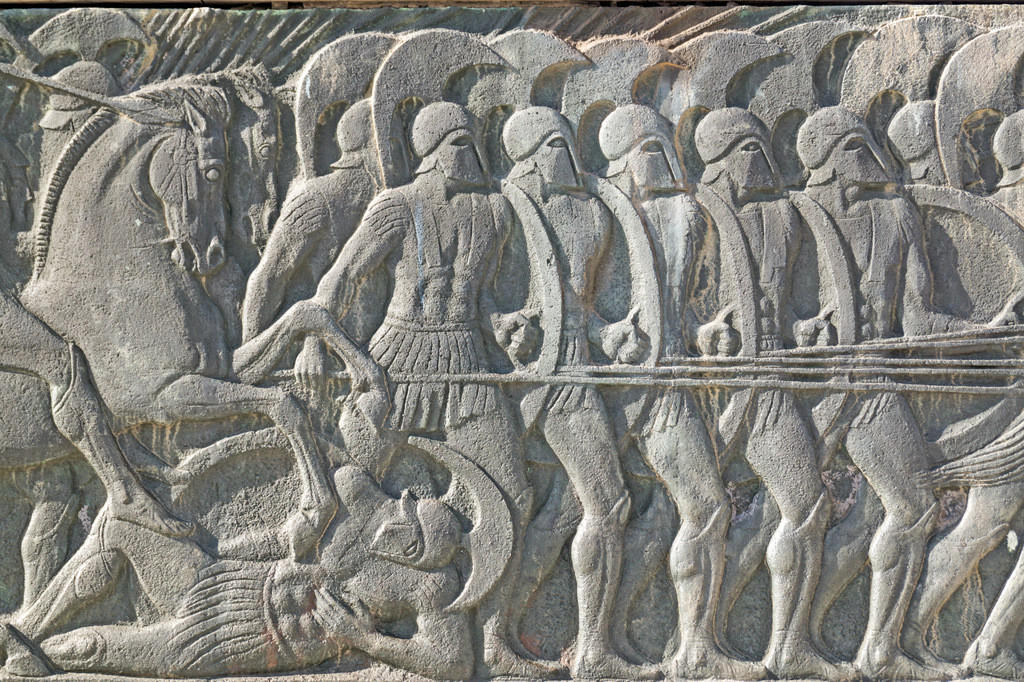
Ephesus was initially founded on a defensible hill, strategically positioned to protect it from both land and sea attacks. This early choice allowed the city to grow rapidly and accumulate wealth without constant threat of invasion.
In time, Ephesus became a prominent member of the Ionian League, a confederation of twelve city-states along the Aegean coast. During this period, the city flourished not only economically but intellectually, emerging as an important center of philosophy and early scientific thought.
2. The Cult of Artemis
Long before Artemis became a Greek goddess, Anatolia worshipped Cybele, the powerful Mother Goddess of fertility. As Ionian culture blended with local traditions, Cybele gradually transformed into Artemis of Ephesus, a uniquely Anatolian version of the goddess.
The rise of her cult elevated Ephesus into a major religious center. By the 8th century BC, pilgrims were traveling from across the region to worship at her sanctuary, cementing the city’s spiritual importance in Western Anatolia.
3. The King of Lydia, Croesus
Around 800 BC, Ephesus attracted the attention of King Croesus of Lydia, famed for his immense wealth. Confident in the protection of Artemis, the Ephesians had never constructed defensive walls, believing divine power alone would safeguard the city.
This faith proved costly. Croesus captured Ephesus with ease. Many inhabitants were relocated closer to the Temple of Artemis, and the city fell under Lydian rule.
Yet Croesus showed remarkable reverence for Artemis. From his legendary riches, he financed major enhancements to the temple, reinforcing Ephesus’ religious prestige even under foreign domination.
4. The Persian Invasion
Beginning in 550 BC, Persian forces swept across Anatolia, conquering the Ionian cities along the Aegean coast. Many were destroyed or heavily damaged.
Ephesus, however, survived through diplomacy. Its strategic value as a prosperous port city allowed its leaders to negotiate favorable terms, agreeing to pay substantial taxes in exchange for protection. As a result, Ephesus escaped the devastation suffered by its neighbors.
5. The Destruction of the Temple
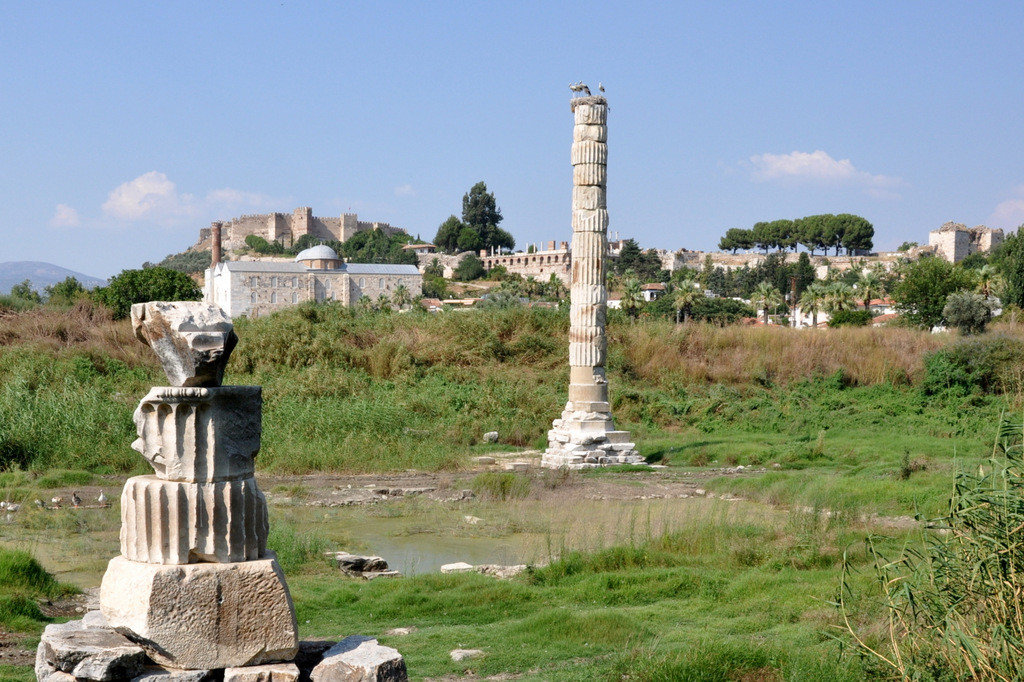
Disaster struck when Herostratus, an Ephesian seeking immortality through infamy, set fire to the Temple of Artemis. The act devastated the city, both spiritually and politically.
For centuries, Ephesus had been defined by its temple. Its destruction threatened the city’s identity and status. Determined to restore their standing, the Ephesians rebuilt the sanctuary on an even grander scale, reaffirming their devotion and resilience.
6. Alexander the Great
As the new temple rose, Alexander the Great entered Anatolia during his campaign against Persia. Captivated by Ephesus and the sanctuary of Artemis, he offered to finance the temple’s completion — on the condition that it be dedicated to him.
The Ephesians declined with diplomatic finesse, noting that a god should not dedicate a temple to a mortal. The temple was completed nonetheless and later earned its place among the Seven Wonders of the Ancient World, becoming one of the most celebrated structures of the Hellenistic era.
7. The Diadochi Period
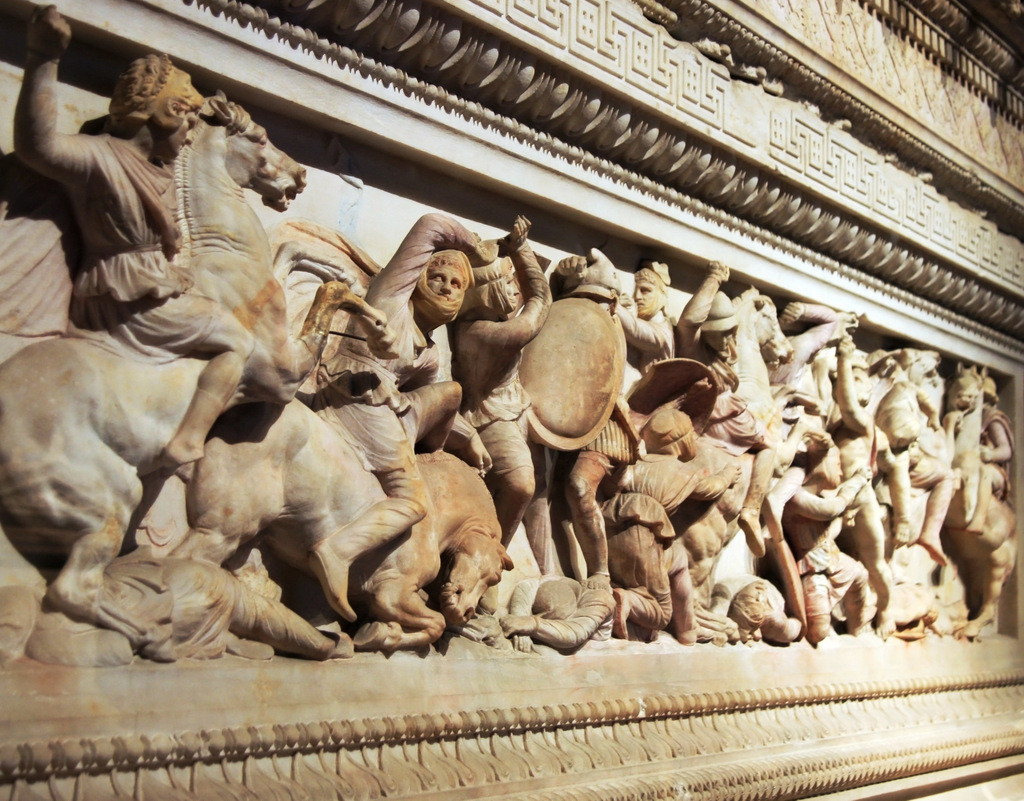
After Alexander’s untimely death, his empire fractured among his generals — the Diadochi. Ephesus came under the rule of Lysimachus, a pragmatic and capable ruler.
Recognizing that sediment was slowly silting up the harbor, Lysimachus made a radical decision: the city had to move. When the population resisted, he forced the issue by blocking the city’s drainage system. Faced with disease and unsanitary conditions, the Ephesians relocated.
For the first time, Ephesus was surrounded by strong defensive walls — a city finally fortified against both nature and invasion.
8. Roman Empire Period
Under Roman rule, particularly during the Pax Romana of Augustus, Ephesus entered its golden age. Prosperity, stability, and imperial favor transformed it into one of the most important cities of the Eastern Mediterranean.
Most of the monumental structures visible today — streets, baths, temples, and theaters — date from this Roman period, which defines Ephesus’ archaeological identity.
9. The Library of Celsus
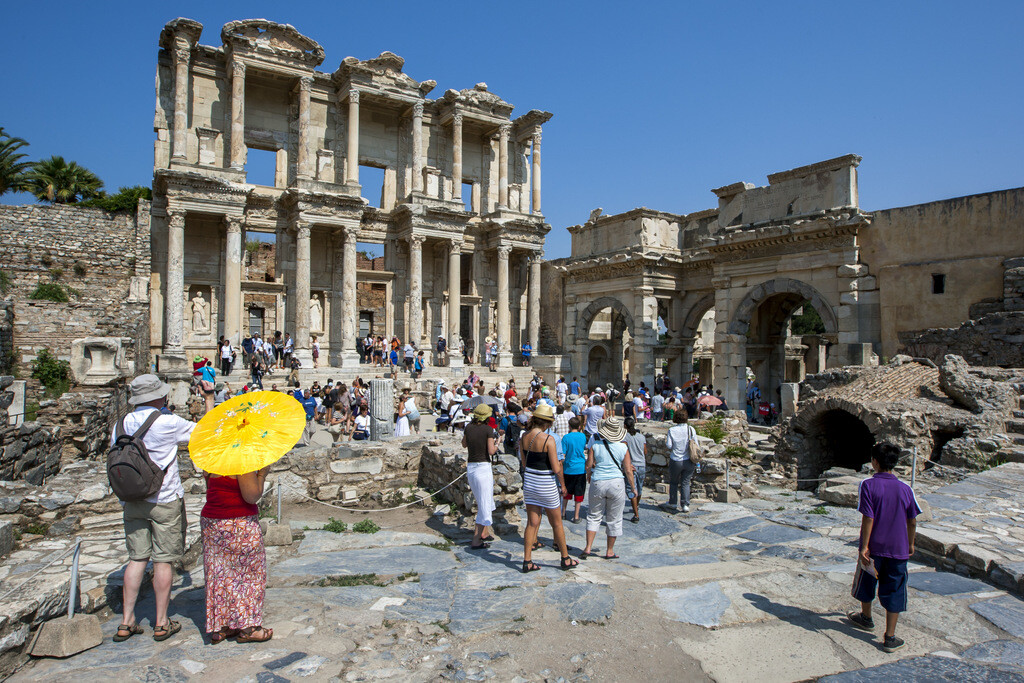
In the 2nd century AD, Ephesus served as the capital of Rome’s eastern provinces. Celsus Polemaeanus, a distinguished Roman official, governed the city during this era.
To honor him, his son Tiberius Julius Aquila commissioned the Library of Celsus. Though only the façade survives, it remains one of the most iconic images of the ancient world — a symbol of knowledge, prestige, and Roman urban culture.
10. Ephesus and Early Christianity
Ephesus also occupies a significant place in early Christian history. Tradition holds that Saint John and the Virgin Mary lived in the region, embedding the city into Christian memory.
In the 19th century, archaeological efforts inspired by the visions of Anne Catherine Emmerich led to the identification of the House of the Virgin Mary, solidifying Ephesus’ role as a Christian pilgrimage destination.
11. The Port of Ephesus
For centuries, sediment gradually filled the harbor, despite repeated attempts by Roman emperors — including Hadrian — to clear it. Eventually, the sea retreated permanently.
Though Ephesus remained culturally active during Byzantine and early Ottoman times, the loss of its port sealed its decline. By the 16th century, the city had largely faded from prominence.
12. Ephesus in Modern Times
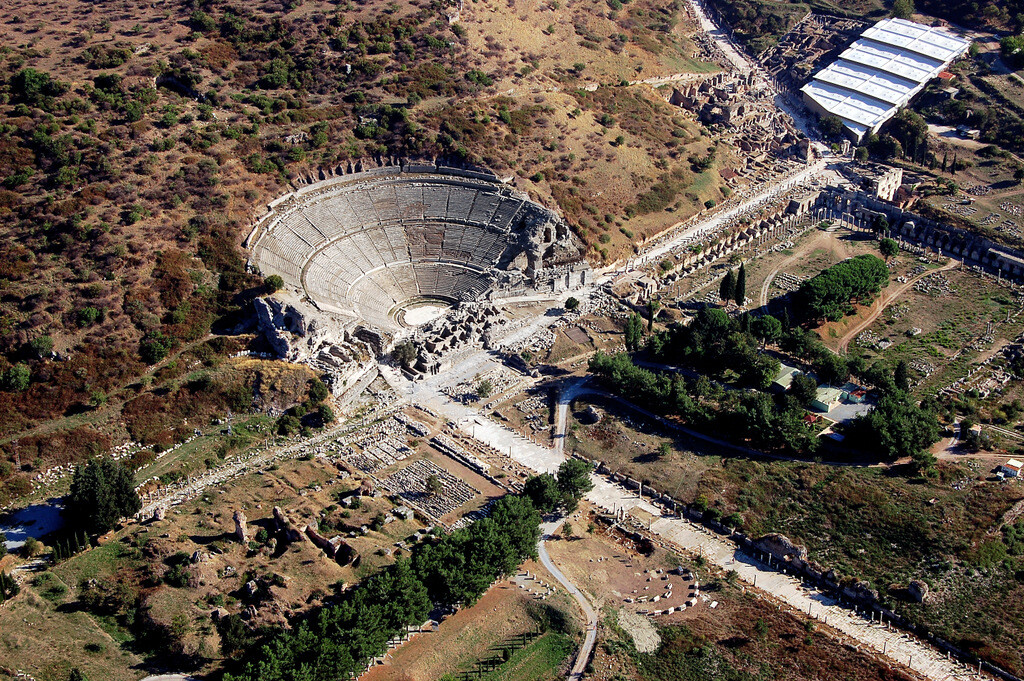
Modern archaeology revived Ephesus’ legacy. In the 19th century, John Turtle Wood uncovered the Temple of Artemis, reigniting global interest in the site.
Today, excavations continue under the direction of the Austrian Archaeological Institute, while artifacts recovered from the city are displayed in the Ephesus Museum in Selçuk — completing the story from myth to modern scholarship.
Ephesus Entrance Fee 2026
The entrance fee for Ephesus Ancient City is €40 as of 2026.
The Museum Pass Türkiye is valid for entry, making Ephesus one of the major archaeological sites covered by the national museum card. This is particularly useful for travelers planning to visit multiple state-run museums and archaeological sites during their trip.
To complete your visit, consider stopping by the Ephesus Archaeological Museum in Selçuk. While the ruins present the city in its original setting, the museum provides essential context through statues, reliefs, and everyday objects uncovered during excavations.
The entrance fee for the Ephesus Museum is €10 in 2026, and it is located only a short distance from the ancient site.
Ticket prices last confirmed: February 2026.
Ephesus Opening Hours 2026
In 2026, Ephesus Ancient City is open every day of the year.
- Opening hours: 08:00 – 18:00
- Last ticket sale: 17:30
These hours apply under normal operating conditions and cover the standard daytime visit.
Night Visits (Seasonal)
During the high season — typically from May to October — Ephesus may participate in Turkey’s “Night Museology” program. On selected days of the week, the site can remain open until late evening hours (approximately 19:00–23:30), offering a very different atmosphere from daytime visits.
This program does not run daily and schedules may change from week to week. Evening openings are announced officially and depend on staffing, lighting, and event planning.
Important Note
Opening hours can occasionally change due to:
- special events,
- conservation or restoration work,
- or operational adjustments.
For this reason, it is always advisable to check the official website shortly before your visit to reconfirm both entrance fees and visiting hours, especially if you are planning around a tight schedule or evening access.
Opening hours last confirmed: February 2026.
How to Get to Ephesus? (2026 Transport Guide)
Ephesus is located near the town of Selçuk, in the İzmir region of western Turkey. Since Selçuk does not have its own airport, most visitors arrive via Izmir Adnan Menderes Airport or travel from nearby resort towns such as Kuşadası.
Below are the most practical and commonly used ways to reach Ephesus in 2026.
From Izmir (City Center or Airport)
The most reliable and budget-friendly option from Izmir is the İZBAN suburban train system.
From Izmir city center or directly from the airport station, take the southbound İZBAN line toward Tepeköy. At Tepeköy, transfer to the connecting train going to Selçuk. These connections are scheduled to align, so the transfer is usually straightforward.
The total journey time is approximately 1 hour to 1 hour 30 minutes, depending on your starting point in Izmir.
Alternatively, long-distance buses and regional coaches depart regularly from Izmir Otogar (Main Bus Terminal) to Selçuk. Travel time by bus is similar, though trains are generally more predictable.
From Kuşadası
If you are staying in Kuşadası or arriving by cruise ship, Ephesus is very close — roughly 20 km (12 miles) inland.
The easiest option is a minibus (dolmuş). Minibuses labeled “Selçuk – Efes” depart frequently from the Kuşadası bus station and central stops, usually every 20–30 minutes. They drop passengers near the Lower Gate of the archaeological site.
Taxis are also widely available. A taxi ride from Kuşadası port or town center to Ephesus typically takes 20–25 minutes and is the most comfortable option, especially in hot weather.
From Selçuk Town Center
Ephesus is only 3 km (2 miles) from Selçuk town center.
You can walk along Dr. Sabri Yayla Boulevard, a flat and scenic route that takes about 30–40 minutes. However, during summer months, walking is not recommended due to heat and lack of shade.
A more practical option is the local minibus, which runs frequently from Selçuk bus station to the ancient city entrance for a small fee.
By Car
If you are driving, Ephesus is well signposted from Selçuk and Kuşadası. There are paid parking areas at both entrances:
- Upper Gate (Magnesia Gate)
- Lower Gate (near the ancient harbor area)
Most visitors enter from one gate and exit from the other, which works well if you are using a taxi or private transfer.
Conclusion
Ephesus is not only one of the most impressive Greco-Roman archaeological sites in the world, but also the cultural heart of a much wider historical landscape centered around Selçuk.
Beyond the marble streets of the ancient city, visitors can explore:
- the House of the Virgin Mary,
- St. John’s Basilica,
- and the Temple of Artemis, once counted among the Seven Wonders of the Ancient World.
Together, these sites form a rare intersection of classical antiquity, early Christianity, and Anatolian history — a combination that makes the region far richer than a single archaeological stop.
If you would like to explore the surrounding area in more detail, you can continue with my dedicated guide to what to see and do around Ephesus. For those planning to stay overnight, I have also prepared a separate article focusing on accommodation options in Selçuk, designed to help you build a well-balanced itinerary.
Written by Serhat Engul

Hi, I am visiting Ephesus 25-28 Nov 2024.
I would like to visit during the day and also the night.
For the night visit, do i have to purchase a separate ticket and can i visit as an independent traveler (without joining a tour?).
Hello Sandy, you can visit Ephesus individually in the evening without joining any tour. Ephesus can be visited until 22:30 in the summer months of 2024.
However, I do not know if it will be open in the evening hours when you visit in November. These opening hours may be valid in the summer months only. I recommend you to check from the official website before visiting.
Hi!
Is Ephesus open in February and March 2025 ? ie is is open all year round?
Thank you.
Rachel
Hi Rachel, yes Ephesus is open all year round. However it closes earlier in the winter.
Merhaba Serhat,
Thank you for your informative post. I’m wondering:
1. Does the 400 TL entrance fee included the whole stretch out ancient city? What I meant was I would be able to see examples below beside those you mentioned:
a) Ephesus Harbour Baths.
b) Alter Hafen Ephesus
c) Ancient Ephesus Harbor.
… and many more
2. Do you know what is the entrance fee at the ticket counter if I don’t mind to go for the long queue?
3. How pack will it be in September?
Thanks in advance for your wisdom guide!
Sophia
Hi Sofia, a single ticket is required to enter Ephesus and allows you to visit all parts of the ruins. The price of this ticket is fixed and does not change for those waiting in the queue. Since September is the high tourist season, Ephesus will be quite crowded.